


MEDICALLY REVIEWED BY

Dr Carly Dulabon, MD, IBCLC, NABBLM-C
Dr Carly Dulabon MD, IBCLC, NABBLM-C is medical director of the department of breastfeeding medicine with Akron Children's Hospital. She completed her medical degree at University of Toledo College of medicine, and her pediatrics residency at Children's Hospital of Pittsburgh. Her special interests are in maternal mental health and infant growth.
A nasal aspirator can still help a toddler over 2 when mucus is getting in the way of sleep, eating, or comfortable nose breathing. But it does not need to be the automatic answer to every runny nose. Start with the least invasive option: use saline for thick or dry mucus. Save brief, gentle suction for times when it is likely to make a meaningful difference and your child can tolerate it.
The shift from newborn care is not that a toddler is suddenly “too old” for an aspirator. It is that the goal changes. With a newborn, caregivers may need to do nearly all the clearing. With a toddler, comfort, cooperation, and emerging independence matter just as much as removing mucus.
Why the Newborn Routine Can Become a Struggle
A toddler may turn away, grab the device, protest, or cry when an aspirator comes near their face. The sensation of suction can be unpleasant, and a child who remembers an uncomfortable attempt may become wary of the routine.

That does not mean your child is being difficult or that suction is always harmful. It does mean that repeating a stressful attempt simply because it worked during infancy may not be the best choice now.
Use a simple question before reaching for the aspirator: Is the mucus actually interfering with my toddler’s comfort or daily activities?
If your child has a runny nose but is breathing comfortably, drinking, eating, sleeping reasonably well, and willing to play, you may not need to do anything. If mucus is visibly blocking the nostrils or seems to be contributing to noisy breathing, trouble eating, or sleep fussiness, a little more help may be useful.
Try the Lowest-Stress Option First
Think of congestion care as a ladder. Start at the bottom and move up only if the next step is needed.
- Use saline for thick or dry mucus. Saline spray or drops can help loosen mucus before your child wipes, blows, or needs suction. The CDC’s cold-symptom guidance for young children includes saline nasal spray or drops as a home-care option; it also notes that a rubber suction bulb may be used to clear mucus.

- Use suction selectively. Consider an aspirator when mucus is close to the nostril opening and is truly obstructive, especially if it is disrupting sleep or making eating more difficult. An aspirator clears mucus from the nasal passages; it does not reach the sinuses or treat the cause of an illness.
Saline can loosen mucus, but it does not treat an infection. Likewise, suction may make a blocked nose feel clearer without replacing medical assessment when symptoms are concerning.
Use an Aspirator Gently and Briefly
When suction is appropriate, the most effective toddler routine is usually short and calm—not repeated until every bit of mucus is gone.
Keep the Tip Shallow
Place the tip at the nostril opening rather than inserting it deeply. Suction should remove accessible mucus, not involve probing inside the nose.
If mucus is dry or thick, use saline first. Trying to suction dry mucus can be uncomfortable and may be less effective. The nasal aspirator safety guidance emphasizes saline before suction, gentle use, and avoiding deep insertion.

Stop When the Nose or Child Needs a Break
Repeated suction can irritate the nasal lining and may contribute to minor nosebleeds. Stop and reassess if you notice:
- Bleeding
- Increasing redness or irritation around the nostrils
- More distress with each attempt
- Persistent crying during suction
- A nose that appears dry and sore rather than blocked with removable mucus
Do not keep trying to “finish the job” if your toddler is pulling away or becoming increasingly upset. A pause, or saline alone, may be the better choice.
Clean and Dry the Device Every Time
Any aspirator that contacts mucus needs careful cleaning. Wash washable parts with warm, soapy water after use, disassemble and dry them as directed, and replace filters according to the manufacturer’s instructions. Check the manual for your specific device: not all parts are interchangeable, washable in the same way, or safe to boil.
Thorough drying matters. A damp, uncleaned aspirator is not something to put away and reuse later.
When Your Toddler Says No
The aim is not to overpower resistance. It is to make care brief, predictable, and as low-pressure as possible.
Try small choices that let your child participate:
- “Do you want to hold the tissue or the saline?”
- “Should we do one nostril or the other first?”
- “Do you want the dinosaur song or the truck song?”
- “Can you help me blow into the tissue?”
Songs, toys, and a comforting routine afterward may help some children tolerate a short attempt. If your toddler refuses, pause rather than escalating into repeated attempts. You can try again later if congestion is still clearly getting in the way.

What Matters When Choosing an Aspirator
No aspirator style is best for every toddler. The practical question is whether the device fits your child’s tolerance and whether you can use and clean it correctly.
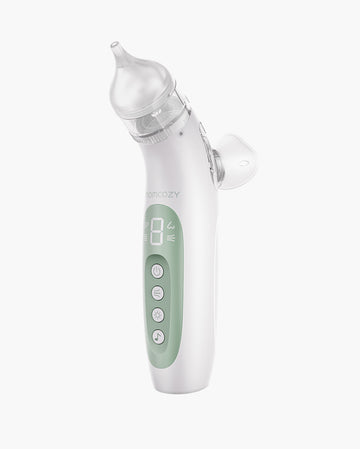
Manual tube aspirators let the caregiver vary suction directly. Electric models provide device-generated suction at the push of a button. That functional difference does not prove that one type works better for all children.
When comparing options, focus on practical details:
- Whether you can keep use brief and gentle
- How easy the device is to clean and dry
- Whether replacement filters or parts are required
- Whether your child tolerates the sound, sensation, and shape of the device
A new device will not necessarily solve a child’s resistance. Sometimes the best adjustment is using less suction, not buying a different aspirator.
Know When Congestion Needs Medical Advice
An aspirator manages mucus near the nostrils. It cannot diagnose or treat the illness causing congestion.
Seek medical care for a child with cold or respiratory-virus symptoms who has trouble breathing, fast breathing, dehydration, fever lasting more than four days, symptoms lasting more than 10 days without improvement, symptoms that improve and then return or worsen, or worsening of an existing chronic condition.
If you think your toddler may have COVID-19 or flu, contact a healthcare professional promptly, particularly if your child is at higher risk of severe illness. Testing and treatment decisions depend on the illness and the child’s individual circumstances.
A successful toddler congestion routine is often shorter and gentler than the newborn version. Start with saline; reserve suction for mucus that is truly getting in the way. If you choose an aspirator, use one that fits its verified instructions and cleaning requirements—and let breathing changes, dehydration, prolonged fever, or worsening symptoms guide you to a clinician rather than another suction attempt.









