








Motion Style
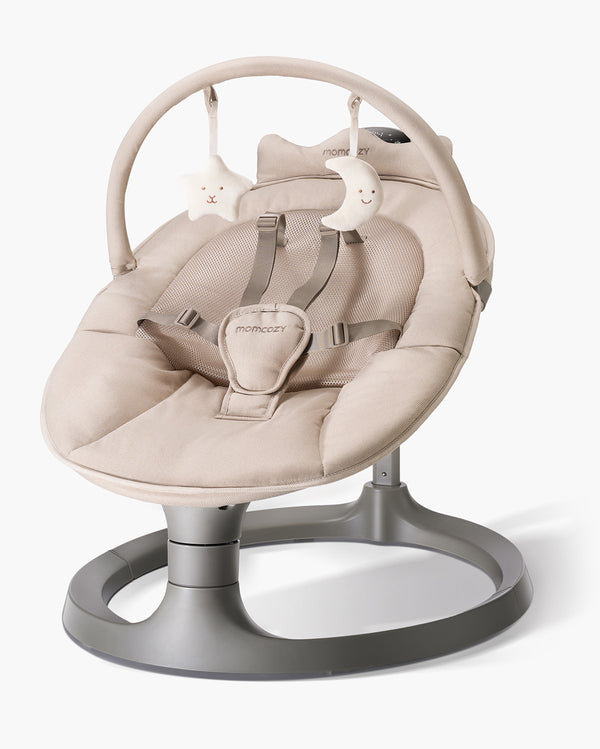
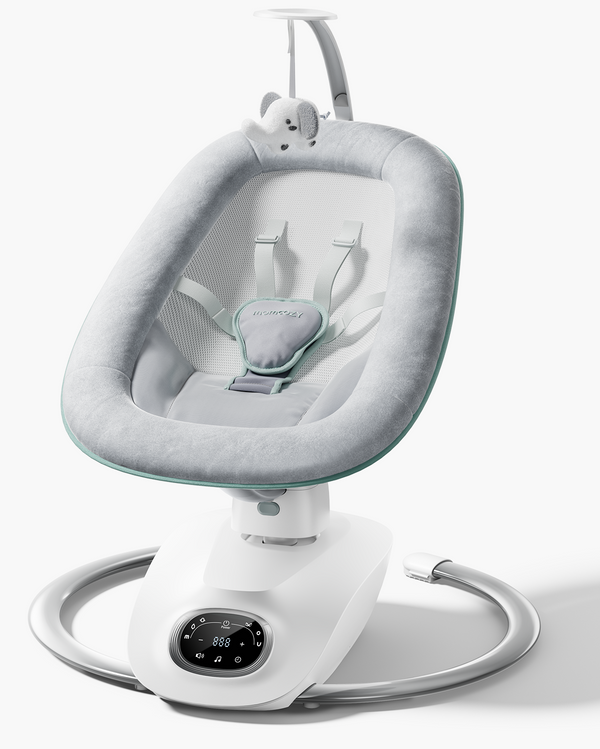
Choose the 2-in-1 baby swing when powered swinging plus a separate stationary-seat mode fits your routine. Choose the 3D motion baby swing when you want more movement patterns, a rotating seat, and remote control.
Baby Swing Comparison
Two electric baby swings and one newborn accessory — the table below helps you identify which option fits your baby's stage, your home, and how long you need it to last.
| Feature | |||
|---|---|---|---|
| Best for | Newborn soothing at home | Extended use & multi-mode soothing | Extra support for newborns |
| Why choose it | Full-featured motion + rotating seat | Seamlessly transitions from infant swing to toddler seat | Improves fit and support for smaller babies |
| Age / Stage | Newborn to ~6–9 months | Newborn → toddler | Newborn stage |
| Motion style | 3D multi-motion, 6 patterns | Natural sway, 4 patterns | N/A |
| Grows with baby? | Limited to infant stage | Converts to toddler seat | Accessory only |
| Price | $229.99 | $159.99–$199.99 | $29.99 |
| Feature | |||
|---|---|---|---|
| Type | Flagship 3D Motion Swing | 2-in-1 Swing + Stationary Seat | Supportive Newborn Accessory |
| Drive | Corded Electric | Corded Electric | N/A |
| Motion Modes | 6 modes | 4 modes | N/A |
| Speed Settings | 4 speeds | 4 speeds | N/A |
| App / Remote | Touch panel + remote | Touch panel | N/A |
| Key Highlights | 180° rotating seat | Converts to toddler seat | OEKO-TEX breathable mesh |
| Feature | |||
|---|---|---|---|
| Age / Weight | Newborn to 20 lbs | Swing: 0–20 lbs / Seat: up to 66 lbs | Newborn to 6 months |
| Indoor Use | 5-point harness, stable base | Dual-arm stability | Support insert |
| Seat Recline | Stepless adjustment | 2-position | Ergonomic support |
| Portability | ~17.8 lbs, stationary-focused | ~11 lbs, lightweight | Ultra-light & washable |
| Feature | |||
|---|---|---|---|
| Controls | Touch panel + remote | Touch panel | N/A |
| Cleaning | Machine-washable seat pad / wipe-clean frame | Machine-washable seat pad / wipe-clean frame | Washable insert |
| Space fit | Better for fixed nursery/living room use | Better for room-to-room use / apartment living | No extra footprint |
Buying Guide
Practical guidance on choosing, using, positioning, and caring for a baby swing.
Choose the 2-in-1 baby swing when powered swinging plus a separate stationary-seat mode fits your routine. Choose the 3D motion baby swing when you want more movement patterns, a rotating seat, and remote control.
Check the limits for swing mode separately from any stationary-seat mode. A convertible seat may remain useful longer, but the powered swing function still has its own age, weight, and developmental limits.
For baby swing for newborn use, follow the manual for recline, positioning, and restraint adjustment. Secure the restraint system as directed, and do not add unapproved cushions, blankets, or positioners.
Measure the intended area before ordering. Keep walkways clear and make sure the swing can sit on a stable, flat floor within direct adult sight and reach.
Compare motion settings, speed controls, sounds, touch controls, and remote access based on what you will actually use during daily care.
Check which fabrics are removable and machine washable, which surfaces require wiping, and how easily the restraint areas can be reached.
A baby swing may be useful for short, supervised soothing while your baby is awake and you complete a nearby task. It may be less useful when space is limited, the expected use period is short, or your baby does not respond well to powered motion.
When considering is a baby swing worth it, think about your space, budget, cleaning needs, expected use period, and your baby’s response. The best infant swing is the option that fits those practical needs—not simply the model with the longest feature list.
An electric baby swing provides consistent powered movement without continuous manual rocking. Compare motion patterns, speed controls, sound options, seat positioning, and how each model fits into your daily routine.
An electric infant swing is intended for short periods of supervised awake time. It does not replace holding, floor play, supervised tummy time, or a safe sleep space.
A newborn swing is an awake-time soothing seat, not a place for naps or overnight sleep. Good baby swing safety starts with following the current manual and using the product only within its stated limits.
If your baby falls asleep in the swing, move them to a firm, flat, non-inclined sleep surface as soon as possible.
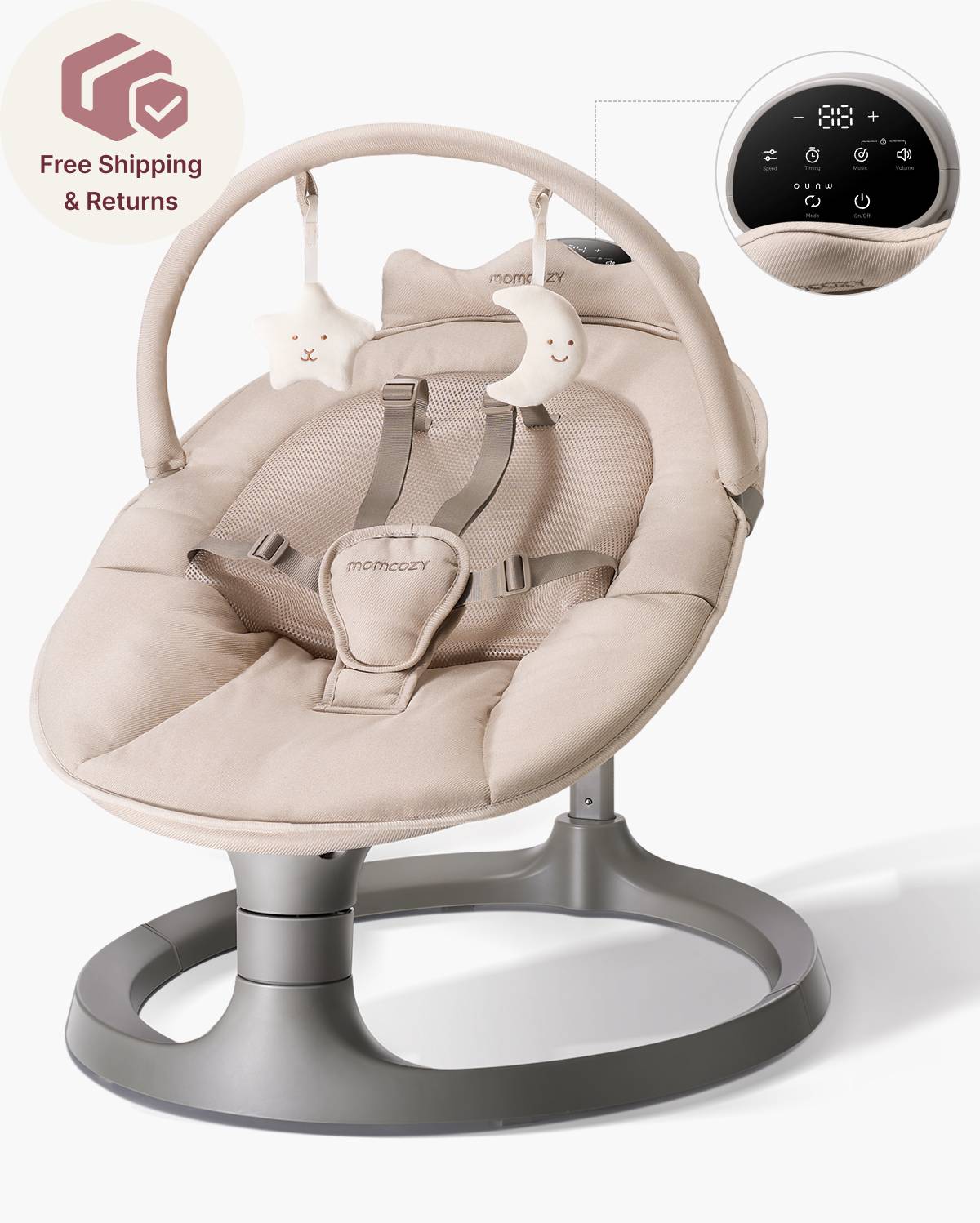
Choose a 2-in-1 baby swing when you value powered motion plus a separate stationary-seat function. The Momcozy model provides four motions, four speeds, eight sounds, two recline positions, and dual-arm support.
Choose a 3D motion baby swing when movement variety and flexible positioning are higher priorities. CocoSway provides six motions, four speeds, a 180° rotatable seat, remote control, and a 5-point harness.
Neither design is automatically the best baby swing for every family. Start with a lower setting, observe your baby’s response, and compare product limits, controls, cleaning requirements, and space needs.
When comparing a portable baby swing, look beyond the word “portable.” Review the footprint, product weight, power source, stability, and instructions for repositioning it safely.
A compact baby swing may suit an apartment or smaller room when it leaves clear walkways and can sit on a stable, flat floor. An indoor infant swing should remain where an adult can directly supervise the baby.
Do not assume a portable infant swing is approved for travel, outdoor use, or uneven surfaces. Remove the baby before moving the product and follow the manual.
In a baby swing vs bouncer comparison, a swing uses powered or repeated motion, while a bouncer generally responds to the baby’s movement or a caregiver’s touch.
In a baby swing vs rocker comparison, a rocker typically moves on a curved base or through manual rocking. Some products combine functions, so check the stated product design rather than assuming the terms are interchangeable.
Regular baby swing cleaning is easier when removable fabrics and high-contact areas are easy to reach.
For both Momcozy electric models:
Both models list removable, machine-washable seat covers. Follow the current product instructions for the CocoSway infant insert rather than relying on customer reviews alone.
Frequently Asked Questions
Quick answers to common questions about choosing, using, cleaning, and safely positioning a baby swing for newborns and infants.
When deciding how to choose a baby swing, compare motion style, speeds, seat function, restraint setup, controls, sounds, cleaning, product limits, and available space. Choose CocoSway for more motion variety and remote control. Choose the 2-in-1 model when a separate stationary-seat mode better fits your routine.
Choose CocoSway when you want six motions, four speeds, a rotating seat, remote control, and a 5-point harness. Choose the 2-in-1 model when you want four motions, four speeds, eight sounds, two recline positions, and a separate stationary-seat mode.
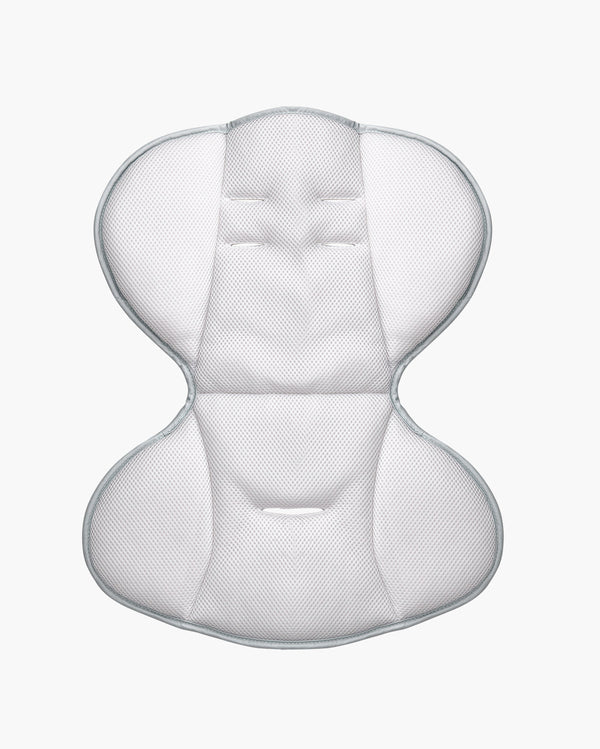
Choose the infant insert only as the accessory identified for compatibility with CocoSway, and follow its current instructions.
A swing can be useful for short, supervised soothing while your baby is awake. It may be less useful when space is limited, the expected use period is short, or your baby does not respond well to powered motion.
The best baby swing for your family should offer settings you will use, a secure restraint system, stable floor placement, practical controls, manageable cleaning, and limits appropriate for your baby.
An electric baby swing uses a powered motor to create repeated motion during supervised awake time. Unlike a manual rocker or bouncer, its movement does not rely entirely on a caregiver’s hand or the baby’s own movement.
A 2-in-1 baby swing combines powered swing use with a separate stated seating mode. The Momcozy model converts to a stationary seat.
A 3D motion baby swing offers multiple movement patterns. CocoSway provides six motions and a 180° rotatable seat.
It depends on your routine. An electric model provides consistent powered movement and adjustable settings, while a manual rocker may be simpler and lighter. Choose according to the motion and setup you will actually use.
No. Sounds are optional. The 2-in-1 model includes eight sounds, while CocoSway’s main verified differences are its six motions, four speeds, rotating seat, remote control, and 5-point harness.
For parents asking are baby swings safe, correct use matters. Follow the manual, use the restraint system, place the swing on a stable floor, supervise continuously, and stop use when required by the product guidance.
No. A swing is not a safe sleep space. If your baby falls asleep, move them to a firm, flat, non-inclined sleep surface as soon as possible. The swing is intended for supervised awake soothing.
There is no single session length that applies to every baby and product. Use the swing for short, supervised periods, follow the manual and pediatric guidance, and provide regular holding, floor play, supervised tummy time, and other awake positions.
Stop when your baby reaches the product’s age or weight limit, no longer fits the seat or restraint system correctly, or reaches a developmental stage that makes use unsafe.
For the 2-in-1 model, swing mode is limited to 20 lb or 9 months, whichever comes first. CocoSway supports infants up to 20 lb; follow any additional stop-use guidance in the manual.
A portable baby swing may suit a smaller room when its footprint, power needs, and required clearance fit the available space. Measure the intended area and confirm stable floor placement before buying.
Yes, when the manual allows it to be repositioned. Remove the baby first, disconnect power where required, and place the empty swing on a stable, flat floor in the new room.
Cleaning depends on the model. Both Momcozy electric swings list removable, machine-washable seat covers. Check how easily the restraint areas, seams, toys, and controls can be reached.
Place it on a stable, flat floor where your baby remains within direct adult sight and reach. Keep it away from stairs, elevated surfaces, cords, heaters, doors, and crowded walkways.
Learn More
Explore practical guides on baby swing safety, sleep, setup, choosing the right model, and knowing when to stop use.
Understand why baby swings are for supervised awake soothing rather than sleep, and what to do if your baby falls asleep.
Read Guide →Review baby swing safety, restraint use, stable placement, supervision, product limits, and stop-use guidance.
Read Guide →Compare motion styles, seat function, controls, cleaning, space, and newborn-use considerations.
Read Guide →Review baby swing setup, first-use checks, controls, positioning, and everyday care.
Read Guide →Learn how product limits, fit, and developmental changes affect when use should end.
Read Guide →Use the product table to compare baby swings by motion style, controls, seat functions, cleaning, and expected use.
Read Comparison →