


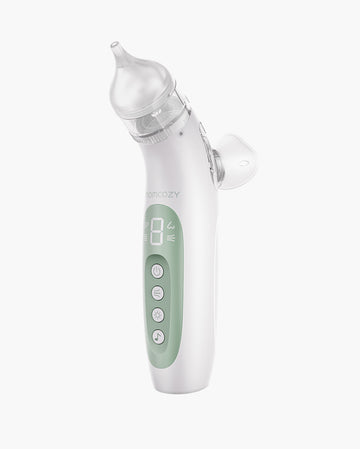
Newborns breathe mostly through their noses, so even a little mucus can make feeding and sleeping harder than you'd expect. Using a nasal aspirator on a newborn can help clear it, but only if the device is made for infants and you use it gently, the way the manufacturer says to. If you're not sure it's right for your baby, ask your pediatrician. And if your baby has any worrying symptoms, don't let suction put off getting care.
Momcozy baby nasal aspirators are one place to compare options, though you'll want to check the instructions and age guidance for the exact model first. Below, we walk through three questions: whether your baby needs suction at all, whether the device fits their needs, and when it's time to stop.

Key Takeaways
- A nasal aspirator may be used to suction a newborn's nose, but the device must match the infant's needs and age.
- Only light suction should be applied to the newborn's nose. The suction should not be deep, forceful, or repeated several times after each use, and it should not irritate the delicate tissues of the nasal passage.
- If a newborn is having trouble breathing, has blue lips or skin, is hard to wake up from sleep, or has a fever, seek medical help immediately. Do not attempt to suction fluid from the baby's airways if he or she is experiencing any of these symptoms.
- Nasal aspirators and other accessories must be cleaned properly after each use according to the manufacturer's instructions.
- Before using it at home, check the age recommendations on an electric aspirator. It's a good idea to get it checked by a doctor if your child is two or under.
Can You Use a Nasal Aspirator on a Newborn?
If needed, a nasal aspirator with good features that is suitable for newborns can be used to remove mucus from a newborn's nose. So, are nasal aspirators safe for newborns? They can be, but it’s a matter of the device, your baby, and how you use it.
What a nasal aspirator does is remove mucus; it doesn’t address what is causing your congestion. If your infant is content and breathing fine, more suctioning is not necessarily better. To the extent that congestion is interfering with feeding, a light clearing of the nose can help your baby breathe through the nose while feeding.
When a Suitable Device May Help
Start with the device, not the suction strength. The tip should be intended for infant use, fit at the nostril entrance, and be used according to the manufacturer’s directions.
If you already have an aspirator that is appropriate for your baby, there may be no need to switch devices simply because your newborn is congested.
When to Ask Before Using It
Nasal aspirators don’t all have the same age guidance, so check the packaging or instructions before using one on a newborn. If it’s not clear whether the device is suitable, ask your pediatrician.
Additional monitoring may be required for a premature or medically complex infant. And if your baby’s breathing, feeding, alertness, or color has changed, treat those as health concerns—not problems to solve by trying a different aspirator.
When Should You Seek Medical Care Instead of Suctioning?
Sometimes the question is no longer, “How do I clear the mucus?” It’s, “Does my baby need to be checked?”
A nasal aspirator can clear the nose, but it can’t tell you why your baby is struggling to breathe or eat. If there’s something that makes your infant seem entirely off from his or her usual state, don’t keep suctioning and relying on the device to fix it.
Call 911 for Emergency Signs
If your infant is struggling to breathe, or their lips or skin are becoming blue or gray, or they're difficult to wake up or they aren’t acting like themselves, dial emergency services. These are not situations where you should keep trying suction at home.
Call the Pediatrician Promptly
If your infant is 3 months of age or younger and has a rectal temperature of 100.4°F (38°C) or higher, call their pediatrician immediately—even if the baby appears to be otherwise fine. Also call for advice if your newborn isn’t feeding well, has less wet diapers, or is breathing more rapidly or with more effort than usual.
The bottom line: don’t wait for suction to cure this. A clearer nose does not rule out an illness.
What Should You Check Before the First Use?
Before the tip is anywhere near your infant’s nostrils, stop and take a close look at the device itself. You should be able to tell whether it is suitable for your baby, if it works the way it’s supposed to, and if it can be brought to an easy halt before you begin.
Age Guidance and Individual Care Needs
- Age recommendations: Refer to the label or your model's latest manual. If you have any doubts about whether the model is for use with infants, ask your pediatrician or the manufacturer.
- Fitting tip: The tip you use should be the tip that is included with the device and which is made for the device, and it should be placed on the outside of the nostril. A soft tip or control adjustment for the model’s age restriction is not applicable.
For babies who are born premature or have medical issues that affect their breathing or airway, talk to your pediatrician for specific guidance on your situation rather than trying to modify a routine for a baby that is otherwise healthy.
Tip Fit and Device Condition
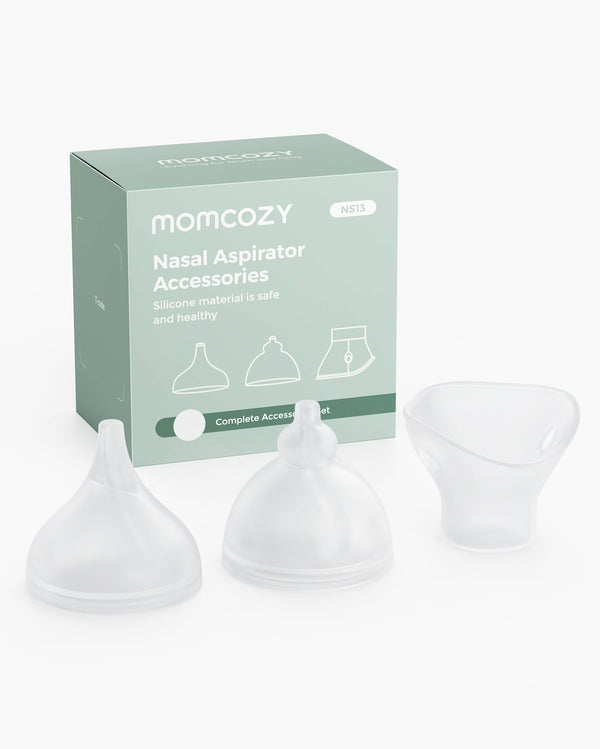
- Device condition: Check for cracks, broken pieces, leaking tubing, or any other damage that might impact fit or suction. Ensure that any filter or replacement part is designed for your model.
- Cleaning guidelines: Determine which parts are washable and which are not. Use the instructions for your device, rather relying on a universal cleaning guide.
- How to stop: Learn how to break suction and power down the device before using it.
Do not use adult nasal equipment or rely on a product photo alone to decide whether an aspirator is suitable for a newborn.

Which Safety Controls Matter for Each Aspirator Type?
There is only one goal for any type of nasal aspirator, and that is to suck out mucus gently. Keep the tip near the nostril’s entrance, and use only enough suction to do the job. The details to watch for vary by device.
|
Device format |
Check before use |
Main limitation |
|
Bulb |
Age guidance, shallow tip, intact bulb, cleanable design |
Placement and internal cleaning need attention |
|
Mouth-powered |
Fit, correct filter/assembly, controllable suction |
Some caregivers dislike this format; hygiene is still necessary |
|
Electric |
Manual age guidance, tip fit, control, and ability to stop |
Motor power does not establish newborn suitability |
Bulb Syringes
Guidance on bulb syringes varies. Allegro Pediatrics discourages their use, while Nationwide Children’s Hospital teaches their use. So don't treat one format as inherently safe or unsafe. Refer to the instructions for your particular bulb, for placement and cleaning.
Mouth-Powered Aspirators
For a mouth-activated device, ensure the fit, filter, and assembly are correct before using. Maintain a controlled suction. If you are not at ease using this format, you may find it more convenient to use an alternative.
Electric Aspirators
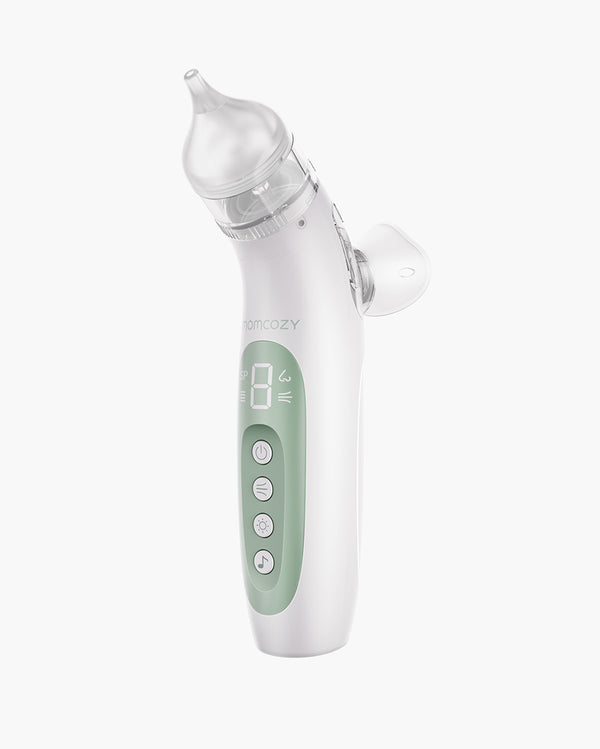
Electric aspirators often include adjustable suction and a motor stop button. These features can make them easier to use, but stronger suction isn’t necessarily safer or better for a newborn. Always follow the age recommendations for the specific model. For a practical comparison of both types, see the guide to electric versus manual nasal aspirators.

What Does Gentle Use Look Like in Practice?
Gentle suction may not clear mucus all at once. Pay attention to whether another attempt is needed, and follow the device’s instructions at every step.
Prepare and Place Gently
If the mucus is thick, it may be difficult to suction, a saline preparation before suction may help to moisten and thin the mucus. Use an infant saline product and follow the package instructions. Never make your own solution or use medicated drops without first talking to your doctor.
Place the tip at the opening of the nostril, not far up into the nose. Never use a nasal aspirator in the throat. The how to clear an infant’s nose guide covers the full procedure.
Reassess Before Repeating
If not much mucus is coming out, don’t automatically turn up the suction or keep going until the nose is totally clear. Stop and check on your baby. If they stay uncomfortable, the tissue looks irritated or you just feel like one more try isn’t going to help, then leave it at that.
There is no standard time duration or number of sessions for each baby or device. If you're wondering whether or not you should try again, the directions for use on when and how often to use an aspirator may help you decide. Go for gentle treatment if the stuffiness really is troubling your baby.
What If Your Newborn Cries or You Notice Blood?
Crying doesn't necessarily mean your baby is hurt, but they’re a cue to stop and check in. There’s no need to push through just to complete the session.
Pause for Distress
Stop suctioning if the baby cries, looks agitated, or you are unable to keep the tip gently in contact. Make sure that both of you are comfortable, and only repeat the procedure if your baby calms down. If they keep resisting, don’t force them to continue.
Stop for Bleeding or Irritation
Stop using the aspirator if you see blood or more irritation. Don’t try to suck the blood off or keep going to get the rest of the mucus out. Instead, keep an eye on your baby and call your pediatrician for instructions, especially if the bleeding continues or you’re concerned.
If you notice bleeding or the baby seems to be in distress along with having difficulty breathing, turns pale or bluish, or the baby becomes less responsive, get an emergency care as previously recommended rather than trying another round of suction.
The repeated attempts at suctioning can cause irritation to nasal tissue, so avoiding excessive daily suction gives you some guidance for when you’re not sure whether it’s safe to try once more.
How Does Device Hygiene Affect Safer Use?
Maintaining an aspirator clean enables its safe use, but the appropriate care varies depending on the model. Wash the parts which the manufacturer says are washable, and dry them as directed. Keep the motor and all other electrical components away from water if the manual states to do so. Filters and replacement parts can be different too, so avoid using another model’s cleaning instructions, such as boiling or running parts through the dishwasher—unless the instructions for your device explicitly state it’s safe to.
Before you begin, consult the most recent manual for your model and adhere to its cleaning instructions.
When Is an Electric Option Worth Considering?
Some parents prefer to use an electric aspirator rather than a manual one. Nevertheless, the most important thing is to pick a tool that works well for your baby rather than one that has a lot of features. If the aspirator you have now does its job, you don't need to get a new one.
Check Suitability Before Comparing Convenience
Check the manufacturer’s age recommendations and make sure the tip fits properly before using an electric aspirator. Follow the instructions for adjusting suction and using the device safely. If your child is younger than two, ask a pediatrician before use.
If you’re considering an electric aspirator and your pediatrician approves, the Momcozy BreezyClear 2-in-1 Spray & Suction Electric Nasal Aspirator could be worth checking out. It uses mist then suction and features adjustable suction power. These are all the features that describe how the device works but that doesn't mean this device is perfect for every newborn.
Member price
$44.99$49.99
Product instructions also state that the child must be awake and under direct supervision while using it. So, can an electric nasal aspirator hurt a newborn? Opting for an electric one doesn’t mean you don’t have to be careful with placement, supervision, and the age range specified on the model.
Frequently Asked Questions
Can a nasal aspirator remove mucus from my newborn’s throat?
A nasal aspirator is for the nose, not the throat. Do not insert a nasal device into your baby’s mouth or throat. If your newborn seems to have difficulty breathing or feeding, seek medical advice rather than trying deeper suction.
Can saline sometimes be enough without suction?
Yes. Saline may loosen mucus enough that suction is unnecessary. If your baby is comfortable, you do not need to automatically add suction. Use an infant-appropriate saline product as directed, and ask your pediatrician if you are unsure whether care at home is appropriate.
Can I use medicated nose drops instead of saline?
Do not substitute medicated nose drops unless a healthcare professional specifically recommends them for your baby. Plain saline and medicated products are different. Check the product label and your clinician’s instructions rather than adapting a nasal product intended for an adult or older child.
Can I use BreezyClear while my baby is asleep?
The product page says to use BreezyClear only while the child is awake and directly supervised. Quiet operation does not change that instruction. For a newborn, first resolve age suitability using the current manual and required pediatrician consultation before considering use.
Conclusion
If mucus is blocking the airway of a newborn, a nasal aspirator can be useful, but more suction is not always better. You should always read the age limit, fit, condition, and instructions of the device and only use it gently if it is appropriate for your baby. You may already have the right aspirator or you can talk to your pediatrician for advice; when you are not sure, read the instructions again or talk to a doctor instead of reaching for a different device or using one.









