


Do you have an overseas trip coming soon, and you're worried about your first time flying with a newborn? That is understandable. Many parents panic because they don't know what to do. But that's the key. You can know what they did not. This article will ensure that. Below, you will find everything that you need to learn. You can find information on how to prepare, what to do during boarding, and how to keep your baby safe.

Key Takeaways
- • Your baby can fly as soon as they are at least 7 days old.
- • You need a baby carrier or a baby stroller to carry your child and other belongings in the airport.
- • A baby can sit on their own plane seat if you bring an FAA-approved car seat.
- • It's best to align your flight with your baby's feeding and sleep schedules to reduce stress.
Timing and Preparation
The first thing that you need to know is if you can actually fly with your newborn. Then, you will want to know what factors to consider and what you will need. You can find answers to these in this section.
When Is It Safe to Fly With a Newborn?
It is usually safe to fly with a newborn once they are at least one week old. However, you should note that that's only if you have a healthy baby. Furthermore, you should have your pediatrician's approval. For a more detailed breakdown of age requirements, you might want to read about how old does a baby have to be to fly.
How about unhealthy or premature babies? Medical experts recommend not flying with them until they are at least 2 - 3 months old. They should also undergo tests that will check if they can handle lower oxygen levels at high altitudes. Then, you will need to obtain a "fit to fly" letter from a doctor.
What to Consider Before Flying With a Newborn?
There are other things you need to consider besides your baby's health. Here's a list for you:
Seats
You should decide on where your baby will sit during the flight. They are allowed to sit in your lap. That will let you save money, but it is risky for your baby. You should get them their own seat instead. Please note that if you choose this option, you need an FAA-approved car seat. Your baby should not sit on the plane seat itself.
Feeding Plans
You can bring breast milk and formula milk in reasonable quantities, and you should. Takeoff and landing are extra stressful for your baby. They may experience ear pain because of their immature Eustachian tubes causing ear pain. Feeding during these times can help your baby overcome that pain. To make sure you are fully prepared for the logistics of nourishment, check out these tips for flying with a baby.
Diapers and Clothes
Bring extra diapers, wipes, a change of clothes for your baby, and at least one spare shirt for yourself. Blowouts and spit-ups happen at the worst times. A lightweight blanket, burp cloths, and a small first-aid kit can also be helpful.
Movement
You should consider how you will move through the airport. You will be carrying your baby and your luggage. You don't want to carry your baby using your arms since this is the case. That will be really stressful. What you should do instead is use a baby carrier or a baby stroller.

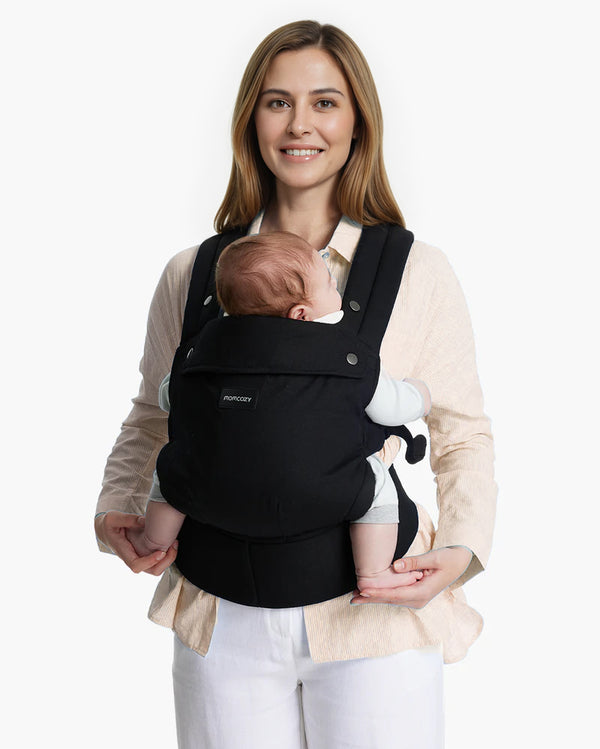
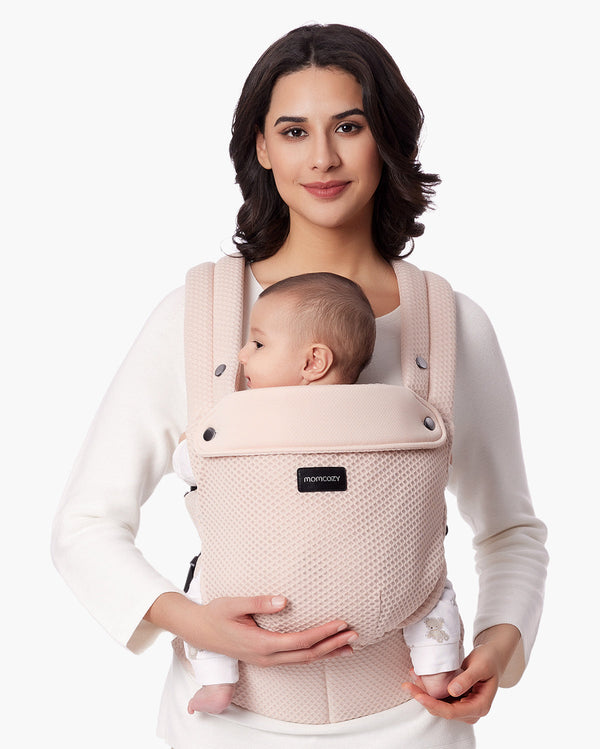
Your best choice for baby carriers is the Momcozy PureHug Baby Carrier. It is designed to keep both you and your baby comfortable in mind. This baby carrier ensures your baby is in a healthy position, which helps prevent problems. It also has an X-shaped design, which helps evenly distribute your baby's weight. With that, this baby carrier helps reduce arm, back, and shoulder strain.


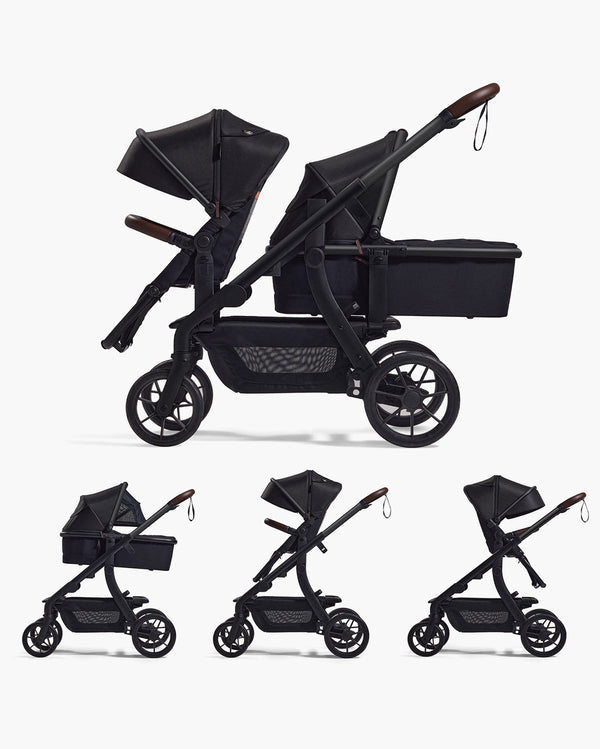
If you want to use atravel stroller instead, you have two amazing options. One of them is the Momcozy ChangeGo Baby Stroller. This is a versatile baby stroller with a spacious storage basket. That is incredibly helpful when you are going to the airport. It makes carrying things a lot easier.

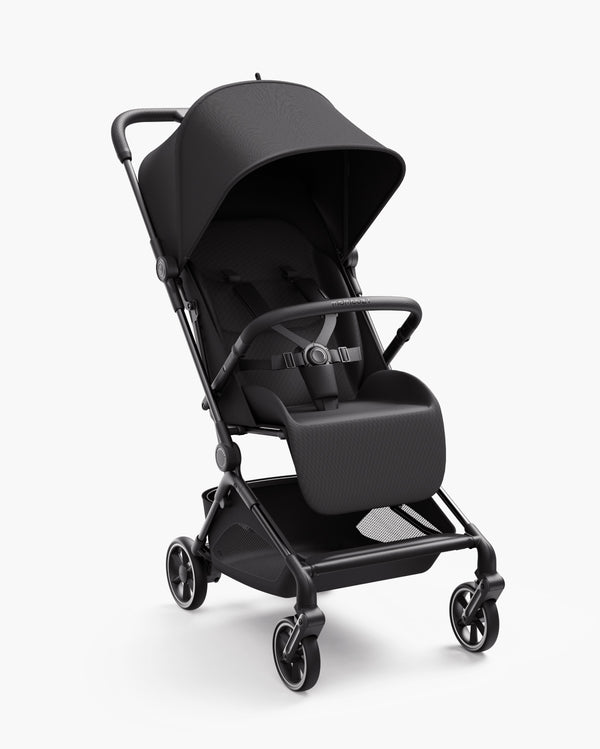
You may want to bring your stroller into the cabin with you. In that case, the Momcozy TuckGo Stroller is the one you should get. It is a lightweight, foldable stroller that can fit in the overhead compartment. The best thing is that, unlike other foldable strollers, this one's easy to fold. It's that convenience that many parents are looking for. It is also durable and features a large seat. That said, you can rest assured that it can keep your baby safe and comfortable.


What Is the Best Time of Day to Fly With a Newborn?
You can either choose night flights or day flights. Night flights align with the time when your baby is asleep. Parents who choose this often become less busy during the flight. On the other hand, while your baby is likely awake during morning flights, delays are less common. Therefore, you can arrive at your destination on your expected date.
Does My Newborn Need a Passport for International Travel?
Yes, international travel also requires your baby to have a passport. Airlines may also ask you for your baby's birth certificate. The processing time for your baby's passport may take 4 - 6 weeks. That said, you should apply early if you already know that you will be traveling abroad soon.
Security and Boarding
What to do during inspection and boarding? Are there rules you should be aware of? We will discuss these in this section.
Will I Be Able to Get Liquid Formula or Expressed Breast Milk Through Security?
Yes. Expressed breast milk and liquid formula are classified as "medically necessary liquids." Therefore, they are exempted from the TSA liquid rules. However, you can't bring any amount of liquid formula or expressed breast milk. The quantity should be reasonable. You can bring only quantities no greater than 3.4 ounces or 100 ml. For more specific guidance on navigating checkpoints, you can learn more about how to fly with breast milk here.
Furthermore, you should inform the TSA officer that you are bringing expressed breast milk or liquid formula at the start of the screening process. You should also remove them from your carry-on, as they require separate screening. It is also important to use transparent bottles since they are easier to screen. It will speed up the process.
It is also important to know that you can bring cooling accessories, and you should make it a point to do that. Cooling accessories, ice packs, and frozen gel packs help ensure that your expressed milk or formula milk remains safe for your baby to consume.
Boarding a Plane With a Newborn
Here is a simple, practical guide you can follow.
- First, check in early and confirm your infant's details. If your baby is flying as a lap infant, make sure they are added to your reservation. If you purchased a separate seat, confirm that your car seat is airline-approved and properly labeled. Arriving at the airport early gives you extra time for feeding, diaper changes, and unexpected delays.
- Next, prepare for security screening. Wear your baby in a soft carrier if possible. A carrier keeps your hands free for documents and bins. You usually can walk through security while wearing your baby, though you may need additional screening. If you bring formula, breast milk, or baby food, inform the security officer before screening. These items are allowed in reasonable quantities, but they may require separate inspection.
- After security, locate your gate and settle in. Use this time wisely. Feed your baby if it aligns with their schedule, or wait until takeoff if you plan to use feeding to help with ear pressure.
- When boarding begins, listen for family pre-boarding announcements. Most airlines allow families with small children to board early. Early boarding gives you time to install a car seat, organize your diaper bag, and settle without pressure. However, if your baby is calm and you prefer less waiting on the plane, you can choose to board toward the end. Decide based on your baby's temperament. Remember to also gate-check your baby stroller if it is too bulky. They will bring it outside the aircraft door when you land.
- As you walk down the jet bridge, keep essentials accessible. Have your boarding pass ready. Keep a pacifier, bottle, or burp cloth within reach. You do not want to dig through your entire bag once you are seated.
- At your seat, set up quickly and efficiently. If you are using a car seat, install it right away according to the airline's instructions. Store your main diaper bag under the seat in front of you, not in the overhead bin. You will need easy access during the flight.
- Before takeoff, loosen tight clothing and make sure your baby is comfortable. As the plane begins to ascend, feed your baby or offer a pacifier to help manage ear pressure. Swallowing helps equalize the pressure in their ears.
Seating and In-Flight Safety
Your baby's safety is a priority. Here are some tips you can keep in mind.
How to Keep Your Newborn Safe When You Fly
- Use a car seat - You need an FAA-approved car seat if you have bought your baby their own airplane seat. This helps restrain them and keep them safe during takeoff, landing, and turbulence. You don't need a car seat if your baby is a lap infant. But again, that is a situation where your baby is not secure. During turbulence, you may accidentally let go of them, or you may crush them with your weight.
- Feed during takeoff and landing - Remember that the pressure during takeoff and landing is painful for your baby. To ease the pain, you should feed them or offer a pacifier. It has been proven that swallowing helps relieve ear pressure.
Should My Newborn Sit on My Lap During the Flight?
Your newborn can sit on your lap, but it is better if they don't. As mentioned above, it is much safer for them to have their own seat and be nestled in an FAA-approved car seat. Here are the reasons why:
- If sudden turbulence hits, the force can overpower your grip, even if you are holding your baby tightly.
- Your arms cannot function as a certified restraint during strong impact or abrupt drops.
- In a severe jolt, your baby can be lifted from your lap before you can react.
- During an emergency landing, your body may be thrown forward, increasing the risk of crushing or injuring your baby.
- Lap infants are not secured to the aircraft seat structure during flight.
Is There a Way My Newborn Can Lie Down Flat on Long Flights?
Yes. You can select a bulkhead seat, where airlines often offer bassinets to provide flat spaces for your baby to sleep on. Bassinets come in limited supplies, though. That said, check with the airlines first if they offer this, and ask for details if you can make a reservation.
In-Flight Care and Feeding
Let's say that you have now boarded the plane and you are up in the sky. How to do daily activities, like breastfeeding and changing diapers, while up there? Here are the answers:
Breastfeeding on the Plane
Breastfeeding on a plane is completely allowed. You do not need to cover up unless you want to. Choose the position that feels most stable for you. A window seat often gives you more privacy and something to lean against. Use a small pillow or rolled blanket to support your arm and reduce strain during longer feeds.
Stay hydrated, especially on longer flights, since cabin air is dry. If your baby is sensitive to noise or light, a lightweight nursing cover can also help reduce distractions.
Bottle Feeding on a Plane
Bring more formula or expressed milk than you think you will need in case of delays. Pack bottles in an easy-to-reach section of your diaper bag. If using formula, pre-measure powder into containers so you only need to add water. You can ask flight attendants for warm water, but test the temperature before feeding. Feeding during takeoff and landing can also help your baby swallow and adjust to pressure changes.
Changing Diapers on a Plane
Most airplane lavatories have a fold-down changing table above the toilet. It is small, so bring only the essentials with you: one diaper, a small pack of wipes, and a disposable pad. Avoid changing your baby in your seat unless absolutely necessary, as space is limited and it may disturb other passengers. Changing your baby's diaper before boarding can also help reduce the chance of needing an immediate mid-flight diaper change. Seal used diapers in disposable bags to help contain odor.
Takeoff and Landing With a Newborn
During takeoff and landing, changes in cabin pressure can make your baby uncomfortable. Swallowing helps relieve ear pressure, so plan to breastfeed, bottle-feed, or offer a pacifier during ascent and descent. Keep your baby upright against your chest to help them feel secure. Stay calm if they fuss. The pressure change is temporary, and most babies settle once the plane levels out.
Comfort and Behavior Management
Any Tips for Keeping My Newborn Comfortable and Content on the Plane?
- Dress your baby in soft, breathable layers - Cabin temperatures change quickly, so layers let you adjust without fully undressing them. Avoid tight waistbands or complicated outfits that make diaper changes harder.
- Keep your baby close - Skin-to-skin contact or babywearing can help regulate their temperature and heart rate while also making them feel secure. The steady hum of the aircraft often works like white noise and can naturally soothe newborns.
- Stick to familiar routines as much as possible - Feed around their usual schedule. Use the same swaddle, blanket, or pacifier they use at home. Familiar smells and textures help reduce overstimulation in a busy environment.
- Minimize extra stimulation - Bright lights, announcements, and movement can overwhelm a newborn. Gently cover their eyes with a light blanket if needed and limit passing them around to others during the flight.
What to Do If Your Newborn Won’t Stop Crying?
First, go through the basics calmly.
- Check the diaper.
- Offer a feed.
- Burp them thoroughly.
- Adjust their clothing if they feel too warm or too cold.
Consider ear pressure, too, especially during ascent or descent. Feeding or offering a pacifier can help with this. If your baby is overtired, try swaddling or holding them firmly against your chest to recreate a secure feeling. Move slightly if possible. Standing near your seat, gently rocking, or walking the aisle when safe can sometimes help reset their mood. Most importantly, stay calm. Your baby can sense your stress. Focus on meeting their needs step by step rather than worrying about other passengers. Crying is your newborn's only way to communicate. It does not mean you are doing anything wrong.








