Do you want to provide the best for your baby but save money at the same time? Everyone does. The good news is that you can do that by using FSA or HSA. With these accounts, you can buy nursing supplies using pre-tax money. Even better, it could be money that your employer has put into your account, making the items essentially free! And here's something many moms don't realize upfront: one of the smartest ways to use those FSA or HSA dollars is to build a breast pump setup that works for all parts of your day — not just when you're sitting at home.
However, please note that not all nursing supplies are FSA-eligible items. There are a few exceptions. You must know about this so you can plan your budget better. That's what this article is for. Continue reading to learn more about FSA/HSA-eligible nursing supplies and which of those you can buy at Momcozy.
This guide rounds up every FSA eligible items for breastfeeding available at Momcozy, so you can plan your pre-tax spending with confidence.
Key Takeaways
- FSA/HSA accounts let you buy breastfeeding supplies with pre-tax dollars.
- Breast pumps — both wearable and traditional plug-in — are FSA/HSA eligible.
- Key FSA eligible items for breastfeeding include pumps, storage bags, nipple cream, nursing pads, and lactation massagers.
- Both plug-in and wearable pumps are covered, so you can build a two-pump setup.
- Not all nursing supplies qualify — nursing shirts and support pillows are excluded.
- For a broader overview, see What to Expect’s FSA-eligible baby products guide.
What Are HSAs and FSAs?
Health Savings Accounts (HSAs) and Flexible Spending Accounts (FSAs) are financial tools designed to help individuals save money for medical expenses by using pre-tax dollars. While they share similarities, they have distinct features and eligibility requirements.
Health Savings Accounts (HSAs)
An HSA is a savings account that allows you to set aside pre-tax money specifically for qualified medical expenses, such as doctor visits, prescriptions, and even certain over-the-counter items. HSAs are only available to individuals enrolled in a High Deductible Health Plan (HDHP).
One of the biggest advantages of an HSA is that the funds roll over from year to year, and any unused money remains in the account indefinitely. Additionally, the account can earn interest or be invested, and the earnings are tax-free as long as they’re used for medical expenses.
Flexible Spending Accounts (FSAs)
An FSA is another type of account that lets you use pre-tax dollars to pay for eligible medical expenses, including co-pays, deductibles, prescriptions, and more. FSAs are typically offered through employers, and you must decide how much money to contribute at the beginning of the year.
Unlike HSAs, most FSA funds have a “use-it-or-lose-it” rule, meaning you must spend the money within the plan year or risk losing it, although some plans offer a grace period or allow a small amount to roll over. FSAs don’t require you to have a specific type of health insurance plan.
How To Get an FSA or HSA Account
You can use both FSA and HSA to buy nursing equipment, like breast pumps and breast pads. Here are guides on how to open an account.
FSA
Here's how to open an FSA:
-
Check Eligibility: Confirm that your employer offers an FSA as part of their benefits package.
-
Enroll During Open Enrollment: Sign up for the FSA during your employer’s annual open enrollment period.
-
Choose a Contribution Amount: Decide how much money you want to contribute for the year, within the IRS annual limit ($3,300).
-
Submit Your Election: Fill out the required forms or complete the online enrollment process through your employer’s benefits portal.
-
Set Up Payroll Deductions: Your chosen contribution amount will be divided across your paychecks and deducted automatically pre-tax.
NOTE: You can immediately access the full year’s contribution on your plan's first day, even though deductions will continue from each paycheck.
HSA
Here's how to open an HSA:
-
Verify Eligibility: Confirm you are enrolled in a High Deductible Health Plan (HDHP) and have no conflicting coverage (e.g., Medicare or being listed as a dependent). Contact your insurer if you're uncertain.
-
Choose an HSA Provider: Decide where to open your HSA. Options include banks, credit unions, insurance companies, or your employer’s benefits program if they offer one.
-
Open the Account: Complete the required paperwork or online forms to set up your HSA with your chosen provider.
-
Contribute Funds: Deposit money into your HSA, either through direct contributions, payroll deductions (if offered by your employer), or both. Make sure your contributions stay within the IRS annual limits.
How Much Can Be Contributed to My Hsa/Fsa Accounts?
As mentioned earlier, you can only contribute to FSAs and HSAs up to the annual limits set by the IRS. These limits are adjusted annually to account for inflation and changes in the economy. For the year 2026, the IRS has announced that the maximum contribution limit for an FSA will be $3,300.
If both you and your husband's employers offer FSAs, you can collectively contribute up to $6,600 between the two accounts. Effectively, that doubles your tax-saving potential for eligible expenses.
When it comes to HSAs, the contribution limits for 2026 will be $4,300 for individuals enrolled in self-only High Deductible Health Plans (HDHPs) and $8,550 for those with family HDHP coverage.
It’s important to regularly review the IRS updates to ensure you’re aware of any changes. It ensures you can maximize your contributions within the allowed limits.
How Long will I Have Access to My FSA/HSA Funds?
You can access your FSA funds for a few months at the end of the plan. On the other hand, you can access HSA funds as long as your account is open.
With FSA, there are grace periods, run-out periods, and run-out periods with carryover. The grace period is the time after the end of the plan year, typically December 31, when you can use your remaining FSA balance. Remember, FSA funds expire, and only a portion rolls over to the next year. The grace period lasts until March 15.
The run-out period is the extra time that lets you file claims for reimbursement. It lasts until March 31. Then, carryover is the amount, up to $640, that can be passed to the balance for the next year.
On the other hand, HSA has no expiration date. You can access your funds as long as your account is open.
Can You Use FSA/HSA Accounts to Buy Breastfeeding Supplies?
Yes, you can use your FSA/HSA funds to pay for your expenses related to breastfeeding. However, please note that not all breastfeeding supplies are eligible. Only the necessary products are covered. For example, nursing shirts and other apparel, as well as support pillows, are not eligible. The good news? Breast pumps — both wearable and traditional plug-in models — are covered, along with the accessories you need to use them. This means you can use your FSA or HSA money to put together a pumping setup that fits your life, whether you're at home, at work, or somewhere in between.
In short, FSA eligible items for breastfeeding are products that the IRS classifies as qualified medical expenses for lactation support. That covers breast pumps, milk storage bags, nipple cream, and nursing pads — the essentials that keep your pumping routine running. You can confirm coverage through the official FSA definition on Healthcare.gov or IRS Publication 969.
What Breastfeeding Products from Momcozy are FSA/HSA Eligible?
Please check the comprehensive, up-to-date list of all Momcozy currently FSA and HSA eligible items.
Here are the main products from Momcozy that you can buy using your FSA and HSA funds. These are the FSA eligible items for breastfeeding you can add to your cart today.
Breast Pumps and Accessories
When you're looking at FSA eligible items for breastfeeding, breast pumps are by far the biggest-ticket purchase — and the one that will shape your pumping experience the most. Before you add one to your cart, it helps to understand that breast pumps generally fall into two main categories, and they're actually designed for different parts of your day.
Traditional Plug-In Electric Breast Pumps
These are the pumps with a separate motor, tubing, and collection bottles — the kind that plug into a wall outlet. They tend to offer stronger, more consistent suction, which is why many lactation consultants recommend them, especially in the early weeks when you're establishing your milk supply.
They work best when you have a dedicated spot to sit and pump. Think: your nursery, the couch, or a private pumping room at the office. Because they're plugged in, you're not going to move around much — but you're getting reliable, hospital-strength suction in return.
-
Best for: Home use, building and maintaining milk supply, exclusive pumpers, early postpartum weeks
-
Typical use: Seated, stationary sessions — 15 to 20 minutes a few times a day
-
What to expect: Strong suction, adjustable settings, consistent output across sessions
For a plug-in option that delivers hospital-grade power, Momcozy’s V3 is built for the job. It offers up to -270 mmHg of suction, dual motors with independent control, SoftStart™ technology that ramps up gently over about 10 seconds, and 5 built-in rhythms (Cozy Flow, Power Pumping, Milk Boost, Lactation Starter, and Deep Emptying). It also adds app control, a closed system, roughly 4 hours of battery life with ~2-hour fast charge, a 320×320 TFT display, and a carrying bag included.
If you want the same core features in a portable, cordless design, Momcozy’s V3 Pro is the premium upgrade. It adds StableFlow smart pressure stabilization, Adaptive Suction, and a brightness-adaptive night light, plus a premium waterproof carrying bag — making it efficient, portable, and smart.
Together, the V3 and V3 Pro work as the at-home workhorse that complements Momcozy’s wearables, and both count among the FSA eligible items for breastfeeding you can purchase with pre-tax funds. For step-by-step reimbursement guidance, see GoodRx’s FSA breast pump guide or the FSA Store breast pump eligibility list.
Wearable (Hands-Free) Breast Pumps
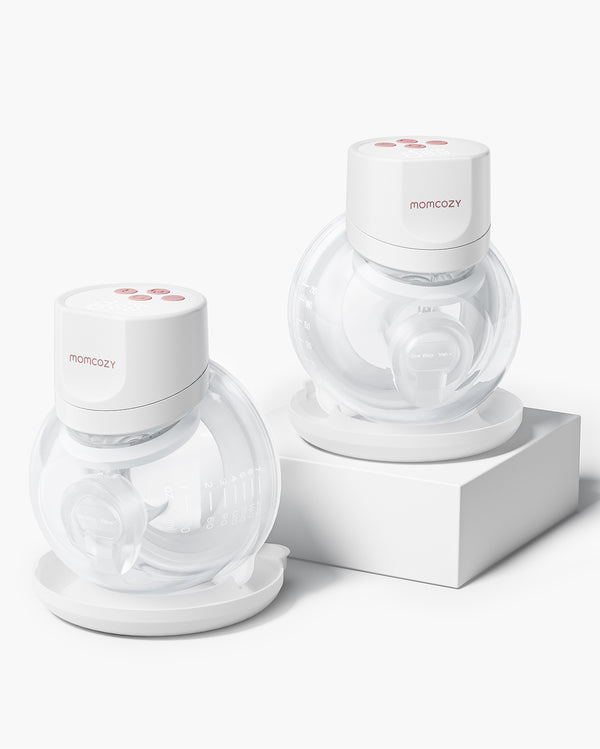
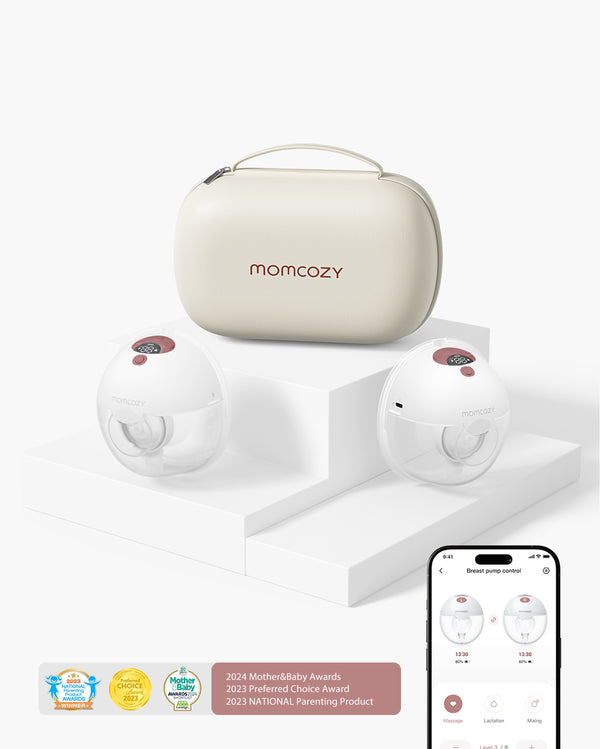
Wearable pumps sit entirely inside your bra — no cords, no tubing, no bottles hanging outside your clothes. They run on rechargeable batteries, so you can pump while making breakfast, answering emails, chasing a toddler, or commuting to work. As core FSA eligible items for breastfeeding, wearable pumps let you stay productive while spending pre-tax dollars.
Modern wearable pumps have come a long way in suction strength, and many moms use them as their go-to pump during busy daytime hours. The key trade-off is convenience over raw power — but for many moms, that's a trade worth making on days when sitting still simply isn't an option.
-
Best for: Work, travel, multitasking at home, pumping discreetly in shared spaces
-
Typical use: Hands-free sessions — move around, work, or care for your baby while pumping
-
What to expect: Cord-free convenience, slightly lighter suction feel, battery-powered
From $63.74 USD $74.99 USD
Time-Saving Convenience
Breast-Friendly Comfort
Upgraded Eficiency
Long-Lasting
Comfort Fit
Steady Output
Hands-Free Freedom
Easy App Control
Breast pumps and their accessories are essential tools for nursing mothers, making breastfeeding more manageable and efficient. Momcozy's electric pumps help express milk conveniently and support you in maintaining your milk supply. Accessories like extra tubing, flanges, and power adapters ensure your pump functions smoothly, providing comfort and reliability throughout your breastfeeding journey.
Why Many Moms Choose to Have Both Types of Pumps
A popular combo is Momcozy’s V3 as your plug-in workhorse for morning and evening sessions, paired with a Momcozy wearable like the M5 or M9 for midday multitasking. If you prefer a cordless option that still delivers hospital-grade strength, Momcozy’s V3 Pro can step in as the premium portable pick — giving you efficient, smart pumping anywhere in the house. Pairing these two is one of the smartest ways to use your FSA eligible items for breastfeeding budget.
Think about your typical day. You might use a traditional plug-in pump first thing in the morning, when your milk supply is at its peak and you want a thorough, efficient session. Then later, you might pop in a wearable pump while you're making dinner or wrapping up a work call — hands-free and hassle-free.
Here's how the two types work together in real life:
-
Morning session (at home) — Use a traditional plug-in pump for a full, powerful emptying session when you have a quiet moment to sit
-
Midday session (at work or on the go) — Slip in a wearable pump during your commute, a meeting, or while running errands
-
Evening session (at home) — Go back to your plug-in pump when you can sit and relax, giving your body the strong stimulation it needs to maintain supply
-
Weekend outings — Bring your wearable so you're not hunting for an outlet at the park or a friend's house
Since both types of pumps are FSA and HSA eligible, using your pre-tax funds to build a two-pump setup is a practical way to cover all your pumping needs without stretching your budget. You don't have to choose one or the other — you can have both, and many moms say that's exactly what made their breastfeeding journey feel manageable.
According to the IRS Publication 502, breast pumps and supplies that assist lactation are considered qualified medical expenses, which means both traditional and wearable models fall under FSA/HSA coverage when they're used for breastfeeding support.
Finding the right body support is vital when you're managing a complete list of the fsa/hsa-eligible items for breastfeeding on momcozy; many moms swear by a maternity pillow for that extra relief.
📋 Want to explore your options? If you're figuring out which pump setup makes sense for your routine, check out FSA Store's complete breast pump eligibility list to see what's covered, or read Pumping Milk's comprehensive wearable pump guide for an honest breakdown of what wearable pumps can (and can't) do. For a broader look at FSA-eligible baby and postpartum essentials, What to Expect has a helpful roundup worth browsing, and GoodRx's guide to using FSA funds for breast pumps walks through the reimbursement process step by step.
Milk Storage Bottles or Bags
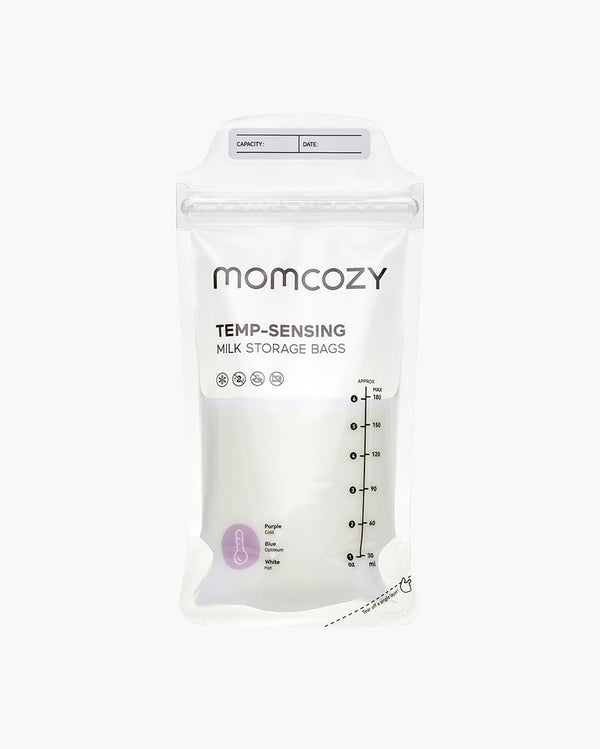
Milk storage bottles and bags are vital for safely storing expressed breast milk. These containers are pre-sterilized and easy to use, allowing you to freeze or refrigerate milk for later use. They offer a practical solution for working moms or anyone managing a busy schedule while ensuring your baby always has access to fresh, nutritious milk. Storage bags are some of the most practical FSA eligible items for breastfeeding moms reach for every day.
From $45.99 USD $49.99 USD
999 Silver
Breathable
Comfortable
Ergonomic
Silver Nipple Shields
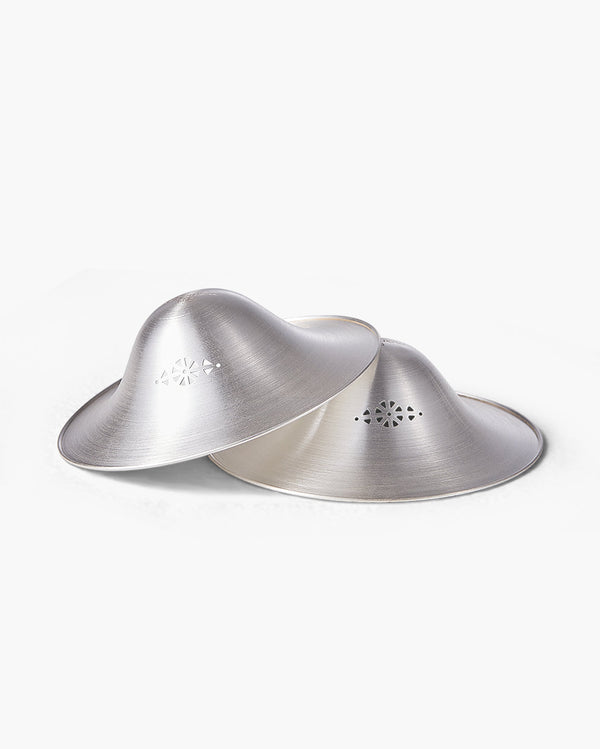
Silver nipple shields are a natural, soothing solution for breastfeeding mothers dealing with sore or cracked nipples. These shields are made of 999 pure silver. They promote healing without the need for creams or medications, ensuring a safe breastfeeding experience for you and your baby. They are reusable, eco-friendly, and designed to provide relief while supporting continued breastfeeding.
Pumping Bras
Nursing bras provide essential support and convenience for breastfeeding mothers. While not all nursing bras are FSA/HSA eligible, those specifically designed to aid lactation, such as Momcozy hands-free pumping bras, qualify. These specialized bras make expressing milk more efficient and comfortable, allowing mothers to pump while multitasking.
Nipple Cream
Nipple cream provides soothing relief for nursing mothers experiencing dryness, cracking, or irritation. It helps heal and protect sensitive skin while maintaining moisture, making breastfeeding more comfortable. Do not worry. The nipple cream is made with baby-safe ingredients, so you can rest assured that it will not affect them negatively.
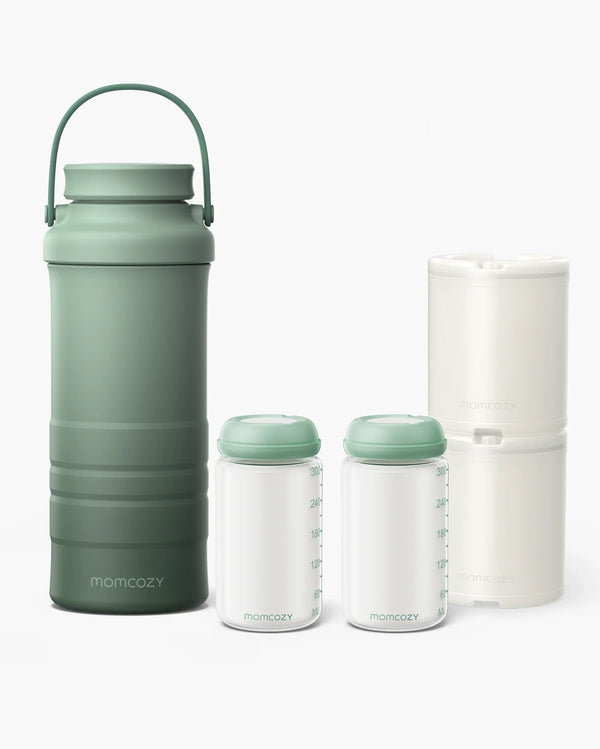
Breast Milk Cooler
A breast milk cooler is an insulated storage solution that keeps expressed milk fresh and safe while on the go. Compact and portable, it’s perfect for working moms, travel, or daycare. This product ensures breast milk stays at the ideal temperature until it's ready to be used.
Lactation Massager
A lactation massager is a handheld device designed to relieve clogged ducts, reduce engorgement, and improve milk flow. Its ergonomic shape and gentle vibrations make it a helpful tool for nursing mothers, promoting comfort and a smoother breastfeeding experience. Momcozy's lactation massager offers different modes with different vibration speeds, allowing you to find the setting most comfortable for you.
Not FSA/HSA Eligible Nursing Supplies
As mentioned earlier, not all nursing supplies are FSA/HSA eligible.
Support Pillows: While support pillows are incredibly helpful for positioning and comfort during breastfeeding or bottle feeding, they are not considered FSA/HSA eligible. These pillows are categorized as general comfort items rather than medical necessities, so they don’t qualify for reimbursement through these accounts.
Nursing Bras, Tops, and Other Apparel: Nursing bras, tops, and other breastfeeding-related clothing, unless explicitly designed to aid lactation (like hands-free pumping bras), are not eligible for FSA/HSA coverage. These items are viewed as regular apparel rather than medical supplies, even though they offer convenience and support for nursing mothers. Always check product descriptions to determine eligibility before purchasing.
How Do I Get a Breastfeeding or Maternity Product Using my FSA/HSA Account on Momcozy?
Buying Momcozy products using your FSA or HSA funds is a lot similar to paying for them using your card or bank account. It is super easy! Here's a quick guide on how to do it. Once you know which FSA eligible items for breastfeeding you need, checkout takes just a few minutes.
Step 1. Checkout
Add the Momcozy FSA-eligible and HSA-eligible nursing supplies that you want to buy to your cart. Once you have added all you want to buy using your FSA/HSA funds, click Checkout.
Step 2. Pay with FSA/HSA
Under the Payment section, select Flex | Pay with HSA/FSA. You will be redirected to a hosted Flex Checkout page.
Step 3. Fill Out the Form
Enter your email address, full name, and credit card information in the form. Then click Pay Now to complete your order. You will be redirected back to the Momcozy success order page.
Can I Use My FSA/HSA to Buy Both a Traditional Plug-In Pump and a Wearable Pump?
Yes — and this is actually one of the smartest ways to use your FSA or HSA funds during your breastfeeding journey. Since both traditional plug-in electric pumps and wearable breast pumps are considered qualified medical expenses under IRS guidelines, your FSA or HSA will cover each type separately. Many moms use their pre-tax dollars to purchase a traditional electric pump as their primary at-home pump, then add a wearable pump for days when they need hands-free flexibility.
As long as each item is FSA/HSA eligible and used for breastfeeding support, there's no rule against having both. Just remember: always review your specific plan's coverage details, check your remaining balance before placing an order, and keep your receipts for reimbursement claims. Different plan administrators may have slightly different requirements, so when in doubt, a quick call to your provider can save you time.
FAQ About FSA/HSA Eligible Items on Momcozy
Here are some FAQs about spending FSA/HSA funds to buy nursing supplies.
Why Am I Not Seeing HSA or FSA Options Show Up at Checkout?
The FSA/HSA option only shows up when you are buying eligible items. That said, if you are not seeing the option, no item in your cart is eligible. Please check our list of eligible items and see if what you're trying to buy is there.
Why Was My HSA or FSA Card Rejected?
The most likely scenario is that you have provided incorrect information. Always double-check the details to ensure all information is accurate. The card number, expiration date, CVC, country, and ZIP must match perfectly with what's on the card.
Can I Still Use My HSA/FSA Funds If I Don’t Have an FSA/HSA Card?
Yes, you can. On the hosted Flex checkout page, you can enter your credit card information instead. Flex, the entity in charge of processing the payment, will email you an itemized receipt following your purchase. You can use that as a document for filing a reimbursement claim. Submit it to your FSA or HSA provider.
Who Is Flex, and What is Their Relationship with Momcozy?
Flex is a company that facilitates payment processes. One of the services they offer is allowing consumers to easily pay for goods using their FSA/HSA funds. Momcozy has partnered with Flex to bring that functionality to our store. With the Flex integration, you can now buy eligible nursing supplies using your FSA/HSA card or get receipts to be used for reimbursement claims if you used your credit card.
Can I Purchase FSA/HSA Eligible Products and Non-FSA/HSA Products from Momcozy at the Same Time?
No. Orders are processed as a whole. When your provider detects non-FSA/HSA-approved products in your purchase attempt, they will flag it and decline the transaction. Furthermore, there is no way to pay for some of the contents of your cart with your FSA/HSA card and the remaining with your credit card. Therefore, you need to process them separately.
Are Both Traditional Plug-In and Wearable Breast Pumps FSA/HSA Eligible?
Yes, both types are covered. You can use FSA/HSA funds for a traditional plug-in pump like Momcozy’s V3 and a wearable pump like Momcozy’s M5 or M9 — or even both, to build a complementary setup. Confirm eligibility with the IRS Publication 502 list of qualified medical expenses.
Can I Use My FSA/HSA to Buy a Second Breast Pump?
Yes. If your first pump was covered by insurance, your FSA/HSA can cover a second device. Many moms use FSA/HSA dollars to add a wearable or traditional pump to their setup, expanding their list of FSA eligible items for breastfeeding.
What FSA Eligible Items for Breastfeeding Should I Prioritize?
Start with the breast pump — your biggest investment — then add storage bags, nipple cream, and nursing pads. These FSA-eligible breastfeeding supplies form the foundation of a practical pumping routine.
Conclusion
To save money during your breastfeeding journey, you can use your FSA or HSA funds to pay for the expenses. However, you can only use them for HSA or FSA-eligible items. Luckily, most breastfeeding supplies are covered. You can use these accounts to buy breast pumps, warm and cold breast pads, lactation massagers, and more. Momcozy offers many of these products, and with the Flex integration, processing these transactions is quick and easy.
One more tip before you shop: think about your entire day — from your morning routine to your commute to those unpredictable moments when you're out and about. A pumping setup that includes both a traditional plug-in pump for home sessions and a wearable pump for life on the go gives you the flexibility to pump whenever and wherever you need to, without missing a beat. Both are eligible for FSA and HSA reimbursement, so you're not choosing between comfort and convenience — you're giving yourself both.
Building a complete kit of FSA eligible items for breastfeeding — from your pump to storage bags and nipple cream — is one of the smartest ways to stretch your pre-tax dollars. For evidence-based guidance, visit the CDC’s breastfeeding resources or the Office on Women’s Health breastfeeding hub.
For more information on breast pump eligibility and FSA/HSA rules, you can also check the CDC's breastfeeding resources and the La Leche League's pump information page for evidence-based guidance on breastfeeding and pumping.
Disclaimer: The information provided in this article is for general informational purposes only and does not constitute medical advice, diagnosis, or treatment. Always seek the advice of your physician or other qualified health provider regarding any medical condition. Momcozy is not responsible for any consequences arising from the use of this content. FSA/HSA eligibility rules may vary by plan administrator. Always verify eligibility with your specific plan provider before making a purchase.