


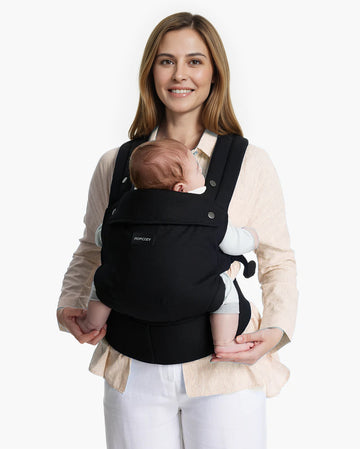
The first time holding a newborn is quite magical as well as terrifying. One of the greatest fears of new parents is supporting newborns' necks. Newborns have limited head control, so caregivers should support the head and neck during lifting, holding, feeding, burping, transfers, and babywearing until steady control develops. During the first weeks and months of life, their neck muscles are too weak to keep the head upright independently. Without proper support, the head may flop forward or backward, causing discomfort and increasing the risk of strain.
When Can Babies Hold Their Heads Up?
Babies develop at their own pace, but head and neck control generally improves gradually during the first few months of life. During the newborn stage (birth to 1 month), babies rely completely on caregivers to support their head and neck. Between 1 and 2 months, many babies begin showing early head control and may briefly lift their heads during tummy time.
By around 3 to 4 months, many infants can hold their heads steadier when upright and raise their heads more confidently while lying on their stomachs. Between 5 and 6 months, babies often gain stronger head control with little head wobbling, making it easier for them to sit with support or, in some cases, independently.
These milestones are only general guidelines. Premature babies and those with certain medical conditions may reach them somewhat later, while others may progress sooner.

How to Support a Newborn’s Head and Neck in Everyday Moments
Newborns have very limited head control, so always support your baby’s head and neck in all daily handling.
1. Picking up your baby
Slide one hand under the head and neck, and the other under the bottom. Lift smoothly so head and body move together.
2. Holding your baby
Keep one hand supporting the head and neck at all times while the other supports the body. Adjust as needed.
3. Cradle hold
Place baby’s head in the crook of your elbow with the body along your forearm. Use your hand to support the back and keep the neck aligned.
4. Upright hold
Hold baby against your chest or shoulder with the head resting securely. Support the head, neck, and upper back with one hand.
5. Feeding
Keep baby slightly upright with head and neck supported and aligned. Avoid letting the head fall backward or sideways. A breastfeeding pillow can help bring your baby closer and reduce arm strain while maintaining proper positioning.
6. Burping
Hold baby upright on your shoulder or sitting on your lap, supporting the head and neck while gently patting or rubbing the back.
7. Passing the baby to another person
Keep supporting the head and neck until the other person has a secure, full grip on the baby.
8. Laying baby down
Lower the head and body together into the crib or bassinet. Keep one hand supporting the head until fully settled.
Always keep the head and neck aligned with the body for safe, comfortable handling.
What Happens If You Don't Support a Newborn's Neck?
The neck muscles of a baby are very weak when they are born. They are unable to balance or regulate the movements of the head like older babies or adults. The failure of caregivers to offer proper support may lead to minor discomfort or severe health issues.
Possible effects of not supporting the head and neck:
-
Temporary discomfort or strain: The head may wobble or tilt, which can be uncomfortable if it happens repeatedly or forcefully
-
Breathing or positioning issues: If the chin drops toward the chest for too long, it can affect breathing and should be corrected immediately
-
Fussiness: Babies may cry or seem unsettled if they feel unstable or unsupported
-
Feeding difficulties: Poor alignment can make latching, sucking, and swallowing harder during feeds
-
More spit-up or discomfort: Awkward positioning may contribute to reflux-like symptoms after feeding
-
Development support: Consistent head and neck support helps babies stay comfortable while their muscles naturally strengthen over time

What If Baby’s Head Fell Back Unsupported?
If your newborn's head briefly fell back because you momentarily lost support, try not to panic. This is a common concern among new parents. Newborns have weak neck muscles and limited head control, so a brief wobble or gentle backward movement can occasionally happen while lifting, carrying, or repositioning them. In most cases, a short, unsupported head movement is not harmful.
It is important to understand that a brief head wobble is very different from a fall, forceful shaking, repeated unsupported flopping, or any incident involving significant impact. While caregivers should always support a newborn's head and neck, a single momentary lapse does not usually cause injury.
When Can You Stop Supporting a Baby's Head?
Every baby develops at their own pace, but many babies begin to show steady head control between 4 and 6 months of age. As their neck and upper body muscles strengthen, they become better able to hold their head upright during everyday activities such as tummy time, being held upright, sitting with support, and spending short periods in age-appropriate infant seats.o
Rather than stopping head support all at once, parents can gradually reduce the amount of assistance they provide as their baby demonstrates consistent control. Signs of readiness include being able to hold the head steady while being held upright, maintain head control during movement, and keep the head aligned when being picked up or laid down. Even as your baby gains strength, continue to monitor how well they control their head during different activities.
Situations Where Some Support May Still Be Helpful
Even after a baby develops good head control, there are times when extra support may still be appropriate.
-
Picking Up and Laying Down: Transitions can cause sudden movements. Supporting your baby's head and upper body during these moments can help keep them comfortable.
-
Uneven Surfaces or Movement: Walking on stairs, traveling over bumps, or moving quickly may cause unexpected head movements, especially in younger infants.
-
Carriers, Strollers, and Other Baby Equipment: Some babies may need additional head support when sleeping, reclining, or riding for extended periods. Always follow the manufacturer's safety guidelines.
-
When Your Baby Is Tired or Unwell: Fatigue and illness can temporarily affect muscle control, making extra support helpful even for babies who usually have strong head control.
Remember that developmental milestones are guidelines, not strict deadlines. Some babies gain head control earlier, while others take a little longer. If you are unsure whether your baby has developed sufficient head control or have concerns about their development, speak with your pediatrician for personalized guidance and reassurance.
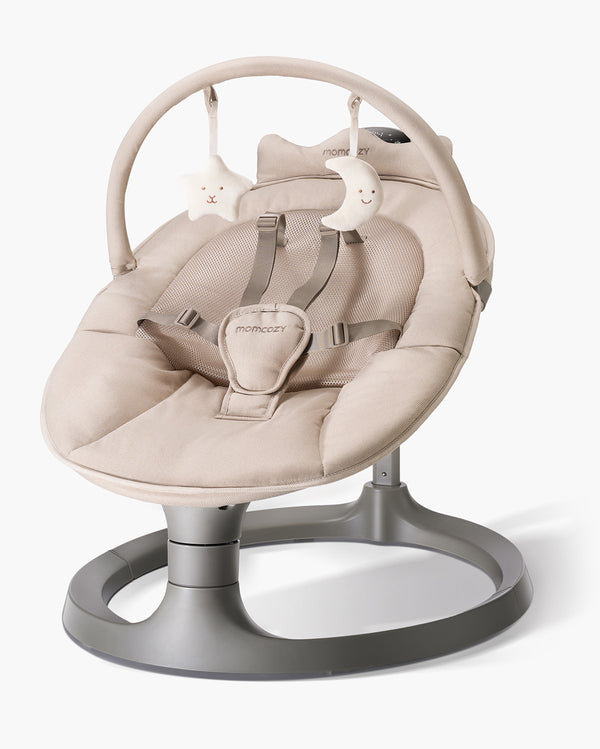
Once your baby is able to sit up on their own with little support, it may be the right time to transition them into a baby high chair for meals, making feeding time safer and more comfortable for both of you. Another option for keeping your baby comfortable and entertained during this stage is a baby swing, which provides gentle motion and soothing support for your little one.

How to Safely Support a Newborn's Head and Neck
Newborns lack so much head control, so it is always best to support the neck when:
-
Uplifting them
-
Carrying them
-
Feeding them
-
laying them down
These are some of the safe methods:
1. Hand Support
Hold the back of your baby's head in one hand and the bottom in another. This gives even more support to lift or hold your newborn.
2. Cradle Hold
Place your baby in your arms so that their head is placed in the crook of your elbow and the neck is well-supported.
3. Upright Hold
When you are holding your baby's face up against your chest, support the head of the baby with one hand behind the neck and upper back.
4. Apply Supportive Products
There are special products that are meant to aid in supporting the neck of your newborn more safely. WeeSnug Newborn Baby Carrier by Momcozy is one of the highly recommended products.
Why Momcozy WeeSnug is an ideal solution:
-
Ergonomic Neck Support: The design supports the head and neck of your newborn so that there is no need to hold your baby with your hands all the time, and yet keep your baby in place.
-
Sunshield Protection: The built-in sunscreen not only protects the delicate skin of your baby but also gives extra coverage to your baby's head and neck.
-
Ergonomic Fit: The adjustable technique makes certain that the carrier expands with your baby, providing support to the neck area throughout these essential first months.
-
Hands-Free Convenience: Parents will feel comfortable moving around whilst holding the baby in place, close and in a supportive position.
When you have a high-quality newborn carrier, such as the Momcozy WeeSnug, you can easily hold your baby nearby without fear of hurting its neck, even when you are multitasking.

When to Worry About Your Baby Not Lifting Their Head
Although a certain degree of deviation in the development of head control is a perfectly normal occurrence, there are some indications that professional assessment might be in order.
- At 2 months: When your baby is lying on their stomach, they make no or minimal effort to raise their head.
- At 4 months: Your infant is not able to hold their head steady in an upright position or still wobbles their head a lot.
- Constant Head Flopping: When you pull your baby up to a sitting position, they always flop their head backwards.
- Muscle Tone Issues: The neck is abnormally rigid (hypertonia) or very loose (hypotonia).
FAQs about Support Newborn Neck: Safe Tips for Parents

Why do newborns need head and neck support?
A brief wobble is usually not harmful, but repeated unsupported movement can cause discomfort, feeding difficulties, or breathing issues in certain positions. Always support the head to keep baby stable and safe.
How do I support a newborn’s neck when picking them up?
A brief wobble is usually not harmful, but repeated unsupported movement can cause discomfort, feeding difficulties, or breathing issues in certain positions. Always support the head to keep baby stable and safe.
What happens if you do not support a baby’s head or neck?
A brief wobble is usually not harmful, but repeated unsupported movement can cause discomfort, feeding difficulties, or breathing issues in certain positions. Always support the head to keep baby stable and safe.
When can babies hold their head up on their own?
Most babies still need support for the head and neck until around 3–4 months, or when they can consistently hold their head steady without wobbling.
When can I stop supporting my baby’s neck?
Most babies still need support for the head and neck until around 3–4 months, or when they can consistently hold their head steady without wobbling.
How can I help my baby build neck strength safely?
Give short supervised tummy time while your baby is awake. This helps strengthen neck, shoulder, and upper body muscles naturally.
What signs mean I should call a pediatrician about baby’s head or neck control?
Seek advice if your baby shows very poor head control beyond expected age, stiffness or unusual floppiness, difficulty feeding, or not meeting early movement milestones.
Conclusion
Neck Support This is one of the most vital (and occasionally stressful) aspects of parenthood, supporting your newborn's neck. Each baby is different, and you should always focus on the particular signals of your child and contact your pediatrician in case you have any doubts. Through early care, your baby will graduate to holding his head up high in no time, thus providing you with another irresistible milestone to cherish. And as you support these milestones, don’t forget small tools that ease daily care—like a Momcozy baby nasal aspirator, which helps your little one breathe comfortably through each stage.








