Many parents traveling with their babies have asked the question of how to warm a bottle of breast milk on the go, as a way to keep their baby fed and happy during travel. Regardless of whether you are running errands, a road tripper or at the park, having a sure bet to heat breastmilk can make a world of a difference. From portable bottle warmers to warm water in a thermos – there are quite a few safe and effective ways of how to do it.
That advice holds all year. It matters more over the holidays, when the drive is longer, the stops are fewer, and the feeds land in a relative’s kitchen instead of your own. This guide keeps the original methods for how to warm breast milk on the go, and adds what changes on a holiday road trip: what to pack, how to keep milk cold for a whole day of driving, and what to do before the drive home.
Breast milk does not have to be warmed. It can be fed cold, at room temperature, or warm, and all three are safe — the right choice is whatever your baby accepts and whatever your family’s routine supports. Warming is optional: some babies take a bottle more readily when it is warm, some do not care at all, so follow your baby’s cues and the instructions for your warmer rather than a fixed rule.
Holiday Road Trips: What’s Different
A holiday drive changes the numbers, not the method. You are covering 300 miles instead of 30, feeds land at rest stops instead of at your kitchen counter, and you are warming bottles in a house where nothing is where you expect it. Three things follow: you need more milk than a normal day, the cooler stays closed for longer, and every warm-up happens away from a sink. The two peak windows are Thanksgiving week and the stretch between mid-December and New Year, when highways, rest areas, and relatives’ kitchens are all at their busiest.
So the warming methods below still apply exactly as written.
Why Should I Warm Up My Baby’s Bottle?
Warming your baby’s bottle stimulates bringing the breast milk to about the same temperature as the milk from the breast, around body temperature (98.6°F or 37°C). Most babies prefer warm milk, which is also easier to digest, especially newborn babies who are used to warm milk being naturally warm during breastfeeding.
In addition to that, warming milk can pacify a fussy child and make feedings easier, especially during night waking or when on the move. Although some babies prefer to drink cold or room temperature milk, warming is helpful in the process of switching from nursing to bottle feeding.
Warming is a convenience, not a requirement. Cold and room-temperature breast milk are both safe to feed, and a baby who takes a cold bottle does not need one warmed.
How to Warm a Bottle of Breastmilk on the Go

It can be easy to warm breast milk when traveling using the right methods and equipment. Below are seven realistic solutions to guarantee that the milk for your baby is the exact right temperature, whether you are going somewhere, shopping, or merely having a fun day out with your kid:
-
Use a Portable Bottle Warmer
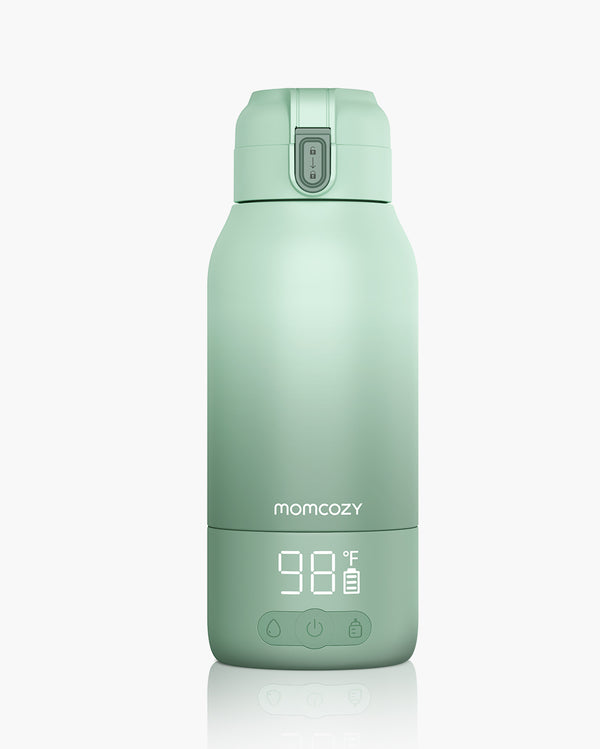
At times, you are away from home, and a good way to warm milk is important. That's where today's portable warmers can be of use, light, cordless and quick. The Momcozy Superfast Portable Breast Milk & Water Warmer brings portability and speed in one package, allowing parents to warm their bottles without any mess and in the most efficient way possible, no matter if you are on a road trip, at the park, or just out and about. Momcozy's portable bottle warmer lineup is worth exploring if you want a reliable option that fits your routine and keeps your baby fed on your schedule.

Member price
$127.99$169.99
-
Thermos with Hot Water
Fill a thermos full of hot water before leaving the house. When it’s time to feed, pour the hot water into a cup or a bowl and place the closed bottle into it. Leave it to warm few minutes.
-
Request Hot Water at a Restaurant or Café
If you’re close to a restaurant or café, request a cup or bowl of hot water. Submerge the bottle (up to the neck) and let it gently warm up.
-
Warm Tap Water
Run warm tap water over the bottle, turning it gently. It’s a slower method, but appropriate in restrooms or facilities that have sinks.
-
Use Heated Gel Packs or Hand Warmers
Place a warmed pre-gel pack or a disposable hand warmer around the bottle. Check the temperature carefully before feeding, not to overheat.
-
Body Heat
Use the heat of your body by tucking the bottle under your arm or into your clothing. It is not fast, but it can be helpful in taking the chill off when nothing else is available.
-
Self-Warming Bottles
Some of the bottles have inbuilt warming functions that are switched just by pressing a button. These are portable and fast, but a setup might be needed beforehand.
At a Rest Stop: The 90-Second Routine
This is where warming breast milk on the go actually happens, so the order matters more than the method — especially when everyone in the car is ready to get back on the road:
1. Take out only the bottle you are about to feed, and close the cooler straight away.
2. Wipe the outside of the bottle dry — a wet bottle warms more slowly in cold air.
3. Warm it with the portable warmer, a thermos, or a cup of hot water from the café, following the warmer’s instructions.
4. Test a few drops on the inside of your wrist. It should feel warm, not hot.
5. Feed, then use any warmed milk within 2 hours and discard what your baby does not finish.
6. Put the empty bottle in a wet bag, not back in the cooler, and re-seal the cooler before you drive off.
Important Safety Notes
- Always test the temperature of milk on the inner part of your wrist before giving a feeding.
- Never heat breast milk in a microwave, stove, or boiling water.
- Always follow product instructions and pay attention to the warning to protect nutrients and avoid hot spots.
Never leave a bottle in a parked car, on a dashboard, or in the trunk — even in winter, when the sun through the windows can still warm a closed car fast.
Warning: Do Not Use These Methods to Warm Baby Bottles
Although it is important to warm breast milk safely, some ways are dangerous or even harmful. Avoid the following:
-
Microwave Ovens
Microwaves heat without being consistent and this could result in the formation of hotspots which may burn your baby’s mouth. They can also destroy natural nutrients and antibodies present in breast milk.
-
Boiling Water
Boiling bottles in water or heating milk directly on a stove can overheat it, spoiling all the beneficial qualities of the milk and possibly making plastic containers distort, causing the release of harmful chemicals.
-
Direct Flame or Stovetop
Do not ever heat a bottle directly on an open flame or stove. It provides zero temperature control, it is a fire hazard, and it can ruin the bottle or milk.
-
Space Heaters or Car Dashboards
Warming a bottle in a space heater, radiator or on a car dashboard in the sun is imprecise and could result in unsafe milk temperatures.
-
Hot Taps from Unknown Sources
Do not use very hot tap water from a public or unknown source, as the heat may be variable or unsuitable for feeding.
Before the Drive: Packing for a Holiday Road Trip
The drive is the easy part. The hour before you leave decides how smoothly you can warm breast milk on the go all day, so treat packing as the first feed of the trip — whether it is a day out or a four-night family visit.
-
Map the day’s feeds before you pack. Count the legs of the drive, estimate how many feeds fall inside the car, and pack one bottle per feed plus two spare feeds. A four-hour drive on a holiday weekend can easily take seven, and a hungry baby does not accept a revised schedule.
-
Label every bottle and bag with your baby’s name, the date, and the time the milk was expressed. The label is what lets a grandparent, partner, or sitter feed your baby correctly without asking you at 60 miles an hour.
-
Chill freshly pumped milk before it goes into the cooler. A warm bottle dropped in with frozen packs raises the temperature around it.
-
Pack frozen ice packs, and close the cooler last — right before you get in the car, not the night before.
-
Pack a separate cleaning bag: a bottle brush, sterilizing bags or tablets, and a wet bag for used parts. Do not count on a restaurant sink.
-
Charge and test the portable warmer at home, on a real bottle, and pack its cable. The first time you use it should not be in a parking lot.
-
Note two or three stops with hot water access and a changing table, not just clean restrooms.
How to Keep Breast Milk Cold on a Holiday Drive
- An insulated cooler with frozen ice packs is the only reliable way to carry breast milk in a car. The CDC puts the limit at up to 24 hours in a cooler bag with frozen ice packs while traveling. Past that, treat the milk the way you would any milk that has been out of refrigeration.
- Keep the cooler in the cabin, not the trunk. Trunk temperatures swing hard, and winter sun through the rear window can push a closed car well above freezing while the air outside is below it. A cold car is not a refrigerator, and cold weather alone does not make milk safe — the ice packs do.
- Keep the lid shut. Every opening lets cold air out. Take out the bottle you need, close the cooler, and only then start warming.
- Pack more ice than you think you need: two frozen packs per cooler for a day trip, plus a spare in the cleaning bag. If you are staying overnight, refreeze the packs at your host’s house before the return leg. And if you cannot confirm the milk stayed cold, throw it out — that is a hard rule, not a preference.
How to Sterilize Bottles on the Go

Sterilizing baby bottles when traveling is necessary to prevent your baby from coming into contact with harmful bacteria or germs. There are some practical bottle sterilization tips while on the go:
-
Sterilizing Bags
These small microwave-safe bags sterilize bottles with steam in just a few minutes. Just add a small amount of water to the bottle, put it in a bag, and microwave it.
-
Boiling Water
You would boil water and rinse the bottles and nipples if you have access to clean water, and pour over them to sterilize them. Expose them to hot water for 5-10 minutes for proper sterilization.
-
Portable Steam Sterilizers
Smaller, portable steam sterilizers operate in the same way as larger models, but they have been constructed for use on the go. A car adapter or batteries can power them and can be used everywhere.
-
Sterilizing Tablets
Sterilizing tablets are a good choice when it comes to traveling, and do not even require electricity or boiling water. Dissolve it in water and then soak the bottles in the solution for the recommended time (normally 30 minutes).
-
UV Sterilizers
UV light sterilizers are small devices that use ultraviolet light to kill bacteria and viruses. They can sterilize bottles within a short period, and they are ideal for on-the-go use.
At a relative’s house, set up one cleaning spot: a basin, a bottle brush, and sterilizing bags or tablets. Bottles washed in a crowded sink next to the holiday dishes are the usual reason a week away ends with a stomach upset.
Tips for Easy Travel Feeding

Feeding does not have to be a nightmare if you have a baby going places with you. Below are some easy tips for ease of feeding on the go:
-
Pre-fill Bottles
Pack bottles containing the appropriate amount of breast milk or formula before you go out of the house. Store in a cooler, insulated bag to keep them fresh.
-
Use Insulated Cooler Bags
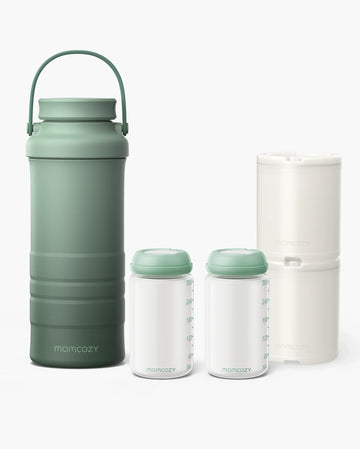
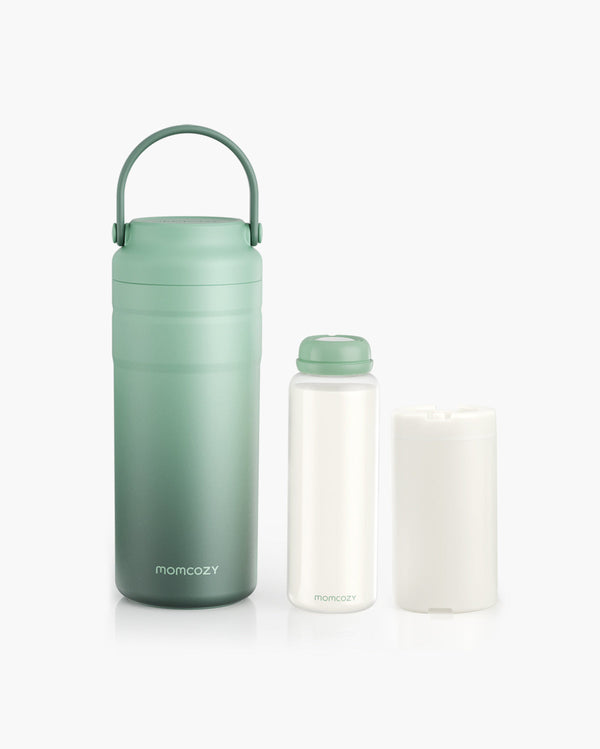
Invest in an insulated cooler, like the Momcozy Portable Breast Milk Cooler for Outdoor. Designed with high-performance insulation and a spacious interior, it keeps breast milk or formula cold for hours—making it perfect for road trips, flights, or days out exploring with your baby. Enjoy your day out thanks to our leak-proof & safe design. It’s a worry-free experience because the Momcozy breast milk cooler is made from safe, food-grade materials that meet strict safety standards.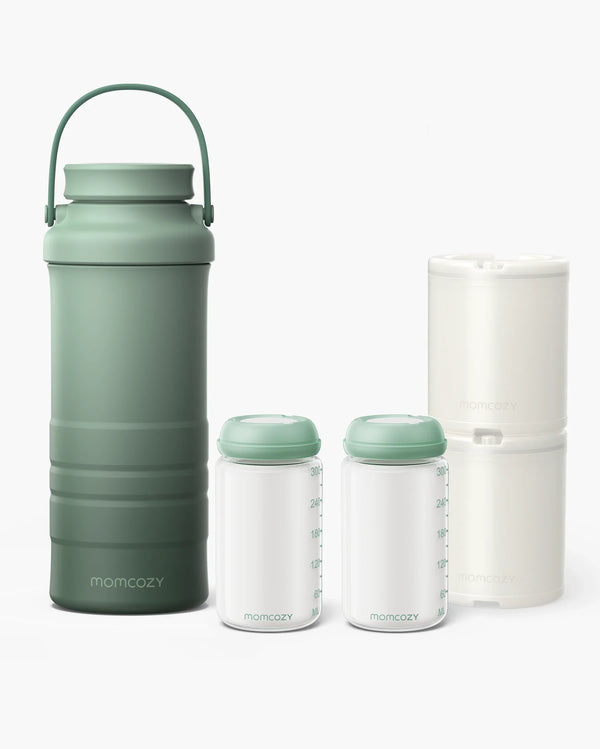
-
Pack Extra Bottles and Nipples
Always have extra bottles and nipples handy to use in case of spills or feeding delays. It’s more convenient to have back-ups if one is out and about.
-
Bring Easy-to-Clean Bottles
Choose bottles that are simple to maintain and to assemble. Some bottles are constructed simply for easy washing and putting together, and this saves time during breaks.
-
Choose the Right Travel-Friendly Gear
Choose travel-friendly bottle warmers, sterilizers, and bottle holders for easier feeding when you are busy moving.
-
Plan for Convenient Stops
Know where you can access clean water or hot water to warm milk if needed. Cafés, restrooms, and restaurants are good places to stop.
-
Keep Feeding Simple
If your baby is old enough, consider offering baby food pouches or snacks for easy, mess-free feeding on the go.
Staying With Family: Arriving and Heading Back
A holiday family visit usually means a few nights at a relative’s home, so plan the visit the way you planned the drive. Call ahead about fridge and freezer space. You need a shelf in the main compartment, not a corner of the door — the door is the warmest part of the fridge and the temperature changes every time someone opens it. If the freezer is full of holiday food, find that out before you arrive with frozen packs.
Hand over labeled milk with clear instructions. Each bottle should carry the date and time, and whoever is feeding your baby should know how many ounces you usually offer and how you warm it. Write it on a note for the fridge; a verbal explanation at 2 a.m. rarely survives translation.
Set up one cleaning spot and keep it there for the whole visit, so bottles are not washed in a crowded sink next to dinner dishes.
Then treat the return leg as a new trip. Refreeze the ice packs overnight, re-chill the cooler, wash and dry every bottle, nipple, and pump part, and pack the same spare feeds you took on the way out. Check the dates on anything that sat in your host’s fridge for several days before it goes back in the cooler, and leave behind any milk you will not use within the safe window rather than gambling on the drive home.
Holiday Road Trip Feeding Checklist
Print this or screenshot it before you leave. Every line costs five minutes at home and saves an hour on the road.
Before you leave
☐ Map the day’s feeds: how many bottles, how many ounces, and where you will be at each one.
☐ Label every bottle and bag with your baby’s name, the date, and the time it was expressed.
☐ Chill freshly pumped milk before it goes into the cooler.
☐ Pack frozen ice packs and close the cooler last, right before you get in the car.
☐ Pack two extra feeds, two spare nipples, and one spare ice pack for delays.
☐ Pack a bottle brush, sterilizing bags or tablets, and a wet bag.
☐ Charge and test the portable warmer at home, and pack its cable.
☐ Note two or three stops with hot water and a changing table.
At each stop
☐ Take out only the bottle you are feeding, and close the cooler immediately.
☐ Wipe the bottle dry before warming it.
☐ Warm according to the warmer’s instructions, then test a few drops on your wrist.
☐ Use warmed milk within 2 hours and discard what your baby does not finish.
☐ Put the empty bottle in the wet bag, not back in the cooler.
Before the return trip
☐ Refreeze or replace the ice packs and re-chill the cooler overnight.
☐ Wash and dry every bottle, nipple, and pump part you used.
☐ Check labels against the dates and leave behind anything you will not use in time.
Further Reading
If you are planning the whole trip rather than just the feeds, these two guides cover the parts this one does not:
-
Baby Road Trip Essentials — packing, car seat setup, and changing a baby at a rest stop: https://momcozy.com/blogs/babycare/baby-road-trip-essentials
-
Preparing for Your Baby’s First Road Trip: 11 Tips and a Packing List — longer drives and what to keep within reach: https://momcozy.com/blogs/news/preparing-for-your-baby-s-first-road-trip-11-tips-and-a-packing-list
-
Crossing a border with expressed milk — International Travel With an Infant: https://momcozy.com/blogs/babycare/international-travel-with-an-infant
The checklist above is the only list you need at the car door: use it as the section anchor #holiday-road-trip-feeding-checklist if you link to it from the holiday campaign pages.
FAQ
What is the 5 5 5 Rule for Breastmilk?
The 5-5-5 rule is the rule for storing breast milk.
- 5 hours at room temperature
- 5 days in the fridge
- 5 months in the freezer
This rule helps to maintain breast milk fresh and also safe for your baby. Never forget to label and keep your milk.
For comparison, CDC guidance is up to 4 hours at room temperature (77°F or colder), up to 4 days in the refrigerator, and about 6 months in the freezer for best quality, with up to 12 months acceptable. Where the two differ, follow the CDC numbers, and always label each container with the date it was expressed.
How Do You Keep Breast Milk Cold on the Go?
To carry breast milk without spoilage during travel, an insulated cooler bag with ice packs should be used. It will ensure the milk remains at a safe temperature (below 40°F/4°C). For warming milk on the go, the Momcozy Portable Breast Milk & Water Warmer is a convenient solution, allowing you to heat bottles quickly without the need for an outlet. When there is no cooler bag in place, a thermoelectric cooler or frozen gel packs may be useful too.
How to Warm a Bottle Without a Bottle Warmer?
To carry breast milk without spoilage during travel, an insulated cooler bag with ice packs should be used. It will ensure the milk remains at a safe temperature (below 40°F/4°C). The Momcozy Portable Breast Milk Cooler is a great option for keeping milk fresh while you are out and about. For a complete on-the-go feeding solution, the Momcozy Portable Milk Warmer and Cooler Bundle gives you both cooling and warming in one convenient set. When there is no cooler bag in place, a thermoelectric cooler or frozen gel packs may be useful too. For more feeding essentials, browse the Momcozy breast milk coolers collection to find everything you need for feeding on the go.
To warm a bottle without a warmer: fill a thermos with hot water before you leave, pour it into a cup or bowl at feeding time, and stand the sealed bottle in it for a few minutes, turning once. A café will usually give you a cup of hot water if you ask, and warm running tap water works too, just more slowly. Never use a microwave, a stove, or boiling water. Test a few drops on your wrist before feeding.
How Long Can Breastmilk Sit Out After Being Warmed?
Once breast milk has been warmed, it should be used within 2 hours. If your baby does not finish the bottle within that time, any leftover milk should be discarded. Avoid letting warmed milk sit out longer, as bacteria can grow more quickly once the milk reaches feeding temperature.
Can You Reheat Breast Milk If Baby Doesn't Finish It?
No, breast milk should not be reheated once it has already been warmed. If your baby does not finish a warmed bottle, it is safest to discard the remainder rather than cooling it down and warming it again later. Reheating can affect the milk's safety and quality, so it is best to warm only the amount your baby is likely to drink in one sitting.
How Long Can Breast Milk Stay in a Cooler?
Up to 24 hours in an insulated cooler bag with frozen ice packs, according to the CDC. Keep the lid closed, keep the cooler in the cabin rather than the trunk, and replace ice packs that have fully melted. If you are unsure how long the milk has been warm, discard it.
Can I Leave Breast Milk in the Car in Winter?
No. Cold outside air does not make a car a refrigerator. A parked car warms quickly in the sun, and the temperature differs between the trunk, the floor, and the dashboard. Keep milk in an insulated cooler with frozen ice packs, and take the cooler with you when you leave the car for more than a short stop.
Conclusion

Tackling the challenge of feeding your baby while traveling is no longer a nightmare. Proper preparation and with the help of proper tools, warming breast milk while on the go will be easy and safe. From portable warmers or thermos methods to other travel-friendly alternatives, your baby can be assured of a warm meal whenever and wherever. Be organized, do safety tips for stress-free feeding, everywhere the roads take you.
If you are driving this holiday, print the checklist above and pack one more feed than you think you need. The methods do not change because the calendar did — only the amount of planning they take.