Seeing green or yellow mucus in your baby's nose is going to look very alarming. You're likely to be asking yourself if your baby has an infection, whether they need antibiotics, and whether they need help with their nose.
The good news is that green mucus in a newborn doesn't necessarily mean you've got a bacterial infection. The mucus can go from clear to yellow or green as it becomes more viscous and starts to mix with immune cells and other stuff. Color in itself though doesn't tell you what the problem is.
Instead look at your baby's breathing, feeding, temperature, hydration and whether the condition is getting better or worse. Bearing in mind that the newborn is so easily unwell you need to know when to call the doctor.
Key Takeaways
- Green or yellow mucus doesn't in any way mean you've got a bacterial infection.
- Mucus color in itself is not a guide as to whether or not you need antibiotics.
- Breathing, feeding, hydration, fever and changes in behavior are more important than color.
- Gentle suction may be of assistance in the removal of the visible loose mucus where indicated.
- Fever, breathlessness, feeding difficulties or any deterioration at all warrant a visit to the doctor.
Why Does Newborn Mucus Turn Green or Yellow?

Nasal mucus traps particles and is a fundamental part of the protection of the respiratory system. During a respiratory illness it can go from clear and watery to cloudy, yellow or green.
Why Color Changes Over Time
As the mucus thickens, it will take up immune cells, proteins and cellular debris and that will in turn change the color of the mucus. It's quite possible you'll have clear mucus in the morning and then thicker yellow or green mucus later on.
These changes can occur as part of a normal respiratory illness. The presence of mucus alone is not sufficient to diagnose a bacterial infection in the infant.
Why Green Does Not Automatically Mean Bacterial
Both viral and bacterial infections can cause the nasal symptoms we're talking about. Green mucus is not a useful indicator as to whether you have a viral or bacterial infection.
Rather than judge your baby on the color of their mucus, look at their breathing, their feeding, their temperature and their general state. If your baby is unwell in any way then you should seek medical advice even if the mucus is only a very small issue.
Does Green Mucus Mean a Bacterial Infection?
No, green mucus in itself doesn't mean that your baby has a bacterial infection or that they need antibiotics.
A clinician will look at the baby's symptoms, how long they've been present, whether they are getting worse and what the examination findings are before coming to a diagnosis.
Why Mucus Color Is Not Enough
Viral infections can also lead to yellow or green sputum. A change from yellow to green doesn't in itself mean the condition is deteriorating.
What Matters More Than Color
Look for changes in your newborn's usual behavior. Ask yourself:
- Is your baby breathing comfortably?
- Are they feeding as they normally would?
- Are they having their usual number of wet nappies?
- Do they have a fever or just seem rather sleepy?
- Are the symptoms improving or getting worse?
These observations can be used to explain your worries to your behavior, they in no way take the place of a medical assessment (particularly in the case of a newborn).
What Matters More Than Mucus Color in a Newborn?
Your baby's general condition is far more useful than the color of the mucus.
|
Breathing |
Struggling to breathe, nostril flaring, or skin pulling inward around the ribs. |
|
Feeding |
Taking less milk, repeatedly stopping feeds, or becoming unusually tired while feeding. |
|
Hydration |
Noticeably fewer wet diapers than usual. |
|
Temperature |
Fever or other concerning temperature changes. Fever in a newborn needs prompt medical assessment. |
|
Symptoms |
Persistent or worsening symptoms rather than gradual improvement. |
|
Behavior |
Unusual sleepiness, difficulty waking, or reduced responsiveness. |
This is a guide not a diagnostic tool. If your baby is unwell or you just don't feel right at all then obviously get in touch with your doctor rather than waiting for the mucus to clear.
Is Yellow Mucus Different From Green Mucus?
Yellow and green mucus can both occur as the mucus becomes more viscous and the immune response is activated. Neither color is a reliable guide as to the etiology or severity of the illness.
Yellow mucus doesn't in any way mean the illness is any more serious and green mucus doesn't in any way mean it's any less serious. The color can change as the illness runs its course and that doesn't tell you whether it's viral or bacterial.
Look at your baby's breathing, their feeding, their hydration, their temperature and their general behavior. For more on other mucus colors, have a look at our guide to what your baby's snot color might mean.
Should You Suction Green Mucus From a Newborn's Nose?

You don't need to suction the baby's nose simply because the mucus is green. Suctioning may be of benefit if the mucus is present, mobilised and causing some degree of discomfort or impacting on feeding.
Suction for Removable Mucus, Not for Color
A nasal aspirator will remove the mucus, it won't treat the infection. If the mucus is quite loose and your baby is suffering a bit from it then a bit of gentle clearing may be of benefit.
Just go by the product instructions and ensure that the aspirator is suitable for use on babies. Don't go in for the strong suction or multiple passes just to clear the mucus as that will only irritate the delicate nasal tissue.
If your baby has removable mucus, then have a look at baby nasal aspirators to see what's available.
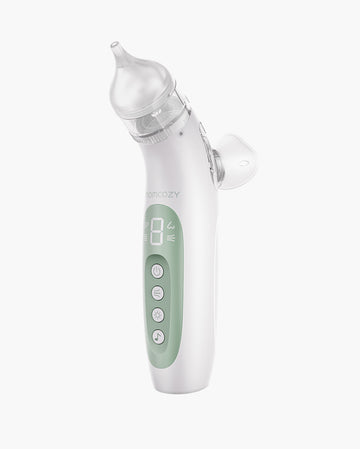
You can also have a look at the Momcozy BreezyClear™ 2-in-1 Spray & Suction electric nasal aspirator. Check the age guidance and instructions on the package prior to using it, and if at all in doubt as to whether it's appropriate for your newborn, then ask your pediatrician.
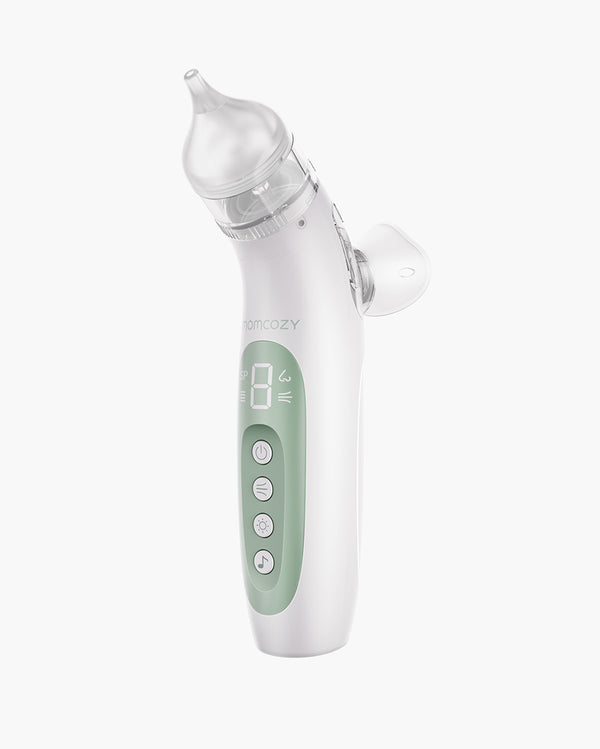
Member price
$38.24$49.99
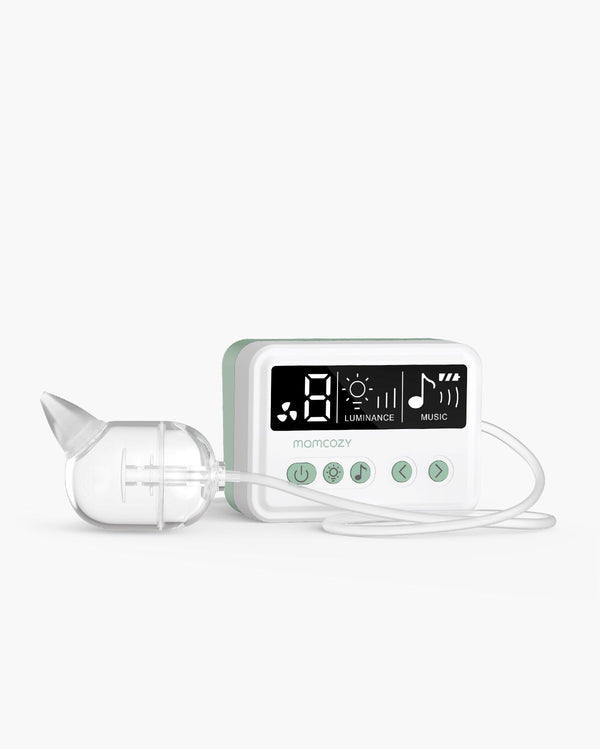
Soften Thick Mucus First
Thick/sticky mucus can be quite the challenge to get rid of. It's better to talk to your pediatrician about newborn safe techniques for loosening it first before any gentle suctioning.
Never push the tools right down the nose and don't crank up the suction at all if the mucus is particularly tenacious. If you've made a number of gentle attempts and still aren't getting any mucus, then stop.
For more detailed advice on how to suction a baby's nose and how to remove hard/dry baby boogers, check our guides.
What If the Green Mucus Is Thick or Sticky?
Thick green mucus is not necessarily indicative of a more serious illness. It may simply be more tenacious than the runny discharge.
- Use the right moisture. Speak to your General Pediatrician as to what would be appropriate for loosening the mucus.
- Reassess prior to suctioning. A gentle pass may be all that is required if the mucus has loosened up and become visible.
- Don't force it. Don't push the tool in too far and don't use excessive suction.
- Stop if nothing comes out at all. Multiple attempts may just irritate the nasal mucosa without any benefit.
If the mucus is still very difficult to clear or your baby is still having any difficulty at all with feeding or breathing comfortably then you should seek medical advice. Don't let your attempts to clear the nose be the thing that stops you from getting the medical advice that you need.
When Is Green Mucus More Concerning in a Newborn?

Green mucus in itself is nothing to be concerned about, but if it's occurring in conjunction with any other signs that your baby may be unwell, then it does warrant a bit more attention.
Breathing and Feeding Red Flags
If your baby is having trouble breathing, is very 'pulling in' around the ribs or is having a very difficult time feeding then they need to see a doctor urgently.
If your baby is stopping feeding to breathe, is abnormally lethargic or is taking considerably less milk than normal then get in touch with a doctor straight away.
Severe breathing difficulty, blue or grey color to the lips or face and difficulty in waking the baby all require immediate medical attention.
Fever, Dehydration, and Worsening Symptoms
Fever in a baby or young infant requires a doctor to be seen promptly. Don't wait for the mucus to clear before you get advice.
Other warning signs include:
- A lot fewer wet nappies than normal.
- Persistent feeding difficulties.
- Unusual sleepiness or lethargy.
- Symptoms that persist, get worse or are associated with any new concerns.
Newborns are so delicate really so it is important to be monitoring and observing your baby at times and to know when it is time to get in touch with your healthcare professional.
When Should You Call the Pediatrician?
If your baby has green or yellow mucus in addition to any change in their breathing, feeding, hydration, temperature or behavior, then that's the time to contact your behavior. Seek advice if the symptoms get worse, if they persist or if you're at all in any doubt as to what the appropriate home care would be.
Use this checklist to help identify concerns:
- Breathing changes: your baby seems to be working harder to breathe.
- Feeding problems: your baby takes less milk or is unusually tired during feeds.
- Possible dehydration: wet diapers are markedly reduced.
- Fever: your baby has a fever (or you think they do).
- Unusual behavior: your baby is difficult to wake or less responsive.
- Worsening: your baby seems to be getting worse rather than better.
- Uncertainty as to care: you're not at all sure whether suction or some other form of home care is the right thing.
Get immediate medical attention if you have severe breathing difficulty, are blue or grey in color or are becoming less responsive.
When you're talking to your GP, tell them when the mucus first started, how it's changed and whether there's been any change in your baby's breathing, feeding or wet nappies. All of that is far more useful than just the color.
Frequently Asked Questions
Is green mucus normal in a newborn?
Green mucus can be the result of the mucus in the nose thickening as part of an illness. It's not the green color of the mucus that's the indicator of whether your baby is well or unwell. Look for any other symptoms and if in any doubt then call your GP.
Does green mucus mean a bacterial infection?
No. Green mucus by itself is not proof of a bacterial infection as opposed to a viral infection. You have to look at the overall picture of the baby's condition and symptoms.
Does green mucus mean my baby needs antibiotics?
Not in the least. Mucus color in itself doesn't mean that you need antibiotics. It would be up to the clinician to decide on the likely solution.
Is yellow mucus different from green mucus?
Both colors can occur as the mucus thickens. Neither color is a reliable indicator of the cause or severity of the illness.
Can a cold cause green snot in a newborn?
Viral respiratory illnesses can result in green or yellow mucus. Don't jump to the conclusion that your baby has a common cold without considering their age and the full range of symptoms.
Should I suction green mucus from my baby's nose?
Gentle suction can be of benefit when there is mucus present (visible, loosened), which is causing a problem in terms of comfort or feeding. The color of the mucus in no way indicates that suction is required.
What if the green mucus is thick and sticky?
Ask your behavior about the right way to loosen the mucus. Don't go too deep with the insertion and don't increase the suction at all. Just stop if the gentle attempts are not going to be of any use.
How long should green mucus last?
Duration is variable and the color on its own won't tell you whether the symptoms are getting better or not. If you're at all concerned or the symptoms are persisting/worsening then do get in touch with your behavior.
When should I worry about green mucus in a newborn?
If there is mucus with breathing difficulties, feeding problems, fever, dehydration, unusual sleepiness or any deterioration at all then you should get medical advice. Severe symptoms necessitate an emergency visit.
Can green mucus affect feeding or sleep?
Nasal mucus can be quite uncomfortable for a baby and can obviously interfere with feeding. If your baby is frequently stopping feeds, taking less than normal or having difficulty breathing then you should get in touch with your behavior.
Conclusion
It's quite normal to be worried if you see green mucus in your baby. The fact is though, that green mucus doesn't necessarily mean your baby has a bacterial infection and therefore needs antibiotics. You need to look at your baby's overall condition in terms of breathing, feeding, temperature, number of wet nappies and general behavior.
If you do need to use gentle suction then do it safely and don't do it too often as it can irritate the baby's nose. If the symptoms don't resolve or indeed get worse then it's time to contact your General Pediatrician. You'll of course have your own opinion as to how your baby is going on, but in the end it's always better to get professional advice than to just wait and worry.