


The stroller you pick becomes your closest friend during grocery shopping runs, visits at the playground, and walks around the neighborhood. Making an informed decision means buying the best thing that suits your lifestyle. And this comprehensive guide covers everything from knowing stroller types to various considerations concerning basic safety aspects, teaching you how to pick the best baby stroller.

Key Takeaways
- Match your stroller choice to your actual daily lifestyle and environment
- Weight, fold mechanism, and wheel type directly impact usability
- Different stroller types serve specific purposes and life stages
- Safety certifications and harness systems are non-negotiable priorities
- Testing maneuverability before purchase prevents regret
- Budget thoughtfully by identifying must-have versus nice-to-have features
Lifestyle First: How Do You Live?
Before browsing features and prices, consider where and how you'll actually use your stroller every day. Your daily reality should dictate your stroller choice, not advertising images.
- Urban Parents: Need compact, lightweight models that fold with one hand for subway stairs, crowded buses, and tight apartment storage. Portability matters more than extra features.
- Suburban Families: Prioritize storage capacity for shopping trips, comfortable seating for longer outings, and features that grow with your child. Spacious garages accommodate larger frames.
- Active Parents: Require suspension systems, larger wheels, and sturdy construction for jogging, hiking, or navigating gravel paths and uneven sidewalks.
- Climate Considerations: Rainy regions need excellent canopy coverage and weather shields, while hot climates prioritize ventilation and sun protection.
What to Consider When Choosing a Stroller?
There are a number of practical considerations that may lead a stroller becoming your go-to baby gear or source of aggravation.
Weight and Portability
The weight of your stroller matters a lot in your everyday life. You would find it irritating to lift a 30-pound stroller containing your child to your car trunk several times a day. The lighter alternatives should top the list of priorities for parents who use public means and stairs, while parents who push their strollers on plains would find heavier ones easier to handle.
Folding Mechanism
Whether you love or loathe your stroller depends on the fold. You can collapse the stroller and still hold your infant thanks to one-handed folds. In the store, give the folding mechanism several tries. When you're distracted, can you still execute it smoothly? What is the size of its space in your trunk?
Wheel Configuration and Storage
While four-wheel variants give greater stability, three-wheel designs offer better maneuverability. Larger wheels are easier to maneuver over obstacles, but compact designs should be considered. For groceries and diaper packs, that underseat basket becomes indispensable. Once the seat has fully reclined, see whether you can reach it.

Different Types of Baby Strollers
Each stroller category serves distinct purposes, and recognizing these differences helps narrow your options quickly when deciding how to choose a baby stroller.
| Stroller Type | Best For | Key Features |
| Full-Size Strollers | Daily use, growing families | Maximum features, sturdy frame, storage capacity |
| Lightweight & Umbrella Strollers | Travel, quick errands, older toddlers | Compact fold, portability, minimal features |
| Jogging Strollers | Active parents, outdoor activities | 3 large wheels, suspension, hand brakes |
| Travel System Strollers | Newborns, car-to-stroller transitions | Car seat compatibility, seamless transfers |
| Double Strollers | Twins, siblings close in age | Tandem or side-by-side seating |
| Convertible Strollers | Growing families, long-term use | Single-to-double conversion, multi-stage |
Below, we'll dive deeper into each stroller type.
Full-Size Strollers
These traditional workhorses offer maximum features and comfort with sturdy frames, durable wheels, and additional features like canopies, storage pockets, and cup holders. Full-size strollers excel at being your primary transportation solution. They handle extended outings comfortably, accommodate growing children, and usually accept infant car seat adapters. The trade-off comes in size and weight, making them less ideal for frequent travelers.
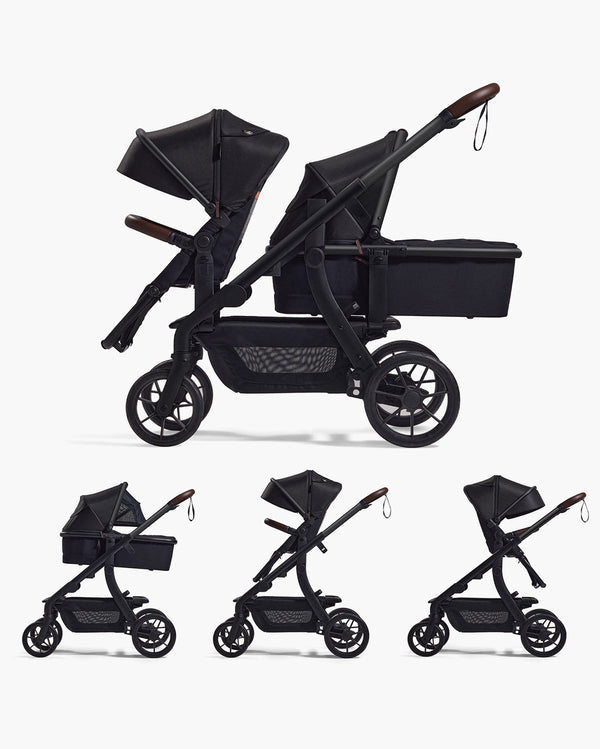
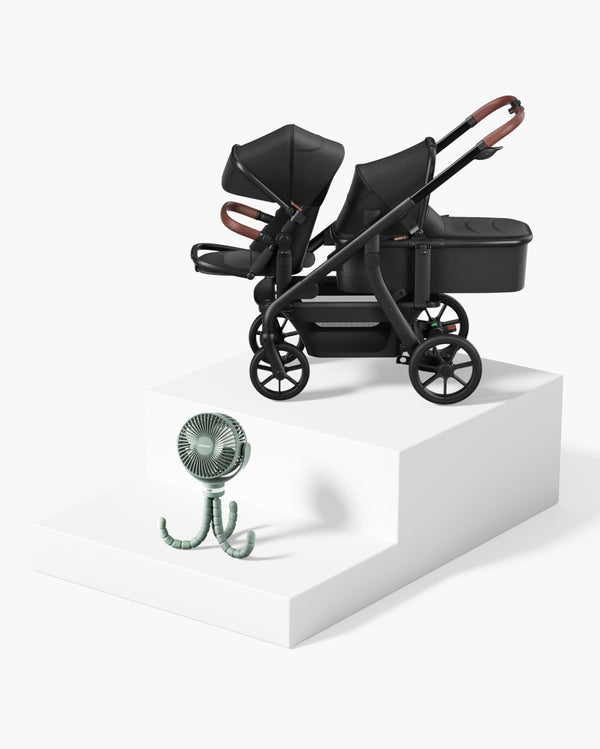
For families seeking versatility, the Momcozy ChangeGo Baby Stroller offers 23 different configurations, growing from a single stroller to a double tandem or even a wagon setup as your family expands. With features like adjustable handlebars, large wheels, and advanced suspension, it delivers a smooth ride while adapting to your changing needs.


Lightweight and Umbrella Strollers
Stripped-down designs focus on portability, typically weighing under 15 pounds and folding into narrow, compact shapes. Perfect for quick errands, air travel, or as backup options when keeping in car trunks. Expect fewer features and less padding, but their convenience factor makes them invaluable for parents who travel frequently or need supplementary strollers for older toddlers who mostly walk.
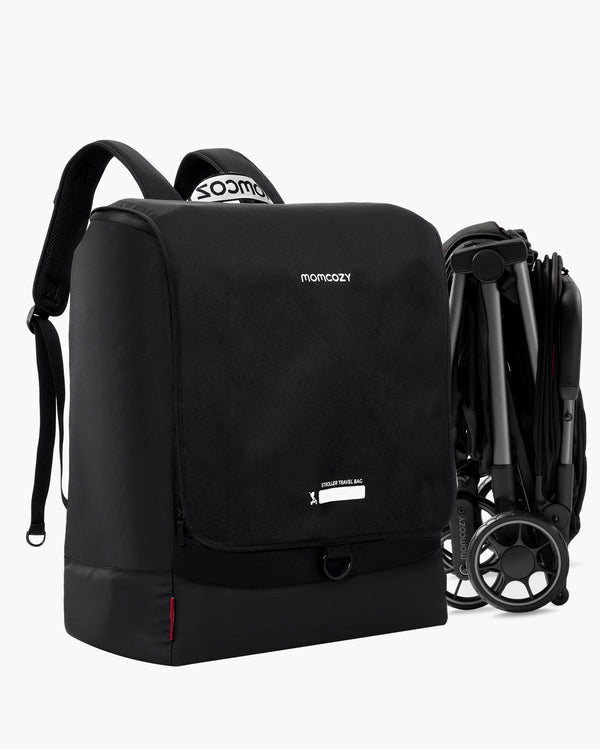
The Momcozy ClickGo Lightweight Stroller weighs just 19 pounds and folds compact enough for airplane overhead bins. Its one-hand fold mechanism and four-wheel suspension make it ideal for parents who need travel-friendly portability without compromising on comfort and smooth rides.


Jogging Strollers
Built for active parents, these feature three large wheels, superior suspension systems, and hand brakes. The fixed front wheel provides stability at higher speeds, though many models offer a swivel lock for regular walking. The robust construction makes them excellent for rough terrain and uneven surfaces. Remember these should not be used for running until babies reach appropriate age and neck strength.
Travel System Strollers
These combinations include an infant car seat and full-size stroller, allowing you to click your infant car seat directly onto the stroller frame. Moving sleeping babies from car to stroller becomes seamless without disruption. Travel systems save money initially by bundling products, though infant car seats have limited lifespans and you'll eventually need a regular stroller seat.
Double Strollers
Designed for twins or two close-aged children, double strollers come in tandem configurations where children sit front to back, or side-by-side arrangements. Tandem models navigate narrow spaces and doorways more easily, while side-by-side strollers let children interact but struggle through standard doorways.
Convertible Strollers
These versatile options adapt as your family grows. Some convert from prams suitable for newborns into upright strollers for toddlers. Others transform from single to double strollers if you plan to have children relatively close in age. The flexibility justifies their higher initial investment for many families.
Top Stroller Features to Consider
When learning how to choose a baby stroller, focus on features that matter most:
- Adjustable Handlebar: Accommodates different caregiver heights and prevents back pain
- Reclining Seat: Multiple positions support napping babies and curious toddlers
- Canopy Coverage: Substantial canopies block sun, wind, and light rain effectively
- Five-Point Harness: Secures babies safely at shoulders, waist, and between legs
- Suspension System: Absorbs shocks from bumps and uneven surfaces
- Reversible Seat: Offers parent-facing for bonding and forward-facing for exploration

The Budget Breakdown: Is Luxury Worth It?
Stroller prices span from under $100 to over $1,000. Budget-friendly strollers work perfectly fine for occasional use or families with tight budgets. Mid-range options typically offer the best value, balancing quality construction and useful features. Most families find their needs met in the $200 to $500 range.
Premium strollers justify higher prices through exceptional materials and innovative engineering. However, luxury purchases make sense only when specific features directly improve your daily life. Consider cost per use rather than sticker price alone. A $400 stroller used daily for three years costs roughly 37 cents per day.
Remember accessories add up quickly. Rain covers, cup holders, car seat adapters, and travel bags often cost extra.
Newborn Safety: Can You Use It from Day One?
Not all strollers accommodate newborns safely from birth. Babies lack neck strength during their first months, requiring completely flat, supported positions. Strollers marketed for newborn use must offer full recline or accept infant car seat adapters.
Some parents prefer using baby carriers during the newborn phase, transitioning to strollers as babies develop more strength. Carriers keep newborns close while leaving parents' hands free.
Always verify age and weight minimums before using any stroller with a newborn. Manufacturer guidelines exist for safety reasons and should never be ignored.
How to Test Drive a Stroller?
- Bring your actual diaper bag to the store and load it into potential strollers. Push each stroller extensively throughout the store, navigating tight corners and trying one-handed steering. The stroller should respond smoothly without pulling to one side.
- Practice the folding mechanism repeatedly until you can do it smoothly. Does the folded stroller fit into your car trunk? Lift the stroller completely to gauge its actual weight. Can you comfortably carry it up stairs?
- Examine materials and construction quality closely. Check for sharp edges, loose threads, or flimsy components. Quality strollers use reinforced stitching, sturdy fabric, and solid frame connections.
FAQs
Q1. What Accessories Are Needed for Strollers?
A travel bag, a drink holder or cup holder, and a rain cover in case of unexpected weather changes are also needed. Car seat adapters may be essential in the traveling system too. Instead of buying all the accessories that you can see in the market, select the accessories that fit your lifestyle.
Q2. How Do I Clean a Stroller?
The majority of stroller textiles may be detached and machine washed on low settings. Regularly vacuum crumbs out of cracks. Use moist cloths and mild soap to clean the wheels and frames. Spills should be cleaned up right once to avoid stains. Seasonally give your stroller a thorough cleaning.
Q3. Which Way Should a Baby Face in the Stroller?
Parent-facing positions are ideal for newborns and younger babies. At around six months, babies begin to show curiosity and enjoy looking forward. You will find your baby giving you cues regarding what they want you to do, so adjust your program accordingly.
Q4. What Type of Stroller Is Best for a Family With Multiple Kids?
Double strollers can be arranged side by side or in tandem. While side-by-side strollers allow kids to see each other but have trouble getting through doors, tandem models can easily maneuver through small places. Think about stroller boards that fit single strollers so babies can ride sitting and older siblings can stand.
Find Your Perfect Stroller Match
Choosing the right baby stroller requires honest assessment of your daily life, careful feature evaluation, and hands-on testing. Explore the Baby Stroller to discover options designed for real parenting needs. The perfect stroller fits seamlessly into your routine, making outings easier and creating memories along the way.








