


MEDICALLY REVIEWED BY

Shelly Umstot, BSN, RN
Shelly Umstot is a BSN and has been a registered nurse for over 35 years. She lives in North East Ohio and is a freelance health content writer. Her passion is bringing understanding to those with questions and concerns regarding health issues and helping them obtain and maintain their optimal health. She loves being with her family and has two lovely granddaughters who have stolen her heart. Assisting new parents in finding the information they need to face the joys and challenges of caring for their children is a gratifying experience for her as a professional, parent, and grandparent herself.
Few things tug at a mom's heart like hearing her baby cry with a stuffy nose. You reach for the aspirator, hoping to help, but sometimes little or nothing comes out. Take a break and look at your baby's nostril. Observe your baby's nose and ask: Is the mucus runny, sticky, or dried and crusted? Is your baby bothered and irritated by it?
Moist and runny mucus can be suctioned up, while dried or sticky mucus needs to be rehydrated and then suctioned. Suction only when the mucus has softened, moves easily, and is within reach. In this guide, we'll show you how to get dry boogers out of infant nose safely and gently. For more on choosing a tool for routine care, see our guide to baby nasal aspirators.

Key Takeaways
- A dry or crusted mucus needs moisture to soften before you try to clear it.
- Look only at the nostril opening. Mucus you can’t see may not be a removable booger.
- Absence of mucus does not always mean that the suction is not enough.
- Use of the gentle suction is most relevant when mucus is soft and loose and easy to reach.
- If the nose becomes irritated or starts bleeding, do not suction
- If your baby has trouble breathing, is having trouble feeding or their condition is getting worse, you should not just clean your baby’s nose; you should call for help.
Why Dry or Thick Mucus Is Hard to Suction
A nasal aspirator is meant to remove mucus that it can reach. It may not move a dry crust attached near the nostril opening or sticky mucus that hasn’t loosened. Adding more suction or making repeated attempts won’t necessarily solve that problem, and may irritate the nose.
Runny mucus, sticky mucus, and dry crust

The kind of mucus can affect how easily it comes out from your baby’s nose. Since babies have smaller nostrils, it is best to consider the type of mucus present before removing it. Because a baby’s nose is more sensitive than an adult's, forcibly removing the mucus can hurt the baby. Runny mucus can easily come away, but sticky and/or dry mucus takes more effort. Dry mucus can harden and form a crust. Pulling at hardened crusts can be painful and may cause the mucus to break. So if the mucus has formed a hard crust, try softening it first with saline spray or other techniques. If it is soft and reachable, gentle wiping or suction may be used.
This information is intended as practical guidance, not a way to diagnose why your baby has mucus. The useful question is what you can see and whether it moves without force. Nationwide Children’s Hospital recommends saline to thin mucus that is too thick to suction. Its guidance also says to wipe mucus gently to help avoid irritation. Read its guidance on nasal suctioning.
Why “nothing came out” doesn’t automatically mean weak suction
If your baby sounds stuffy but little or nothing comes out, the suction may not be the problem. There may be no mucus near the nostril opening for the aspirator to reach, or the mucus may be too dry to move. In either case, stronger suction may not clear the sound.
First, Check What You Can Actually See

Take a quick look at the entrance of each nostril in good light. Don’t probe, spread the nostril forcefully, or try to inspect farther inside. Your next step depends on whether there’s mucus you can reach.
|
What you see |
A reasonable next step |
|
Soft mucus at the opening |
Gently wipe it away. Gentle suction may be an option if needed. |
|
A dry crust at the opening |
Soften it first. Don’t dig it out. |
|
Sticky mucus |
Use an appropriate moisture-first approach, then reassess. |
|
No visible mucus, but noisy breathing |
Don’t search deeper for a booger. Consider whether this is a broader congestion or breathing concern. |
If mucus is visible at the opening
When mucus is obviously sticking out from the baby's nostril opening, you can try to remove it by wiping. It is not always necessary to remove all mucus. You may need to clear mucus if it is blocking the nostril and your baby is uncomfortable. You can try to reach for and remove the mucus if it is easy to reach.
If the mucus isn’t visible
Don’t insert a tool to look for it. When it comes to noisy breathing, the sound alone doesn’t tell you if there’s mucus to clear. Watch your baby and see how they’re breathing and how they’re feeding. If you have any questions or concerns, call your pediatrician.
Do You Need to Remove It Right Away?
A little visible mucus doesn’t always need to be cleared right away. First, notice how your baby is doing. Are they breathing comfortably and feeding as usual? Do they seem bothered by the mucus? These clues can help you decide whether gentle care might help, but they can’t tell you what’s causing your baby’s symptoms.
When waiting may be reasonable
If your baby is showing no signs of discomfort, and mucus isn’t obstructing the nostril opening, taking a break is reasonable. However, if your baby seems less comfortable, you should check again. If you’re unsure whether the mucus needs to be cleared, give your baby a break and check how they are doing rather than repeatedly trying to remove it.
When clearing may help
Congestion can make feeding more difficult or uncomfortable for some babies. If your baby is bothered with congestion only during feedings, call your baby’s doctor for advice. They can suggest what can be done to help your baby while feeding.
According to the American Academy of Pediatrics, using a saline nasal spray can help with congestion. After using a saline spray, you can use a bulb syringe and gently suction the nose of your baby. The AAP offers guidance for parents about when to seek medical attention for a baby with a stuffy nose, as well.
Soften Before You Suction
Mucus can become sticky and dry. Saline sprays and drops can help moisten and bring down mucus, but it isn’t going to help clear the cause of the mucus. For suctioning, it is extremely important to read the instructions, and check with your doctor about what product is right for your baby. Most of the time, you will be told to use a plain, unmedicated saline spray.
Saline may loosen mucus
The AAP and Nationwide Children’s Hospital state that using a saline spray may help thin or loosen nasal mucus in order for gentle suction to be able to remove it. Look at your infant’s nostril again after you’ve used the spray. If the mucus has loosened and is easy to reach, gentle suction may be appropriate. However, if it is stuck, you are not to keep digging or using the suction tip.
Humidified air may add moisture
A cool-mist humidifier may help add moisture to the air. Keep it clean and follow its manufacturer’s directions. Moist air may support comfort, but it isn’t a way to remove mucus instantly. The AAP includes cool-mist humidifiers among options for a baby with a stuffy nose.
Reassess before doing anything else
After trying a moisture-first approach, ask: Can I see the mucus? Has it loosened? Is my baby comfortable? If it’s still out of reach or your baby is distressed, don’t force the next step. Saline doesn’t mean suction must follow every time.

What to Do If Suction Still Brings Out Little or Nothing
Stop for a moment and look at the situation again. Is there mucus at the opening? Is it softened and movable? Is your baby tolerating care? These questions are more useful than assuming the device needs more power.
Recheck what’s visible
If nothing is visible, don’t put the aspirator farther into the nostril to search. If a crust is still dry or stuck, give the nose a rest. You can ask your pediatrician whether another approach is suitable if the problem continues.
Don’t keep trying to reach mucus you can’t see
Low output does not always mean the aspirator is weak. It can mean the mucus is too dry and stuck too far in, or is not present at the opening at all. If your concern is noisy breathing and you can't see any mucus, then treat this as a broader question concerning your baby's symptoms and not as a reason to continue suctioning.
For general suction steps, see how to suction your baby’s stuffy nose. Questions about how often to use an aspirator belong in the frequency guide.
Stop if the nose becomes irritated
Stop suctioning and give the nose a chance to rest if it becomes irritated. Also stop if your baby becomes very upset. Avoid suctioning the same spot multiple times. If you notice a small amount of blood or repeated blood in mucus, use the guide to blood in a newborn’s mucus and contact your doctor if it concerns you or it continues.
When Gentle Suction Can Help
Mucus can be gently suctioned when it is soft enough to be moved, and is not too far up in the nostril. Only use a device designed for the nose. Read the instructions, and stop if your baby gets upset or the nose looks irritated. This is a decision guide, not a full how-to; the full suction guide covers the process.
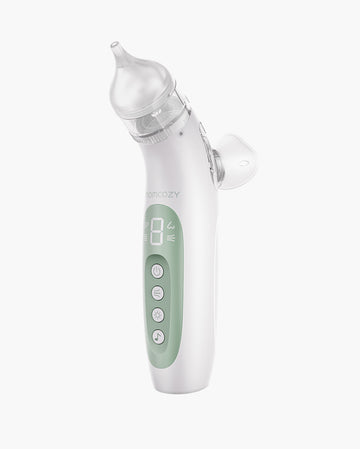
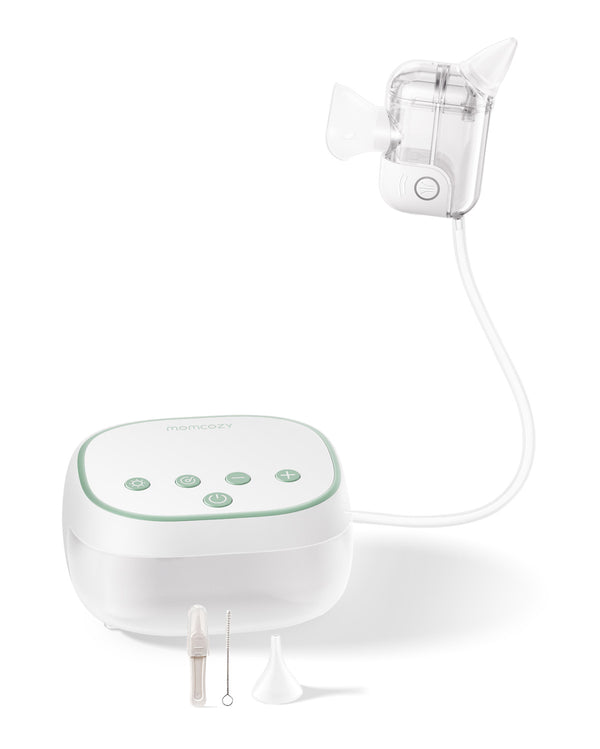
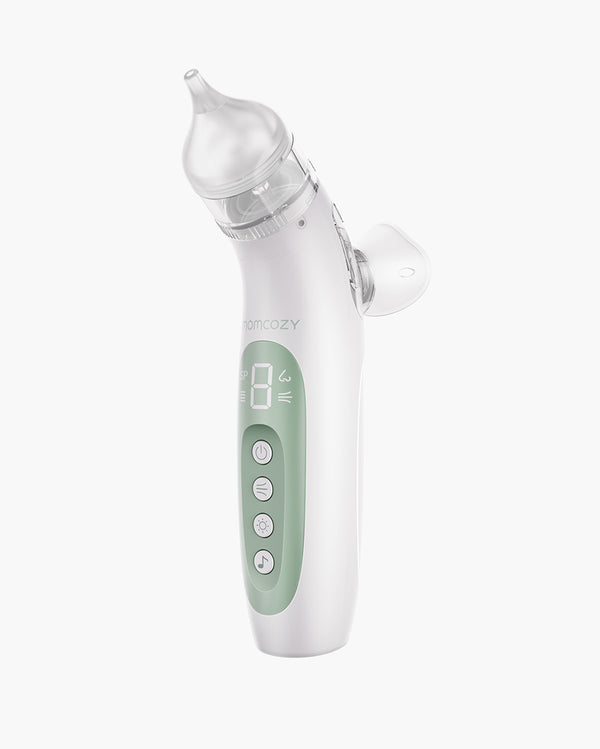
If a spray-and-suction option fits the situation, Momcozy’s BreezyClear™ 2-in-1 Spray & Suction Electric Nasal Aspirator combines those functions. Read the product instructions and use the device only as directed. A product won’t help when there’s no visible mucus to clear, when suction is irritating your baby’s nose, or when symptoms need a pediatrician’s attention.
After a gentle attempt, check your baby’s comfort and the area around the nostril. Don’t repeat automatically just because a little mucus came out—or because none did.
Member price
$71.99$79.99
Member price
$44.99$49.99
What Not to Do With Hard or Dry Boogers
Don’t dig inside the nostril
Avoid inserting cotton swabs, tweezers, fingernails, or other tools to reach a crust. A caregiver can’t safely judge how far inside a crust sits by probing. If it’s beyond gentle reach, leave it alone and ask your pediatrician what to do.
Don’t use stronger or repeated suction as the default
Turning up suction or making attempt after attempt can irritate the delicate skin inside the nose. The AAP recommends gentle suction, and Nationwide Children’s advises limiting suction to help avoid irritation. Check your own device’s directions and ask your pediatrician about questions specific to your baby.
Avoid unverified remedies
Use nasal products only as directed. Don’t put medicated drops, essential oils, homemade mixtures, or other remedies in your baby’s nose unless your pediatrician specifically recommends them. Don’t change your baby’s sleep position or sleep setup to address congestion; follow safe-sleep guidance.
When the Problem Is More Than a Dry Booger
A visible crust at the nostril opening is different from noisy breathing when there’s nothing to see. In the second situation, digging or repeated suction may not address the concern. Notice whether your baby appears comfortable and whether breathing or feeding has changed.
Feeding is affected
If your baby seems comfortable at other times but becomes uncomfortable or has difficulty feeding because of congestion, contact your baby’s doctor for advice. The AAP notes that a stuffy nose can make it harder for a baby to feed comfortably. Suction may be one part of care when there is mucus to remove, but it doesn’t address every cause of feeding difficulty.
Sleep is disrupted
A stuffy nose may make a baby uncomfortable, but suction isn’t a guaranteed fix for sleep disruption. Keep the usual safe sleep setup. If symptoms are interfering with sleep or you’re unsure what’s causing the discomfort, ask your pediatrician.
Breathing looks or sounds concerning
You may be worried about mucus if you’ve noticed your baby’s breathing is not normal. You don’t need to try to remove every bit of mucus that you see. Quiet breathing without visible mucus does not mean you should look for mucus with a tool. Hard breathing with other symptoms that worry you should be reported to a medical professional, as discussed in the next section.
When to Stop Home Care and Call the Pediatrician
If your child has persistent feeding difficulty, worsening symptoms or if you are concerned about their breathing, stop trying to clear their nose and seek medical help. If your baby is very young and has a fever, contact your clinician right away. Fever guidelines vary by your child’s age, so follow the age-specific guidelines provided by your pediatrician.
The American Academy of Pediatrics (AAP) says if your baby is having trouble breathing and has difficulty getting enough oxygen and turns blue, you need to call 911.
Frequently Asked Questions
Can saline loosen a hard booger in a baby’s nose?
Plain saline made for nasal use may help soften or thin mucus. Follow the product directions, then check whether anything has become visible and movable. Saline doesn’t mean you need to suction if there’s nothing to remove.
What if the booger is too deep to see?
Don’t search for it with a cotton swab, tweezers, or an aspirator tip. If you can’t see mucus at the nostril entrance, stop treating it as a surface booger. Ask your pediatrician about ongoing congestion or noisy breathing.
Should I use stronger suction if nothing comes out?
No. First check whether mucus is visible, softened, and reachable. If it isn’t, stronger suction may not solve the problem and can irritate the nose. Follow your device’s instructions for its settings.
What if suction causes a small blood streak?
Stop suctioning and let the baby’s nose rest. If bleeding recurs, continues, or worries you, contact your pediatrician. See the guide to blood in a newborn’s mucus for more context.
Why does the dry booger keep coming back?
Dryness may be one factor, but recurring crusts can have different explanations. Do not try to remove the boogers repeatedly. Consult your pediatrician if this worries you.
Can I use a cotton swab on a visible booger?
No, do not put a cotton swab in the nose. If mucus is only on the outside you can use a soft tissue to wipe around the nose. Leave anything farther inside alone.
How can I tell whether the sound is mucus or normal noisy breathing?
Just because your child is making noise while breathing does not necessarily mean that there is mucus blocking the airway. If you do not see any mucus do not go digging to see if there is something blocking the airway. Listen to your child’s breathing and if this worries you, contact your pediatrician.
Conclusion
If mucus is too thick or too dry to suction, take a look at the opening of the nostril to see if you can see a soft bit. This might mean it doesn’t need to be suctioned, but just cleaned. If mucus is too dry or sticky, try using saline as directed to soften it. Make sure mucus is movable before trying to suction.
If suctioning causes irritation or your baby becomes upset, stop. If you can’t see any mucus, don’t try to fish for it. If your baby has feeding problems, worsening symptoms, or you think there’s something wrong with your baby’s breathing, you need to call for pediatric help immediately. If suctioning is appropriate, use the full guide to suctioning your baby’s stuffy nose.









