Cold weather does not have to end your outdoor routine. Fresh air benefits babies year-round, and with the right preparation, winter stroller walks can be safe, comfortable, and genuinely enjoyable for both of you.
Knowing how to keep baby warm in a stroller comes down to a few smart, layered decisions made prior to stepping outside. The sections below cover all of them, from temperature limits to the gear that actually works.
Why Winter Walks Are Worth It (and When They Are Not)
Fresh air is good for babies in every season. Exposure to natural light supports healthy sleep rhythms, outdoor stimulation encourages sensory development, and a change of scenery can reset a difficult afternoon for both baby and parent. Pediatricians frequently recommend outdoor time in cold months, provided the conditions and preparation are right.
Not every winter day calls for a stroller outing. Extreme wind chill, freezing rain, and temperatures that drop below what your baby can safely tolerate are valid reasons to stay in. The goal is not to push through regardless of conditions. It is to build the knowledge to go out on the days that work, and to recognize the ones that do not.
The first practical question to answer is: what temperature is actually too cold?
How Cold Is Too Cold? Know Before You Go
Most pediatric guidelines suggest that healthy, full-term babies can go outside in temperatures as low as 32°F (0°C), provided they are dressed in proper layers and shielded from strong wind. Below that threshold, cold stress risks increase quickly, and outings should be short and well-prepared.
Useful benchmarks to keep in mind:
-
Above 32°F (0°C): Outdoor walks are generally fine with proper layering. Check baby every 10 to 15 minutes for signs of cold stress.
-
Between 20°F (-7°C) and 32°F (0°C): Keep outings under 30 minutes. Full coverage of hands, feet, and face is critical.
-
Below 20°F (-7°C): Most pediatricians advise against outdoor stroller time for infants. If you do go out, limit exposure to under 15 minutes and stay close to a warm indoor space.
Wind chill often hits harder than raw air temperature. A 35°F (2°C) day with strong wind can feel like 20°F (-7°C) at skin level. Check the feels-like temperature, not only the thermometer reading, prior to heading out.
Signs your baby is too cold include pale or bluish lips and fingertips, unusual fussiness, cold skin on the chest or back (not only the hands), and a drop in movement or alertness. Get inside immediately if you notice any of these.
Once you confirm the day is suitable, the next step is getting the layers right.
The 3-Layer Rule: How to Dress Your Baby for the Stroller
Layering works for babies for the same reason it works for adults: air trapped between layers insulates against the cold. Because babies cannot tell you they are uncomfortable, getting the layers right at the start matters.
Layer 1: Base Layer
Start with a snug-fitting, moisture-wicking onesie or thermal bodysuit. Cotton works in mild cold. Merino wool or synthetic thermal fabric performs better in serious cold because it pulls moisture away from skin and retains warmth even when slightly damp.
Layer 2: Mid Layer
Add a fleece sleeper, a knit sweater, or a quilted jacket. This layer traps body heat and should be easy to remove if baby gets too warm indoors or in a heated car.
Layer 3: Outer Layer
A snowsuit or bunting bag that covers legs and feet goes on last. Look for a water-resistant outer shell with insulation inside. Thick, puffy coats do not belong in car seats (more on this in Section V), but in the stroller, a full snowsuit is appropriate.
The One-Finger Check
Slip one finger between your baby's layers and their chest. If it feels comfortable to you, it is likely comfortable for them. Hot or sweaty: remove a layer. Cool: add one.
Extremities
Mittens, warm booties or socks, and a hat that covers the ears are non-negotiable in cold weather. Babies lose heat disproportionately through the head and hands. A well-fitted hat can make a real difference in how comfortable baby stays throughout the walk.
With the layers set, the right accessories extend your comfortable outdoor range even further.
5 Winter Stroller Accessories That Actually Make a Difference
Clothing handles the basics. Accessories fill in the gaps.
1. Stroller Footmuff or Bunting Bag
A footmuff attaches to the stroller seat and encloses baby from the waist down, or fully, depending on the design. It adds insulation without bulking up baby's clothing and removes quickly when you head indoors. Choose one with a waterproof outer shell for wet winter days.
2. Weather Shield or Rain Cover
A clear plastic cover fits over the front of the stroller and blocks wind and precipitation without cutting off visibility or airflow entirely. Paired with layering, a quality weather shield can extend your outdoor range by a few degrees and make your baby feel warmer and more comfortable.
3. Stroller Blanket with Secure Attachment
A loose blanket in a stroller is a safety concern, as it can shift over a baby's face. Use a blanket designed to clip or tuck securely into the harness area, keeping it in place on bumpy paths.
4. Handlebar Hand Warmers or Muffs
A comfortable parent is one who actually goes outside. Muff-style handlebar warmers keep your hands warm without bulky gloves that reduce your grip on the handlebar.
5. Reflective Accessories
Winter daylight is short. If you walk in the early morning or late afternoon, attach clip-on reflective strips to the stroller frame so drivers and cyclists can see you clearly.
With the right gear in place, the most important thing left is to avoid the mistakes that undo all of it.
6 Mistakes That Let the Cold In (and How to Avoid Them)
1. Putting Baby in a Thick Coat in the Car Seat
Puffy coats compress during a crash and create dangerous slack in harness straps. For car travel to your walk destination, dress baby in a thin base and mid-layer. Add the snowsuit at the stroller.
2. Covering the Stroller Completely with a Blanket
A blanket draped over the entire stroller can reduce airflow and potentially trap heat and exhaled air. Use a purpose-designed weather shield instead, which blocks wind and precipitation while maintaining airflow.
3. Skipping the Hat Because It Keeps Coming Off
A hat that fits properly stays on. If yours keeps slipping, it is likely too small. Size up to a longer style that covers the ears and the back of the neck.
4. Waiting Too Long to Read Baby's Signals
Babies do not shiver as effectively as adults. By the time a baby shows visible discomfort in the cold, they may already be considerably chilled. Check baby's chest skin (not hands) every 10 minutes. Cold hands alone do not indicate a cold baby.
5. Staying Out Too Long Because Baby Seems Calm
Babies often appear settled even as cold stress builds. Set a firm time limit for cold-weather walks and stick to it, regardless of how content baby appears.
6. Skipping the Pre-Walk Seat Warm-Up
A cold stroller seat pulls heat away from baby immediately. Run your hand across the seat fabric and harness buckles prior to buckling baby in. If they feel cold, bring the stroller indoors for a few minutes first, or briefly place a warm (not hot) water bottle on the seat, then remove it prior to placing baby in.
Good preparation covers most of these risks. The right stroller handles the last piece.
How the Right Stroller Makes Winter Walks Easier
A winter-ready stroller holds your gear, protects baby from the elements, and lets you move quickly when conditions change.
For Families Who Pack for Every Scenario
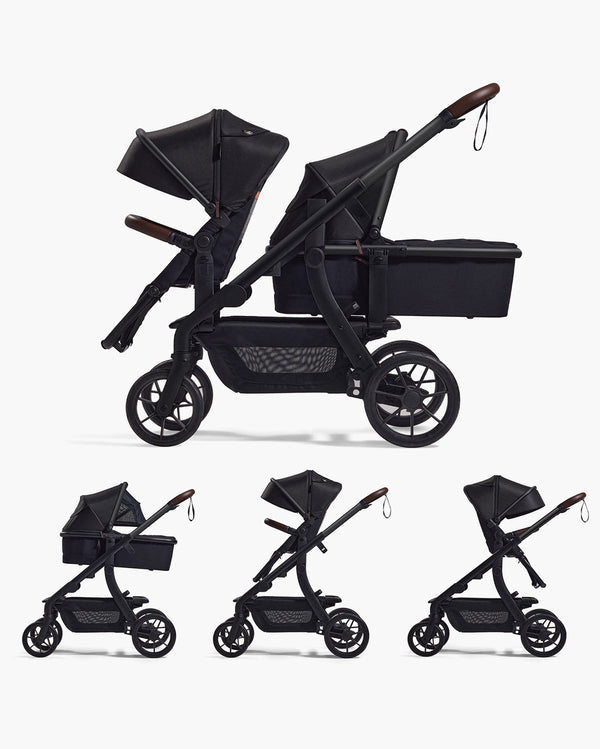
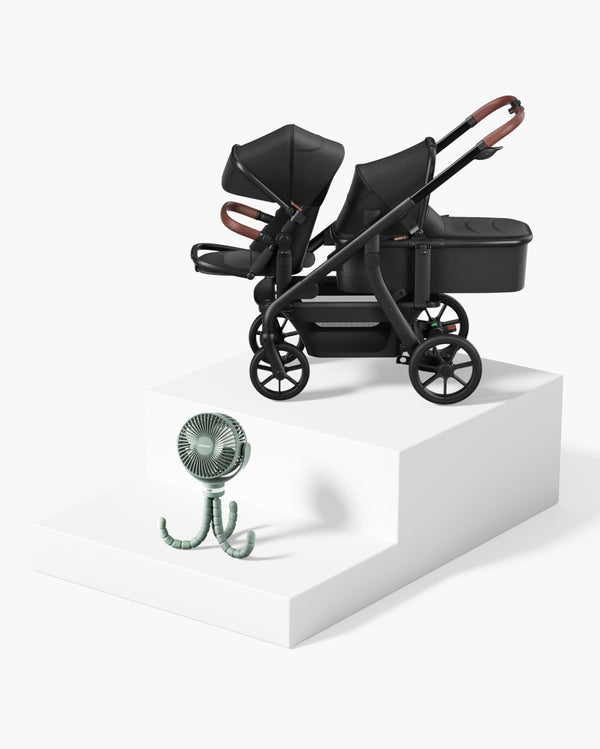
The Momcozy ChangeGo Baby Stroller suits full-day winter outings. Its OEKO-TEX certified fabric rests safely against baby's skin through long outdoor sessions. The extendable canopy blocks wind as well as sun, and the large under-seat storage (up to 19.8 lbs / 9 kg) carries the footmuff, backup layers, weather shield, and the thermos of hot coffee you deserve. Large 10-inch (25 cm) front swivel wheels and 12-inch (30 cm) rear wheels with all-wheel suspension handle winter terrain, from wet pavement to compacted snow paths. The 23 configurations adapt as your family grows, from bassinet to toddler seat to double stroller.
23 Configurations
Single-to-Double
Newborn-to-Toddler
Convertible Design
For Families Who Move Fast
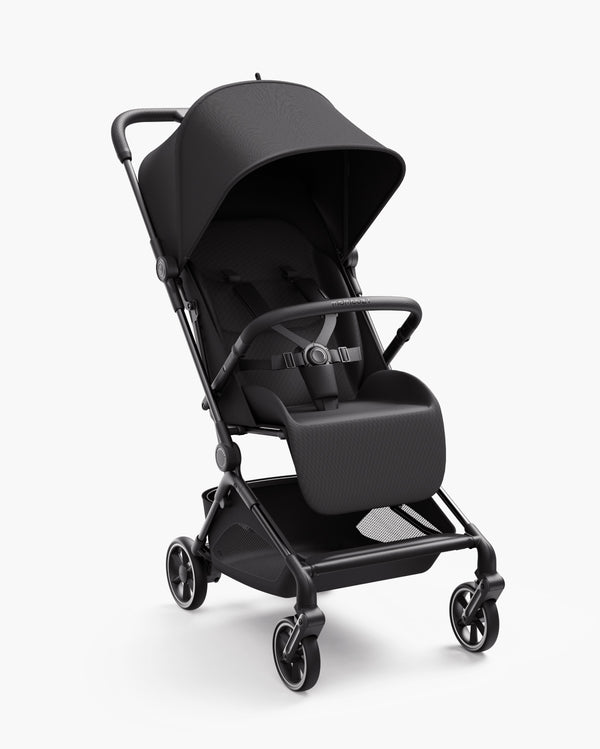
The Momcozy TuckGo Stroller is built for mobility without sacrificing comfort. At only 13.9 lbs (6.3 kg) and folding to carry-on size, it works well when you are ducking in and out of heated shops, moving through busy holiday markets, or heading to the airport for a warmer destination. The wide seat and three-position recline keep baby comfortable in full winter layers, and the sturdy carbon fiber frame holds steady on icy or uneven pavement.
Carry-On Compatible
Lightweight & Foldable
3-Position Recline
4-Wheel Suspension
23 Configurations
Single-to-Double
Newborn-to-Toddler
Convertible Design
Both strollers are compatible with footmuff and weather shield attachments, making them ready for the full cold-weather accessory setup described above.
lightweight stroller to find the right fit for your winter outings.
Take Winter Stroller Walks Today
Cold weather does not have to keep you and your baby indoors. With the right layers, the right accessories, and a clear sense of when conditions are too harsh, winter stroller walks can be a regular and rewarding part of your routine. Check the temperature, dress in layers, watch baby's signals, and choose a stroller built for the season. The fresh air is worth it.
FAQ about baby safety in cold weather
Q1: How long is it safe to stay outside in freezing temperatures?
At 32°F (0°C) with light wind, most healthy babies can stay outside comfortably for 30 to 45 minutes with full layering. Below 20°F (-7°C), limit outings to 15 minutes or less. Below 10°F (-12°C), outdoor stroller time is not recommended for infants. Always factor in wind chill, and come inside sooner if baby shows any sign of cold stress, including pale lips, unusual stillness, or cold skin on the torso.
Q2: Should I use a stroller fan in winter for air circulation?
A fan is not necessary in cold weather and would work against keeping baby warm. The more relevant concern in winter is carbon dioxide buildup if the stroller is heavily covered. A purpose-built weather shield with built-in ventilation addresses that concern without adding cold air. If you move from outdoors into a warm indoor space, unzip or remove the weather shield to allow fresh air to circulate naturally.
Q3: What are the best practices for transitioning from cold outdoors to a warm indoor space?
Remove the outer layer (snowsuit or bunting) as soon as you get inside. Babies overheat quickly in heated spaces, and a fully bundled baby in a warm shop can become too hot within minutes. Take off the hat, unzip or remove the weather shield, and check baby's chest for warmth. If you are only stopping briefly, loosen the outer layers rather than fully undressing, and keep a lightweight backup layer accessible for heading back outside.