


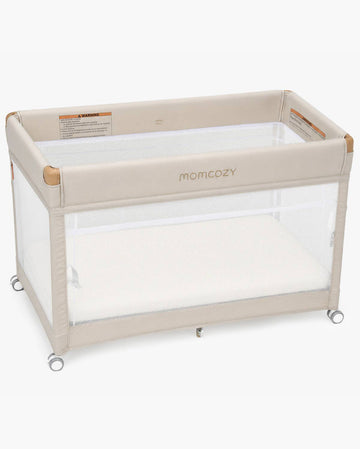
Yes, a newborn can sleep in a Pack and Play or playard only when the exact product and current mode are intended for infant sleep and every part is used as instructed. The category name alone does not approve every component. A raised bassinet, napper, changer, and main playard floor may serve different purposes. For families who need a sleep space that can move between rooms or travel, Momcozy portable playards are designed around that flexible format, but the manual for the exact model and mode always controls the setup.
Key Takeaways
- A newborn may sleep in a playard only when the exact product and mode are intended for infant sleep.
- A main floor, raised bassinet, napper, changer, or dome may have a different approved use.
- Use the provided or approved sleep surface. Do not add unapproved mattresses, toppers, foam, pillows, blankets, or padding.
- Naps and overnight sleep follow the same safe-sleep requirements, although babies may respond differently to the sleep space.
- Stop using a raised bassinet level as soon as the model’s weight, height, or developmental limit applies.
- Check borrowed or stored playards for recalls, damage, missing parts, modifications, and correct assembly.
Can a Newborn Sleep in a Pack and Play? The Short Answer
A newborn can use a playard for sleep when that exact playard and active mode are approved for infant sleep, fully assembled, and fitted with the permitted sleep surface. Do not assume that every product called a Pack and Play, playpen, portable crib, or travel cot follows the same instructions.
Sleep approval does not promise that a baby will settle there all night. Safety depends on the product and setup, while sleep behavior varies by baby. Terms such as Pack and Play, playard, portable crib, and playpen are often used interchangeably, but playard uses and age limits can vary by product. The exact instructions should guide the final decision.
First Check Which Part of the Playard Is Approved for Sleep
Look at the exact component your baby will lie on. A multiuse playard may have several attachments, yet only specific parts may be intended for sleep.

| What You Are Looking At | What to Verify Before Use |
|---|---|
| Main playard floor | The manual permits sleep at your baby’s current stage. |
| Raised bassinet level | It is named as a sleep mode, with current weight and developmental limits. |
| Newborn napper, lounger, seat, or dome | The instructions explicitly permit sleep. A soft or reclined attachment should never be assumed to qualify. |
| Changing station | Treat it as a diaper-changing surface unless the manual states another approved use. |
Use the same sequence every time: component name → approved use → assembly → permitted surface → current limit. Community terms such as “bassinet” and “napper” are often used loosely. The product label and manual provide the decision because playard bassinet modes vary across models.
What Does a Safe Sleep Setup Look Like in a Playard?
Once you identify a sleep-approved mode, check the whole setup. The surface should be firm, flat, and installed as directed. Fully open the frame and secure every required rail, hub, latch, and lock.
For every nap and nighttime sleep, use a product intended for sleep and follow the same safe-sleep basics: keep the space bare and place your baby on their back. If the model permits a fitted sheet, use one made for that surface. It must not loosen anchors or cover straps, snaps, or hook-and-loop tabs.
Place the playard on a stable floor, away from blind cords, monitor cords, windows, heaters, and reachable furniture. These checks follow the same safe sleep setup used for cribs and bassinets: place the baby on their back, use a firm sleep surface, and keep the space bare.
Why Does the Pack and Play Mattress Feel Thin and Firm, and Can You Add Another?
The included pad may feel unusually firm. Do not soften it with another mattress, foam, a topper, folded blankets, pillows, or loose padding. Additions can change the fit and create gaps near flexible side walls.
Use the supplied sleep surface unless the instructions identify another compatible option. Any aftermarket playard mattress should name the exact playard brand and model, since poor fit can create entrapment or suffocation hazards. The firmness also helps preserve the fit designed for that playard, while extra playard padding can change the fit and create gaps.
Are Naps and Overnight Sleep Different in a Playard?
The safe-use requirements are the same for a short nap and a full night’s sleep. Supervision does not make an unapproved attachment, extra mattress, or soft bedding suitable for sleep.
A baby may still respond differently to an unfamiliar surface or room. Before a trip, use the correctly assembled playard during ordinary sleep times at home. If sleep remains difficult, choose another approved space without altering the mattress. A Pack and Play vs. crib decision depends on available space and long-term routines, so comfort problems may also signal that another approved format suits the family better.
When Must You Stop Using a Raised Bassinet Level?
Stop using the raised level as soon as any limit in the model’s instructions applies. Limits may include weight, height, rolling, pushing up, sitting, kneeling, or pulling up. The first applicable condition controls.
Do not rely on age alone or borrow a limit from another model. Because bassinet stop-use limits vary, check the exact instructions as your baby’s movement changes. Move to a lower approved mode or another sleep space as soon as the first applicable condition appears.
Does Safe Use Change at Grandparents’ House or While Traveling?
No. A different location does not change the approved setup, mattress, sheet, or limits. Bring the permitted components and give caregivers the instructions.
At the destination, lock the frame, secure the sleep surface, and engage wheel brakes. Keep the unit away from cords, curtains, windows, heaters, and furniture. Inspect a hotel or relative’s playard as borrowed equipment. The home playard vs. travel crib choice can matter for families who travel often.
What Should You Check Before Using a Borrowed or Secondhand Playard?
A stored or secondhand playard needs a full inspection. Find its brand, model number, manufacture date, labels, and current manual before assembly.
- Search the CPSC recall database using the model details.
- Inspect the frame, rails, hinges, floor, mesh, and mattress attachments.
- Confirm that every original part is present and no substitute hardware or improvised repair has been added.
- Test every lock while the playard is empty.
- Confirm that the approved sleep surface attaches as directed.
Every required component should be accounted for during a secondhand playard inspection. If you cannot confirm the intended sleep mode, locate the instructions, or restore the original configuration, choose another approved sleep space. Do not improvise with hardware, repairs, or replacement padding.
When Should You Choose a Different Sleep Setup?
Do not use the setup if the component lacks sleep approval, a limit has been reached, or the playard is recalled, damaged, modified, incomplete, or unable to lock. If your baby does not settle in a correctly prepared playard, choose another approved sleep space without making the playard softer.
How to Check the Momcozy One-Click Foldable Baby Playard for Newborn Sleep
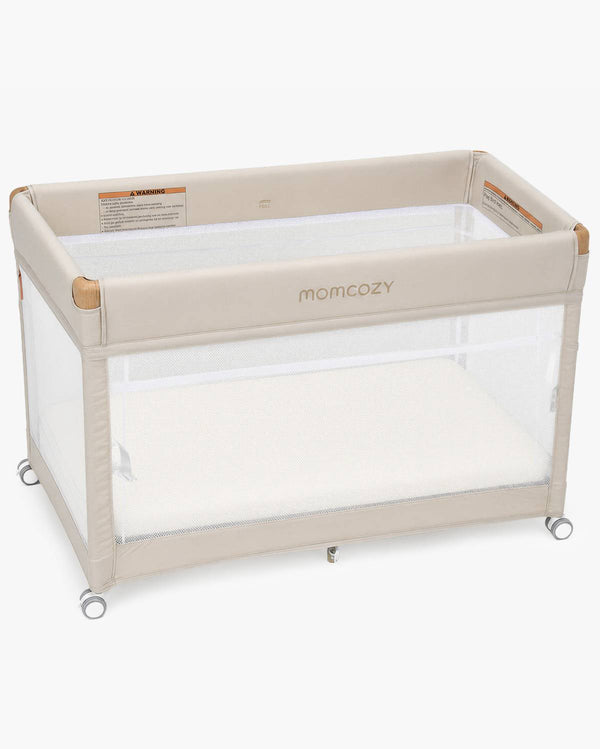
The Momcozy One-Click Foldable Baby Playard with Bassinet combines Bassinet and Playard modes in a foldable frame, but each mode still needs its own use check. For newborn sleep, confirm that the included U.S. instructions identify Bassinet Mode for that purpose. Install the supplied sleep surface exactly as directed, complete every setup step, and engage the caster brakes before placing the baby inside.
Before the first sleep, identify every stated Bassinet Mode weight and developmental stop-use condition. Share those limits with anyone who may assemble or use the playard. The changing station is not a sleep space, and its proximity to the bassinet does not change its intended use. When the first Bassinet Mode limit applies, move to the next approved mode without adding a topper or second mattress.
Safe-Use Checklist Before Every Sleep
Use this quick check for naps and nighttime sleep:
- Confirm that the exact product and current component or mode are intended for sleep.
- Fully assemble and lock the playard according to the manufacturer’s instructions.
- Use the provided or approved sleep surface exactly as directed and do not add unapproved padding.
- Use only a fitted sheet allowed for the model, and make sure it does not interfere with anchors or straps.
- Keep pillows, toys, loose blankets, bumpers, positioners, toppers, and other soft items out of the sleep space.
- Place baby on their back for sleep and follow the broader safe-sleep guidance linked in the article.
- Check the active mode’s weight, height, and developmental stop-use conditions.
- Engage wheel brakes and place the playard away from cords, windows, and other hazards as directed.
- For borrowed or stored products, check recalls, damage, missing parts, modifications, and current instructions before use.
FAQs About Newborn Sleep in a Playard
Q1. Can a Newborn Sleep in a Playard From the First Day Home?
Yes, if the exact playard and selected mode are intended for sleep from birth, the frame is fully assembled, and only the approved sleep surface is used. If your newborn has a medical condition affecting sleep, follow the individual plan from their clinician.
Q2. Can a Baby Sleep in the Bottom of a Pack and Play?
Yes, when the main playard floor is identified as a sleep-approved mode for your baby’s current stage. Secure the supplied or approved surface exactly as directed, keep the space bare, and follow the model’s weight, height, and developmental limits.
Q3. Is a Raised Upper Level Always the Same as a Bassinet Attachment?
No. A raised platform may be labeled as a bassinet, napper, lounger, or another accessory, and those names do not carry the same approval. Check the manual for the exact component and confirm that it is specifically intended for infant sleep.
Q4. Can I Use a Regular Crib Sheet in a Playard?
Only if the playard manual permits a fitted sheet and the sheet is made to fit that exact sleep surface. Do not use a crib sheet that bunches, comes loose, covers attachment points, or interferes with mattress anchors or straps.
Q5. Why Does My Baby Sleep Well in a Crib but Not in a Pack and Play?
An unfamiliar surface, room, sound, or routine can affect how easily a baby settles. Let your baby experience the correctly assembled playard during normal sleep times at home, but do not add padding or change the approved surface to improve comfort.
Q6. Can a Baby Use the Same Playard for Naps and Nighttime Sleep?
Yes, when the active mode is approved for sleep and your baby remains within every listed limit. Use the same firm, bare setup for naps and nighttime sleep because supervision and shorter sleep periods do not make unapproved additions suitable.
Q7. Can a Baby Sleep in a Playard at Grandparents’ House Every Weekend?
Yes, if the playard remains correctly assembled with all approved parts and the baby stays within the current mode’s limits. Caregivers should know how to lock the frame, secure the sleep surface, check the brakes, and keep the space bare.
Q8. How Do I Find Out if an Older Playard Has Been Recalled?
Find the brand, model number, and manufacture date on the product label, then search the CPSC recall database. Also check for safety warnings, missing parts, and modifications. Stop using the playard if its identity or original configuration cannot be confirmed.
Keep Rechecking the Setup as Your Baby Grows
A newborn may sleep in a playard when the exact product and mode are intended for infant sleep and used as directed. Keep the approved surface unchanged, recheck limits as development changes, and inspect the product over time. Apply the same checks when comparing Momcozy portable playards.








