


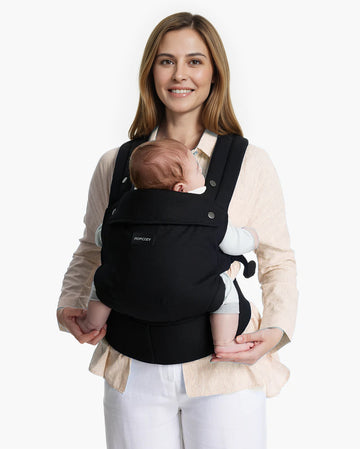
Baby wraps and carriers for sleep, soothing, reflux, and nursing are one of the most practical tools in early parenting. Babywearing reduces infant crying, supports healthy hip development, and improves breastfeeding outcomes. This guide walks you through every key scenario, from newborn bonding and daytime naps to reflux relief and hands-free nursing, so you can choose the right carrier with confidence.

Why Does Skin-to-Skin Contact Matter for Newborns
Early skin-to-skin bonding carrying does real, measurable work during the newborn stage. Fabric choice and fit determine how well a carrier supports that closeness.
The Benefits of Close Contact
Skin-to-skin carrying regulates a newborn's body temperature, heart rate, and stress hormone levels. Babies carried chest-to-chest calm faster, sleep longer, and cry less. A randomized study cited by the International Hip Dysplasia Institute (IHDI) found that ergonomic babywearing from birth is associated with significantly higher breastfeeding rates at six months.
The Best Fabric Features for Skin-to-Skin Bonding
Stretch and softness are the two most important qualities for skin-to-skin carrying. A stretchy fabric wraps around both parent and baby with no rigid buckles, creating a snug, womb-like hold that a structured carrier cannot match. Momcozy wrap baby carriers have different fabric options you can choose from. The Momcozy SnapLite Cooling Mesh Wrap Carrier uses breathable air mesh (87% polyester / 13% spandex) that stays cool while staying snug, ideal for extended bonding sessions in warm weather. For parents who prefer 100% cotton, the Momcozy WeeSnug Newborn Carrier delivers the same womb-like feel with added structure for newborns between 7 and 25 lbs (3.2 to 11.3 kg).

How Do Baby Wraps Help Soothe a Fussy Baby
A fussy baby needs rhythm, pressure, and closeness. A well-fitted carrier delivers all three and keeps your hands free. Most newborns settle within minutes of being placed in a chest-to-chest carry. To soothe a fussy baby at home, wrap carriers that go on in under 60 seconds, no tying required, make this realistic during a full-on meltdown.
Soothing in Public
Busy environments overwhelm newborns fast. A carrier creates a physical barrier against bright lights, noise, and visual stimulation. When a baby faces inward toward your chest, they get your heartbeat, your warmth, and your familiar scent instead of sensory overload. Parents consistently report that babies who fuss in strollers stay calm the moment they move to a carrier.
Sling Wraps for Quick Calming
Ring-adjustable sling-style wraps let you place and secure a baby in seconds. One-handed adjustments mean you can fine-tune the fit while the baby is already inside, without setting them down first.
Are Baby Carriers Safe for Newborn Sleep and Naps
Daytime supervised naps in a well-fitted carrier are generally considered safe for healthy babies and can be a real solution for babies who resist the crib. The key is following established safety guidelines every single time.
What Pediatric Sleep Educators Look For
Experts consistently point to three design features when recommending carriers for daytime naps:
- Ergonomic M-position support places knees higher than hips with thighs fully supported from knee to knee.
- Built-in head and neck support prevents chin drop without requiring a separate insert.
- Firm, snug fit eliminates sagging fabric that can block the airway.
The Momcozy WeeSnug Newborn Carrier includes a foldable head support panel and a Visual Adjustment Scale printed directly on the carrier, giving parents a quick visual checkpoint every time they wear it.
Safe Napping vs. Overnight Wearing
Daytime naps in a properly fitted carrier with a supervising adult present are generally safe. According to the American Academy of Pediatrics (AAP), infant carriers and slings are not recommended as routine and overnight sleep surfaces. Always move your baby to sleep on a firm, flat surface for nighttime sleep.

The T.I.C.K.S. Safety Rule
Check every point on this list before each wear, especially during naps, according to the T.I.C.K.S. Safety Rule.
|
Letter in T.I.C.K.S. |
Stands For |
What to Check |
|
T |
Tight |
Carrier hugs baby snugly with no sagging fabric |
|
I |
In View |
Baby's face is fully visible at all times |
|
C |
Close Enough to Kiss |
Tilt your chin and reach baby's forehead easily |
|
K |
Keep Chin Off Chest |
At least one finger's width between chin and chest |
|
S |
Supported Back |
Baby's back holds a natural, gently curved position Before bedtime routines begin, a few minutes of gentle rocking in a electric baby swing can help baby transition from active play to a calmer state—just remember to always move them to a firm, flat crib for actual sleep. |
Can a Baby Carrier Help with Reflux, GERD, and Colic
Yes. Many pediatric caregivers recommend upright carrying as a first-line comfort measure for reflux babies. Gravity reduces acid backflow when a baby stays vertical after feedings.
Why Upright Positioning Helps
Keeping a baby upright for at least 30 minutes after a feeding significantly reduces the backward movement of stomach acid. A carrier that maintains an upright, ergonomic position makes those 30 minutes hands-free and soothing for both parent and baby, far easier than holding a fussy, uncomfortable infant without support.
What to Look For in a Reflux-Friendly Carrier
|
Feature |
Why It Matters for Reflux |
|
Upright M-position seat |
Keeps the torso elevated, reducing acid backflow |
|
Snug, supportive fit |
Prevents forward slumping that compresses the stomach |
|
Soft, flexible fabric |
Allows natural breathing without adding abdominal pressure |
|
Easy, quick wear system |
Lets you secure a fussy baby fast during a crying episode |
The Momcozy PureHug Baby Carrier features EVA waist support with a lightweight, adjustable fit that holds baby in the correct upright position with minimal setup time. It supports babies from 7 to 45 lbs (3.2 to 20.4 kg), making it a strong daily option for families managing colic or GERD.
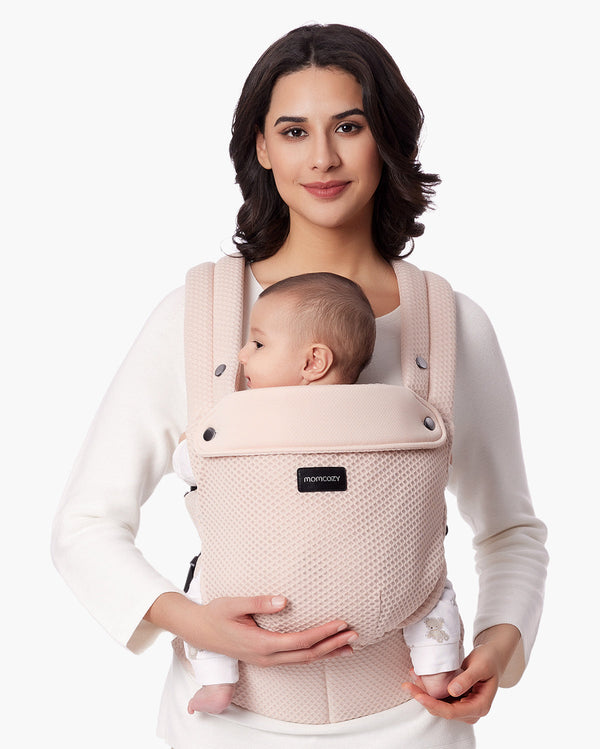
All Momcozy baby carriers are recognized by the International Hip Dysplasia Institute (IHDI) as hip-healthy products. For reflux babies, a carrier that forces the legs straight can add pressure to the abdomen and make symptoms worse.
How Can Nursing Moms Use a Baby Carrier On-the-Go
Breastfeeding while babywearing gives nursing parents a discreet, hands-free way to feed on the go. A well-designed wrap acts as a built-in privacy shield and frees both hands entirely. All Momcozy wrap carriers — including the SnapLite Cooling Mesh Wrap Carrier and the Easy to Wear Hands-Free Baby Wrap Carrier — include this nursing privacy function without any extra accessories.
Pumping and Wearing at the Same Time
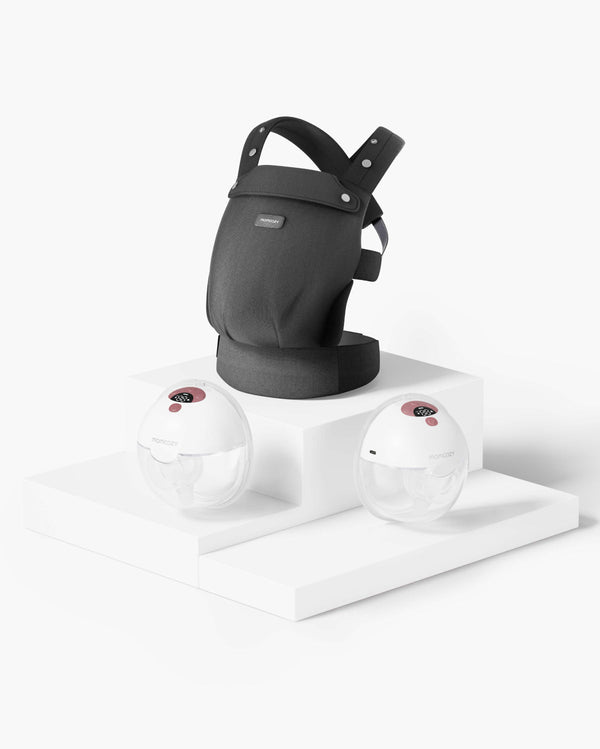
Parents using wearable breast pumps can combine expressing and babywearing with the right carrier setup. Choose a carrier with a wide, adjustable chest fit to leave enough room for wearable pump cups. Ring-adjust or simple clasp systems work better here than multi-buckle designs, because you can open and adjust the front of the carrier without taking the whole thing off.
Which Momcozy Carrier Fits Your Specific Need
With sleep, soothing, reflux, and nursing all pulling in different directions, it helps to match your carrier to your most common daily situation.
|
Scenario |
Best Carrier Type |
Momcozy Pick |
|
Newborn bonding and skin-to-skin |
Stretchy cooling wrap |
SnapLite Cooling Mesh Wrap Carrier |
|
Newborn sleep and drowsy naps |
Structured wrap with head support |
WeeSnug Newborn Carrier (0–12M) |
|
Reflux and colic relief |
Upright structured carrier |
PureHug Baby Carrier |
|
Nursing discreetly on the go |
Wrap with built-in privacy panel |
SnapLite or Easy to Wear Hands-Free Wrap |
|
Quick pickups and toddler carries |
Standalone hip seat |
Wanderer360 Hip Seat |
|
Long outings with a growing baby |
2-in-1 hip seat and full carrier |
2-in-1 Hip Seat Baby Carrier |
Every carrier in this lineup carries the IHDI hip-healthy certification and supports the ergonomic M-position from the first wear. Whether you need a wrap baby carrier, a newborn carrier, or a hip seat carrier, there is a Momcozy baby carrier built for your specific situation.
Conclusion: Find Your Perfect Baby Wrap or Carrier
Baby wraps and carriers for sleep, soothing, reflux, and nursing give parents a practical, evidence-backed tool for the most demanding parts of early parenting. Follow the T.I.C.K.S. rule at every wear, keep overnight sleep on a firm flat surface, and pick a carrier built around your specific daily needs. Whether it's skin-to-skin closeness for a newborn or upright support for a colicky baby, there is a Momcozy baby carrier designed for that exact moment.

FAQs
Q1. How Long Can I Keep My Baby in a Wrap Carrier Each Day?
Most parents use a wrap carrier for 1 to 2 hours at a stretch, then take a break to let the baby move freely. As your baby develops stronger muscle control, you can gradually extend carry sessions. Watch for signs of discomfort in both yourself and your baby, and consult your pediatrician with any specific concerns about duration.
Q2. When Should I Switch from a Wrap to a Structured Baby Carrier?
Most parents transition around 4 to 6 months, when the baby develops stronger neck and core control. Structured carriers offer more defined support for heavier babies, while wraps suit the newborn stage best.
Q3. Can I Use a Baby Carrier After a C-Section?
Yes, but wait until your incision heals and your doctor clears you, typically around 6 to 8 weeks postpartum. Choose a carrier with a waistband that sits above or below the incision to avoid direct pressure.
Q4. Can Both Parents Use the Same Baby Carrier?
Yes. Most Momcozy carriers adjust from XXS to XXL, so both parents share one carrier without repurchasing. Simple ring-adjust and buckle systems allow a quick fit change between wearers. The IHDI notes that babywearing benefits, including bonding and reduced infant crying, extend to all caregivers, not just mothers.
Q5. How Do I Wash a Baby Wrap Carrier?
Most baby wrap carriers are machine washable on a gentle, cold cycle. Air dry flat to preserve the fabric's stretch and shape. Always check the care label on your specific carrier before washing to avoid shrinkage or damage.








