


Hip Seat Carriers


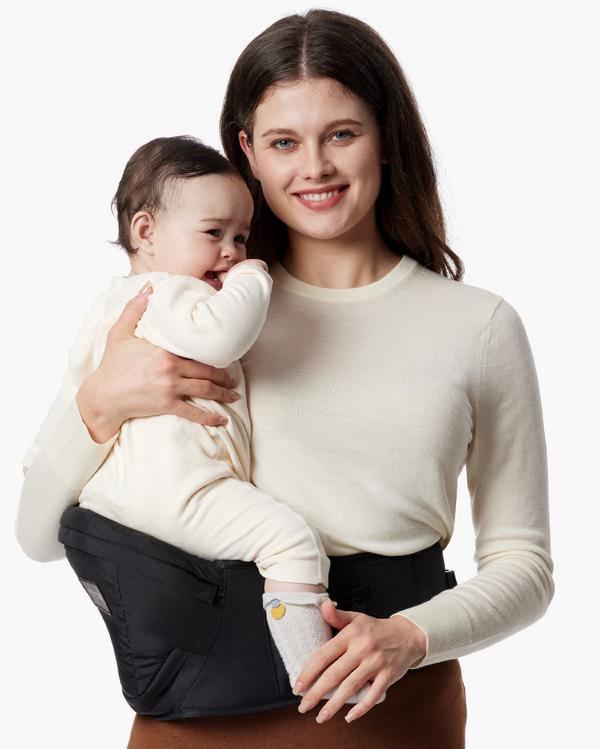
Hip Seat Carrier Guide: Choice, Fit & Everyday Use
What Is a Hip Seat Carrier?
Unlike a standard carrier that supports the upper body with straps and a panel, a seat-only hip carrier mainly assists the adult’s hold. The seat supports part of the child’s weight around the waist, but the caregiver may still need to keep one arm around the child.
Choose this style for quick transitions, short errands, queues, or home routines when you want quicker transitions without putting on a full structured carrier each time. Compare the two product styles above before choosing your setup.
Hip Seat Only or 2-in-1 Carrier?
Wander360 is designed around speed: secure the waistband, position the seat, and place your child on it while maintaining the required hand support. Move2Fit adds a detachable upper panel and X-shaped shoulder straps, allowing you to switch between hip-seat assistance and approved full-carrier modes.
A seat-only design can be easier for repeated ups and downs, while a full mode may suit longer outings or times when broader weight distribution matters. Check the Move2Fit setup instructions before treating any configuration as hands-free.
When Can a Baby Use a Hip Seat Carrier?
Momcozy positions Wander360 for use from 6 months+ and Move2Fit from 5 months+, subject to the latest instructions. A hip seat is not intended to replace a newborn-specific carrier. Before use, confirm the current age, weight, size, and positioning limits for the exact product and mode.
A child who meets the listed age may still need a different option if the seat, waistband, or carrying position does not fit securely. Review the current product guidance before the first carry.
How Should Baby Sit on a Hip Seat?
Check that the child is not leaning away from you, sliding toward the edge, or causing the seat to tilt. In seat-only mode, the caregiver’s arm provides the upper-body support that the product itself does not provide. In Move2Fit’s approved full-carrier mode, the structured panel and straps add support around the torso.
Use the model-specific fit video to check the seat angle, body position, and required hand support.
How to Wear and Adjust the Waistband
For Wander360, choose the waist size that matches your measurement before ordering. For either model, smooth the waistband around your body, fasten every closure, and check that the seat does not drop or rotate as weight is added.
If the carrier slides, tilts, presses sharply into one area, or feels less secure after clothing changes, stop and refit it before continuing. A different caregiver should complete a fresh adjustment rather than relying on the previous setting.
Quick Ups and Downs in Daily Routines
Wander360 suits moments when speed matters and you can maintain an assisted hold. Move2Fit adds the option to switch into an approved structured mode when the outing becomes longer or the child needs more complete support.
For longer stretches, switch to the mode that gives you the level of support you need and take breaks as needed.
Comfort for the Caregiver
If one side feels overloaded, check whether the seat has shifted, the waistband is too low or loose, or the child is leaning away. Change sides when the product and situation allow, and take regular breaks during longer use.
Move2Fit’s X-shaped shoulder straps can distribute support across the shoulders and waist in approved full-carrier modes. Stop using the carrier if you experience persistent pain, numbness, sharp pressure, or loss of stability.
What are your wireless bras made of?
Seat-only use may require continuous hand support. Avoid activities involving heat, sharp objects, running, cycling, fall risks, or sudden movements. Do not treat any configuration as hands-free unless the model instructions explicitly allow it.
Follow the care label for the exact model. Clean only as directed, let all parts dry fully, and stop using the product if a load-bearing component is torn, stretched, cracked, or no longer locks correctly.
A seat-only hip seat supports the child on a firm platform but usually requires the caregiver to keep one arm around the child. A structured carrier also supports the upper body with a panel and shoulder straps. A 2-in-1 model combines both forms, letting you switch between quick assisted carrying and approved full-carrier modes.
Choose Wander360 when your priority is a simple baby hip seat carrier for quick assisted carries from 6 months+. Choose Move2Fit when you want a hip seat baby carrier that can switch between a detachable seat and a structured mode from 5 months+.
Base the final choice on current fit, size, mode, and product instructions rather than age alone.
Not always. Wander360 is a seat-only carry-assist product and should not be treated as hands-free; keep the required hand support around the child.
Move2Fit can provide hands-free carrying only when the approved upper panel, straps, and fastenings are fully assembled and used in a mode that the instructions permit.
Seat-only hip seats are particularly useful for short, repeated carries and frequent ups and downs. For longer outings, a structured 2-in-1 mode may distribute support more broadly across the shoulders and waist.
Comfort still depends on fit, child size, activity, and breaks, so neither style should be described as an unlimited all-day solution.
No. Momcozy’s hip seat models are not newborn carriers. Wander360 is positioned for 6 months+ and Move2Fit for 5 months+, subject to the latest model instructions.
For an earlier stage, choose a product specifically designed and approved for newborn positioning rather than using an upright hip seat early.
A toddler can use an eligible model while remaining within that product’s current age, size, weight, and fit limits.
A toddler hip carrier can be useful when a walking child repeatedly asks to be picked up, but Momcozy’s products should not be presented as toddler-only carriers.
They can be used safely when the child meets the product requirements, the correct mode is assembled, every fastening is secure, and the caregiver follows the instructions.
Inspect the carrier before every use, maintain any required hand support, and stop if the child or carrier is no longer positioned securely.
Do not use a seat-only hip seat as a sleep surface. If a child becomes drowsy or falls asleep, continuously monitor their position, face, and airway, follow the exact product instructions, and move them to an appropriate firm, flat sleep surface as soon as practical.
Place the waistband in the position shown by the model instructions so it lies flat, feels secure, and keeps the seat level.
The best position can vary with body shape and clothing. If the seat tilts, drops, or creates concentrated pressure, support the child and readjust before continuing.
Common causes include a loose waistband, incorrect placement, a size mismatch, slippery clothing, or the child sitting away from the caregiver’s body.
Stop, support the child with both hands, check every fastening, and refit the waistband. Do not continue while the seat is tilted or unstable.
Check whether the waistband is level, the seat is centered, and the child is close to your body. A low, loose, or uneven fit can concentrate pressure.
Change modes or take a break if discomfort persists, and stop using the carrier if you experience pain, numbness, or sharp pressure.
Try a calm, brief session when the child is rested, then check the seat angle, clothing, temperature, timing, and body position.
Some children need time to adjust, while others may not like a particular mode. Stop if the child remains distressed rather than forcing the carry.
Follow the care label for the exact model. Remove only parts identified as detachable, secure fastenings as directed, and avoid heat, harsh cleaning methods, or machine settings that could damage the seat or load-bearing structure.
Let every part dry fully before the next use.
Inspect it before every use. Check buckles, hook-and-loop fasteners, straps, seams, waistband, seat, and structured panels for wear, stretching, cracking, or damage.
Stop using the carrier when any load-bearing part no longer fastens or supports the child as intended.
Yes, especially for queues, airports, attractions, car transfers, and repeated switches between walking and being carried.
A compact hip carrier can reduce the need to put on a full carrier for every short transition. Use the appropriate mode, maintain required hand support, and take breaks based on both the child’s and caregiver’s comfort.
Limit use to low-risk activities where you can maintain the support required by the selected mode.
Avoid cooking, hot drinks, sharp tools, climbing, running, heavy lifting, and tasks with a fall risk. Seat-only carrying must not be treated as hands-free simply because the child is resting on the seat.
- Choosing a selection results in a full page refresh.
- Opens external website. Opens in a new window.