


Mastitis can be a real headache for breastfeeding moms, often leaving them worried about how it will affect their milk supply. Yes — mastitis can decrease milk supply, usually on the affected side, and that dip is typically temporary. The first job is calming swelling while you keep milk moving on your usual schedule. Rebuilding volume comes after the breast feels less hot and angry.
We'll tackle the big question head-on: Can mastitis decrease milk supply? Then: why output drops, how to protect supply during a flare, and how to increase milk supply after mastitis — without the old “heat and empty harder” script.
This page is general education for U.S. families, compiled against ABM Protocol #36 (2022) and the AAFP 2024 mastitis review. It is not a diagnosis, it is not individually signed by a named clinician, and it does not replace care from your OB-GYN, midwife, pediatrician, or an IBCLC. Full sources: Academy of Breastfeeding Medicine Protocol #36 (2022) and the American Academy of Family Physicians 2024 mastitis review.
Key Takeaways
- Mastitis can decrease milk supply, most often on the affected breast, and the drop is usually temporary.
- Swelling can compress ducts, pain can slow let-down, and milk that sits can signal the body to make less.
- During a flare, ice, rest, and your usual feeding rhythm protect supply better than prolonged heat, hard massage, or extra pumping.
- Many moms see output climb again within several days to about two weeks after fever and swelling ease — timelines vary.
- Antibiotics used for bacterial mastitis do not permanently dry up milk. Illness, fever, and missed milk removal are more often the reason for a dip.

Does Mastitis Decrease Milk Supply?
Yes, mastitis can decrease milk supply temporarily. The inflammation and infection associated with mastitis can make it difficult for the milk to flow properly, which may reduce the amount of milk your body produces. Additionally, the pain and discomfort caused by mastitis can make breastfeeding more challenging, leading to less frequent nursing or pumping sessions, which also contributes to milk supply drop after mastitis. However, this reduction in milk supply is often temporary, and normal production typically resumes following treatment and recovery from mastitis. With appropriate treatment and continued breastfeeding or breast pumping, you can maintain your milk supply and may even see it bounce back as you recover from mastitis.
Will mastitis decrease your milk supply on both sides? Often no. The drop is usually one-sided. The other breast may keep its usual volume and sometimes compensate a little. That can make pump bottles look uneven even when your baby is still getting enough overall — watch wet diapers and weight with your pediatrician, not ounces on one side alone.
Does mastitis increase or decrease milk supply? For most people it decreases on the inflamed side. Any “increase” you notice is more often the other side working harder, not mastitis boosting production. A milk supply decrease after mastitis is rarely permanent if milk removal continues after you feel better. If output stays down for about two weeks of consistent effort, ask an IBCLC to look at latch, flange fit, and whether another issue is in play.
It also helps to separate flow from production. The breast can still be making milk while swelling pinches the path out — like drinking through a kinked straw. Once inflammation eases, more milk may come through even before your body has fully “reordered” a higher volume.
Why Does Mastitis Decrease Milk Supply?
The mechanics of breastfeeding are delicately balanced, and mastitis can disrupt this balance in several ways, leading to a milk supply drop after mastitis.
1. Inflammation and Compression
As the breast tissue inflames with mastitis, it may swell and compress the milk ducts within your breast. This is a sort of physical blockage inside the breast, which acts to impede the normal flow of milk out toward the nipple, creating congestion in the pathways responsible for carrying milk toward the nipple. KellyMom notes that milk supply and pumping output from the affected breast may decrease temporarily — a common side effect, not proof that lactation has ended.
2. Pain and Breastfeeding Challenges
Mastitis is generally accompanied by sharp pains and discomfort, which may result in shallow or infrequent nursing. Because milk production works on a supply-and-demand basis, the less stimulation through nursing, the more the body gets the signal that less milk should be produced.
3. Poor milk drainage
If mastitis is making it too painful to breastfeed, a mother may not be emptying the affected breast fully or frequently enough. Poor drainage will make the problem worse, as an engaged full breast acts as a signal to the body to slow down production. A protein often called the feedback inhibitor of lactation (FIL) builds up when milk sits. That is a local “we have enough” message, not a moral failure.
4. Impact of infection
The body's immune response to infection includes diverting energy and resources to fight off the bacteria causing mastitis. This fight requires energy—energy that might otherwise be used to produce milk, potentially leading to a temporary milk supply drop after mastitis. Fever also dehydrates you. Milk is mostly water, so fluids matter, but you do not need to force gallons — drink to thirst and keep a bottle nearby when you feed.
5. Emotional Stress
Discomfort and stress of mastitis may affect hormones responsible for milk production and release. High levels of stress interfere with oxytocin (the hormone associated with the milk ejection reflex, also known as letdown) leading to less efficiency in the release of milk.
It’s important to know that a milk supply drop after mastitis is something many moms face. However, with the right approach and sometimes a little help from healthcare professionals, most women can get past mastitis without it permanently affecting their milk production. With good care, you can keep breastfeeding effectively and keep your milk supply steady.

Mastitis Causes and Symptoms US Moms Should Not Ignore
Mastitis means inflammation of the breast. It is not always a bacterial infection. ABM describes a spectrum: ducts can narrow from swelling, inflammatory mastitis can follow, and bacterial mastitis is one later point on that line. Only a clinician can tell you where you are on it. For a fuller symptom walkthrough, see mastitis symptoms in breastfeeding.
Why does mastitis happen?
- Hyperlactation: An oversupply of milk can also be a culprit. Producing a lot of milk will cause your ducts to narrow because the surrounding tissue compresses them. This may cause engorgement when your breasts are feeling extra full and firm, which can overlap with inflammatory mastitis.
- Narrowed or poorly draining ducts: Milk doesn't flow freely and gets stuck, leading to swelling and pain in that area. If one breast gets clogged—maybe because your baby didn't fully drain it or you've skipped breastfeeding—it can back up, causing pressure and inflammation. Many so-called “plugs” are swelling, not a cork you can force out. Blocked duct relief covers that shift in language.
- Bacterial infection: Your skin harbors bacteria, which usually do not cause any problems. However, if they sneak into your breast tissue, through a sore or cracked nipple, it can lead to an infection within the breast, setting the stage for mastitis.
- Insufficient breast emptying: When milk stays in the breast—whether from infrequent feedings or incomplete pumping—it can increase the risk of infection. Long gaps are a problem. Adding extra “just in case” sessions can also worsen swelling if you already make more than baby needs.
- Tight clothing or pressure on the breast: Wearing bras that are too tight or even sleeping in a way that puts constant pressure on the breasts can act like a dam, blocking the flow of milk. A comfortable, non-tight nursing bra helps.
- Weakened immune system: When you're run down from lack of sleep, stress, or poor nutrition, your body's defenses are lowered. This can make it harder to fight off infections, including those that lead to mastitis.
What are the symptoms of mastitis?
- Breast pain: One of the first signs you'll notice is pain in the breast. It may start out feeling uncomfortable and progress to a severe ache or burning sensation, especially when you're breastfeeding, as the milk tries to pass through the inflamed area.
- Swelling and redness: The affected part of your breast might look swollen and red. It could feel hot and hard to the touch — a sign of inflammation, and sometimes infection. On darker skin, redness can be harder to see — go by heat, pain, and how you feel overall.
- Flu-like symptoms: Mastitis doesn't just stay local to the breast; it can make you feel sick all over. You might develop a fever, chills, and body aches, making you feel as though you've caught the flu.
- Nipple discharge: Sometimes, along with the pain and swelling, you may see some unusual discharge from the nipple. It could be cloudy or have streaks of blood, an indication of inflammation or infection.
- Fatigue: This isn't just your regular tiredness; with mastitis, the fatigue can be overwhelming, making even simple tasks feel exhausting.
- Lower output on that side: Pump ounces or a fussy baby on one breast can be part of the picture. Milk can also taste saltier for a short time.
Causes vary widely. Tenderness, swelling, or flu-like feelings are a flag to slow down and get support — not a verdict that breastfeeding is over.

How to Protect Your Milk Supply During Mastitis
Do not try to dry up while you have mastitis. Cutting sessions during a flare often makes the breast more congested. Protect supply by calming swelling and staying on your usual feeding rhythm — not by pumping extra to strip the breast empty. The AAFP 2024 review, based on ABM Protocol #36, advises against heat, aggressive massage, and frequent complete emptying with a pump while the tissue is inflamed.
Keep milk moving — on the schedule you already have
Stay on the feeding or pumping rhythm you already use, including overnight. Skip extra “empty harder” sessions, and skip long gaps too. Nurse first if you can latch without pushing through sharp pain. If that side is too sore, pump or hand-express for comfort — about what your baby usually takes, not until the breast feels bone-dry.
If latching still hurts too much, a wearable on a comfortable setting can cover those same usual sessions. Do not jump to max suction. The Momcozy M5 Smart Wearable Breast Pump can log ounces so you can see the dip is often one-sided. It helps you keep the schedule. It does not treat mastitis, and it is not a reason to add extra pumps.
Member price
From$119.99Code Save 15%


Member price
$209.99$257.99
Ice first; skip the old heat-and-knead routine
Older blogs (including an earlier version of this page) often told moms to use a long warm compress and to massage a lump toward the nipple. Current specialist guidance leans the other way for inflammatory mastitis: cold packs between feeds to reduce swelling, plus clinician-approved anti-inflammatory pain relief if it is appropriate for you. Ask your doctor or pharmacist before you take anything. Do not start, stop, or change a prescription on a blog’s say-so.
Brief warmth right before a feed is optional if it helps your let-down. All-day heat can vasodilate and may worsen swelling. Deep massage, vibration tools, and “working the clog out” can injure tissue. If you use touch, keep it light — more like stroking toward the armpit than digging.
Rest, fluids, and less pressure on the breast
Getting enough rest and leaning on your people matters as much as pumping math. If you need hands-on help, an IBCLC can look at latch and a rebuild plan. Drink to thirst. Eat as well as you can — food is support, not a mastitis treatment.
Wear a supportive bra that does not carve a groove into the sore area. Tight straps and underwires are a common aggravator. Prevention basics — latch, gaps, and pressure — also live in how to prevent mastitis.
During a flare — do: nurse or express on your usual cadence; ice between sessions; rest; call a clinician if you are not improving in 12–24 hours or you feel suddenly very ill.
During a flare — don’t: power-pump, crank suction, use prolonged heat, deep-tissue massage, or try to wean that side overnight.
How to Increase Milk Supply After Mastitis
A milk supply decrease after mastitis usually rebounds once inflammation settles and you raise demand again. For many parents, volume starts trending up within several days to about two weeks after fever and swelling ease. That is a range, not a promise. Signs your milk supply is dropping can help you tell a true dip from a fussy day.
Frequency first, then one extra session
Offer the recovering side more often once it is comfortable, or add one short expression after a feed. Power pumping belongs here — after the flare — not while the breast is still hot and red. A common optional hour is 20 minutes on, 10 off, 10 on, 10 off, 10 on, once a day for a few days. The point is stimulation, not a huge bottle in that hour.
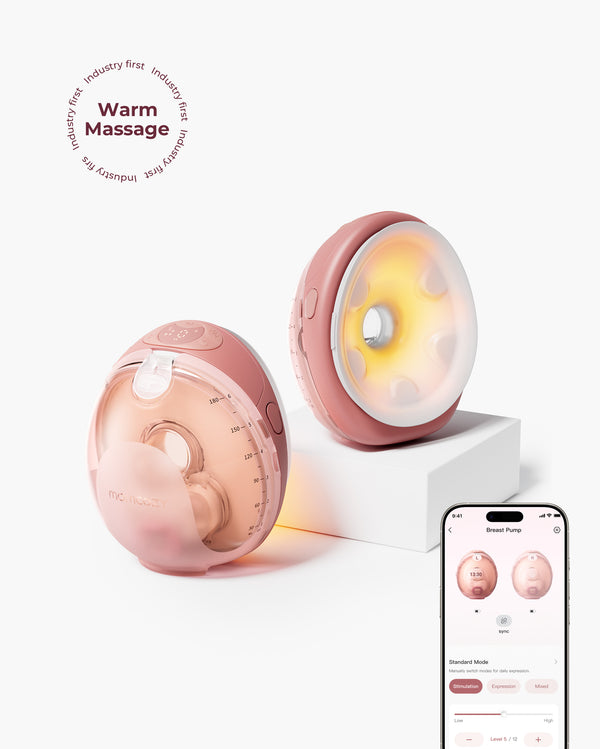
When you are ready to keep sessions on time at home or at work, a wearable can help you avoid the long gaps that helped land you here. Momcozy sells wearable breast pumps; they are optional scheduling tools, not mastitis treatment. The Momcozy Air 1 Ultra-slim Breast Pump is a slim, no-heat cup that sits lower-profile under clothes for work or errands. After swelling has settled, the Momcozy Wellness 1 Warm-Massage Wearable Breast Pump can use warmth and a gentle rhythm as a comfort aid for let-down. Skip heat and vibration modes while the breast is still inflamed. None of these pumps treat, cure, or prevent mastitis. Use a comfortable suction and a flange that does not rub.
Member price
From$329.99Code Save 15%

Hands-on pumping, skin-to-skin, and when to get help
Gentle compression while a pump runs can help some people move milk. Keep the touch light. Recheck flange size if you see a white ring, pain, or almost no output. Skin-to-skin can support oxytocin when you are worn out. Galactagogue teas and cookies have limited evidence — they are optional snacks, not a cure for low supply after mastitis.
If output is still markedly down after about two weeks of consistent removal, or baby has fewer wet diapers, call your pediatrician and an IBCLC. Low milk supply reasons lists other causes worth ruling out.
Do Antibiotics for Mastitis Decrease Milk Supply?
Do antibiotics for mastitis decrease milk supply permanently? Usually no. Most of the dip comes from the illness itself: fever, missed feeds, pain, and dehydration. Many antibiotics prescribed for bacterial mastitis are compatible with breastfeeding, but that is a decision for your clinician or pharmacist, not a blog list of drug names and doses.
If you are prescribed antibiotics, finish the course even if you feel better in a day. Stopping early is a common reason mastitis comes back. Ask whether a probiotic is appropriate for you; antibiotics can also be followed by nipple or infant thrush, which is another reason to stay in touch with your care team. La Leche League International discusses mastitis care, including when antibiotics may be part of the plan.
Not every case of breast inflammation needs antibiotics. Mild symptoms that have been present for less than a day sometimes improve with rest, ice, and usual milk removal. If you are acutely ill, have a high fever, spreading redness, or you are not improving, contact your doctor the same day. Do not delay professional care to “wait out” bacterial mastitis.
If Baby Refuses the Affected Side
Refusal is common. Milk can taste saltier when tight junctions in the breast let more sodium through. Flow can also be slower, which frustrates a baby used to a faster let-down. The milk is usually still considered safe for a healthy, full-term baby — your clinician can confirm for your situation. LLLI notes that babies sometimes fuss on the inflamed side for taste or flow, not because the milk is “bad.”
Keep removing milk on that side even if you offer a bottle of what you expressed. Try the sore side when baby is sleepy, or start on the comfortable side to trigger let-down, then switch. If baby will not latch, a slim wearable such as the Air 1 can cover usual-schedule expression without adding heat. Protecting that side’s supply still matters until they return to the breast.
How to Decrease Milk Supply Without Getting Mastitis
This is a different goal from treating mastitis. Searchers asking how to decrease milk supply without getting mastitis are usually weaning or down-regulating an oversupply. Do not mix that plan with an active flare.
Drop one session at a time. Sudden long gaps are a classic setup for inflammatory mastitis. Use cold after feeds for comfort if you are down-regulating. If you already have mastitis, do not start a dry-up plan until your clinician says it is reasonable. Oversupply itself is a risk factor on the mastitis spectrum — slow changes beat an overnight wean.
When to Call Your Doctor or an IBCLC
Call your OB-GYN, midwife, or primary doctor the same day — or use urgent care or the ER if you look or feel severely ill — if you have a fever around 101°F (about 38.3–38.5°C), spreading redness or red streaks, pus, blood from the nipple, a lump that is getting larger, or symptoms that are worse after 12–24 hours of home care. A hard lump that never changes with feeding or pumping needs a medical exam; abscess is uncommon but it is not something to self-treat.
Call the pediatrician if baby has fewer wet diapers, poor weight gain, or signs of dehydration. An IBCLC can help with latch, flange fit, and a rebuild plan if supply stays down after you feel better. You do not have to wait until you are in crisis to ask for help.
FAQ: Quick Answers to Common Questions
Does mastitis decrease milk supply?
Yes. Mastitis can decrease milk supply, most often on the affected breast. The drop is usually temporary once inflammation eases and you keep removing milk.
Will mastitis decrease my milk supply permanently?
Permanent loss is uncommon when milk removal continues after you recover. If output is still low after about two weeks of consistent effort, see an IBCLC and your clinician to look for other causes.
How long does it take for milk supply to return after mastitis?
Many parents notice an upward trend within several days to about two weeks after fever and swelling improve. Bodies differ. Watch the trend, not one pump session.
Do antibiotics for mastitis decrease milk supply?
Antibiotics themselves rarely dry up milk. Fever, missed feeds, and the infection are more often the reason for a dip. Ask your clinician which medicine is appropriate and finish the prescribed course.
Can I keep breastfeeding if I have mastitis? Is the milk safe?
Continuing to breastfeed or express is usually encouraged unless your clinician says otherwise. Milk is typically still fine for a healthy term baby. Fussiness can be about saltier taste or slower flow.
Should I decrease milk supply while I have mastitis?
No. Do not try to dry up during a flare. Keep your usual feeding or pumping rhythm and focus on calming swelling with clinician-guided care. Wean only when a clinician agrees it is safe.
Does mastitis increase or decrease milk supply?
It more often decreases supply on the inflamed side. The other breast may keep up or compensate. It does not typically increase overall production.
Conclusion
Dealing with mastitis can be stressful, especially when you’re concerned about your milk supply. But don’t worry—this is often a bump in the road, not the end of breastfeeding. Protect supply in two phases: during the flare, ice, rest, and usual milk removal; after swelling settles, add frequency or one extra wearable session if you need it. Bring pump logs to an IBCLC if the ounces still look scary.
Power pumping can wait until you feel better. Tools such as Air 1, Wellness 1, or M5 Smart are optional ways to keep a schedule — they do not treat mastitis. With patience, professional care when red flags show up, and a little help from your people, most moms see flow return.








