Key Takeaways
-
• Spit-up is common and usually harmless.
-
• Small amounts don’t always require refeeding.
-
• Watch your baby’s behavior—not just the mess.
-
• Frequent forceful vomiting may signal a problem.
-
• Proper feeding posture and support can reduce spit-up.
Quick Answer
If your baby spits up, you don’t need to automatically feed again. In most cases, spit-up is normal and does not mean your baby lost a full feeding. The right choice depends on your baby’s cues.
If your baby seems calm, content, and relaxed after spitting up, there is usually no need to offer more milk right away. However, if your baby is still showing clear hunger cues—such as rooting, sucking their hands, turning toward the breast or bottle, or continuing to fuss for milk—you can pause briefly, then offer a slower or smaller feed if needed.
The key is to follow your baby’s behavior rather than the amount of milk that came up. Spit-up can look larger than it actually is, so focus on whether your baby still appears hungry or comfortable.
Introduction
Spit-up is one of the most common concerns for new parents. If you’re wondering, if the baby spits up should I feed again, you’re not alone. Seeing milk come back up can feel alarming, especially in the early months when feeding feels constant and unpredictable. The good news? In most cases, spit-up is normal and manageable with the right approach and supportive feeding setup.
Creating a calm, upright feeding environment can make a big difference. Supportive tools like a well-designed high chair from the Momcozy Best Baby High Chair Collection and ergonomic positioning aids from the Momcozy Nursing Pillow Collection can help reduce discomfort, improve posture, and support smoother, more confident feeding sessions for both baby and parent.
Spit-Up Vs. Vomit: Know the Difference
Before answering if the baby spits up should I feed again, it’s important to distinguish spit-up from vomiting.
Spit-up:
- Gentle flow of milk from the mouth
- Happens shortly after feeding
- Baby remains calm and comfortable
- Small amounts
Vomit:
- Forceful or projectile
- Larger volume
- May cause crying or discomfort
- Can indicate illness
If milk is coming out of your baby’s nose along with spit-up, this can look scary but is often harmless. You can learn more in this guide about milk coming out of baby’s nose: https://momcozy.com/blogs/babycare/milk-coming-out-of-babys-nose
Why Do Babies Spit Up During or After Feeding?
Babies spit up during or after feeding because their digestive systems are still developing. In the first months of life, the muscles that keep milk in the stomach are still immature, making occasional reflux very common, especially around feeding times.
Common causes include:
- Immature lower esophageal sphincter
- Swallowing air during feeds
- Overfeeding
- Lying flat too soon after feeding
- Fast or forceful milk flow
- Frequent movement or tummy pressure after meals
The valve between the stomach and esophagus isn’t fully strong yet, so milk can easily flow back up. Newborn stomachs are also very small, which means even a slight overfill can lead to spit-up. Spit-up is more likely when feeding is followed by burping delays, crying, or active movement right after eating. These situations can increase pressure in the tummy and push milk upward, which is why spit-up is commonly seen both during and after feeding sessions.
Should You Continue Feeding After Baby Spits Up?
Here’s the simple answer:
If your baby seems hungry, you can feed again. If they seem content, you don’t need to.
Ask yourself:
- Is the baby rooting?
- Sucking hands?
- Fussing for milk?
- Turning toward the breast or bottle?
- Acting calm and satisfied?
If it was a small spit-up and your baby appears relaxed, there’s usually no need to refeed immediately. Many babies spit up a tablespoon or two and feel completely fine afterward. However, if a larger amount comes up and your baby still shows clear hunger cues, offering a smaller, slower feeding can help replace what was lost without overfilling the stomach.
If spit-up happens frequently after large feeds, consider:
- Offering slightly smaller amounts more often
- Feeding in a more upright position
- Slowing bottle flow if using formula or expressed milk
Quick Decision Guide
-
Spit-up during feeding + baby still hungry: Pause to burp your baby, then continue feeding more slowly if they remain comfortable and continue showing hunger cues.
-
Forceful vomiting, repeated vomiting, distress, poor feeding, or signs of dehydration: Stop feeding and contact your pediatrician for guidance before continuing feeds.
The goal isn’t to replace every drop that comes up—it’s to make sure your baby feels comfortable, satisfied, and continues growing well.
How Long Should You Wait to Feed Again After Spit-Up?
There is no strict rule for how long parents should wait to feed again after spit-up. In many cases, it helps to pause briefly, burp your baby, and observe their behavior before offering more milk.
It’s also helpful to pause for a few minutes before offering more milk. Avoid rushing to refeed just because you saw milk come up. Observe your baby’s cues first. Responsive feeding—watching your baby instead of the clock—can help prevent unnecessary overfeeding, which may lead to more spit-up.
If your baby still seems hungry, try restarting the feed at a slower pace. Offering a smaller amount, taking burping breaks, and keeping your baby in a more upright position during and after feeding may help make the next feeding more comfortable.
Baby Spitting Up but Still Wants to Eat: What It May Mean
It is common for babies to spit up but still show hunger cues afterward. This can happen because spit-up often looks like more milk than it actually is, while most of the feed is still retained.
If your baby is still rooting, sucking their hands, or turning toward the breast or bottle, they may still be hungry and can usually continue feeding slowly and gently. Try offering milk at a calmer pace and watch for comfort cues.
If spit-up happens repeatedly in large amounts or your baby seems unwell or distressed, pause feeding and consult your pediatrician if needed.
What If Baby Spits Up a Lot or Seems to Spit Up the Whole Feed?
Sometimes spit-up may appear large or look like your baby has brought up an entire feed. While this can be alarming, the amount often looks bigger than it actually is once it spreads on clothing or surfaces.
If your baby still shows hunger cues after a larger spit-up—such as rooting, sucking hands, or continued fussiness—you can offer a smaller and slower feed instead of immediately replacing the full amount. This helps avoid overfilling a still-sensitive stomach.
However, if large spit-up episodes happen repeatedly, or if your baby seems uncomfortable, distressed, or unwell, it is best to pause feeding and monitor closely. In such cases, consult your pediatrician if concerns continue.
Feeding Again After Spit-Up: Breastfeeding vs. Bottle Feeding Tips
Whether you are breastfeeding or bottle feeding, it can help to restart feeds slowly after spit-up and pay attention to your baby’s comfort and hunger cues.
Breastfeeding Tips
-
Check that your baby has a comfortable latch and is feeding calmly.
-
Pause for burping if your baby seems gassy or pulls away frequently.
-
Try a more relaxed or upright feeding position if spit-up occurs often.
-
If feeding is painful, difficult, or consistently stressful, consider speaking with a lactation consultant for additional support.
Bottle-Feeding Tips
-
Check that the nipple flow is appropriate for your baby's age and feeding pace.
-
Try paced feeding to help your baby drink more slowly and comfortably.
-
Consider offering smaller amounts if overfeeding may be contributing to spit-up.
-
Keep your baby upright during supervised feeds and for a short period afterward to support comfortable digestion.
How Much Spit Up Is Normal?
Spit-up often looks like more than it is.
A tablespoon of milk can spread widely on clothing, making it seem excessive. Normal spit-up:
- Happens daily
- Occurs after feeding
- Doesn’t affect weight gain
- Doesn’t cause distress
If your baby is growing well and producing regular wet diapers, spit-up alone is rarely a concern.
If you notice clear liquid spit-up, it may simply be saliva mixed with milk. Learn more here: https://momcozy.com/blogs/babycare/baby-spitting-up-clear-liquid
When Do Babies Stop Spitting Up?
Most babies improve significantly by:
-
4–6 months as they gain better head and trunk control and begin sitting upright with support
-
6–9 months as digestion matures and they spend more time upright, crawling, or playing
-
Around 12 months for most infants, when the lower esophageal sphincter becomes stronger
As muscle tone improves and babies spend less time lying flat, spit-up naturally decreases. The introduction of solid foods can also help, since thicker foods are more likely to stay in the stomach.
That said, every baby develops at their own pace. Some “happy spitters” may continue mild spit-up past 9 months but still grow normally and show no discomfort. If your baby is gaining weight well and seems content, occasional spit-up is usually just part of infancy.
Baby Spit Up Color
Color can provide helpful clues about what’s happening:
-
White or milky: Normal. This is partially digested breast milk or formula.
-
Clear: Often saliva or stomach fluids, especially if it happens long after feeding.
-
Curdled or chunky: Normal. Milk may look like cottage cheese–like after mixing with stomach acid.
-
Yellow or green: May indicate bile and could signal a blockage—seek medical advice promptly.
-
Blood-tinged (pink or red streaks): Call your pediatrician. This could be from irritation in the throat, cracked nipples (if breastfeeding), or another cause that needs evaluation.
-
Brown or coffee-ground appearance: Requires immediate medical attention, as it may indicate digested blood.
Always contact your doctor if spit-up contains unusual colors, appears forceful and projectile, or is accompanied by fever, lethargy, dehydration, or poor weight gain. While most spit-up is harmless, color changes can sometimes provide important medical clues.
How to Reduce Spit-Up During and After Feeds
While you can’t eliminate spit-up completely, you can reduce it.
1. Feed in an Upright Position
Keeping the baby's head elevated during feeds reduces backflow.
2. Use Proper Feeding Support
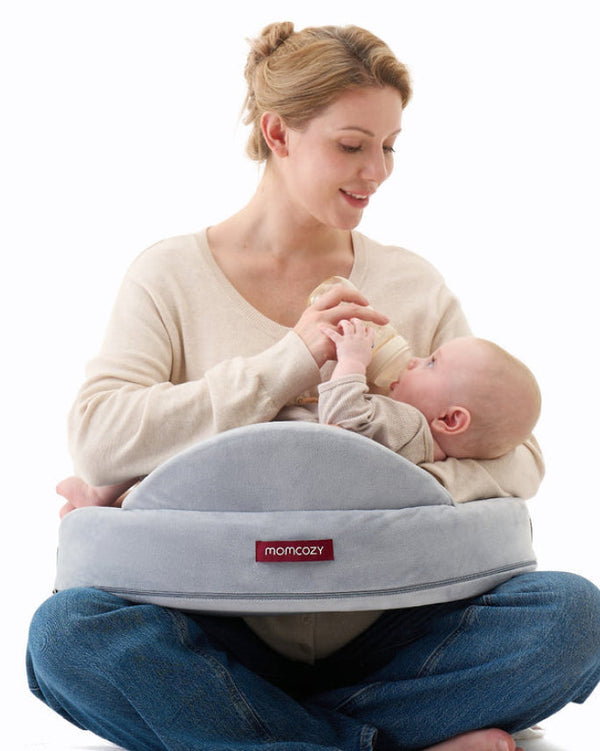
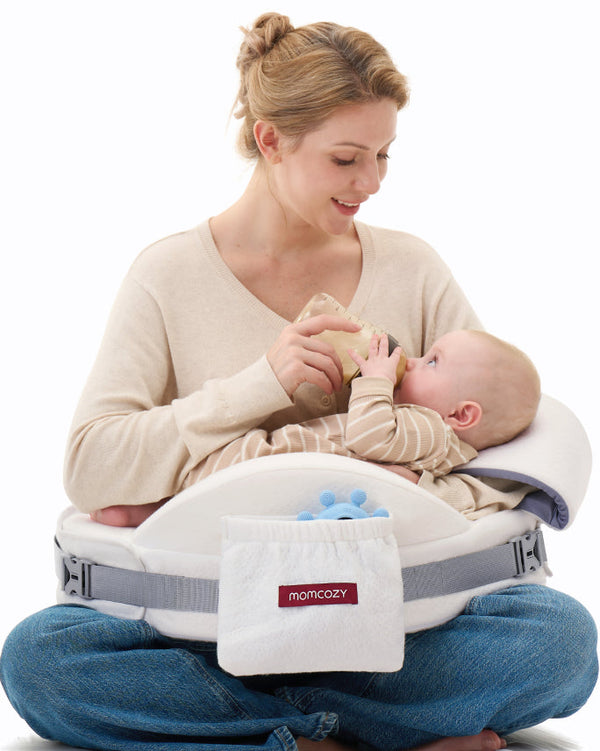
A supportive nursing pillow improves positioning and alignment. Explore options in the Momcozy Nursing Pillow Collection.
Recommended: Momcozy MaxSupport Nursing Pillow
From $54.99 USD
Features:
- Firm, structured support to prevent sinking
- Elevated positioning to align baby with breast
- Wide surface for stability
- Reduces shoulder and back strain
The added height helps reduce milk pooling, which can decrease spit-up.
Momcozy Memory Foam Nursing Pillow
$69.99 USD
Features:
- High-density memory foam for consistent firmness
- Contours without collapsing
- Supports longer feeding sessions
- Maintains stable elevation
A well-positioned baby swallows more effectively and takes in less air.
From $54.99 USD $59.99 USD
3. Burp Frequently
Pause halfway through feeding to burp.
4. Avoid Overfeeding
Watch cues instead of pushing to finish bottles.
5. Keep Baby Upright After Feeding
Hold upright for 15–20 minutes post-feed.
6. Transition to Supported Seating for Solids
When babies begin solids, proper posture remains essential. The Momcozy DinerPal High Chair supports upright feeding alignment.
Explore the Best Baby High Chair collection:
Momcozy DinerPal High Chair
$299.99 USD
Key Features:
-
5 Adjustable Modes: Grows from early solids to toddler stage
-
Stable Anti-Tip Base: Improves safety
-
Secure Harness System: Keeps baby upright
-
Removable Easy-Clean Tray: Simplifies mess management
-
Ergonomic Back Support: Promotes healthy posture
Proper seating minimizes slouching, which reduces abdominal pressure and potential reflux.
5 Modes
Safety Design
Lifelong Use
Ease of Cleaning
When Not to Feed Your Baby After Spitting Up
Avoid immediate refeeding if:
- Baby vomited forcefully (projectile vomiting across the room)
- Baby appears lethargic or unusually sleeper
- There are signs of choking or breathing difficulty
- Fever is present
- Baby seems pale, sweaty, or distressed
If your baby appears to choke during feeding, review this safety guide: https://momcozy.com/blogs/babycare/what-to-do-if-your-baby-is-choking-on-milk
Always ensure breathing is normal before considering another feed. If vomiting was forceful, it’s best to wait 20–30 minutes before offering small amounts of milk. Starting too soon can irritate the stomach further and trigger another episode.
Also avoid refeeding immediately if your baby seems uncomfortable, tightly arching, or crying intensely. In these cases, pause, hold the baby upright, and monitor symptoms before deciding the next step.
When Is Baby Spit-Up a Concern?
While spit-up is usually harmless, seek medical advice if you notice:
- Projectile vomiting that happens regularly
- Poor weight gain or weight loss
- Extreme fussiness or crying during feeds
- Arching back in pain consistently
- Persistent coughing, gagging, or wheezing
- Refusal to eat
- Fewer wet diapers (possible dehydration)
Frequent spit-up combined with discomfort or growth issues may signal a deeper digestive concern. Trust your instincts—if something feels unusual, it’s worth checking with your pediatrician.
The “Happy Spitter” vs. GERD
Understanding the difference can ease a lot of worry.
Happy Spitter:
- Spits up frequently
- Gains weight normally
- Appears comfortable and content
- Eats well
- No breathing or sleep problems
These babies may soak multiple bibs a day but remain cheerful and thriving. No treatment is usually needed beyond simple feeding adjustments.
GERD (Gastroesophageal Reflux Disease):
- Spit-up or reflux appears painful
- Feeding refusal or very short feeds
- Poor growth or slow weight gain
- Irritability, especially after meals
- Frequent night waking due to discomfort
- Chronic coughing or breathing symptoms
GERD is less common but requires medical evaluation and possible treatment. Unlike happy spitters, babies with GERD show clear signs of discomfort.
Most babies fall into the “happy spitter” category. If your baby is growing well, meeting milestones, and generally content, spit-up is likely just a temporary developmental phase that improves with time.
When to Call Your Baby’s Pediatrician
Do not continue feeding if your baby shows signs of significant illness, repeated vomiting, breathing difficulties, or dehydration. Seek medical advice if you notice any of the following:
-
Forceful or projectile vomiting
-
Green or bloody vomit
-
Repeated vomiting episodes
-
Fever accompanied by vomiting
-
Breathing difficulties or signs of choking
-
Blue or gray skin color
-
Fewer wet diapers or signs of dehydration
-
Poor weight gain
-
Unusual sleepiness or lethargy
-
Refusal to feed
-
Any behavior that seems unusual or not normal for your baby
Trust your instincts. If your baby does not seem well or if something feels concerning, contact your pediatrician.
Product Recommendation & Helpful Feeding-Support Tools
The right feeding setup can help make feeding sessions more comfortable and manageable for both parents and babies. While these products do not treat or prevent spit-up, they can support everyday feeding and care routines.
-
Nursing pillow: A supportive nursing pillow or breastfeeding pillow can help create a more comfortable feeding position and reduce strain on your arms, shoulders, and back during frequent feeds.
-
Baby nasal aspirator: If spit-up comes through the nose or leaves visible nasal residue, a baby nasal aspirator may help clear the nasal passages and improve comfort before the next feed.
-
Baby carrier: For supervised awake time after feeding, a baby carrier or newborn baby carrier can provide a convenient way to keep your baby close while offering short periods of upright comfort.
-
Baby monitor: After your baby is settled back into their crib or bassinet, a baby monitor or smart baby monitor can help you check in without disturbing their rest.
-
Baby sound machine: A baby sound machine or white noise machine may help create a calm and consistent environment during nighttime feeding and sleep routines.
For older babies who are developmentally ready for solids, supportive seating such as a high chair can help encourage comfortable, upright feeding posture during mealtimes.
FAQ
What if my newborn spits up and still wants to eat?
This is common. Spit-up can look like more milk than it actually is, so your baby may still be hungry and ready to continue feeding.
Should I feed baby again after a big spit-up?
If your baby still appears hungry, consider offering a smaller and slower feed rather than replacing the entire amount right away.
What if baby spits up the whole bottle?
Spit-up often looks larger than it really is once it spreads on clothing or bedding. If large spit-up happens repeatedly or your baby seems unwell, contact your pediatrician.
Should I stop feeding when baby spits up?
Not always. A small spit-up does not usually require stopping a feed. However, forceful vomiting, repeated vomiting, or signs of illness should be evaluated by a healthcare professional.
Can I continue breastfeeding after baby spits up?
Yes. If your baby remains comfortable and continues to show hunger cues, you can usually continue breastfeeding at a calm pace.
Should I feed baby again after vomiting?
Vomiting is different from spit-up. If your baby vomits forcefully, repeatedly, or seems unwell, contact your pediatrician before continuing feeds.
When is spit-up a sign I should call the pediatrician?
Contact your pediatrician if your baby has forceful or repeated vomiting, green or bloody vomit, breathing difficulties, signs of dehydration, poor weight gain, unusual sleepiness, or refuses feeds.
If my baby spits up, should I feed them again?
It depends on cues, not the clock. A small, effortless spit-up usually means your baby is just full, so there's no need to "top up" — wait for the next feed. But if they seem genuinely hungry afterward (rooting, fussing, sucking hands), it's fine to offer a little more. Don't force a full re-feed onto an upset tummy.
How do I know if my baby is still hungry after spitting up?
Watch for active hunger cues — rooting, mouthing, sucking on hands, and settling when offered the breast or bottle — rather than just the fact that milk came up. A baby who spits up but stays calm and content has likely had enough. One who fusses and roots is signalling they'd take a little more.
What's the difference between spit-up and vomiting?
Spit-up is the easy, often dribbly flow of milk that comes up with little effort and doesn't bother your baby. Vomiting is more forceful — sometimes projectile — and usually upsets them. Frequent, forceful, or green or bloody vomiting is different from harmless spit-up and should be checked by a doctor.
How much spit-up is normal?
More than it looks: even a tablespoon of milk spreads out and seems like the whole feed came back. Small, frequent spit-ups are normal for a "happy spitter" who is gaining weight and content. It's the amount your baby keeps down — shown by steady growth and wet diapers — not what comes up, that matters.
How many times a day is too much spit-up?
There's no strict number — many babies spit up after most feeds and are perfectly healthy. Frequency matters less than how your baby is doing: a content, thriving baby who spits up often is usually fine. Spit-up that's forceful, distressing, or paired with poor weight gain is what signals a problem, regardless of count.
Should I feed again if my baby spits up right after feeding?
Usually not straight away. Spitting up immediately often means the stomach was full or your baby gulped air, so re-feeding can lead to more spit-up. Burp them, hold them upright for 15–20 minutes, and wait. If they show clear hunger after settling, offer a small amount rather than a full feed.
Why does my baby spit up curdled milk?
Curdled, lumpy spit-up just means the milk had already started mixing with stomach acid, which curdles it — so it came up a while after feeding rather than straight away. It's normal and not a sign of spoilage or illness. Fresh-looking spit-up simply came back up sooner, before digestion began.
When should I worry or see a doctor about spit-up?
Contact your doctor for forceful or projectile vomiting, green or bloody spit-up, poor weight gain, arching and crying with feeds, refusing to feed, fewer wet diapers, or any breathing trouble. These can point to reflux disease, an allergy, or a blockage like pyloric stenosis, rather than the normal spit-up of a happy, growing baby.
Final Thoughts
If a baby spits up, should I feed again? In most cases, the answer depends on your baby’s cues—not the mess. Spit-up is common, temporary, and usually harmless. Watching your baby’s behavior is more important than measuring the milk on their shirt.
With proper positioning, supportive tools like structured nursing pillows, and upright seating such as the Momcozy DinerPal High Chair, feeding can feel calmer and more comfortable. Confidence grows with understanding—and understanding turns worry into reassurance.