Abstract: Is your baby spitting milk from their nose? Often alarming, this guide clarifies why it happens and when it's cause for concern. Learn practical tips to prevent nasal milk leakage and make feeding times more comfortable for your little one.
Is It Normal for Milk to Come Out of a Baby’s Nose?
Yes, it’s normal for milk to occasionally come out of a newborn’s nose, especially during or after feeding. Many parents notice breast milk or formula coming out of a baby’s nose, which can look alarming but is usually normal in infancy. This happens because babies have an underdeveloped digestive system and a small, still-developing flap (called the epiglottis) that helps separate the airway from the esophagus. When babies spit up or have reflux, milk can sometimes flow upward and exit through the nose instead of the mouth. This is often called “spit up through the nose” and can happen during fast feeding, mild reflux, or when babies swallow air. While it may look concerning, it’s usually harmless as long as your baby is otherwise healthy, feeding well, and gaining weight.In most cases, occasional milk coming out of a baby’s nose is not dangerous if the baby is breathing normally and settles quickly after feeding. However, if it happens frequently or is accompanied by other symptoms like coughing, choking, or difficulty breathing, it’s worth discussing with your pediatrician to rule out any underlying issues.
Should I Be Worried If Milk Comes Out of My Baby’s Nose?
In most cases, there’s no need to worry if milk comes out of your baby’s nose occasionally. Basically, milk tends to flow through the nose of the baby during infancy because the human body is systemically immature to this stage in babies, including the coordination between the actions of swallowing and breathing. It's usually nothing to worry about if your baby doesn't show discomfort and is feeding and gaining well. However, if the milk coming out of the nose of a newborn happens frequently, is accompanied by coughing, choking, or difficulty breathing, or if your baby seems uncomfortable or unwell, it’s a good idea to consult your pediatrician. These could be signs of an issue like reflux or a feeding problem that may need attention.
What Are the Possible Causes of a Newborn Spitting Up Through the Nose?
Milk coming out of a newborn’s nose is often caused by their still-developing anatomy and reflexes. Newborns are more likely to experience this because their swallowing coordination is still immature, their stomach is small, and feeding patterns such as fast feeding, swallowing air, or gas buildup can increase spit-up during early infancy. Here are the most common reasons:
-
Immature Digestive System: Newborns have a small stomach and a weak lower esophageal sphincter, the muscle that keeps food in the stomach, leading to spit-up or reflux. This is one reason milk may come out of a baby’s nose during feeding.
-
Swallowing and Breathing Coordination: Babies are learning to coordinate swallowing and breathing. They may have especially poor coordination of swallowing and breathing while feeding. If milk flows in too quickly, or they swallow too much air, milk can come out through the nose.
-
Overfeeding: Feeding too much or too quickly can overwhelm a baby's tiny stomach, causing the milk to come back up easily.
-
Position During Feeding: Lying flat or at an awkward angle during feeding makes it easier for milk to travel upwards into the nasal passages. Proper positioning is important to reduce milk coming out of a baby’s nose while feeding. In breastfeeding, fast milk letdown or latch issues may contribute, while in bottle feeding, nipple flow or feeding speed may also play a role.
-
Nasal and Throat Connection: The shorter distance between the mouth and nose in babies makes it easier for milk to come out through the nose during spitting up.
-
Reflux (GER): Gastroesophageal reflux is common in newborns and occurs when stomach contents flow back into the esophagus, sometimes reaching the nose.
While these causes are typically harmless, frequent or forceful spit-ups coming out of babies' noses, especially with signs of discomfort, could indicate an issue like GERD (gastroesophageal reflux disease) or a feeding problem. If you’re concerned, consult your pediatrician for guidance.
What Should I Do If My Newborn Is Spitting Up Through the Nose?
If your newborn spits up through their nose, stay calm—it’s usually not a cause for immediate concern. Here’s what you can do to help your baby:
-
Keep Your Baby Upright: With much care, hold the baby in an upright position for 15–20 minutes after feeding. This helps milk settle in their stomach, reducing the chance of spit-up.
-
Clear the Nose: If milk manages to come out of the nose, gently clear any residual from the nostrils with a soft tissue or a bulb syringe. This helps clear a pathway for breathing comfortably.
-
Burp Your Baby: Stop in between and after feeding to burp your baby. This will release the air trapped inside, which pushes the milk upwards.
-
Check Feeding Position: The baby should be at a slight angle during feeding, his head higher than his stomach to facilitate easy, smooth passage of the milk into the stomach. As your baby grows and transitions to solids, ensuring they sit in a proper baby high chair can also help maintain the necessary upright posture for safe digestion.
5 Modes
Safety Design
Lifelong Use
Ease of Cleaning
Momcozy Prime Big Deals Day is Coming This June 6 - 28!
Get ready to score the biggest discounts of the season on our high-demand breast pumps, bottle washers, nursing bras, and other premium baby gear!
Momcozy Official
June 6 - June 28
Up to 60% OFF
Unlock member check-ins, early coupons, and extended sales post-event.
Shop Direct →
Amazon Store
Limited-Time Run
15% - 25% OFF
Fast shipping on all best-selling essentials. Stock is highly limited.
Shop Amazon →
-
Avoid Overfeeding: Offer smaller volumes more frequently, as your baby's small stomach may be overwhelmed by one large volume.
-
Baby monitor: If your baby seems fussy, gags, or coughs frequently during or after feeding, they may need a slower pace or smaller amounts.
-
Stay Calm and Reassure Your Baby: Spitting up through the nose can startle your baby, so comfort them with gentle pats or soothing words.
If spit-up through the nose becomes recurrent, is forceful, or is accompanied by other symptoms, such as coughing, choking, or failure to gain weight, check with your pediatrician to rule out an underlying concern.
How to Prevent Milk From Coming Out of a Baby’s Nose?
While it’s not always possible to completely prevent milk from coming out of a baby’s nose, there are several steps you can take to reduce the likelihood:
1. Feed in an Upright Position
Place your baby at an angle of 30–45 degrees while feeding, where the head is above the body. Rest their head in the crook of your elbow while their back remains straight. This helps in the appropriate flow of milk into the stomach due to gravity and reduces the risk of reflux.
2. Use Proper Feeding Support
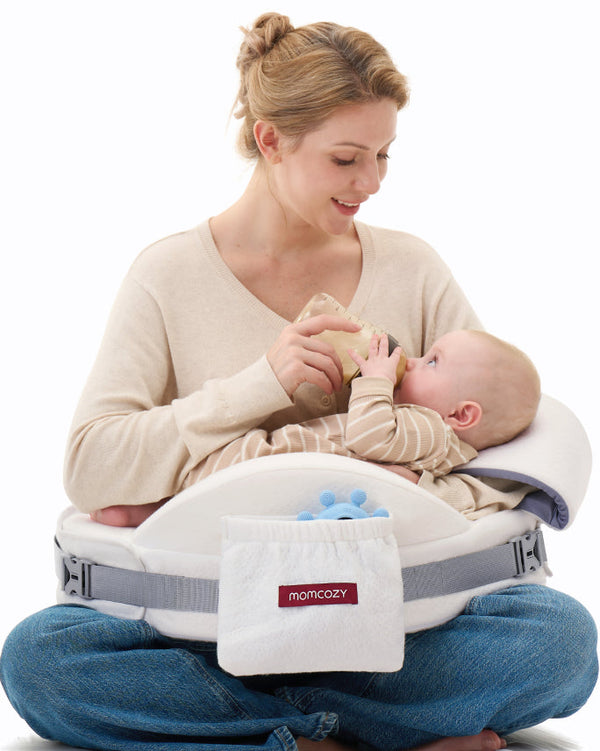
Maintaining the right feeding angle consistently can be challenging, especially during long nursing sessions. A well-designed nursing pillow can help support better positioning and make feeding more comfortable for both parent and baby.
-
Promotes Optimal Feeding Position: A supportive nursing pillow elevates your baby to breast level, encourages a tummy-to-tummy position, which can support more stable feeding posture.
-
Reduces Physical Strain on Parents: By supporting your arms, shoulders, neck, and wrists, a nursing pillow helps prevent fatigue during long or frequent feeding sessions.
- Encourages a Secure and Comfortable Latch: The Momcozy Nursing Pillow – Ergonomic Support is thoughtfully contoured to provide stable, 360° waist support.
-
Adjustable Height for Growing Babies: The Momcozy Adjustable Nursing Pillow features layered adjustability, allowing you to customize the elevation as your baby grows. This flexibility is especially helpful during cluster feeding or when alternating between breastfeeding and bottle-feeding.
-
Practical for Everyday Use: Both options are designed with easy-to-clean covers and durable filling, making them ideal for daily feeding routines.
Additional Insight on Using Nursing Pillows
Beyond posture support, a nursing pillow can also help create a more relaxed feeding experience for both mother and baby. Proper support during feeding allows the baby to feed more calmly, which may reduce fussiness and help regulate swallowing rhythm.
Some nursing pillows are also designed with breathable and skin-friendly fabrics, helping maintain comfort during longer feeding sessions, especially in warm environments. If you’re looking to improve feeding posture, reduce spit-up episodes, and create a more comfortable experience for both you and your baby, exploring the Momcozy Nursing Pillow Collection can help you confidently choose the best fit for your needs.
From $54.99 USD $59.99 USD
3. Paced Feedings
Break feeding into 10- to 15-minute segments. If the infant is bottle-fed, try "paced bottle-feeding": hold the bottle horizontally, allow sucking for 20 to 30 seconds, and then stop for 10 seconds. This mimics the natural rhythm of breastfeeding and does not overfeed.
4. Burp Frequently
Burp your baby every 2-3 ounces if bottle feeding, or after switching breasts if breastfeeding. Try different positions for burping—over the shoulder, sitting on your lap, or across the knees. Each baby may like a different position.
5. Use a Slow-Flow Nipple
For bottle-fed babies, start with preemie or newborn nipples, which are usually marked as Level 0 or 1. Only increase the nipple flow rate when your baby shows frustration with the current level, typically around 3-4 months old.
6. Avoid Distractions
Try to make the feeding environment restful—dim the lights, reduce the noise level, and avoid undue movement around the baby. Consider feeding in a quiet room, or use a nursing cover to minimize your infant's stimulation from the environment.
7. Keep Baby Upright After Feeding
Keep the baby in an upright position against your chest for at least 15-20 minutes after feeding. This can be done by gently patting their back as you walk around or rocking in a rocking chair. It aids digestion and helps to prevent reflux.
8. Check for Proper Latch
While breastfeeding, the baby should have most of your areola in the mouth and not just the nipple. The lips should be flanged out (like fish lips), and you will hear rhythmic swallowing. If this hurts, gently break the latch by inserting your finger into the baby's mouth and try again.
9. Avoid Tight Clothing
Loosen up your baby's clothes, especially around the belly. Avoid tight elastic around the waist. Use stretchy, breathable clothing. Go one size bigger in onesies if they seem snug around the middle.
10. Monitor Feeding Cues
Learn your baby's early hunger cues: rooting, putting hands to mouth, and increased alertness. Stop feeding when they show signs of fullness, such as turning away, closing their mouth, pushing the bottle/breast away, or becoming distracted/sleepy.
11. Keep a Nasal Aspirator Handy
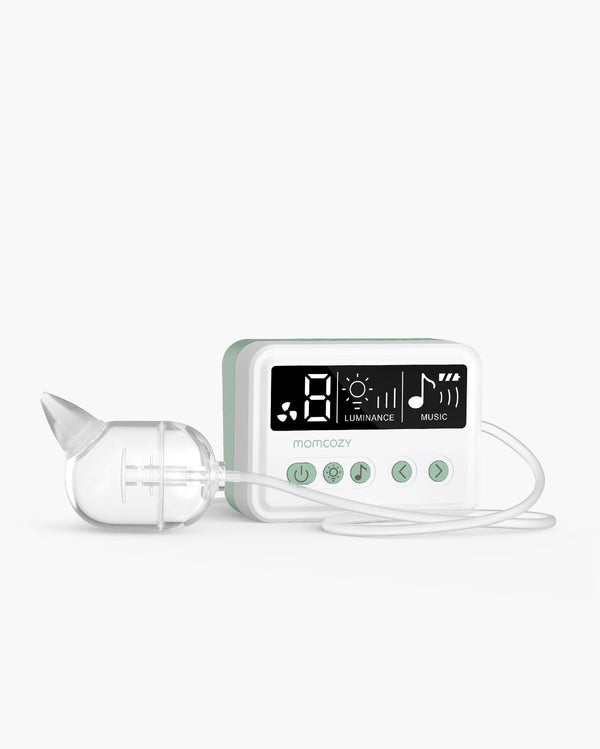
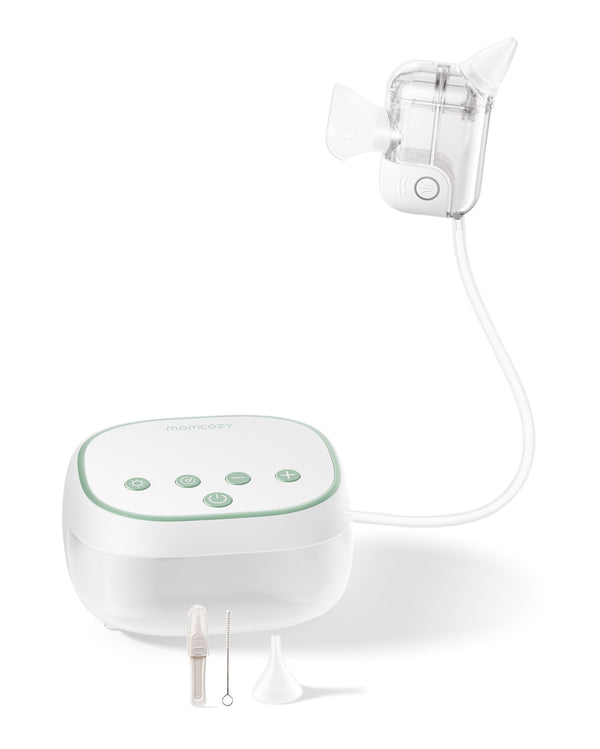
Consider keeping a gentle nasal aspirator like the Momcozy Nasal Aspirator nearby during feedings. If milk does come through the nose, you can safely clear their nasal passages with adjustable suction levels, making breathing easier for your baby. The built-in soft night light feature is particularly helpful during nighttime feedings.
Every baby is different, and a newborn's spit-up coming out of the nose is a regular part of your baby's development in the early months. While it can be concerning to witness, try not to worry too much about occasional incidents.
Hospital Grade
9 Levels of Suction
3 Style of Tips
Easy to Clean
2-in-1 Design
Hospital Grade Suction
Adjustable Suction
All-in-One Storage
Milk Coming Out of Baby’s Nose While Sleeping
If milk comes out of your baby’s nose while sleeping, it may happen after feeding when a small amount of milk comes back up. In most cases, it is not dangerous if your baby is breathing normally and appears comfortable.
Keep your baby on a flat, firm surface and always follow safe sleep practices—do not use pillows, wedges, or inclined sleep positions. If you notice choking, coughing, or breathing difficulty, check your baby right away and seek medical advice if needed.
When Should I Call a Doctor if Milk Comes Out of My Baby's Nose?
Milk coming out of a baby’s nose is usually normal in newborns, especially during feeding or mild spit-up, but there are certain warning signs that may need medical attention.
Seek medical advice immediately if you notice any of the following warning signs:
- Your baby shows signs of breathing difficulty or distress
- The milk coming from the nose appears yellow, green, or bloody
- Your baby seems to be choking or gagging frequently during feeds
- There's persistent coughing after feeding
- Your baby shows signs of dehydration (fewer wet diapers, dry mouth, no tears when crying) which may indicate dehydration in newborns
- Your baby refuses to feed or appears uncomfortable during feeding
-
Milk coming out of your baby’s nose happens frequently during most feeds
- Your baby has a fever along with nasal regurgitation
- There's significant weight loss or poor weight gain
Trust your parental instincts. If something doesn't seem right with your baby's feeding patterns or if you're concerned about the frequency of milk coming out of the nose of a newborn, don't hesitate to consult your healthcare provider. It's always better to be cautious when it comes to your baby's health and safety.
Make Feeding Time Better When Baby's Nose Leaks Milk
Don't worry too much if you see milk coming from your baby's nose - it happens to many newborns while they're learning to feed. Be mindful of your baby's posture during feeding and give regular breaks, watching for signs of difficulty breathing or frequent coughing. Trust your instincts—if you feel like something is wrong or you are concerned about how frequently this happens, it is always okay to call your doctor. Most babies outgrow this phase with some simple feeding adjustments. Keep feeding time calm and comfortable, and you'll both get through this stage just fine.
FAQ
Is it normal for milk to come out of my baby's nose?
Yes, it's common and usually harmless. A baby's nose and throat connect, and their swallowing is still immature, so a little milk can come up the nose during a burp, spit-up, or a fast feed. It tends to ease as they grow. Occasional nasal spit-up in a content, well-feeding baby isn't a concern.
Why does milk come out of my baby's nose?
It takes the nasal route because a baby's nose and throat share one passage (the nasopharynx), and the soft palate hasn't matured enough to fully seal it off during a spit-up or burp. So when milk refluxes — typically after a fast or big feed or a strong burp — some escapes through the nose as well as the mouth. It's anatomy, not illness.
Should I worry if milk comes out of my baby's nose?
Usually not — if your baby clears it, breathes normally, and stays pink and content, it's just messy, not dangerous. Worry only if they choke and can't clear it, go blue or limp, gasp or struggle to breathe, or it happens with forceful, projectile vomiting. Those signs need urgent medical attention.
What should I do when milk comes out of my baby's nose?
Stay calm and sit your baby upright so gravity helps the milk drain, and let them cough or sneeze it out themselves — babies are good at clearing their own airway. Gently wipe the nose, and only suction with a bulb or aspirator if mucus and milk are blocking it. Don't tip them backward.
How do I stop milk coming out of my baby's nose and mouth?
Feed in a more upright position, slow a fast flow with paced feeding or a recline that eases letdown, and don't overfeed — smaller, more frequent feeds help. Burp partway through and after, and keep your baby upright for 15–20 minutes afterward. These steps cut down both nasal and mouth spit-up.
Can my baby aspirate or choke on milk that comes out of their nose?
Babies are built to protect their airway and almost always clear milk by coughing, sneezing, or swallowing, so true aspiration into the lungs is rare. Keep feeds upright and unhurried to lower the risk. Seek urgent care only if your baby chokes without recovering, turns blue, or has ongoing breathing trouble afterward.
Why does milk come out of my baby's nose when lying down or asleep?
When your baby is flat, milk that comes back up can't drain forward, so more of it diverts into the shared nose-and-throat passage and escapes through the nose rather than just the mouth. Feed more upright, burp well, and hold them up for 15–20 minutes before laying them down on their back. For spit-up during sleep in general, see our sleep spit-up guide.
When should I see a doctor about milk coming from my baby's nose?
For nasal spit-up specifically, get prompt help if your baby chokes and struggles to clear it, turns blue, has ongoing fast or laboured breathing, or milk comes from the nose with persistent congestion that blocks feeding; blood or green fluid also needs review. For the general spit-up warning signs (projectile vomiting, poor weight gain), see our guide on whether to feed again after spit-up.
Related Articles You Might Find Helpful
Understanding your baby's feeding journey can bring up many questions. If you're looking for more insights into feeding concerns, spit-up, or related topics, these articles might offer further guidance:
➤ How to Know if Newborn Getting Enough Breast Milk
➤ What to Do If Your Baby Is Choking on Milk
➤ GER Remedy: Does Warm Milk Help with Acid Reflux in Babies?
➤ Baby Spitting Up Curdled Milk? Here’s What’s Normal and What’s Not
➤ Understanding Causes and Solutions for Blood in the Breast Milk