


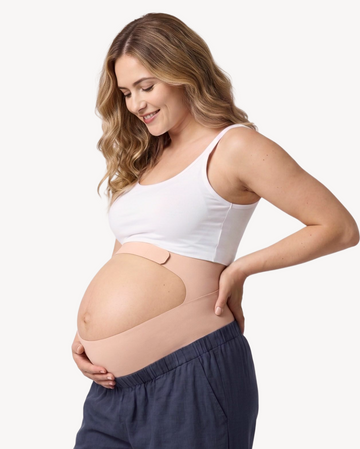
Pregnancy is not the same for all and nor is the belly of pregnancy. Although many people imagine their baby bump being perfectly round, others may notice that their baby bump is actually a double curve with a crease down the center, which is what the "b belly pregnancy" is all about.
Here, we will cover what a b belly pregnancy is, contribute to its cause, how it differs from the other pregnancy belly shapes, if there is any medical concern you should be aware of, and some tips to get comfortable and confident as the bump grows.
What is a B-Shaped Pregnancy Belly?
Definition & Visual Features
A B-shaped pregnancy belly appears to be two separate portions that create a silhouette resembling the letter "B" from the side. Unlike the more classically described D-shaped pregnancy belly (the classic "basketball under the shirt" look), a B belly features an indentation or wrinkle that demarcates the junction between the top and bottom portions of the abdomen.
This division typically occurs around the navel area, with the upper portion containing the expanding uterus and the lower portion consisting of existing abdominal tissue or fat. Side on, this creates the signature B-shape that this belly type is referred to as.
Prevalence Among Pregnant Women
✦ B-bellies are actually really normal, occurring in about 30-40% of pregnancies.
✦ They occur more often in first-time moms.
✦ Women who have a higher pre-pregnancy BMI or multiple prior pregnancies may be more likely to develop a B belly.
The prevalence points out an important fact: the pregnancy body is much more diverse than the bodies shown by pregnancy magazines and the media.

Is a B Belly Normal during pregnancy?
Yes. A b belly is nothing out of the ordinary and just one of the many ways a pregnant belly can appear. The abdomen does not form a single smooth, rounded bump but instead exhibits a clear dip in the midsection forming two curves, like the letter "B.
This shape is typically not associated with the health of your baby but is more likely to have a connection with body composition. Some people may have a B-shaped tummy due to the location of their fat deposits, the firmness of their skin, their level of tummy muscle tone or the position of their expanding uterus. For some women, the crease grows less evident as the pregnancy advances and for others the B belly remains all through the pregnancy.
Your bump does not indicate the growth and development of your baby. Your health care provider will check on your pregnancy with measurements, ultrasounds and prenatal
checks, not by how your tummy looks.
What Causes a B Belly?
Physiological Explanations for the Shape
There are a number of anatomical and physiological explanations that result in the development of a B-shaped belly during pregnancy:
1. Abdominal Muscle Separation (Diastasis Recti): The abdominal muscles can become separated along the midline because of the expanding uterus during pregnancy, resulting in a distinct indentation.
2. Core Muscle Tone: Pre-pregnancy core strength plays an important role in how well the abdomen can accommodate the expanding fetus.
3. Skin Elasticity: Differences between women in skin elasticity determine how the abdominal area expands to fit pregnancy.
4. Uterine Position: A woman's normal tilt or position of her uterus can influence the external appearance of her pregnancy belly.
Lifestyle Factors That Influence the Belly
Pre-pregnancy and existing lifestyle factors can result in the development of a B-shaped belly:
✦ Pre-pregnancy Weight: Greater percentage of body fat before getting pregnant is commonly associated with B-shaped bellies.
✦ Previous Pregnancies: Women with a history of multiple pregnancies may experience weakening of abdominal muscles, thereby having a higher risk for a B belly.
✦ Activity Level: Regular physical activity during and before pregnancy can have an effect on the strength of the core as well as belly appearance.
Genetic Considerations
Genetics also play a significant role in determining pregnancy belly shape:
● Patterns of body fat distribution within the family
● Hereditary skin elasticity parameters
● Genetic susceptibility to muscle tone and form
The majority of women remark that their pregnancy bulge resembles that of their mother's or sister's pregnancy body, which indicates the hereditary aspect of this body characteristic.
What are Other Types of Pregnancy Belly Shapes?
The Spectrum of Pregnancy Belly Types
Pregnancy bellies come in various shapes and sizes, each uniquely beautiful and normal:
- D-Belly: The classic rounded pregnancy belly that resembles the letter "D" from the side.
- B-Belly: The divided appearance resembling the letter "B" discussed throughout this article.
- Apron Belly: Where the lower portion of the belly hangs lower than the upper section.
- Compact Belly: A smaller, neater bump that's common in women with strong core muscles.
- High Belly: Where the baby and uterus sit higher in the abdomen.
- Low Belly: Where the baby and uterus position lower in the pelvis.
Comparison Chart: Key Characteristics
| Belly Type | Visual Appearance | When It Typically Occurs | Common Factors |
| D-Belly | Smooth, rounded curve | Often in women with lower BMIs | Strong core muscles, good skin elasticity |
| B-Belly | Divided with visible indentation | Common in plus-size pregnancies or multiple pregnancies | Higher pre-pregnancy weight, diastasis recti |
| Apron Belly | Lower portion hangs below the bump | Often in women with previous pregnancies | Prior pregnancies, higher BMI, loose skin |
| Compact Belly | Neat, smaller projection | First pregnancies, athletic women | Strong abdominal muscles, taller women |
| High Belly | Bump positioned higher on the torso, often above the navel | Common in first pregnancies or early/mid pregnancy | Strong abdominal muscles, shorter torso, baby's position |
| Low Belly | Bump sits lower in the pelvis, sometimes creating a dropped appearance | Often in late pregnancy or subsequent pregnancies | Baby dropping before delivery, relaxed abdominal muscles, taller women |
Are There Concerns About a B Belly?
Medical Considerations
From a medical perspective, having a B-shaped pregnancy belly generally poses no health risks:
1. Impact on Baby: The shape of your belly has no effect on your baby's growth, development, or overall health.
2. Pregnancy Monitoring: Healthcare providers can effectively monitor fetal growth regardless of belly shape.
3. Skin Health: The main physical concern involves managing skin irritation in the fold area, which can be addressed through proper hygiene and moisture management.
4. Post-Pregnancy Recovery: Women with B bellies may sometimes experience different postpartum recovery patterns, particularly regarding abdominal muscle tone.
Psychological and Emotional Aspects
The emotional impact of having a non-typical pregnancy belly shape can be significant:
✦ Many women report feelings of insecurity when their pregnancy doesn't match media portrayals.
✦ Social media's idealized pregnancy images can exacerbate these concerns.
✦ Cultural expectations about the "perfect bump" may create unnecessary anxiety.
It's crucial for healthcare providers to address both the physical and emotional aspects of pregnancy body changes, validating all body types as normal variations.
What Maternity Clothes Improve a B Belly?
Supportive and Flattering Clothing Options
The right maternity wear can provide comfort and confidence for women with B-shaped bellies:
1. Full-Panel Maternity Pants/Skirts: These extend over the entire belly, providing smooth support for both sections of a B belly.
2. Empire Waist Dresses/Tops: Garments that flow from just under the bust help create a unified silhouette.
3. Layered Looks: Light cardigans or open jackets can create flattering lines while providing comfort.
4. Supportive Undergarments: Seamless, supportive underwear designed for pregnancy can help smooth the transition between belly sections.
Supportive Products for Comfort
Several specialized products can provide additional support:
◆ Belly Bands: These flexible fabric bands offer gentle compression and support across the entire abdomen.
◆ Pregnancy Support Belts: More structured than bands, these provide firmer support and may help distribute weight more evenly.
◆ Maternity Compression Garments: These can provide all-over support while minimizing the appearance of the B shape for those concerned about it.
When selecting supportive garments, prioritize comfort, breathability, and appropriate sizing rather than appearance alone.
Does Having a B-Shaped Belly Affect Pregnancy?
Belly shape plays little to no role in pregnancy growth:
✦ Fetal Growth: Your baby grows healthily regardless of your outer belly shape.
✦ Length of Pregnancy: Belly shape will not affect gestation duration.
Belly shape doesn't affect labor:
✦ Labor and Childbirth: No data have been found that B-shaped bellies lead to different labor experiences for other belly shapes.
Dispelling Popular Misconceptions
There are a few popular misconceptions regarding B-shaped pregnancy bellies:
MYTH #1: "A B belly means you're having twins." FACT: Belly shape depends on body shape, not number of babies.
MYTH #2: "B bellies indicate bad maternal health." FACT: B bellies are a normal variation and are in no way related to general health status.
MYTH #3: "You can completely re-engineer your belly during pregnancy." FACT: Some exercises can be beneficial, but fundamental body structure and pregnancy changes have a profound effect on belly shape.
How to Manage a B Belly During Pregnancy
Enhance Comfort with Strategies
While completely changing your belly shape isn't realistic, these approaches can enhance comfort:
1. Gentle Core Exercises: Pregnancy-safe exercises like pelvic tilts and gentle side stretches can help maintain muscle tone.
2. Posture Awareness: Proper alignment reduces back strain and can help distribute pregnancy weight more comfortably.
3. Supportive Sleep Positions: Using pregnancy pillows to support your belly while side-sleeping can increase comfort. Sleep on your side with the use of a pregnancy pillow to help support your belly, hips and back. The Momcozy Pregnancy Pillow provides full-body support for greater comfort throughout pregnancy. Check out and find out more about the Momcozy U Shaped Maternity Body Pillow. 

4. Maternity Belly Band: Wearing a maternity belly band can provide additional support and help alleviate pressure on your back and abdomen. Enhance your comfort during pregnancy with the Momcozy pregnancy belly band! If you require advanced weight redistribution, consider the Momcozy Plus Size Pregnancy Belly Band. Engineered with a wide, contoured belly cradle and an optimized lifting angle, it provides gentle support from underneath without compression. Its adjustable straps, grab handles, and dual-side adjustments ensure a flexible, tailored fit even for late-stage pregnancy. Check out our diverse selection of premium pregnancy support garments to experience all-day relief.

5. Skin Care: Regular moisturizing of the belly and paying special attention to the fold area can prevent irritation.
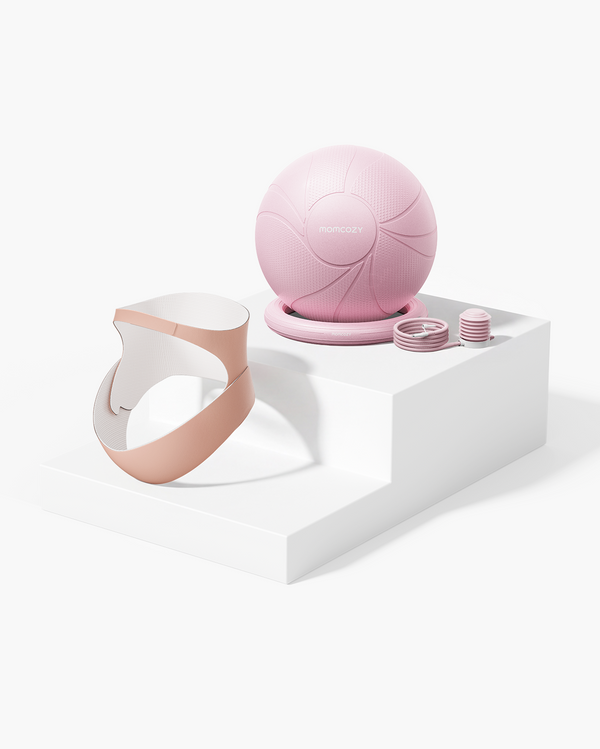
6. Supported Movement with a Pregnancy Ball: A maternity exercise ball can provide a comfortable surface for gentle pelvic tilts, hip circles, and seated posture practice. The Momcozy BirthEase Pregnancy Ball Set features an anti-burst ball that supports up to 330 lb, making it suitable for many body sizes. Use it on a non-slip floor, keep your feet wide and flat, and stay near a wall or sturdy chair if you need extra balance.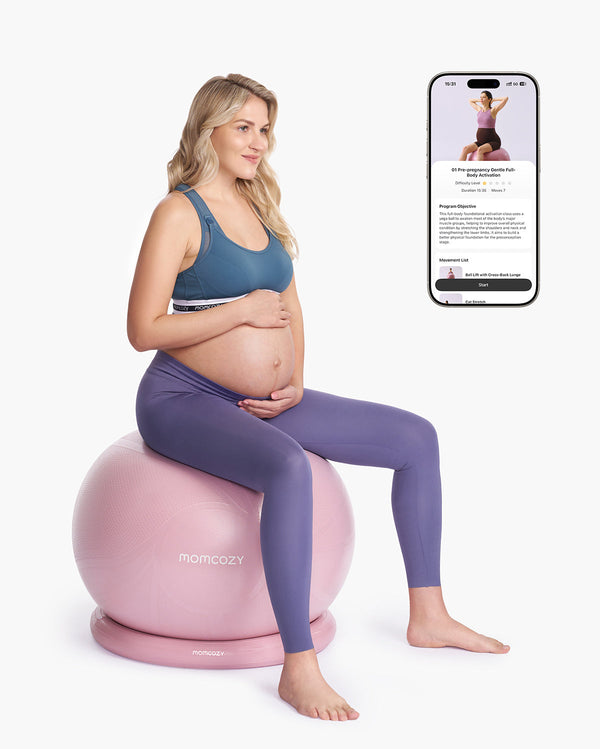
 Member price
$119.89
Member price
$119.89
Consider Non-Surgical Support Options
Several non-invasive approaches can provide additional comfort:
◆ Physical Therapy: Specialized prenatal physical therapy can address specific discomforts related to belly shape.
◆ Prenatal Massage: Professional massage can help relieve tension in compensating muscles.
◆ Supportive Garments: As mentioned earlier, properly fitted support bands can redistribute weight for greater comfort.
How to Prepare for Potential B Belly Before Pregnancy
Although genetics play a big role, these steps may be helpful:
✦ Activate Your Core: Core strength before pregnancy can help maintain muscle tone during pregnancy.
✦ Improve Overall Fitness: Pre-conceptual fitness results in better muscle tone and potentially easier transition into pregnancy modifications.
✦ Maintain Healthy Skin: Elastic, hydrated skin may respond well to pregnancy stretching.
✦ Manage Healthy Pregnancy Weight: Being pregnant and having a healthy weight for your body type could affect the way your belly would be. Remember that these tips can affect but not decide any specific belly shape, as genes also play their part.
Is a B Belly Only a Plus-Size Pregnancy Thing?
No. While the b belly pregnancy is pretty much a hallmark of plus size women, because of the distribution of belly fat, anyone can experience it.
Women who have:
- Reduced belly fat around the waist area
- A weak tummy wall or diastasis recti is the term used for the separation of the two abdominal muscles.
- Loose skin after previous pregnancy or weight loss or gain
- Some body types and fat distribution patterns
Similarly, many plus-size ladies don't have a B belly. Belly shapes differ amongst people and each pregnancy will be different.
Will a B Belly Round Out Later?
It might. During the second and third trimesters, many moms will find that the dip begins to soften and their bump becomes rounded. This occurs due to abdomen expansion through the growth of the baby and the increased filling of the abdomen.
But not all belly's transform the same. Having a prominent crease until delivery is okay, some women experience this all the way to birth.
Acknowledge that your bump doesn't look like you're used to, instead of worrying about how the bump looks, think about how your baby is growing, how comfortable you are and how your healthcare provider is assessing your baby during visits.
What About a B Belly Postpartum?
It's normal for your tummy to look a different way after the birth than it did before you became pregnant. Your uterus requires several weeks to get back to its normal pre-pregnancy size, and the skin and abdominal muscles will "bounce back".
Those who have a b belly pregnancy might see the crease still present for a while following delivery. This is typically a condition associated with skin sagging, excess belly fat and floppy core muscles, and not necessarily a problem.
It's different for each mom. You can support your healing process with gentle movement, proper nutrition and strengthening the pelvic floor or core (after discussing these with your healthcare provider).
Does B belly go away after pregnancy?
Yes, but for many women, it's a longer period of time. The B shape, which is less noticeable as your body heals postpartum, may fade over a few months. All of these factors contribute, including weight changes, strengthening of the abdominal muscles and natural skin recovery.
Others may have a crease of some sort that still exists after multiple pregnancies or large weight gain or loss. This is a normal change in the body type and is not a sign of ill health.
If you are worried that your tummy is continuing to separate, if you have any discomfort or you can see a bulge that does not get better, talk with your healthcare professional and ask them to investigate whether you have a diastasis recti or a hernia. Keep in mind that the postpartum journey is unique for each woman and that how you look after you've given birth has nothing to do with how healthy you are or how good of a mother you are.
Celebrate Your Unique Pregnancy Experience Today!
Belly shapes during pregnancy, whether B, D, or any other shape, are the beautiful diversity of the human body during this time of transformation. Your belly shape is in no way a reflection of your worth as a mother or your baby's health. By understanding what influences belly appearance and practicing comfort-enhancing strategies, you can focus on the joy of your pregnancy experience rather than cultural expectations about how a pregnant body "should" look.








