


MEDICALLY REVIEWED BY

Dr Carly Dulabon, MD, IBCLC, NABBLM-C
Dr Carly Dulabon MD, IBCLC, NABBLM-C is medical director of the department of breastfeeding medicine with Akron Children's Hospital. She completed her medical degree at University of Toledo College of medicine, and her pediatrics residency at Children's Hospital of Pittsburgh. Her special interests are in maternal mental health and infant growth.
A common short-term dose for recurrent clogged ducts is 1,200 mg of sunflower lecithin three or four times a day, then a lower dose or stopping once the lump has cleared and stays away. If you have fever, spreading redness, or worsening pain, do not rely on supplements alone.
If you are dealing with a sore lump after a missed feed or a long stretch between pumping sessions, it can feel hard to think about anything else. Many plugged areas improve within 24 to 48 hours with the right care, and lecithin is often used when clogs keep coming back even though the research behind it is still limited. After reading this, You will get a simple dosing plan, what to try at home, and the signs that mean it is time to call a lactation professional or doctor.
What Sunflower Lecithin May Help With
What a clogged duct usually feels like
A plugged milk duct usually feels like a tender, painful lump in one area of the breast. It often happens after skipped or delayed feeds, incomplete milk removal, pressure from a tight bra or strap, or a stretch of stress and fatigue. Some parents also notice a tiny white bleb on the nipple.

Many breast “clogs” are now understood as inflammation and swelling around the duct, not just thick milk stuck inside it. That matters because aggressive squeezing, deep massage, and extra pumping can sometimes make the area angrier instead of helping it settle.
Why sunflower lecithin gets suggested
Lecithin is a normal component of human milk and is commonly suggested for plugged ducts. The idea is that it may help milk fat stay more evenly mixed, which may make recurrent plugs less likely. Many breastfeeding parents choose sunflower lecithin when they want a non-soy option.
The evidence is still limited. There are no strong clinical trials proving that high-dose lecithin works for clogged ducts, so it is best viewed as a common lactation-support tool, not a guaranteed fix. It may help some parents, but it does not replace good milk removal, rest, and attention to latch or pump fit.
How Much Sunflower Lecithin to Take
The common short-term dose
The most widely used dose is 1,200 mg taken three to four times a day. That gives a daily total of 3,600 to 4,800 mg.
If you are staring at a label while tired, the plain-English version is simple:
Take one 1,200 mg capsule with each meal (breakfast, lunch, dinner) and again at bedtime — this is the common four-times-daily plan. Many people start with three times a day

Some lactation handouts use a very similar total in a different schedule. For example, two to three 1,200 mg capsules twice a day lands in the same general range. The exact schedule matters less than staying in that common short-term daily total while the clogged area is active.
How to choose a practical schedule
A divided daily dose is the usual approach for recurrent plugged ducts. Most parents find either three times a day or four times a day easier to remember than trying to space it perfectly. Breakfast, lunch, dinner, and bedtime is often the least stressful way to do it.
Sunflower lecithin is usually well tolerated, but side effects can happen. Loose stools, stomach upset, or nausea are the common ones people talk about. If you take blood thinners, have a seed allergy, or are not sure whether the supplement fits your health history, check with your clinician before using it.
How Often to Take It and When to Stop
During an active clog
Most plugged areas clear within about 48 hours. That is why the higher lecithin dose is usually treated as a short-term step, not something to stay on forever by default. If the lump, tenderness, and localized swelling are improving over a day or two, the supplement has done the part you were hoping it would do.
A higher dose during active symptoms and a lower dose for prevention is a common lactation pattern. In practical terms, that means you use the full short-term dose while the clogged area is still clearly there, then step down once the breast feels normal again.
After the lump clears
There is no strong evidence-based stopping rule for lecithin. That is important to know, because many parents assume there must be one official answer. There is not. The safer way to think about it is that lecithin is a temporary support, and the full dose does not need to continue once the clog is gone.
A reasonable next step after symptoms settle is either to stop or to drop to a lower preventive dose if you keep getting repeat clogs. If you stop and the same problem comes back quickly, that is a sign to look deeper at milk removal, flange fit, latch, nipple damage, oversupply, or pressure on the breast instead of just taking more capsules indefinitely.
What to Do at Home While You Take It
Simple relief that usually helps
Regular feeding or pumping on your normal schedule helps more than adding extra sessions. Keep milk moving, but do not chase the lump with repeated pumping “just in case.” If your baby is breastfeeding well, varying positions may help drain a sore area more comfortably.

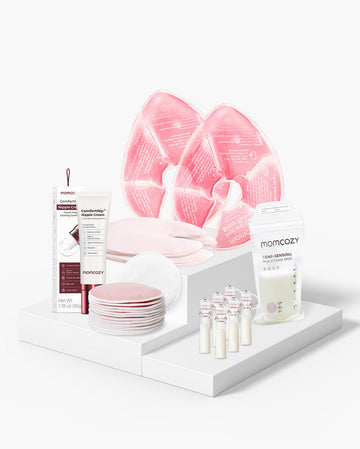
Cold packs, rest, and very gentle massage are standard home care. “Gentle” matters here. Think light pressure that moves swelling, not deep digging into the breast. Some parents also like reusable hot and cold pads for comfort; for example, Momcozy breast pads can be chilled between feeds to relieve engorgement or warmed briefly before nursing or pumping to encourage letdown. A supportive bra is helpful, but tight bras, underwire, baby-carrier pressure, or sleeping hard on one side can keep the area irritated.
A short action checklist
- Take sunflower lecithin in the common short-term range of 1,200 mg 3 to 4 times daily if you are using it for a current clog.
- Keep breastfeeding or pumping on your usual schedule instead of adding extra sessions.
- Use ice or a cold pack between feeds to calm swelling and pain.
- Try only light massage or gentle lymphatic-style touch, not deep pressure.
- Check for common triggers like a missed feed, poor latch, pump flange discomfort, a tight bra, or a strap pressing on the breast.
- Rest as much as you can and ask for help with the baby or household if the pain is making feeds harder.
When Home Care Is Not Enough
Red flags that need prompt medical care
Fever, chills, body aches, and a red, hot, painful breast can point to mastitis. A fever of 101°F or higher is a clear reason not to keep self-treating at home and hoping for the best. You may need medical care quickly, and some cases need antibiotics.

Worsening symptoms or mastitis signs that are not improving within 24 hours deserve a call to a doctor. This is especially true if you feel flu-ish, the redness is spreading, the pain is getting sharper, or the whole breast feels swollen and unwell rather than just one sore spot.
When the “clog” may be something more
A breast mass that lasts more than 48 to 72 hours should not just be assumed to be a simple plug. Recurrent clogs in the same place, a bleb that keeps returning, or pumping pain that happens over and over deserve a proper lactation assessment.
Deep shooting breast pain, shiny or flaky nipples, or nipple pain that lasts more than a few days can also point to another nipple issue. If cracked nipples, latch pain, or flange pain are part of the picture, fixing that root problem often matters more than any supplement.
FAQ
Q: Should I take sunflower lecithin three times a day or four times a day?
A: Both are used in breastfeeding support. The main target is usually a total of 3,600 to 4,800 mg per day during an active clog. If your capsules are 1,200 mg, that usually means 3 or 4 capsules spread through the day.
Q: Is sunflower lecithin better than soy lecithin?
A: There is no strong proof that sunflower works better. Many parents choose sunflower because they want to avoid soy, especially if soy sensitivity or allergy is a concern.
Q: Can I just pump more to force the clog out?
A: Usually no. Regular milk removal helps, but extra pumping can worsen oversupply and inflammation. Gentle care plus your normal feeding or pumping pattern is usually the better path.
Practical Next Steps
If you want the plain answer, start with the common short-term dose of 1,200 mg of sunflower lecithin 3 to 4 times a day, use it alongside calm breast care, and reassess within 24 to 48 hours. If the lump clears, there is usually no reason to stay at the full dose.
If clogs keep returning, shift your attention from the capsule bottle to the pattern behind the problem. Repeated lumps often mean something is still off with latch, pump setup, breast pressure, oversupply, or milk removal. And if you feel sick, develop fever, or the redness and pain are building instead of easing, skip more home experiments and get help.
References
- Lecithin - a lactation database
- Plugged Ducts, Mastitis, and Thrush
- Mastitis and Sore Breasts - Signs, Symptoms, and Treatment
- Clogged Milk Duct: Causes, Symptoms & Treatment
- Treatments - Lecithin
- Managing Plugged Ducts
- Plugged Ducts and Mastitis: Do Choline, Lecithin, or Probiotics Actually Help?
- Lecithin and Breast-Feeding: Does It Work for Plugged Ducts?








