If you’re considering a GLP-1 medication while breastfeeding, check the active ingredient and how you take it. For semaglutide, U.S. breastfeeding advice differs between tablets and injections. A small study of injected semaglutide found no measurable drug in sampled milk. Evidence about newborns, long-term infant outcomes, and effects on milk supply remains limited.
Which GLP-1 medication and formulation are you asking about?
Look for three details on the pharmacy label: the brand, the active ingredient, and whether the medicine is taken by mouth or injected. Ozempic and Wegovy are brand names for semaglutide products. Rybelsus also contains semaglutide. Different GLP-1 medicines have their own evidence and labeling, so a finding about semaglutide can’t answer a question about every drug in this group.
If you call a pharmacy, try reading the prescription label aloud or sending a photo through a secure patient portal. “I take semaglutide by injection and feed expressed milk to my four-month-old” is a much more useful starting point than “Can I take a GLP-1?” Also mention why it was prescribed. The health implications of changing a treatment for diabetes, for example, belong in the discussion alongside feeding goals. MotherToBaby’s semaglutide fact sheet offers a patient-oriented overview.
What do Ozempic and Wegovy labels say about breastfeeding?
Read section 8.2, titled “Lactation,” for the exact formulation on your package. In the U.S., the labels for semaglutide tablets containing the absorption enhancer SNAC advise against breastfeeding during treatment with those tablets. Injection labels describe a clinical decision that weighs the parent’s need for treatment alongside breastfeeding benefits and possible effects on the infant.
| Product and route | What to discuss with your clinician |
|---|---|
| Ozempic injection | The U.S. injection label calls for considering the parent’s clinical need, the benefits of breastfeeding, and potential effects of treatment or the underlying condition. |
| Ozempic or Rybelsus tablets | The U.S. tablet label advises against breastfeeding during treatment because of potential exposure to the absorption enhancer. |
| Wegovy injection | See the injection-specific lactation information in the Wegovy prescribing information. It describes limited data and an individualized assessment. |
| Wegovy tablets | The same prescribing information gives a separate recommendation against breastfeeding during tablet treatment because of the absorption enhancer. |
Why the tablet ingredients matter
SNAC helps the body absorb oral semaglutide. The tablet labels explain that SNAC or its metabolites can be present in milk and that clearance may differ in infants. That matters even when semaglutide itself is below a laboratory’s quantification limit. An answer based only on how much of the active drug was measured misses a question the label specifically addresses.
Why an injection label may sound different from a research summary
A prescribing label and a published study are distinct records. The label gives the manufacturer’s approved prescribing information. A research summary may also describe independent measurements from a small group of volunteers. Ask your prescriber to consider both sources for the product you actually use. Neither a single reassuring sentence online nor an older leaflet that mentions only animal data gives a complete personal answer.
What did researchers find in human milk?
LactMed’s semaglutide review describes eight mothers who provided milk samples while using subcutaneous semaglutide. Researchers collected samples at specified times after a dose. Semaglutide was below the assay’s detection limit in those samples. “Below the detection limit” means that the laboratory could not measure it with that test; it doesn’t establish zero exposure at all times.
The infants were four to 23 months old and received mixed feeds. Follow-up was short, and growth and development were reported by the mothers. That leaves particularly important questions for families with a newborn, a premature baby, or a baby receiving all nutrition from breast milk. It also limits what can be said about effects months or years later.
If your clinician mentions this study, a good follow-up question is, “Which parts of that group resemble my situation?” The answer may change depending on your baby’s age, feeding pattern, and health. The sampling times in the study were for measurement. They do not establish a time of day when nursing or pumping has been shown to eliminate exposure.
Does semaglutide affect milk supply?
There isn’t enough direct evidence to predict a change in milk production for an individual using semaglutide. A study of drug concentrations in milk answers a different question from a study measuring daily milk output. LactMed notes the lack of relevant published information on effects on lactation in its review.
If you notice a change, describe what you have actually observed. “My afternoon pumping session has yielded less three days in a row” is more precise than “My supply is gone.” Include changes in work breaks, nursing frequency, equipment fit, and whether you’ve felt unwell or had trouble eating or drinking. Your prescriber can assess how you’re tolerating treatment, and a lactation professional can look at the feeding or pumping routine.
If your baby is feeding poorly, has fewer wet diapers than usual, or there are concerns about growth, call the pediatrician promptly. You don’t have to establish what caused the change before asking for help. Your baby’s current needs can be assessed while your own clinician reviews the medication.

What if I stopped before pregnancy or want to restart?
A direction in the label about stopping semaglutide before a planned pregnancy addresses a future pregnancy. It does not establish a waiting interval for breastfeeding after a dose. If you see a time interval online, check whether the text refers to conception, pregnancy, nursing, or a specific formulation before treating it as relevant.
What to bring to a restart conversation
- Your actual product name, formulation, reason for treatment, and the date you last used it.
- Your baby’s age, whether they were born prematurely, and how much of their feeding comes from breast milk.
- Recent changes in your health or feeding routine, and which clinicians are already involved.
If you are currently taking the medicine, tell your prescriber. If you are considering a restart, say that instead. Those calls may need different next steps. Don’t independently stop diabetes treatment, switch from a tablet to an injection, or change how you feed your baby on the strength of a comparison table. Ask your team for a plan that accounts for both of you.
What should you ask your prescriber and pediatrician?
Start by asking who will address each part of the decision. Your prescriber knows the reason for treatment and the implications of a change. Your pediatrician can interpret your baby’s feeding and growth history. A pharmacist can help identify the product and locate the correct label. With your permission, the teams can share the information they need.
- What does section 8.2 say for the exact product I have at home?
- Does the available human study include infants close to my baby’s age and feeding pattern?
- What would changing or interrupting my treatment mean for my health?
- What feeding changes should prompt a call, and how soon should growth be reviewed?
- If advice changes as my baby grows or my treatment changes, who should I check back with?
What if I am pumping or worried about intake?
Feeding expressed milk still involves milk exposure. A manual pump, a wearable breast pump, and nursing directly are different ways of removing or giving milk; the choice of equipment doesn’t settle the medication question. There is no established pump-and-discard schedule in the evidence above for clearing semaglutide from milk.
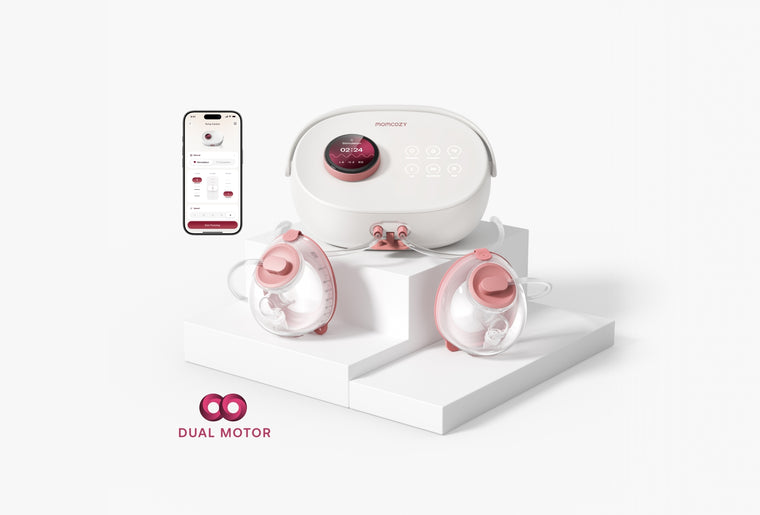
If you already express milk and are troubleshooting a separate equipment problem, these common pumping questions and this guide to low milk supply may help. When comparing electric breast pumps, a feature such as separate left and right controls can be useful for comfort. The Momcozy V3 double electric breast pump offers 15 independently adjustable suction levels on each side. That feature changes how a session feels, not a drug’s concentration in milk.
Frequently asked questions
Can I take Ozempic while breastfeeding?
Bring the exact product to your prescriber. Ozempic tablets and injections have different U.S. lactation labeling. The answer also depends on why you need treatment and your infant’s situation. Let your care team know if your baby was born early or receives breast milk exclusively.
Does Wegovy affect milk supply?
Direct evidence on milk production is limited. If you’ve noticed a change since starting a medicine, report the timing, changes in feeding or pumping, and whether you are having difficulty eating or drinking. A change that happens around the same time still needs an assessment.
Does pre-pregnancy stopping advice also apply to nursing?
A preconception interval is written for people planning pregnancy. It cannot be used as a general breastfeeding restart date. Ask your prescriber about the formulation, the date of last use, and what any changes would mean for your health.
Do GLP-1 medications pass into breast milk?
The answer depends on the specific medicine and formulation. In a small study, injected semaglutide wasn’t measurable in the samples tested. Some oral semaglutide formulations also contain an absorption enhancer that raises a separate concern. Findings from one product do not establish exposure for the whole class.
Can I take semaglutide while pumping?
Tell the prescriber whether the expressed milk is being fed to your baby. Pumping itself doesn’t make exposure higher or lower in a predictable way. Ask about your own treatment and feeding plan before deciding to discard stored milk or change a pumping schedule.