Choosing between exclusive pumping vs breastfeeding comes down to how you want to deliver your baby breast milk, not whether they get it. Exclusive pumping means expressing milk with a breast pump and bottle-feeding it; breastfeeding means nursing directly at the breast. Both are valid ways to feed your baby, and the right fit depends on your body, your baby, your lifestyle, and what feels sustainable for you.
Key Takeaways
- Exclusive pumping and breastfeeding both give your baby breast milk; the difference is how the milk reaches them (bottle vs. direct latch).
- Pumped milk keeps the same core nutrition and immune protection as nursing, with small differences in how the milk is delivered, not in the milk itself.
- Most moms do best with a flexible, mixed approach rather than an all-or-nothing choice.
- A reliable pump plus a consistent schedule is the foundation of successful exclusive pumping.
Understanding Exclusive Pumping
Exclusive pumping, also known as EPing, is synonymous with exclusive expression of breast milk or pump-dependent breastfeeding. It is a way of getting milk for the baby through a breast pump, as opposed to putting the baby to the breast. It helps in the intake of breast milk for an infant even when there is no direct latching. It provides a viable option for those having challenges with traditional breastfeeding or those who prefer the flexibility that it provides. Now let us look at the pros and cons of breast pumping and breastfeeding.
Because your baby is still receiving your breast milk, exclusive pumping is considered a form of breastfeeding by most lactation professionals and healthcare providers—just delivered by bottle instead of at the breast. You can absolutely pump exclusively instead of breastfeeding at the breast and still be “breastfeeding” in the nutritional sense. It is also not the same as formula feeding, since the milk itself is still human milk.
So, is exclusively pumping breastfeeding? Yes—because your baby still gets your breast milk, exclusive pumping counts as a form of breastfeeding, just via bottle. And is exclusively pumping the same as breastfeeding? Not the same physical act, but the same nourishment, and the same “breastfeeding” in the nutritional sense. Some parents also phrase the topic as breastfeeding exclusively pumping or exclusive breast pumping vs breastfeeding; whichever wording you use, the comparison is the same.
Exclusive Pumping vs Breastfeeding: A Side-by-Side Comparison
When you line up exclusive pumping versus breastfeeding, the milk is the same—what changes is the logistics, the sensations, and who can participate in feeding. This quick comparison makes the trade-offs easy to see.
| Factor |
Exclusive Pumping |
Breastfeeding (Direct) |
| How milk is delivered |
Expressed by pump, fed by bottle |
Directly at the breast |
| Convenience |
Needs pump, bottles, cleaning & storage |
Always available, no equipment |
| Bonding |
Bottle feeding + skin-to-skin; slightly lower oxytocin surge |
Strongest skin-to-skin bonding & oxytocin release |
| Tracking intake |
Easy to measure exact milliliters |
Harder to know the exact amount |
| Supply control |
Depends on a consistent schedule & pump efficiency |
Self-regulating supply-and-demand |
| Cost |
Pump, accessories & storage supplies |
Free—no equipment needed |
| Shared feeding |
Anyone can feed the baby |
Mother must be present for feeds |
| Best for |
Latch issues, separation, shared care, returning to work |
When nursing works well and close contact is wanted |
There is no single winner. Breastfeeding vs exclusive pumping is a personal match-up—many families blend the two, nursing when together and pumping when apart.
Advantages of Exclusive Pumping over Breastfeeding
When considering exclusive pumping vs breastfeeding, it’s important to recognize the advantages that come with exclusive pumping, listed below:
- One can fix the timing of feeding: The breast milk can be pumped and stored in the refrigerator, which enables other family members to feed the baby.
- Easier to quantify how much milk your baby is taking: With exclusive pumping vs breastfeeding, it's easier to track the exact amount of milk your baby consumes, as you can measure the milk in milliliters.
- It lets you be separated from your baby: You're not always on the clock for direct nursing. You can still manage to provide breast milk even when the baby has issues with latch-on and just about any other nursing problems.
- It helps you build an abundant milk supply because of the consistent schedules you put in place for pumping.
- You can build a freezer stash in case you want to go back to work or for donation.
- It presents an opportunity to share the many feeding duties with a higher degree of ease and balance among partners and caregivers.
- Physical cost on the nipples is decreased, as compared to when often baby latching.
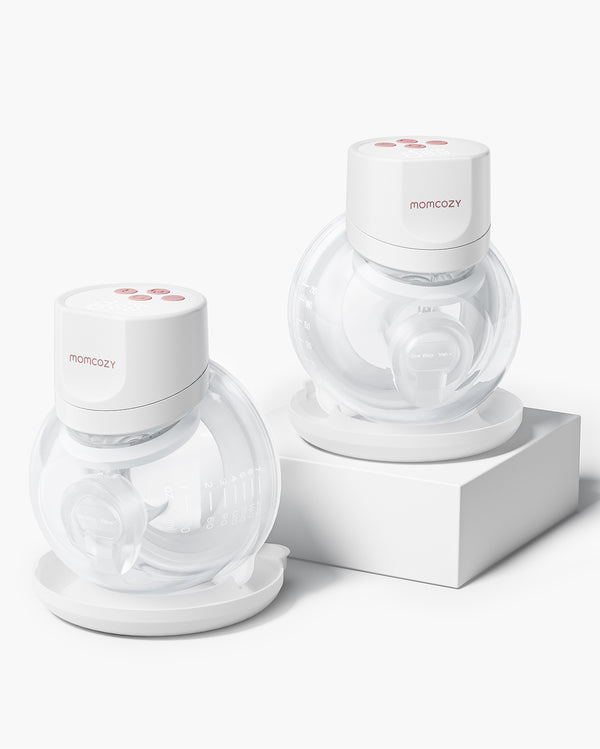
Of course, it must be realized that to maintain the baby in the state of exclusive pumping, one would need a good and effective breast pump to make this work. Most mothers would testify that wearable pumps, just like the Momcozy S12 Pro Quick, are a game-changer in their experience with pumping. This hands-free pumping equipment from Momcozy will make sure that you can multitask in the workplace and while on the go or during parties. With its discreet design and quiet operation, it is really appropriate for use when on the go or at the workplace.
From $63.74 USD $74.99 USD
Time-Saving Convenience
Breast-Friendly Comfort
Upgraded Eficiency
Long-Lasting
A dependable pump is the backbone of exclusive pumping. Because supply runs on frequent, effective milk removal, the pump you choose—and how consistently you use it—directly shapes your results. The next section covers how to build and protect that supply, including which pump setup works best.
Disadvantages of Exclusively Pumping
This also means that you will therefore have to be prepared to meet or address these likely challenges:
- Time-consuming: This is because you need to pump more often than you would when practicing direct breastfeeding.
- Equipment-reliant: Be prepared for the maintenance and cost.
- Losing skin-to-skin time associated with breastfeeding.
- Extra time must be used to clean and sterilize the pump and pump parts.
- The quality of your breast milk might decrease simply because you have to store and reheat it to the proper temperature.
- You might be at a higher risk of developing mastitis, which is inflammation in the breast tissue unless you have a set schedule of when to pump.
- Being emotionally deprived and "in the dark" in terms of following the feeding cycle.
Does Exclusive Pumping Provide the Same Benefits as Breastfeeding?
This is one of the most-searched questions, and the reassuring answer is: yes—exclusive pumping delivers the same core nutrition and immune protection as direct breastfeeding, because the milk is the same milk. The differences are about how the milk gets to your baby, not about what’s in it. Put plainly, does exclusive pumping provide same benefits as breastfeeding? In short, yes—the milk itself is nutritionally equivalent. And the benefits of exclusive breastfeeding vs pumping? Both deliver breast milk’s core benefits; the only difference is the delivery method, not the milk.
The milk itself is nutritionally equivalent
Fat, protein, carbohydrate, and calorie content do not change just because the milk passed through a pump first. The American Academy of Pediatrics and the UK’s NHS both note that breast milk—whether nursed or pumped—remains the gold-standard food for infants.
Immune protection carries over
Pumped milk keeps the antibodies (especially secretory IgA), live cells, and prebiotics that coat and protect your baby’s gut and airways. The CDC highlights these immune benefits as a key reason breast milk—pumped or nursed—beats formula for infant health.
The honest nuances worth knowing
To make an informed choice, it helps to understand where the two methods genuinely differ:
- Real-time adjustment: during direct nursing, milk composition shifts through the feed to match the baby’s needs; pumped milk is a snapshot taken at one time.
- Salivary feedback loop: a baby’s saliva at the breast can prompt the mother’s body to make pathogen-specific antibodies. Bottle feeding does not replicate this exact real-time signaling.
- Fresh vs. stored: freezing for more than a couple of weeks can gently reduce some energy, fat, and antibody levels. Using refrigerated milk within a day or two keeps it closest to fresh.
- Microbiome: direct nursing transfers more of the mother’s natural oral and areola microbes, giving pumped milk slightly less microbial richness.
- Hormonal bonding: nursing triggers a stronger oxytocin surge, deepening bonding and the milk-ejection reflex, though pumping also releases oxytocin—just often less intensely.
None of these differences make exclusive pumping a lesser choice. They simply explain why some moms prioritize nursing when they can and pump when they cannot—and why the World Health Organization frames breast milk (by any delivery method) as the ideal first food.
Building and Protecting Your Milk Supply While Exclusively Pumping
Exclusive pumping is a supply-and-demand job: the more often and more effectively you remove milk, the more your body makes. Treating supply-building as a planned routine—rather than something that happens on its own—is what separates a stressful experience from a sustainable one.
Pump often, especially in the early weeks
Aim for 8–12 sessions per 24 hours in the first 6–8 weeks while your supply is being established. Include at least one session overnight, since prolactin—the hormone that drives milk production—peaks in the early morning hours. As your baby grows and your supply stabilizes, most moms comfortably settle into 6–8 sessions a day.
Get the flange fit right
Flange size matters more than most people expect. A wrong-sized flange can hurt and lower output. The 24–27 mm flanges shipped by default are too large for many moms, so check your actual nipple diameter and size down if needed.
Use power pumping and replace parts
Power pumping—short sessions that mimic a baby’s cluster feeding—can signal your body to boost supply when you hit a plateau. Also replace valves and membranes on schedule, because worn parts quietly reduce suction and output over time.
Choosing the right pump setup
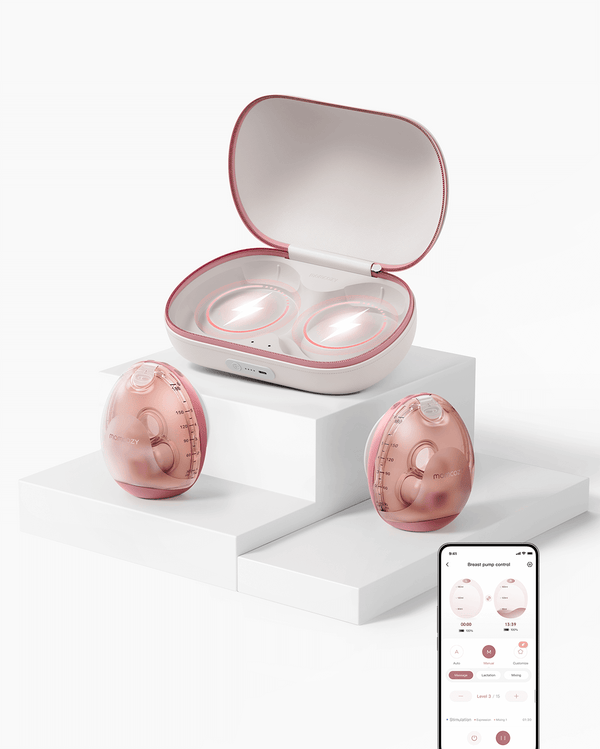
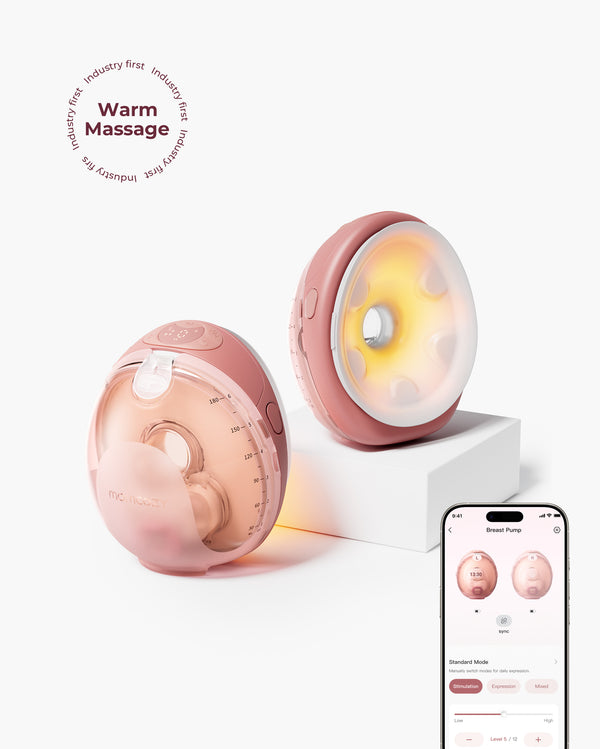
For exclusive pumping, the most effective setup is a two-pump combo: a full-size “big host” pump at home plus a hands-free wearable for when you are out. A hospital-grade pump like Momcozy’s V3 (plug-in) or V3 Pro (portable, cordless) delivers the strong, supply-building suction exclusive pumping demands—both offer up to about -270 mmHg with independent dual control and built-in rhythms such as Power Pumping, Milk Boost, Lactation Starter, and Deep Emptying that are designed for the milk-building stage. Pair that with a wearable such as the Momcozy Air 1 or W1 for on-the-go sessions, and you cover every pump without being tethered to a wall. They are teammates, not rivals: the host pump protects your supply at home, while the wearable keeps you consistent when life pulls you away. For guidance on choosing and using a pump, La Leche League’s pump information page is a helpful reference.
Ultra-slim
Wireless Charging
Effortless Alignment
Smart App Control
From $263.99 USD $329.99 USD
Warm-Massage
Milk Boost Mode
Reliable Battery
Transparent Top
Advantages of Nursing Directly over Feeding Expressed Milk Exclusively
When you weigh exclusive pumping vs nursing, the advantages below are the ones direct breastfeeding uniquely offers—mostly around closeness, convenience, and the body’s natural supply regulation.
Breastfeeding directly at the breast carries with it the following advantages:
- Direct skin-to-skin contact that aids socio-emotional bonding.
- Always available and at the right temperature.
- No need for bottles or equipment; therefore, for many mothers, easier.
- Helps the uterus to contract, so it returns to its pre-pregnancy size faster.
- May help mothers lose weight in the postnatal period.
- Provides comfort to the baby and relieves the pain of growth or illness.
- Milk adapts to the baby's needs on an individual and real-time basis.
- More affordable as you don't need to purchase carts and pumps.
Using a comfortable nursing pillow can help position the baby correctly and reduce strain on the mother's back and arms.
Disadvantages of Exclusive Breastfeeding
While having all the advantages, exclusive breastfeeding has a few cons:
- Demands a lot of the mother's time.
- Indirectly, one cannot be sure if the baby is getting enough milk.
- Mother may feel tethered at home to feed the baby.
- First few weeks could lead to sore nipples and breast congestion.
- Some women face feeding problems in public.
- Sleep deprivation if mom has to do all the nighttime feedings.
- Dietary restrictions for the mother help to prevent allergens from crossing into the baby's milk.
- Preventing others from comforting or bonding with the baby during feedings.
Other Factors You Should Know About Exclusive Breastfeeding
Do I need to pump if I am exclusively breastfeeding?
Not necessarily. If your baby is feeding well and gaining weight appropriately, there is no need to pump. Some moms do like to pump occasionally, however, either to build a small stash or to relieve some engorgement.
Can you go back to breastfeeding after exclusively pumping?
Yes, it's possible to transition from exclusive pumping back to breastfeeding. This process, called relactation, may require patience and support from a lactation consultant.
Does exclusive breastfeeding include pumping?
Technically, exclusive breastfeeding is feeding directly at the breast. However, many describe occasional pumping—for example, so a support person can do a night feed—as still exclusive breastfeeding.
Is it more efficient to breastfeed than to pump?
For most people, yes. Babies generally remove milk from the breast much better than pumps do. However, this can differ depending on the situation and on the type of pump.
When should you pump when you’re exclusively breastfeeding?
If you want a freezer stash, expect to be away from your baby, or would like a partner to handle a feed, adding one or two pumping sessions a day—often right after the morning feed when supply is highest—usually works well. Many moms who breastfeed exclusively never pump at all, and that is perfectly fine; exclusively breastfeeding no pumping is a completely normal path. If you are comparing exclusive breastfeeding vs pumping or exclusively breastfeeding vs pumping, remember both keep your baby on breast milk—the only question is how it is delivered.
Combining Both: A Mixed (Breastfeeding + Pumping) Approach
You do not have to pick a side. A mixed approach—nursing when you are with your baby and pumping when you are apart—is one of the most common and sustainable setups in real life. This is what “exclusive breastfeeding and pumping” or “pumping while exclusively breastfeeding” looks like for many families: the baby still nurses at the breast as the primary method, with pumped bottles filling the gaps.
A useful timing tip: if you are mainly nursing but want to add pumping, most lactation consultants suggest introducing a pump around 4–6 weeks, once breastfeeding is well established. This protects your milk supply and your baby’s latch before adding bottle exposure. If you must return to work before 6 weeks, start a little earlier to build a buffer.
Occasional pumping also lets a partner, grandparent, or caregiver bond during feeds and gives you rare hands-free breaks—without taking away the benefits of nursing directly.
Reintroducing Breastfeeding After Exclusive Pumping (Relactation)
Reintroducing breastfeeding after exclusively pumping is often possible: if you have been exclusively pumping and now want your baby back at the breast, it is often possible—a process called relactation. The word is relactation (not “relaxation”): it means rebuilding a milk supply and a latch after a gap. For guidance, La Leche League’s relactation page walks through the basics with a lactation consultant.
Reintroducing breastfeeding after exclusive pumping takes patience, but these steps help:
- Increase skin-to-skin time so your baby re-learns the breast and your hormones get the nursing signal.
- Offer the breast often—before bottles and whenever your baby shows feeding cues—rather than on a strict schedule.
- Keep pumping after or between nursing sessions to maintain the supply-building stimulus while your baby’s latch strengthens.
- Use at-breast supplementation (a supplemental nursing system) so your baby gets milk while practicing at the breast.
- Lean on an IBCLC (lactation consultant) for a plan tailored to your baby’s age and any latch challenges.
“Breastfeeding after exclusive pumping” is very achievable for many dyads, though some babies resist the breast after preferring a bottle. Go at your baby’s pace and keep pumped milk as a safety net so feeding stays low-stress.
Exclusive Pumping vs Formula
Another common comparison is exclusive pumping vs formula. Pumped or nursed, breast milk contains antibodies, live cells, and prebiotics that formula cannot replicate—which is why the World Health Organization and CDC position human milk as the ideal first food. But “fed is best” is not just a slogan: formula is a safe, nutritionally complete alternative when breast milk is not available, not enough, or simply not feasible for you.
The practical takeaway: exclusive pumping lets you keep the benefits of breast milk when direct nursing is not an option, while formula ensures your baby is fed and thriving if pumping does not work out. Neither choice makes you a better or worse parent—what matters is a fed, cared-for baby and a mother who is mentally and physically well.
Choosing Between Exclusive Pumping and Breastfeeding
Choosing between exclusive pumping and breastfeeding is a personal decision that should touch on the following:
- Lifestyle and daily routine
- How comfortable it may feel to the mother when she thinks about direct breastfeeding
- Whether you think latching and other such problems might happen with you or your baby
- The support you have and your level of discipline in sticking to a pumping routine
- Your emotional needs and the need for physical closeness during feeding
- Any potential medical concerns that might make direct breastfeeding difficult
- Your back-to-work strategies and workplace pumping arrangements
- Your infant's preferences and nursing behavior
Remember, you do not necessarily need to adopt an all-or-nothing approach when it comes to exclusive pumping vs breastfeeding; most mothers find that a mixed approach is often possible and beneficial.
Conclusion
Be it exclusive pumping, breastfeeding, or a combination of both, the main goal should be that your baby is being fed and doing well. Both exclusive pumping vs breastfeeding come with distinct advantages and drawbacks, and what works for one mother-infant duo may not be the best fit for another. Pumping exclusively could provide you more flexibility, meaning that you might find yourself providing your baby with breast milk even when direct nursing isn't possible or simply isn't wanted. But breastfeeding offers so much closeness and convenience that it cannot be compared. The "best" decision is one that contributes to your own physical and emotional health while keeping your baby's nutritional needs in mind. Don't hesitate to reach out to lactation consultants, healthcare providers, or other moms for support. Remember, fed is best, and you're doing an amazing job no matter which path you choose. Trust your gut, be flexible, and most importantly, enjoy this sweet time with your baby.
If you do choose exclusive pumping, give yourself the best odds with the right tools: a strong at-home pump (such as Momcozy’s V3 or V3 Pro) for building supply, paired with a wearable (Air 1 or W1) for life on the move. And if direct nursing is your goal, know that many moms successfully blend the two—or even return to the breast after a stretch of pumping. However you feed your baby, you are doing a remarkable thing.

Frequently Asked Questions
Is exclusive pumping the same as breastfeeding?
In the nutritional sense, yes. Your baby is still getting your breast milk—it is just delivered by bottle instead of at the breast. Most lactation professionals count exclusive pumping as a form of breastfeeding, which is why you can pump exclusively instead of breastfeeding at the breast and still be giving your baby breast milk.
Does exclusive pumping provide the same benefits as breastfeeding?
Yes. Pumped milk keeps the same core nutrition and immune protection as nursed milk; the differences are in delivery (real-time adjustment, the salivary feedback loop, fresh-vs-stored losses, microbiome, and the strength of the bonding hormone surge), not in the milk itself. Both are valid, healthy choices.
Do I need to pump if I am exclusively breastfeeding?
Not necessarily. If your baby is gaining weight well, you do not need to pump. Many moms who breastfeed exclusively never pump. Occasional pumping only makes sense if you want a stash, expect to be away, or need relief from engorgement.
When should I pump when I am exclusively breastfeeding?
Add one or two sessions on days you want a buffer—often right after the morning feed when supply is highest—if you plan to be away or want a partner to feed. There is no required schedule; pump only as your life calls for it.
Can I pump exclusively instead of breastfeeding?
Yes. Exclusive pumping is a legitimate, complete way to feed your baby breast milk when direct nursing is not possible, not preferred, or not working—due to latch issues, separation, work, or personal choice.
Does exclusive breastfeeding include pumping?
Technically, exclusive breastfeeding means feeding directly at the breast. In practice, many parents who pump occasionally—say, for one night feed by a partner—still call it exclusive breastfeeding, since the baby’s primary nutrition is breast milk at the breast.
Can you go back to breastfeeding after exclusively pumping?
Often, yes—through relactation. It takes time, skin-to-skin, frequent breast offers, continued pumping to protect supply, and support from a lactation consultant, but many babies do return to the breast after a period of exclusive pumping.
Exclusive pumping vs formula: which is better?
Breast milk (pumped or nursed) has immune and live-cell advantages formula lacks, so when it works, exclusive pumping is the closer match to breastfeeding. But formula is a safe, complete alternative when breast milk is not available or feasible—and a fed baby is always the goal.
Is it more efficient to breastfeed or to pump?
For most dyads, babies remove milk more efficiently than even a good pump, which is why some exclusively pumping moms need more frequent or longer sessions to match a nursing baby’s output. Pump efficiency varies by model and flange fit.