


MEDICALLY REVIEWED BY

Talia, OBGYN, master’s degree holder, IBCLC
A board-certified OBGYN, master’s degree holder, and IBCLC. As a mom who exclusively breastfed for 2 years, I bring both clinical expertise and real parenting empathy to my work.
I’ve supported 20,000+ postpartum parents with evidence-based breastfeeding guidance—from latching & positioning to lactation medication safety. 90% of my clients build sustainable feeding routines, and I’ve partnered with 2,000+ families to boost breastfeeding rates and satisfaction.
Pulling the high chair closer often helps because it gives your baby more trunk support, less forward reaching, and a more stable head-and-neck position, which can reduce gagging during swallowing. In one infant feeding case review, a closer chair position was linked to fewer gag episodes by improving postural stability and keeping the head in a neutral, slightly flexed position.
If your baby seems to gag less at the table, that does not usually mean the food is suddenly safer in a different way—it often means their body is better supported. A lot of the time, the fix is not “harder swallowing,” but simply better seating, better foot support, and less effort spent balancing. Below I’ll walk through why that happens, what a safer setup looks like, and when gagging is still worth bringing up with your pediatrician.
What gagging is, and why it is not the same as choking
Gagging is a protective reflex. It happens when food touches the back of the tongue or throat and the baby’s body tries to move the food forward again. Choking is different: the airway is blocked, the baby is silent or cannot breathe effectively, and it needs immediate action.

That difference matters because gagging during early feeding can be normal while your baby is learning textures and oral control. The CDC notes that coughing, gagging, or spitting up can happen as babies adjust to new textures, especially when moving from smooth purees toward lumpier foods.
Why a closer high chair can reduce gagging
When the high chair is pulled close to the table, your baby usually doesn’t need to lean forward as much to reach the food. That small change can make a big difference, because less leaning often means less head-jerking, less trunk wobbling, and fewer reflex triggers at the back of the mouth.
A more stable seat can also help the jaw, tongue, and swallow work together more smoothly. Feeding references consistently point to an upright, supported 90-90-90 posture—hips, knees, and ankles at about 90 degrees—with feet supported and the tray positioned close enough that the baby doesn’t have to reach or hunch.

The posture pieces that matter most
A baby usually does better when the torso stays upright, the head stays neutral or slightly tucked, and the feet have a firm surface to press against. That setup gives the trunk more stability, which can free the mouth and throat to focus on swallowing instead of balance.
If the tray is too far away, the baby may lean forward and lose alignment. If the seat is reclined, or the feet dangle, the body has to work harder to stay steady, and that can make gagging more likely.
What a safer high-chair setup usually looks like
The best setup is usually very plain: upright seat, snug harness, feet supported, and the tray or table close enough that your baby can eat without stretching. One feeding guideline describes the ideal position as a 90-90-90 seat with the tray around belly-button to nipple height so the baby can stay centered and upright.

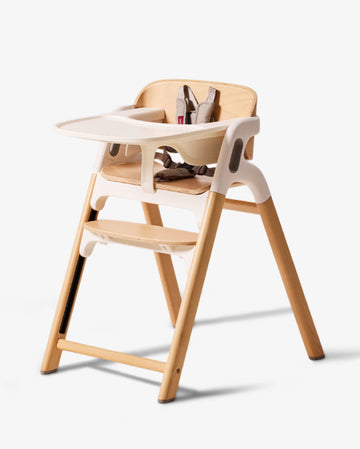
A neutral setup example is an adjustable high chair like the Momcozy DinerPal High Chair, where tray position and seat height can be adjusted so the baby sits closer to the table and more supported.
A practical setup checklist
- Seat fully upright, not reclined
- Hips, knees, and ankles close to 90 degrees
- Feet flat on a footrest or stable support
- Tray or table close enough to avoid forward reaching
- Baby centered, not slumped or twisted to one side
- Always supervised during meals
That kind of setup reduces the amount of “extra work” your baby has to do to stay balanced while eating. When the body is stable, many babies gag less simply because they can better control the food in their mouth.
When gagging can be normal, and when it deserves a closer look
A little gagging here and there is common when babies are learning solids. The CDC says babies can cough or gag as they adjust to new textures, and that first foods are usually best when they are smooth or pureed before progressing to thicker and lumpier textures.
It is more concerning if gagging happens during most feedings, if your baby has trouble breathing, turns blue or pale, repeatedly chokes, or is not feeding well or gaining weight. Those are the kinds of patterns that should be discussed with a pediatrician.

Red flags to watch for
- Gagging during most meals
- Repeated choking instead of brief gagging
- Trouble breathing
- Blue or pale color change
- Poor feeding, weight loss, or obvious distress
- A baby who cannot sit upright well even with support
If the issue seems tied to posture, the first thing to check is seating. If it seems tied to texture, it may help to step back to a smoother food for a few days before trying again.
How to make feeding easier in real life
Start with the simplest changes first: pull the high chair closer, make sure the feet are supported, and keep the seat fully upright. Then watch whether your baby still needs to lean, twist, or crane the neck to reach the food. That one adjustment often gives you the clearest answer about whether posture is part of the problem.
It also helps to match the food to your baby’s current skill level. Smooth purees are usually easiest around the start of solids, and thicker or lumpier textures come later as oral skills improve. The CDC recommends serving age-appropriate textures and keeping the baby well supported rather than pushing ahead too quickly.
Simple adjustments that often help
- Bring the chair closer to the table
- Keep the baby upright, not reclined
- Add firm foot support
- Use age-appropriate textures
- Offer one new texture at a time and watch how the baby responds
- Slow down if gagging increases
Key Takeaways
If your baby gags less when the high chair is pulled closer, the most likely reason is better posture and more stability—not magic, and not necessarily a sign that the baby “likes” the food more. A closer chair often reduces forward leaning, keeps the head and trunk more aligned, and makes swallowing easier.
The main goal is a safe, upright, well-supported feeding position with feet grounded and the tray close enough that your baby does not need to reach. If gagging is occasional, that can be part of normal learning. If it is frequent, severe, or comes with breathing changes, it is time to ask your pediatrician for guidance.








