Baby leaps are those times when your baby suddenly and spectacularly develops mentally. The question is, why are leaps so important? Even though they may appear to be mere fussy times, they are actually the times when your baby's brain is truly making giant leaps. In each leap, your baby is learning something new—such as identifying patterns, understanding cause and effect, or identifying feelings. These bursts of mental growth are leading up to milestones such as language, movement, and social interaction. Knowing baby leaps means you can guide your baby through each phase of his or her incredible journey.
What Are Baby Leaps?
Baby leaps are a term many parents use to describe periods when their baby seems to develop new awareness, skills, or ways of interacting with the world. During these phases, you may notice changes in sleep, feeding, mood, clinginess, or behavior as your baby adjusts to new developmental abilities.
The idea of baby leaps, developmental leaps, or mental leaps in babies is often used to explain why a baby suddenly seems fussier, more attached, or more interested in learning new things. However, every baby develops at their own pace, and leap timelines should be viewed as flexible rather than exact schedules.
If your baby is suddenly clingy, sleeping differently, or acting unlike themselves, a developmental leap may be one possible explanation. However, symptoms such as fever, breathing difficulties, poor feeding, dehydration, or unusual lethargy should always be discussed with a pediatrician.
What Parents Usually Mean by "Leap"
When parents talk about baby leaps, they're usually describing periods when a baby appears to be making noticeable developmental progress. These changes may involve cognitive, sensory, social, emotional, or motor development.
You may also hear terms such as:
-
Developmental leaps in babies
-
Mental leaps in babies
-
Infant developmental leaps
-
Baby developmental milestones
While many parents find leap concepts helpful for understanding behavior changes, it's important to remember that baby leaps are not a medical diagnosis or a guaranteed developmental schedule. Some babies experience noticeable changes during these periods, while others develop more gradually.
Why Baby Leaps Matter?
Baby leaps don't vanish—instead, they form the foundation of the way your child moves, thinks, and interacts with the world.
During a leap, your baby is creating new pathways in their brain that enable them to understand things they couldn't before. It's like they wake up one day with a completely new perspective. You might not even notice it, at least not at first, but those shifts are taking place behind the scenes—and fast.
Here is why such jumps are a big deal:
-
They shape your baby’s brain. Each leap adds a new mental skill—like noticing patterns, understanding distance, or recognizing emotions.
-
They lead to major milestones. Rolling over, babbling, sitting, crawling—those all happen after key mental leaps, not before.
-
They help with bonding. As your child becomes more attuned to the world, they also become more attuned to you. They become accustomed to your face, your voice, and your comfort method.
-
They explain the fussiness. It makes sense that you know your baby is in a leap when you can recognize their added clinginess or mood swings. It's not "bad behavior"—they're simply readjusting to big changes.
Knowing about baby leaps allows you to arrive there with more assistance, more patience, and a whole lot less stress. When you understand what's going on, you stop worrying that something's amiss—and begin to look at it as something that is normal.
Signs Your Baby May Be Going Through a Developmental Leap
Not every fussy day is a leap, but some babies show similar patterns during periods of rapid development.
Common signs may include:
Sleep Changes
-
Shorter naps
-
More night waking
-
Difficulty settling
Feeding Changes
Mood and Behavior Changes
-
Extra fussiness
-
More crying than usual
-
Increased sensitivity
Clinginess and Connection
New Skills
-
Reaching for objects
-
Rolling over
-
Babbling
-
Tracking people visually
-
Increased curiosity
Track leaps based on your baby’s due date, not birth date. This gives a more accurate window of when to expect changes.
According to the American Academy of Pediatrics, it’s normal for babies to experience changes in behavior during major mental and physical developments. Staying responsive and offering comfort during these stages is key for emotional and cognitive growth.
AAP Developmental Milestones by Age
When Do Baby Leaps Happen and How Long Do Baby Leaps Last?
Baby leaps usually occur with a consistent rhythm in the first 20 months. These spurts of brain growth are literally tied to your baby's due date, not birthday—so always start there.
With each jump, there's a new manner in which your baby will see and engage with the world. Some are subtle and almost undetectable, and others are like an entire hurricane relocated into your living room (hello, sleepless nights and clingy days).
Baby Leap Timeline
You may see charts showing exact leap weeks. While many parents find these timelines helpful, developmental changes do not happen on a precise schedule for every baby.
Babies reach milestones at different times, and leap timelines should be viewed as rough guides rather than predictions. If you have concerns about your baby's development, speak with your pediatrician and refer to established milestone guidance from pediatric organizations.
Here’s how baby leap commonly goes:
-
Leap 1 – Around 5 weeks: Becoming more aware of the world
-
Leap 2 – Around 8 weeks: Patterns and smoother movement
-
Leap 3 – Around 12 weeks: Shifts, transitions, and more control
-
Leap 4 – Around 19 weeks: Events and understanding cause and effect
-
Leap 5 – Around 26 weeks: Relationships between objects
-
Leap 6 – Around 37 weeks: Categories and recognizing patterns
-
Leap 7 – Around 46 weeks: Sequences and routines
-
Leap 8 – Around 55 weeks: Programs and problem solving
-
Leap 9 – Around 64 weeks: Principles, boundaries, and behavior
-
Leap 10 – Around 75 weeks: Systems and big-picture thinking
How Long Do Baby Leaps Last?
Leaps usually last from a few days to a few weeks, depending on your baby’s personality and the leap itself. The first leaps (the first three, for example) are usually short, but after that, they might last a little longer—sometimes 2 to 3 weeks.
Here’s a general pattern you might notice:
-
Beginning: Baby seems cranky or unsettled
-
Middle: Sleep disruption and increased clinginess
-
End: New skill appears or baby becomes calmer and more focused
Once a leap is past, parents experience a "sunny period" where their baby is more relaxed, happier, and curious. Enjoy these quiet times when they do occur!
Newborn and Infant Leaps: What's Different in the Early Months?
Many parents search for newborn leaps or infant leaps, especially during the first few months when babies seem to change quickly.
However, newborn behavior is influenced by many factors beyond developmental leaps, including:
In the first few months, it can be difficult to separate normal newborn adjustment from developmental changes. Rather than focusing on exact leap weeks, it is often more helpful to pay attention to your baby's overall growth, feeding, comfort, and milestone progress.
How Do Leaps Affect Your Baby's Settling and Sleep?
If your baby suddenly resists naps or wakes more frequently during the night, a developmental leap may be one possible reason. During these periods, babies often become more aware of the world around them, which can make it harder for them to relax and settle into their usual sleep routine.
You might notice:
-
Increased fussiness at bedtime
-
Shorter naps or frequent night waking
-
Needing more comfort or contact to settle
It's also important to remember that not every sleep disruption is caused by a developmental leap. Sleep regressions, teething, illness, routine changes, and normal developmental growth can all affect how well a baby sleeps. Looking at your baby's overall behavior, feeding, and comfort can help you better understand what may be contributing to the changes.
While these phases can be challenging, they are often temporary. Maintaining a consistent bedtime routine, responding to your baby's needs, and creating a calm sleep environment can help make sleep feel more predictable. Some families also use a baby sound machine as part of their wind-down routine to provide consistent sleep cues and a soothing nursery atmosphere.
As your baby wakes more often, becomes fussier, or experiences changes in their sleep pattern, many parents appreciate having a reliable way to check in without disturbing their rest. A baby monitor can help you stay connected during naps and overnight sleep while allowing you to observe your baby's sleep habits from another room. For a full range of reliable tools to help you navigate sleep changes and stay connected with your little one, explore our collection of baby monitors. Because better rest for your baby can bring greater peace of mind for parents, too.
App or Parent Unit
Danger Zone Alert
Storage Supported
Vox Mode
How Can You Support Your Baby During a Leap?
Leaps can feel like emotional rollercoasters—for both of you. Your baby might cry more, cling tighter, or resist sleep. The best thing you can do? Be there. These changes mean their brain is growing fast, and your comfort is their safe space.
Here’s what helps:
A baby swing provides the perfect vantage point for baby to observe the world during alert time—the gentle motion keeps them content while they take in new sights and sounds.
-
Extra cuddles and contact—babies crave reassurance
-
Sticking to routines for security and predictability
-
Responding calmly to fussiness—your patience is powerful
-
Offering simple play to support new skills
As your baby starts engaging more with the world, you'll need a safe and supportive environment for mealtime too. A baby high chair will help them explore new foods comfortably during these developmental phases.
5 Modes
Safety Design
Lifelong Use
Ease of Cleaning
Also, leaps often come with clinginess and unpredictable routines, making it hard for moms to find time to pump or rest – especially those whose breastfeeding.
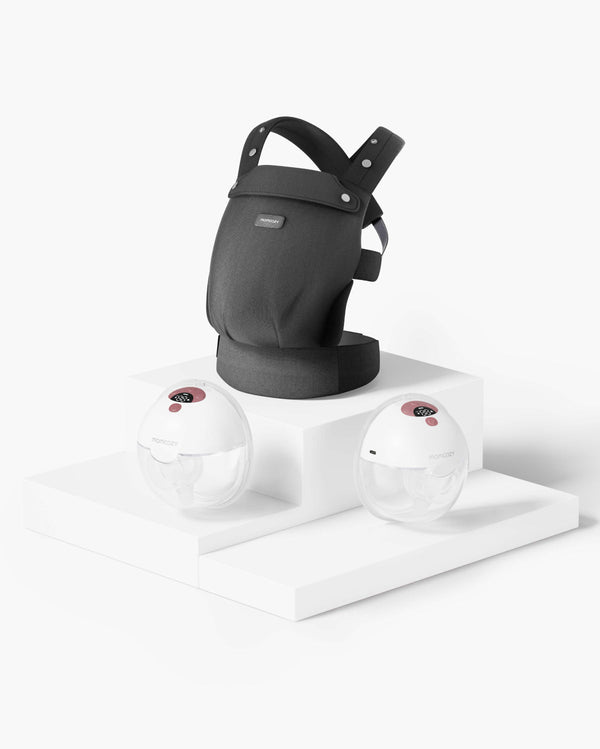
The Momcozy M5 Smart Breast Pump was designed to fit seamlessly into your day, giving you the freedom to pump hands-free and comfortably, even while holding your baby. It’s quiet, efficient, and built for busy moms navigating every leap with love.
From $101.99 USD $119.99 USD
Comfort Fit
Steady Output
Hands-Free Freedom
Easy App Control
When Fussiness May Not Be Just a Leap
Developmental leaps should not be used to explain symptoms that seem unusual or concerning.
Contact your pediatrician if your baby has:
Parents know their babies best. If something feels wrong, it is always appropriate to seek medical advice.
FAQs About Baby Leaps
What is a mental leap in babies?
A mental leap refers to a period of cognitive development when a baby begins understanding new concepts, patterns, or ways of interacting with the world.
Are baby leaps the same as developmental milestones?
Not exactly. Baby leaps describe periods of developmental change, while milestones are specific skills or abilities that many children achieve within a certain age range.
What is the difference between baby leaps and growth spurts?
Growth spurts are primarily related to physical growth and increased nutritional needs, while developmental leaps are often associated with learning, awareness, and behavioral changes.
Can newborns have leaps?
Newborns go through rapid developmental changes, but their behavior is also heavily influenced by feeding, sleep cycles, sensory adjustment, and physical growth.
What if my baby doesn't match a leap timeline?
That's completely normal. Development varies from child to child, and leap timelines should be viewed as flexible guides rather than strict schedules.
When should I call the pediatrician instead of assuming it is a leap?
Contact your pediatrician if your baby has fever, breathing difficulties, poor feeding, dehydration signs, unusual lethargy, developmental regression, or any symptom that concerns you.
What Is the hardest leap for a baby?
Leap 4 is usually the toughest for most babies. It usually happens at around 4 months and brings tremendous changes in how your baby experiences the world. They start understanding cause and effect, and it's overwhelming and even scary for them. Sleep often takes a hit, they may cry more than usual, and they suddenly want to be held all the time. It’s a major shift in awareness, and because it lasts longer than earlier leaps, it can feel never-ending. But hang in there—it means your baby is growing in amazing ways.
What are the 3 C's of baby leap?
The 3 C's of a baby leap are Crying, Clinginess, and Crankiness. These are the normal signs that your baby is going through a mental leap. They might cry more often (even when there doesn't seem to be a reason for them to), get super clingy and won't let you set them down, and just in general seem cranky or upset. It’s not bad behavior—it’s your baby’s way of coping with all the new things their brain is trying to process. Once the leap passes, you’ll often notice a new skill or behavior pop up, and things will settle.
Conclusion
Baby leaps can be a whirlwind—your baby is serene one day and cranky, clingy, and sleeping less than before the next. But you now know: these leaps are not backward steps—they're signs of forward motion. Each cry, snuggle, and sleepless night usually represents something amazing happening in your baby's brain.
The key is to stay patient, stay present, and remind yourself that this phase will pass—because it always does. And with every leap, your baby becomes more aware, more connected, and more themselves.
So give yourself grace. Whether it’s using a good breast pump (Momcozy M5 Smart Wearable Breast Pump), tracking their sleep with a smart monitor (Momcozy 5-inch Dual Mode Smart Baby Monitor - BM04), or just taking a deep breath during a tough day, you’re doing a great job. You've got this, mama. One leap at a time.