


MEDICALLY REVIEWED BY

Talia, OBGYN, master’s degree holder, IBCLC
A board-certified OBGYN, master’s degree holder, and IBCLC. As a mom who exclusively breastfed for 2 years, I bring both clinical expertise and real parenting empathy to my work.
I’ve supported 20,000+ postpartum parents with evidence-based breastfeeding guidance—from latching & positioning to lactation medication safety. 90% of my clients build sustainable feeding routines, and I’ve partnered with 2,000+ families to boost breastfeeding rates and satisfaction.
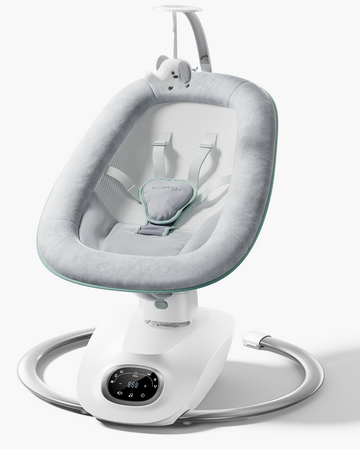
Use the swing only for short, supervised awake time, keep it on a flat floor in a low-traffic spot, and move baby to a crib or bassinet as soon as they get sleepy. That protects safety first and also cuts down on noise, clutter, and tension in a shared home.
Start with the safety rules everyone in the house should know
The biggest rule is simple: a baby swing is not a sleep space. CDC guidance says sitting devices like swings are not recommended for routine sleep at home, and if baby dozes off, you should move them as soon as possible to a safe, flat sleep surface.
Keep the swing on the floor, not on a bed, sofa, table, or counter. The FDA also advises that the swing be used only on a flat, stable surface, with the base fully locked and clear of cords, windows, or furniture that could tip over.

If baby slumps forward, has trouble breathing, or seems distressed, stop right away and take them out. That matters in a shared space too, because a quick stop is better than letting the swing run longer just to avoid interrupting other people.
Share the safety boundary up front
It helps to tell roommates or family members the house rule before anyone gets annoyed:
- awake time only
- supervised only
- floor only
- no pillows, blankets, or stuffed toys
- stop if baby falls asleep
That keeps the swing in the “temporary soothing tool” category instead of turning it into a general baby zone. CDC guidance also emphasizes giving baby lots of direct attention and cuddling, so the swing should not replace holding, floor time, or normal interaction.
Pick the spot that creates the least friction
The best place is usually a low-traffic corner of a common room, away from shared walls, sleeping areas, and walkways. If you can, keep it out of hallways and doorways so nobody has to step around it. Practical small-space advice also points to a firm, level floor away from soft surfaces like beds and sofas.

A rug or mat can help dampen vibration and movement noise, which is useful if your floors carry sound. Just keep the surface firm and stable so the swing itself stays safe and doesn’t wobble.
If your swing folds or stores easily, put it away when you’re done. That reduces visual clutter and makes the common space feel like a shared room again instead of baby gear storage.
A simple placement order that usually works best
- Low-traffic corner
- Away from shared walls
- Away from cords and furniture
- On a firm floor or mat
- Easy to see from where you’re sitting
That last point matters because the swing should stay supervised, not tucked out of sight. The FDA recommends never leaving a baby unattended in an infant swing.
Time it around quiet hours, naps, and predictable routines
In a shared home, timing matters almost as much as placement. The CDC says not to keep babies in swings for too long, and the general safety guidance is to use the swing only for short periods while baby is awake and supervised.
For babies 4 to 12 months old, the CDC recommends 12 to 16 hours of sleep per 24 hours, including naps. That makes it easier to use the swing during awake windows instead of during sleep-heavy periods when roommates or family are trying to rest.
Short, predictable sessions are usually easier on everyone than random, all-day use. A practical limit often mentioned in small-space guidance is roughly 30 to 60 minutes per session, but the safest frame to follow is still the manufacturer’s instructions plus the “stop when baby sleeps or gets upset” rule.

A sound machine can also help soften background noise during supervised awake time. The Momcozy Smart Baby Sound Machine lets you control volume, sound, and timer remotely via the dedicated app — no need to enter the nursery.
Keep the swing calm, not overstimulating
Start with the lowest effective speed and only increase it if baby is still unsettled. Practical small-space advice notes that higher speeds can increase both motor noise and motion amplitude, which can bother nearby adults even if baby seems content.
If your swing has music, keep it low and simple, or skip it if your household is already noise-sensitive. The point is to soothe the baby without turning the whole room into a sound source that travels into other rooms. That said, the evidence here is practical inference from product features and shared-space advice, not a studied decibel threshold.
White noise can be helpful for calming a fussy baby, but it is not a substitute for a safe sleep surface. So if baby falls asleep, the next step is still to move them to the crib or bassinet.
Set a few house rules so nobody has to guess
Easy shared-space rules
- Use the swing only when baby is awake and supervised.
- Keep sessions short.
- Stop if baby gets sleepy, fussy, or uncomfortable.
- Don’t add blankets, pillows, or toys.
- Keep cords and the swing base out of walkways.
- Store it away when you’re finished if possible.
These rules are simple, but they make a shared home feel much more manageable. They also match the safety guidance that swings are not for routine sleep and should not be treated like a crib or bassinet.
If your baby is very young, be especially careful about head control and slumping. CDC milestone guidance notes that by 4 months, many babies can hold their head steady without support when being held, but if you have concerns about development, or if baby seems to struggle with positioning, talk with the child’s doctor.
Keep the swing from taking over the whole room
The easiest way to avoid resentment is to treat the swing like a temporary tool, not permanent furniture. Put it in the room only when you’re using it, keep it stored if your setup allows, and make sure the rest of the household can still move through the space comfortably.

Floor time should still be part of the day too. CDC guidance encourages getting down on the floor for movement and exploration, which gives baby more variety and keeps the swing from becoming the default place to park them.
If you notice the swing is being used more and more just to keep the house quiet, that’s a sign to reset the routine. Use it briefly, supervise closely, and move baby out once they’ve settled or fallen asleep.
The practical takeaway: choose a firm floor spot, keep sessions short and supervised, and move baby out the moment sleep starts. If everyone in the house knows those three rules, a baby swing is much easier to live with in a shared space.








