


MEDICALLY REVIEWED BY

Shelly Umstot, BSN, RN
Shelly Umstot is a BSN and has been a registered nurse for over 35 years. She lives in North East Ohio and is a freelance health content writer. Her passion is bringing understanding to those with questions and concerns regarding health issues and helping them obtain and maintain their optimal health. She loves being with her family and has two lovely granddaughters who have stolen her heart. Assisting new parents in finding the information they need to face the joys and challenges of caring for their children is a gratifying experience for her as a professional, parent, and grandparent herself.
A supportive setup usually means an upright seat, stable foot support, and enough trunk help to keep your baby from slumping or sliding. For babies with low muscle tone, Maricopa County, AZ says the goal is not “perfect independence” right away; it is safe, stable positioning that helps protect the airway and makes early solids easier to manage.
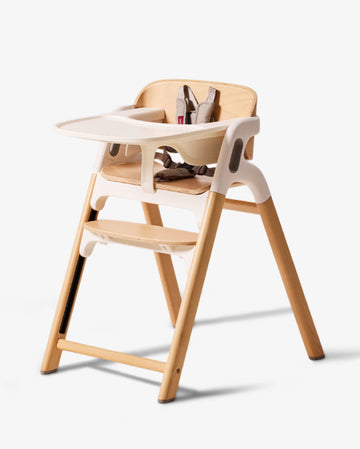
If your baby leans, head-bobs, or seems to lose posture quickly in the chair, you are probably seeing a setup issue as much as a readiness issue. A well-fitted chair can make a real difference, and babies with low tone often do better when the seat, footrest, tray height, and harness are adjusted together instead of one at a time. A neutral example is the Momcozy DinerPal High Chair, which offers adjustable seat height and tray position, but fit and support still need to match the baby's posture needs.
First: Make sure your baby is actually ready for solids
The CDC says the usual starting point is around 6 months, not before 4 months. Readiness is about more than age: your baby should be able to sit with minimal support, hold their head steady, bring objects to their mouth, swallow food instead of pushing it out, and show interest in food.

Low muscle tone can change how that readiness looks in real life. A baby may technically be old enough but still need extra seating support because head control, trunk stability, and oral control are not yet reliable enough for an unsupported feeding position. Hypotonia is a reduced resistance to passive movement and often comes with poor postural control, which is why positioning matters so much here.
What readiness can look like with low muscle tone
You may see your baby try to lean forward, fatigue quickly, or lose alignment in the middle of a meal. That does not automatically mean they are not ready for solids, but it does mean the chair setup needs to be more supportive and the food texture should stay simple. For some babies, purees are the safer starting texture while posture and oral-motor skills build.
If your baby cannot hold their head up or sit with support, do not try to “train through it” with a less-supported chair. In that case, a caregiver-held semi-reclined position may be the safer short-term option if a clinician has advised starting solids despite low tone.
What a supportive high chair setup should include
The most useful starting position is upright, with the hips, knees, and ankles each near 90 degrees, feet supported, and the trunk held centered and vertical. That 90-90-90 position is a common feeding target because it improves stability, helps the child stay seated longer, and supports safer swallowing.

A good setup also keeps the tray and harness working with the baby instead of against them. The tray should sit around belly height or mid-sternum height, not up at the chest or armpits, and the harness should keep the child upright without pushing the shoulders too far back.
The main fit checks
- Seat angle: aim for upright, not reclined, for regular solids feeding.
- Foot support: feet should rest firmly on a footrest or stable substitute.
- Trunk support: use side support, a snug harness, or an insert if your baby leans.
- Tray height: the tray should let the baby reach food without hunching.
- Base stability: the chair should be wide, stable, and not prone to tipping.
If the chair is too deep, too large, or too reclined, a small rolled towel behind the back can help bring your baby more upright and forward in the seat. If there is no usable footrest, a box, book stack, towel bridge, or other stable foot support can make the biggest practical difference.
How to adjust the chair step by step
Start by getting the seat height and depth right. If your baby sits too far back, use a rolled towel or insert behind the lower back to shorten the effective seat depth. If the tray is too high, raise the seated height or remove the tray so the baby can come closer to the table without collapsing forward.
Next, make the feet do some work. A firm footrest helps the child bear weight forward through the feet, which supports pelvic stability and makes it easier to keep the trunk upright. Dangling feet are a common reason babies slump, slide, or fatigue quickly at the start of a meal.
A practical adjustment order
- Put the baby in the chair and check head and trunk control.
- Add back support if the seat is too deep or the baby leans.
- Add or raise the footrest until the feet are firmly supported.
- Lower or reposition the tray so it sits at about belly height.
- Tighten the harness so the baby stays centered but can still move the arms.

For some babies with low tone, a more customized seating setup is needed. Clinical guidance notes that support should address both active postural control in the neck, back, and trunk and the lower-body base of support, especially if persistent head lag or shoulder “slip-through” is present.
When recline helps, and when it does not
For most babies starting solids, recline is not the goal. Upright posture is the standard because reclined positioning can reduce airway protection and make swallowing less efficient.
That said, some babies with marked low muscle tone need temporary extra support. In one forum-based report, caregivers described using a semi-reclined lap position or a reclining high chair for purees only when the baby could not yet sit unassisted or hold the head reliably. That kind of setup should stay tied to a clinician-led plan rather than general “starting solids” advice.
A useful boundary to keep in mind
If your baby is not ready for upright feeding, the safer move is not to force a standard high chair setup. Instead, ask whether a semi-reclined supported feeding plan, purees only, or a therapy-guided progression makes sense for your child’s motor level. Hypotonia can affect head control, swallowing, sucking, and the ability to sit independently, so the feeding plan often needs to match the motor plan.
What to feed first, and how to keep it simple
For most babies, the first foods should be smooth, soft, and easy to manage. Common starting options include thin purees, mashed foods, or single-ingredient iron-fortified cereals, with texture gradually thickened as swallowing skills improve.

Keep the first servings small and watch closely for coughing, gagging, spitting, or fatigue. Some gagging can be normal during the transition, but foods should still be soft enough to mash easily and not require chewing. The CDC also recommends introducing one single-ingredient food at a time and waiting 3 to 5 days before adding another new food so you can watch for reactions.
Texture and pacing tips that usually help
- Start with smooth purees or very soft mashed foods.
- Offer tiny amounts first so your baby can practice without overload.
- Keep the pace slow and responsive.
- Stop if your baby turns away, closes the mouth, or pushes food out.
- Keep breast milk or formula as the main nutrition source during the early transition.
If you are introducing allergens, do it as part of normal complementary feeding rather than holding them back indefinitely. The CDC recommends introducing potentially allergenic foods when other complementary foods are started, while a doctor should guide peanut introduction for children with severe eczema or egg allergy.
When to ask for extra help
If your baby has low muscle tone, the setup question is often also a therapy question. A feeding therapist or occupational therapist can help with seating, trunk support, head control, oral-motor coordination, and texture progression. Speech-language therapy is also commonly used when swallowing or sucking is part of the challenge.
You should also ask for help if your baby keeps showing head lag, cannot maintain upright posture even with support, has persistent coughing or choking with feeds, or seems to be slipping farther into the chair despite adjustments. Those are signs that the current setup may not be enough on its own.
Stop-and-check signs
- Head keeps falling forward or to the side
- Baby slides down despite harness and foot support
- Coughing, choking, or wet-sounding swallowing happens during feeds
- Baby cannot maintain a stable airway position in the chair
- Feeding feels unsafe, stressful, or inconsistent from one meal to the next
If a child suddenly loses skills they previously had, or if hypotonia appears more severe than expected, a pediatric clinician should evaluate the cause. Standard chair adjustments can support feeding safety, but they do not treat the underlying tone issue.
Final Takeaway
For a baby with low muscle tone, the best high chair setup is usually upright, well-fitted, and fully supportive: feet planted, trunk centered, tray at the right height, and enough help to keep the head stable. If your baby cannot sit safely in that setup yet, it is better to use a clinician-guided alternative than to push ahead with a standard high chair arrangement.
The short version is this: fix the chair first, keep the food simple, and get extra feeding or therapy support early if posture, swallowing, or comfort are not holding up.








