Introduction
Sleep deprivation can feel overwhelming in the early months of parenting. Many families want better sleep—but feel uncomfortable with rigid or cry-heavy methods. That’s where gentle sleep training comes in.
Gentle sleep training focuses on teaching babies independent sleep skills while maintaining emotional connection, responsiveness, and trust. Instead of leaving a baby to cry alone, parents provide consistent reassurance and structured support.
This guide will explore what gentle sleep training really means, how it works, when to start, how long it takes, practical techniques, common challenges, and whether it’s the right fit for your baby. We’ll also cover tools that can support calmer routines—such as baby swings and baby monitors designed to create a secure sleep environment.
Key Takeaways
-
• Gentle sleep training emphasizes responsiveness and consistency.
-
• Some crying may still occur—but not prolonged, unsupported crying.
-
• Most babies are ready between 4–6 months.
-
• Results typically take 2–4 weeks.
-
• Consistency matters more than speed.
-
• The right sleep environment supports success.
What Is Gentle Sleep Training?
Gentle sleep training refers to a range of responsive, developmentally appropriate approaches that help babies learn to fall asleep independently without abruptly removing parental support.
In the early months, babies rely heavily on sleep associations—such as rocking, feeding, or being held—to fall asleep. Gentle sleep training works by gradually reshaping these associations so the baby can fall asleep in their crib with decreasing levels of assistance.
Gentle methods:
- Gradually reduce assistance over days or weeks
- Respond promptly and calmly to distress
- Maintain consistent and predictable routines
- Teach self-soothing skills in small, manageable steps
- Support emotional security while building independence
This approach views sleep as both biological and relational. It’s not about forcing sleep or ignoring needs. It’s about guiding the process in a structured, supportive way that strengthens both sleep skills and attachment. For a broader overview of why parents choose these paths, you can explore whether sleep training is necessary and when to start.
Is Gentle Sleep Training Really Sleep Training?
Yes—but it differs significantly from more traditional or rapid methods.
At its core, sleep training simply means helping your baby develop the ability to fall asleep independently and connect sleep cycles without relying fully on external help. Gentle sleep training accomplishes this goal more gradually and responsively.
Rather than aiming for immediate results, gentle methods prioritize:
- Emotional regulation
- Secure attachment
- Gradual skill-building
- Reduced parental anxiety about the process
The process may take longer than more abrupt techniques. However, many families prefer it because it aligns with their parenting values and comfort level.
What Makes It “Gentle”?
Gentle sleep training is considered gentle because it prioritizes emotional safety while teaching independent sleep.
It is characterized by:
- Respect for developmental readiness (typically after 4 months, when sleep cycles mature)
- Avoidance of prolonged, unsupported crying
- Continued physical touch or verbal reassurance when needed
- Gradual transitions instead of sudden withdrawal
- Sensitivity to temperament differences
Gentle sleep training emphasizes teaching rather than enforcing. It acknowledges that babies may protest change, but that change can happen in a supported way.
Core Principles of Gentle Sleep Training at a Glance
While techniques may vary, successful gentle sleep training is built on several foundational principles.
1. Consistent Bedtime Routine
A predictable 20–30 minute wind-down routine signals the brain that sleep is approaching. Repetition strengthens sleep cues and supports melatonin release.
A typical routine may include:
- Bath or wash-up
- Pajamas and diaper change
- Feeding (ending before fully asleep)
- Quiet book or song
- Into crib awake
Consistency helps babies feel secure and reduces bedtime resistance. To better understand how to structure these hours, refer to a comprehensive baby sleep training guide for day and night.
2. Age-Appropriate Wake Windows
Overtiredness is one of the biggest obstacles to sleep training success.
When babies stay awake too long:
- Cortisol rises
- Settling becomes harder
- Night wakings increase
When wake windows are appropriate:
- Sleep pressure builds naturally
- Falling asleep becomes easier
- Night sleep improves
Understanding your baby’s age-specific wake needs is critical for success.
3. Put Baby Down Drowsy but Awake
This step teaches the core skill of independent sleep initiation.
If a baby always falls asleep fully in arms or while feeding, they may struggle to connect sleep cycles later.
Placing baby down when:
- Eyes are heavy
- Movements slow
- Body is relaxed
—but still awake allows them to practice finishing the process themselves.
4. Respond to Distress Calmly
Gentle sleep training does not ignore crying.
Instead:
- Pause briefly to assess
- Offer verbal reassurance
- Use gentle touch if needed
- Pick up if baby is highly distressed (depending on chosen method)
The goal is to reduce intensity over time—not eliminate all crying immediately.
5. Gradually Reduce Intervention
Instead of stopping assistance abruptly, reduce it in small steps:
- Shorten rocking by a few minutes each night
- Move chair farther from crib every few days
- Reduce feeding time gradually
- Delay immediate intervention by brief intervals
Small adjustments allow babies to adapt without feeling overwhelmed.
The Science Behind Gentle Sleep Methods
Sleep is a biological process influenced by:
- Circadian rhythm
- Melatonin production
- Sleep pressure (homeostatic drive)
Around 4 months, babies experience a neurological sleep maturation. Sleep cycles shift from newborn patterns to more adult-like cycles with lighter stages.
This is often when:
- Frequent night waking begins
- Sleep associations become stronger
- Sleep training becomes more effective
Research suggests that consistent routines and predictable responses improve sleep consolidation and reduce night wakings over time.
When Is the Right Age to Start Gentle Sleep Training?
Most pediatric professionals suggest starting between:
Before 4 months:
- Babies still need frequent night feeds
- Self-soothing skills are limited
After 6 months:
- Sleep habits may be more ingrained
- But still very changeable
Signs baby may be ready:
- More predictable schedule
- Able to fall asleep independently sometimes
- Night wakings not always hunger-related
Always consult your pediatrician if unsure.
Signs Your Family Is Ready for Gentle Sleep Training
You may be ready if:
- You feel exhausted or overwhelmed
- Baby relies heavily on rocking or feeding to sleep
- Night wakings are frequent and prolonged
- You’re ready to stay consistent
Parental readiness is just as important as baby readiness.
Does “Gentle” Mean My Baby Won’t Cry?
No. Some crying is normal—even with the most responsive methods.
Crying is a baby’s primary communication tool. When routines change, babies may protest because:
- They prefer the old sleep association
- They are adjusting to a new skill
- They feel temporarily frustrated
The difference with gentle sleep training is how parents respond. Gentle sleep training reduces distress—but it does not eliminate it completely. Learning any new skill can involve short periods of frustration.
How Long Does Gentle Sleep Training Take?
Most families see noticeable improvement within:
2–4 weeks
However, progress is rarely linear. You may see:
- Improvement for a few nights
- A temporary regression
- Gradual reduction in crying duration
- Longer stretches of consolidated sleep
Typical signs of progress include:
- Shorter crying periods at bedtime
- Fewer night wakings
- Faster resettling after brief wakings
- Longer nighttime sleep stretches
- More predictable nap patterns
The first 3–5 nights are often the most challenging, as babies adjust to new expectations.
Can Gentle Sleep Training Be Used for Naps as Well as Nighttime Sleep?
Yes—but nights are usually easier to start with.
Why?
- Sleep pressure is stronger at bedtime
- Melatonin levels are higher
Once nighttime sleep improves:
- Apply same principles to naps
- Keep nap routines shorter but predictable
Day sleep may take longer to consolidate. For specific tips on mastering the daytime, see our advice on nap training and baby sleep tips.
Practical Ways to Gently Sleep Train Your Baby
1. The Chair Method
Sit beside the crib:
- Offer verbal reassurance
- Gradually move chair further away every few nights
2. Pick Up, Put Down
Comfort when crying, then place the baby back down calm but awake.
3. Gradual Fading
Slowly reduce:
- Rocking time
- Feeding duration
- Physical contact
4. Bedtime Routine Reset
Establish a predictable 20–30 minute wind-down:
- Bath
- Pajamas
- Feeding
- Book
- Song
- Into crib
Consistency signals safety.
Creating the Ideal Sleep Environment
Environment plays a major role in gentle sleep training success.
Consider:
- Dark room
- White noise
- Comfortable temperature
- Safe sleep surface
Supportive Baby Swing for Calm Pre-Sleep Time
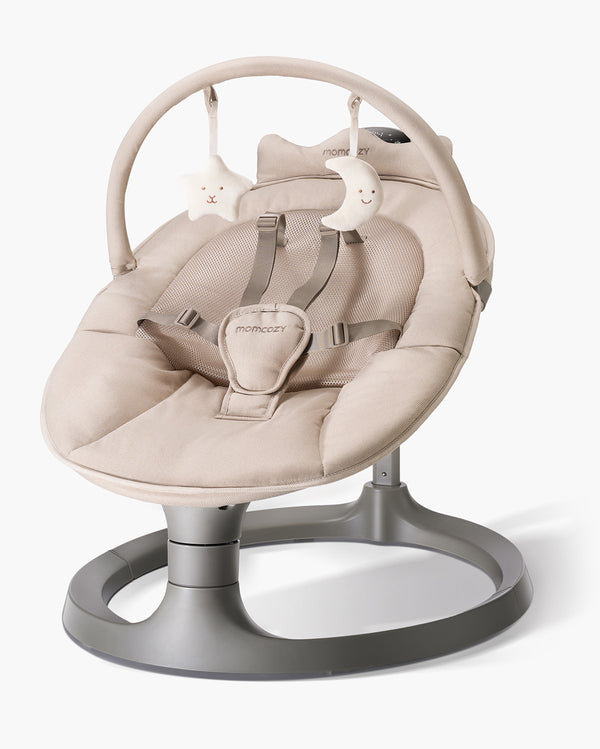
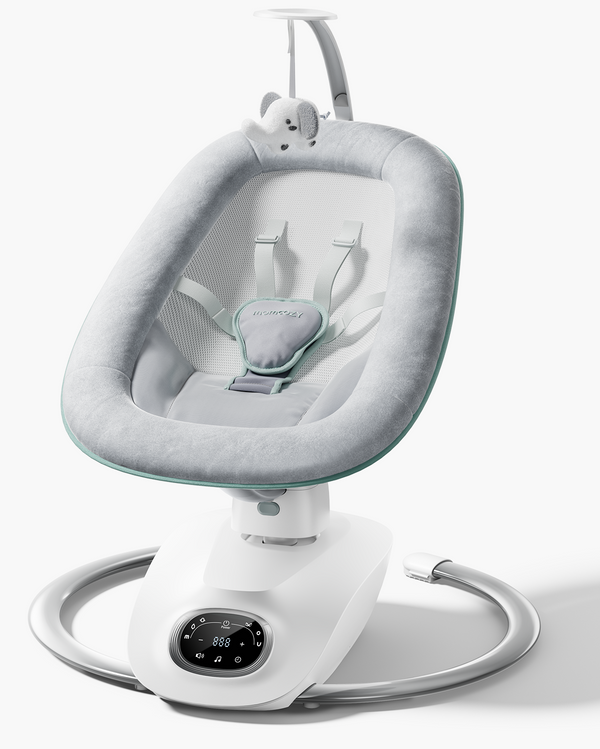
From the Momcozy Best Baby Swing Collection, the Momcozy Smart Baby Swing provides:
- Multiple sway motions that mimic natural rocking
- Adjustable speed levels
- Bluetooth-enabled music
- Soft breathable fabric
- Secure 5-point harness
- Lightweight, portable frame
While swings should never replace safe crib sleep, they can help calm babies before bedtime and support structured wind-down routines.
Dual-Arm Support
Parent-Inspired Swing Motions
Comfortable Seat
Doubles as a Stationary Seat
Patented 3D Swing Tech
6 swing motions
180° rotatable seat
5-point harness
Reliable Monitoring for Peace of Mind
From the Momcozy Best Baby Monitors Collection, the Momcozy 5-Inch HD Baby Monitor offers:
- Large 5-inch HD display
- Clear night vision
- Two-way talk function
- Room temperature monitoring
- Long-range connectivity
- Secure, encrypted signal
- Expandable multi-camera capability
A high-quality monitor allows you to observe without repeatedly entering the room and interrupting sleep learning.
App or Parent Unit
Danger Zone Alert
Storage Supported
Vox Mode
These tools don’t replace consistency—but they support a calm, predictable sleep environment.
How to Handle Common Gentle Sleep Training Challenges?
Frequent Night Wakings
Evaluate:
- Hunger vs. habit
- Wake windows
- Overtiredness
Increased Crying at First
This can be a temporary adjustment. Stay consistent for at least 7–10 days before changing course.
Nap Resistance
Shorten wake windows slightly and maintain a pre-nap routine.
Early Morning Waking
Often due to overtiredness or bedtime being too late.
Is Gentle Sleep Training Right for Every Baby?
Not necessarily.
It works best for:
- Babies over 4 months
- Families ready for consistency
- Parents comfortable with gradual progress
It may not work well if:
- Baby has untreated reflux
- Major schedule inconsistency exists
- Parents cannot maintain consistency
Every baby is unique. The goal is not perfection—it’s improvement.
Final Thoughts
Gentle sleep training offers a balanced path between responsiveness and independence. It prioritizes attachment while still teaching essential sleep skills. It requires patience, predictability and emotional steadiness
But over time, babies learn to sleep safely. With supportive tools like calming baby swings for wind-down time and reliable baby monitors for reassurance, you can create an environment that supports lasting sleep success. Better sleep is not about strictness. It’s about structure with warmth—and consistency with care.