


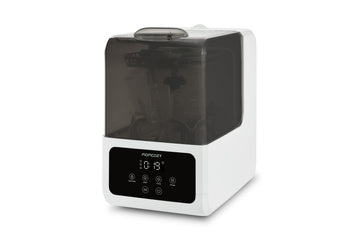
Newborn moms are quick to rinse baby bottles now. Baby bottles, nipple covers, valves, and some parts of the breast pump will hold milk in little grooves and corners. A rinse after feeding won't be enough to clean those areas; the parts need to be washed well.
Using a bottle sterilizer versus dishwasher to compare and differentiate the two, keep in mind that they are a little bit different. Some dishwasher choices are capable of cleaning and sterilizing your baby feeding items and accessories with the proper heated drying and cleaning (or sanitizing) cycle. Also, a sterilizer gives another level of sterility through a step like steam sterilizing. There are also models that can wash, sterilize, dry, and store.

Bottle Sterilizer vs Dishwasher: Which Is Better?
There is no decision between these two options for every family. If you own a dishwasher and your bottles can be washed in it, then both a dishwasher and a sterilizer will work well for your family. Alternatively, you may find a sterilizer is a good option if this is advised for additional sterilization or if a member of your family would like to have a separate appliance for sterilising feeding items.
|
Feature |
Dishwasher |
Bottle Sterilizer |
|
Removes milk and formula residue |
Yes, when used correctly |
Not usually, unless it includes a washing function |
|
Sanitizes feeding items |
Yes, with suitable settings |
Yes, depending on the model |
|
Cleans everyday dishes |
Yes |
No |
|
Designed for baby-feeding equipment |
Not specifically |
Yes |
|
Requires parts to be separated |
Yes |
Usually |
|
May include drying or storage |
Depends on the appliance |
Depends on the model |
The important difference is that sanitizing does not clean; milk residue must be removed before sanitizing feeding items. A steam sterilizer that does not automatically clean cannot remove all residue; it has to be removed.
The Centers for Disease Control and Prevention (CDC) offer guidelines concerning dishwasher-safe feeding items. These can be washed in the dishwasher, including using hot water and heated drying or a sanitize cycle, which sanitizes the items. Therefore, using these methods of washing feeding items does not require an additional step of sanitizing per CDC guidelines.
Can I Just Use My Dishwasher to Sterilize Baby Bottles?
Yes, just a dishwasher cycle will sufficiently kill enough germs to be sanitised as per the CDC sanitizing guidelines. The correct term is usually sanitizing rather than sterilising.
But the result is dependent on the appliance, its settings, and whether the dishes are dishwasher safe. A normal cycle without the right heat or sanitizing setting should not be confused with a sanitizing cycle.
For infants younger than 2 months, immunocompromised children, or premature babies, you should check with the pediatrician and follow CDC recommendations. They may need an alternative cleaning method if your dishwasher doesn't have the required cycle.

Is a Bottle Sterilizer Actually Necessary?
It is not necessary for all healthy, full-term babies. According to the CDC, daily sanitizing may not be necessary for older, healthy babies, as long as the bottles and parts are cleaned carefully after every feed. Washing after each feed is still required; sanitizing is the extra step. Extra sanitizing, however, is recommended for babies under two months, premature babies, and those with weakened immune systems.
A separate sterilizer may prove to be a helpful tool. It may provide a specialized approach for sanitizing compatible feeding equipment for those parents who desire the convenience of such an appliance. Some may even be used to both dry or store bottles.
Some modern appliances go even further by combining the washing and sanitizing into one machine. While these products may cut down on steps, parents should still be aware that some functions are being combined. A steaming machine wouldn't be the same thing as a washer that uses special detergent to first remove milk residue before it sanitizes.
Is It Bad to Not Sterilize Baby Bottles?
No, not always. Many healthy full-term infants over 2 months of age require cleaning after every feeding, but don't need to be sanitized on a daily basis.
It is best to ensure that the bottles are cleaned properly, as simply rinsing them off will not be enough, and one should never leave them dirty. All the parts that can be removed must be separated, washed, rinsed, and dried.
The more pathogens you can get rid of, the better, so now you should be sanitizing your equipment for your younger babies, preemies, or if your baby has other health issues. Follow whatever your pediatrician recommends. If you are uncertain about a risk factor or the safety of your gear, ask a medical professional before you choose not to sanitize.
When to Stop Sterilizing Baby Bottles
There is no specific age when every family should stop sanitizing the bottles. This primarily depends on the child’s condition, health, and age, and the recommendations of the pediatrician.
Representatives of the CDC emphasize that daily sanitizing is necessary if the child is under two months, was born prematurely, or has low immunity. Meanwhile, in healthier older children, this is not necessary as long as the feeding equipment is effectively sterilised after every feed.
You don't have to sterilize it all now, but you should still wash the bottles each time you're finished using them. Disassemble the bottles, and get as much of the formula out of them as you can. Rinse them and let them air dry, and be sure to keep your clean bottles in a safe location.
Seek your pediatrician's advice and carefully follow the manufacturer's advice before you make any changes to the way your child is fed. Please remember that children can be very different and that some children are unwell or that instructions for the equipment may be different.
What Is the Safest Way to Sterilize Baby Bottles?
The safest method is to wash the items, then use an approved method of sanitizing suitable for the type of item being sanitised. Read the manufacturer's instructions. Some items are sensitive to certain temperatures or methods.
The CDC recommends a few different approaches to disinfecting compatible feeding items that have been washed:
- Boiling: all items can be broken into smaller pieces and boiled in a pot of water for 5 minutes. Simply remove items with a clean pair of tongs.
- Steaming: use a microwave steam system or plug-in steam appliance as directed by the manufacturer.
- Dishwasher: items may be rinsed in a hot water cycle with a heated dry or sanitizing cycle.
- Solution of Bleach: If none of these approaches are an option, or time doesn't permit, then follow the procedures for diluting and soaking per the CDC's instructions. Do not try to figure out what strength of solution to use.
Items should be air-dried in a well-ventilated, non-contaminated space following sterilization. Do not use a dish towel to dry items. CDC is cited as the source for these methods. Follow CDC guidelines for specific instructions and warnings for each method.
Are You Supposed to Wash Bottles After Sterilizing?
No. You wash the bottles before you sanitize them. If you sanitize first, the bottles can pick up germs from your hands and the surrounding area.
Disassemble the bottle and wash and rinse all parts. Wash and rinse all parts again. Sanitize if necessary or as directed. Allow to air dry in a clean area.
When the parts are dry, wash your hands and store in a clean, covered container. Following the steps in order reduces the risk of contamination.
Making Bottle Cleaning Easier for Busy Parents
Bottle cleaning may seem like a never-ending task, especially if your baby is using multiple bottles per day. If you are pumping, you may also need to clean your collection cups, as well as your breast pump parts like the flanges and valves. However, a dedicated bottle care appliance can make this process much easier. Just be sure to use it right!
The Momcozy DeepClean Lite Bottle Washer is a compact, all-in-one device for washing, steaming, drying, and storing compatible feeding items. Its footprint of about nine inches is designed to fit smaller kitchen counters without requiring a major rework.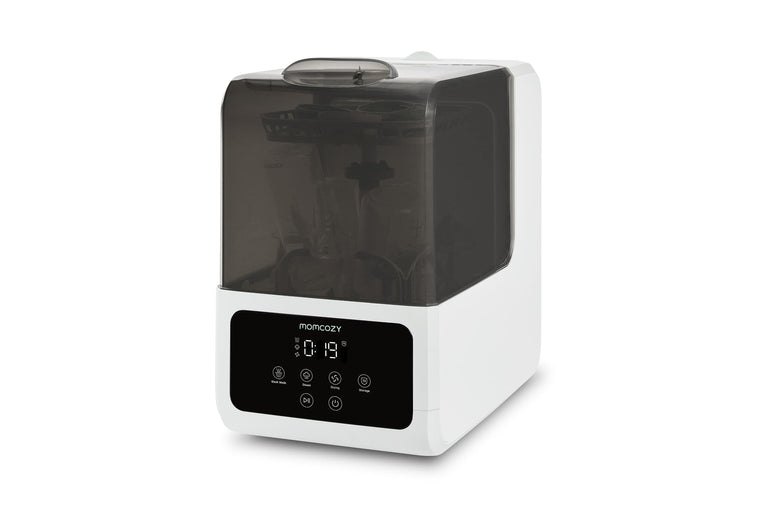 $299.99Code Save $30
Based on Momcozy's product details, it employs a 4-layer spray system and numerous spray nozzles to contact various surfaces. Momcozy also has Pump360 Rotary Jets, in particular for breast pump components, that aid in steering water into bends and difficult areas. The product page states 212F steam sanitization, heated drying, and hygienic storage for 72 hours.
This dual capability sets it apart from a mere steam sterilizer that doesn't wash feeding equipment. The washer can perform multiple aspects of bottle maintenance in one unit, although parents still need to adhere to the washing machine's instructions on loading, detergent, cleaning, and maintenance. Confirm that your bottles and pump parts are suitable before using.
You can check out this link to view the Momcozy DeepClean Lite Bottle Washer specs or this link to see the whole Momcozy bottle washers' collection and compare what is available. The features might change, so double-check what you are buying.

FAQs
Is It Worth Buying a Bottle sterilizer?
It may be helpful to you in certain situations. If your child needs more sanitization or if you feel that a stand-alone device is a better choice for your feeding tools, you should go for the first option. Some sterilizers also allow for storing and drying the equipment, whereas all-in-one washers also provide a cleaning function.
Do You Need a Bottle sterilizer If You Have a Dishwasher?
Not necessarily. If they're dishwasher-safe, and you use a hot-water and heated-drying or sanitizing cycle, you don't need to do anything else, the CDC says. Just make sure you check what your dishwasher can handle and consult your child's doctor.
Should I Sterilize Baby Bottles in a Sterilizer or Dishwasher?
Both of these could be suitable based on your appliances and your child's needs. A dishwasher will clean and sanitize what goes into it, with the proper setting. A steamer can be used to sanitize an item after you clean it, and some dishwashers have a setting that will do both, so consult your manual.
How Often Should You Sterilize Baby Bottles?
Sanitize feeding items daily if the child is under two months, was born prematurely, or has a weak immune system. If the infant is older and does not have health issues, it is unnecessary to do it daily. It is enough to clean and sterilize the equipment after each use, following all the manufacturer’s guidelines and consulting with a pediatrician.
Do You Need to Sterilize Bottles After Every Use?
No. Not every baby needs their bottles sterilized after each feed. All bottles should be washed after every feed. Consider sterilising bottles once a day if your baby is premature or has a weakened immune system, or follow guidance from your health care provider and CDC.
Conclusion
Comparing a bottle sterilizer vs. dishwasher? Think about what either device can achieve! A dishwasher might be good enough to clean and sterilize bottles that are dishwasher safe, if you choose the right setting. A sterilizer or a combined washer and sterilizer might be the more sensible option for families who need extra sanitization or who want to save time.
Whatever you decide, wash your feeding items with hot soapy water after every feed, sterilise when needed, and air dry completely before storing. For busy parents who would like the convenience of washing, steam sterilising, drying, and storing all in one compact machine, check out the Momcozy DeepClean Lite Bottle Washer. Always read the instructions and your baby's healthcare advice.









