


MEDICALLY REVIEWED BY

Zola Zhang, MD, IBCLC, Breast Surgeon, Mother
Breast Surgeon | International Board Certified Lactation Consultant | Mother
As a dedicated Breast Surgeon and International Board Certified Lactation Consultant (IBCLC) with 21 years of clinical experience, my work is rooted in both medical expertise and the lived reality of motherhood—because I’m not just a clinician, but also a mother who exclusively breastfed my own child for two years. This dual perspective shapes every interaction, allowing me to blend scientific rigor with deep empathy for the joys and challenges of breastfeeding.
Yes. A baby swing can become a suffocation risk when loose blankets, pillows, extra toys, thick padding, or other add-ons crowd the seat or get near your baby’s face.
You know that moment when the swing finally calms your baby, and you’re tempted to tuck in one more blanket or hand them one more soft toy? I get why it feels harmless, especially when your baby looks cozy, but safety reviews of infant swings have included thousands of incidents and several deaths tied to breathing position. Here’s how to use a swing for soothing without turning it into a crowded sleep space.
Why Extra Blankets and Toys Can Make a Swing Riskier
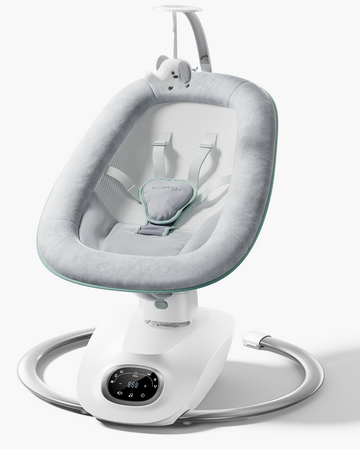
A baby swing is designed as a seated soothing device, not a crib, bassinet, or nap space. A safety agency describes an infant swing as a powered framed product for an infant in a seated position, generally used from birth until a baby can sit up unassisted, and its review of 2,268 infant-swing incidents included 15 fatalities, 600 nonfatal injuries, and 1,653 noninjury reports.

The concern is not just “too much stuff.” It is where those items end up once your baby wiggles, slumps, turns their head, or falls asleep. A small blanket that starts at the waist can ride up toward the chin, and a plush toy that starts near the hip can end up beside the nose or mouth.
Loose Items Can Block Airflow
Soft items are risky because they can mold around a baby’s face. Long-standing infant sleep guidance from safety and infant-health organizations says babies under 12 months should sleep without pillows, quilts, comforters, sheepskins, stuffed toys, or other soft bedding, because soft bedding can contribute to suffocation risk.
That same common-sense idea applies when you are using a swing. If something soft can cover the nose or mouth, press against the face, bunch under the chin, or trap the head in an awkward position, it does not belong in the swing seat.
The Swing Position Adds Another Layer of Risk
Swings hold babies at an incline, and young babies have heavy heads and still-developing neck control. If a baby’s head drops forward, their chin can press toward the chest, which can make breathing harder.
A safety agency’s swing safety review included five “slump-over” deaths in infants ages 2 weeks to 3 months, and four were attributed to positional asphyxia, where body position interferes with breathing. That is why extra padding, thick blankets, or toys around the shoulders and head matter so much: they can make a slumped position more likely or harder to notice quickly.

How Many Add-Ons Are Too Many?
For a baby swing, the safest answer is simple: no loose add-ons in the seat. That means no loose blankets, pillows, nursing pillows, stuffed animals, extra head supports, aftermarket inserts, or soft toys placed around your baby.
Built-in toys that came with the swing are different from loose toys tossed into the seat, but they still need a quick check. In a safety agency’s review, broken or detached toys and mobiles accounted for 2% of incident reports and 4% of injury reports, so anything cracked, loose, dangling too low, or within grabbing-and-mouth range should be removed or repaired based on the manufacturer’s instructions.
A Practical “Clear Seat” Rule
Before turning on the swing, look at the seat the way you would look at a crib for safe sleep: clear, fitted, and uncluttered. The harness should lie flat against your baby, and there should be no fabric bunching between the straps and the body.
A good setup looks like this:
- Baby is dressed in fitted clothing, such as footed pajamas.
- Harness is buckled and snug according to the manual.
- No blanket is draped over the baby or tucked into the seat.
- No plush toy, pillow, burp cloth, nursing cover, or loose lovey is in the swing.
- Any attached toy bar or mobile is secure and used only as intended.
If your baby seems chilly, add a fitted clothing layer before swing time instead of adding a blanket. For actual sleep, move your baby to a crib, bassinet, or play yard, where a wearable blanket can be a practical option if it fits safely and does not interfere with movement.
Watch Out for “Just for a Minute” Items
The things parents toss into swings are usually normal baby-care items: a burp cloth after a feeding, a small swaddle blanket, a teether, a soft rattle, or a pacifier clip. The problem is that babies move unpredictably, and a tiny newborn does not have the same ability to turn away from fabric that an older child would.
I like to treat the swing like a high-use baby station: before every session, do a 10-second reset. Clear the seat, check the straps, check the floor around it, and make sure your cell phone, nursing pad, blanket, and burp cloth are not sitting in the swing from the last feeding.
The Riskiest Time Is When Baby Gets Drowsy or Falls Asleep
A swing may calm a fussy baby, but it should not become the place where your baby takes regular naps. A safety agency has warned against inclined infant products marketed for sleep, especially when the incline is greater than 10 degrees, because an unsafe sleeping environment can create a suffocation hazard.

This is where overloading the swing becomes even more concerning. A baby who is awake may wiggle, fuss, or signal discomfort, but a sleeping baby may slump quietly, turn into fabric, or stay in a compromised position without making much noise.
What to Do If Baby Falls Asleep in the Swing
If your baby falls asleep in the swing, move them to a firm, flat sleep surface as soon as you can. Safe sleep guidance for recalled and warned-about infant swings has repeatedly pointed parents back to a crib, bassinet, or play yard with only a fitted sheet.
That transfer can feel scary when you finally have a sleeping baby. One practical trick is to keep the sleep space ready before you start soothing: lights dimmed, fitted sheet smooth, sleep sack nearby if you use one, and no loose items in the crib. Then you are not scrambling while holding a half-asleep baby.
Short Sessions Are Better Than Long Stretches
A swing is best used for brief soothing or awake time, not long stretches of childcare. Parent-focused baby safety guidance commonly suggests limiting swing sessions to about 15 to 30 minutes, and one practical safe swing use recommendation is to avoid toys, blankets, and pillows in the swing while supervising closely.
That time limit is helpful because it keeps you from relying on the swing as a holding zone for every nap, feeding recovery, or fussy window. It also makes it easier to notice when your baby is getting sleepy and needs to be moved.
Incline, Padding, and Sleep Marketing Are Red Flags
Some newer swing-like products have been recalled or warned against because they were marketed for infant sleep while using an unsafe incline. A safety agency warned consumers in 2025 and 2026 about infant swings that had an incline greater than 10 degrees and were sold as sleep products, saying the products created a suffocation hazard.
This matters even if your own swing has never been recalled. A swing can look soft, cozy, and sleep-friendly while still being the wrong place for sleep. The safer mental shift is: swings are for supervised soothing; cribs, bassinets, and play yards are for sleep.
Be Careful With Added Pillows, Canopies, and Nets
One recalled electric infant swing included a pillow, seat cover, mosquito net with canopy, hanging plush toys, remote control, and USB cable, and a safety agency said the product was recalled because it posed a suffocation risk when marketed for sleep with an unsafe incline. The recalled swing is a good reminder that more accessories do not always mean safer or more comfortable.

For everyday parenting, this means you do not need to make the swing “cozier.” The safer setup is usually the simpler one: original seat pad, properly buckled harness, supervised baby, and no extras.
Follow the Weight and Development Limits
Many baby swings support around 20 to 30 lb, but the exact limit depends on the model. You should stop using the swing when your baby reaches the manufacturer’s weight limit, can sit up unassisted, tries to climb out, or no longer fits securely in the harness.
Weight is not the only issue. A stronger, more mobile baby can shift position, grab dangling toys, twist in the seat, or pull loose fabric toward their face, so the swing can become less predictable even before the listed weight limit.
Safer Ways to Keep Baby Comfortable Without Crowding the Swing
The most useful swing routine is simple: dress baby comfortably, buckle the harness correctly, stay nearby, and move baby to a safe sleep space when drowsy. A parent-focused baby sleep guide notes that swings may help soothe crying babies, but they are not meant for unsupervised or prolonged sleep because the semi-upright position can let the head fall forward.
If you use the swing after a feeding, keep a burp cloth on your shoulder or beside you, not under your baby’s head. If your baby spits up often, talk with your pediatrician about feeding position and timing rather than propping the baby with blankets or padding.
If Baby Likes Holding Something
Some babies like having their hands busy, especially during that fussy evening stretch. Instead of putting a plush toy in the swing, you can offer a pacifier if your baby uses one, or save soft toys for supervised floor time when your baby is awake and on a firm surface.
If the swing has a manufacturer-installed toy bar, use it only as the manual allows. Keep an eye on whether your baby can pull pieces loose, mouth them, or get tangled with them as they grow.
If Baby Seems Cold
A loose blanket is not the best fix for a chilly baby in a swing. Try fitted footed pajamas, a bodysuit under pajamas, or slightly warming the room to a comfortable level.
Avoid draping a blanket over the swing frame, canopy-style, to block light or drafts. That can reduce visibility and may affect airflow around your baby, and it also makes it harder for you to see the exact position of your baby’s face and chin.
A Simple Safety Check Before Each Swing Session
You do not need a complicated routine. You just need a consistent one, especially during the newborn weeks when everyone is tired.
Use this quick check:
- Clear the seat of blankets, toys, pillows, burp cloths, and extra padding.
- Buckle the harness every time, even for a short session.
- Keep the swing on the floor, not on a couch, bed, counter, or table.
- Stay close enough to see your baby’s face, chin, and chest.
- Stop the session if your baby gets drowsy, slumps, fusses hard, or tries to roll or sit up.
- Move a sleeping baby to a crib, bassinet, or play yard with a firm, flat surface and only a fitted sheet.
- Check the manual for weight, age, battery, and toy-bar instructions.
That last point matters more than it sounds. Some swings have removable parts, remote controls, button-cell batteries, or toy attachments that come with their own warnings, and those details can change how you use the product safely.
Key Takeaways
Yes, overloading a baby swing with blankets, toys, pillows, or extra padding can create a suffocation risk. The risk rises when your baby is young, drowsy, sleeping, poorly positioned, or surrounded by loose soft items that can shift toward the face.
The safest swing setup is plain and supervised: original seat, snug harness, no loose extras, short awake sessions, and a clear plan to move your baby to a firm, flat sleep space when they get sleepy. If you remember only one thing, make it this: a swing can help soothe your baby, but it should never be made into a cozy little bed.








