


MEDICALLY REVIEWED BY

Mary Bicknell, MSN, BSN, RNC, ANLC
Mary Bicknell comes with over 30 years of experience as an RN in the NICU. Educating mothers on the importance of healthy breastfeeding is important to her. It can be challenging to maintain successful breastfeeding through many difficult situations and long hospitalizations. Mary is committed to helping families define what successful breastfeeding means to them; and to assist them to obtain their goal. After leaving the bedside, Mary became a nurse leader and continued to make sure that breastfeeding education and support was always available to the families in her unit.
·
Keep breast milk cold, clean, clearly dated, and on a realistic timeline for your trip. For most travel days, the safest approach is to use a well-packed cooler, move milk into a refrigerator or freezer as soon as you arrive, and follow the shortest time limit if anything feels uncertain.
Safe travel storage does not require perfect conditions. It requires a solid cold-chain plan, clean handling, and backup options that work in real life—like having a reliable baby bottle warmer on hand. With that framework, it becomes easier to decide when to refrigerate, when to freeze, when to use milk first, and when to discard it.
Start With the Safest Travel Plan for Your Exact Trip
The first decision is not which bag to buy. It is whether the milk will be used during the trip, within a few days after arrival, or much later. If the milk will be fed soon after you arrive, refrigerated milk can stay safe for up to 4 days, and that often makes a short hotel stay easier than trying to freeze everything. For example, if you pump on Friday afternoon and arrive Friday night for a two-night trip, refrigeration is usually enough as long as the milk stays cold the entire time.

Freezing becomes more useful when the trip is longer, freezer access is reliable, or you are building a stash instead of feeding that milk right away. The best-quality freezer window is about 6 months, although several medical sources note that up to 12 months can still be acceptable in proper freezer conditions. In practice, freezing adds security for longer travel, but it also adds one more task: keeping milk fully frozen, or at least very cold, until it reaches the next freezer, according to the CDC.
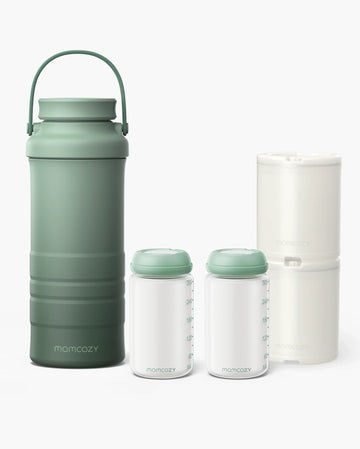
A cooler bridges the gaps between locations. Milk can stay cold in an insulated cooler with frozen ice packs, which is why that setup works well for road trips, airport days, and long stretches between pumping and check-in. The tradeoff is that a cooler is only as effective as its packing and how often it gets opened. If you stop every hour to check bags, the inside warms more than you think.
Know the Time and Temperature Windows That Matter Most
When you are away from home, the easiest way to reduce stress is to remember only the limits that actually drive decisions. Freshly expressed milk is commonly considered safe for: up to 4 hours at room temperature, up to 4 days in the refrigerator, and about 24 hours in a cooler with frozen packs. If the milk has been thawed in the refrigerator, the CDC says to use it within 24 hours.
Storage location |
Practical travel rule |
Room temperature |
Aim to use within 4 hours |
Insulated cooler with frozen packs |
Aim to use or move within 24 hours |
Refrigerator |
Use within 4 days |
Freezer |
Best quality within 6 months |
One nuance matters here. Mayo Clinic notes that milk may last up to 6 hours at room temperature, while CDC-based guidance from Clemson and Ohio State stays closer to 4 hours. That difference likely reflects room conditions, how conservative the source is, and the fact that quality and safety are not exactly the same question. Away from home, where temperatures fluctuate and timing gets fuzzy, the more protective 4-hour rule is the smarter choice. This guide is general information, not a substitute for personal medical advice. If your baby was born premature, is medically fragile, or has recently been in the hospital, follow your pediatrician's or hospital team's instructions.
It also helps to portion milk for real feeding patterns, not ideal ones. Small portions of 2 to 4 fl oz reduce waste, thaw faster, and make it easier to use the oldest milk first. If your baby usually takes 3 fl oz, storing one 3 fl oz bag and one small 1 to 2 fl oz top-off portion is often more practical than freezing a single 6 fl oz bag that may not be finished once thawed.

Clean Handling Matters More on the Road
Travel introduces more touch points, more surfaces, and fewer easy places to wash. Clean hands and clean pump parts are a core safety step, especially because infants are more vulnerable to foodborne illness than adults. If you have ever pumped in a car, an airport lactation pod, or a hotel room with a tiny sink, you already know how easily “I will wash everything later” becomes the weak link.
The most dependable containers are breast milk storage bags made specifically for milk or clean hard bottles. Bags save space and freeze flat, which is a real advantage when cooler space is tight, but they can leak if overfilled or loosely packed. Hard bottles are sturdier and easier to screen at the airport, yet they take up more room and can be heavier to carry all day.
Labeling keeps a manageable system from turning into guesswork. Dating every container lets you use the oldest milk first and makes it much easier to calculate deadlines after delays. For example, if you pumped at 8:00 AM on Saturday and moved the milk into a hotel refrigerator by 12:00 PM, that milk should generally be used by Wednesday at 8:00 AM, not sometime midweek.
Flying With Breast Milk Without Losing Your Nerve
Airport travel feels intimidating, but the rules are better than many parents expect. TSA allows breast milk in carry-on bags in quantities over 3.4 oz, and your child does not need to be traveling with you for that exemption to apply. That matters on work trips, conference travel, and return flights home when you are carrying more milk than you left with.

The smoothest approach is to tell the officer early that you are carrying breast milk and cooling packs, then keep those items easy to remove for screening. TSA notes that clear, translucent bottles are faster to screen than pouches, which is one reason some parents prefer bottles for air travel even if they normally freeze in bags. The upside is faster inspection and less risk of a soft bag being squeezed or shifted. The downside is bulk.
If your packs are fully frozen, screening is usually simpler. Partially frozen or slushy cooling packs are still allowed, but they may get extra screening. That is why many experienced pumping travelers keep one small cooler for milk they may need during the day and another more tightly packed section for frozen storage. It is not about being elaborate. It is about not opening the entire cold system every time you need one bottle.
When Milk Thaws, Warms, or Changes Plans Mid-Trip
Travel rarely goes exactly as scheduled, so a calm decision framework helps most here. If frozen milk still has ice crystals, it can be refrozen. If it has fully thawed but is still cold, refrigerate it and use it within 24 hours. Once thawed, it should not go back into the freezer.
Fresh milk should also be cooled before combining it with older chilled or frozen milk. Warm newly expressed milk should not be poured directly onto frozen milk because it can partly thaw the older batch. On a travel day, that usually means pumping into one container, chilling it, and combining the milk only once both portions are at the same temperature.

After feeding, the timing gets tighter. Leftover milk from a feeding should be used within 2 hours and then discarded. That can feel wasteful when every ounce took effort, but it is one of the clearest safety lines in the guidance. If your baby often leaves 1 oz behind, smaller servings are not just tidier; they also protect your stash.
A Calm, Practical Way to Pack
For most trips, the winning setup is simple: a reliable pump, spare parts, labeled storage containers, a well-insulated cooler, and more frozen packs than you think you need. Hotel freezer access should be confirmed before you arrive, because “there should be a freezer” is not the same as “someone can store your milk safely at 10:30 PM.” If you are driving, keep the cooler out of direct sunlight and open it as little as possible. If you are flying, carry your milk instead of checking it when temperature control matters most.
The goal is not perfection. It is a plan that still works when traffic runs long, the meeting ends late, or the airport line moves slowly. Safe milk storage on the road comes down to clean hands, small portions, firm time limits, and a cooler you trust. That is enough to protect what you pumped and make the trip feel more manageable.








