


If you are asking, “Is a pack and play changing table worth it?” look first at where you already change diapers. The attachment can be useful when your playard stays in a bedroom, living room, or grandparents’ home where changes happen throughout the day. It may add little value when a comfortable changing surface is already nearby. As you compare Momcozy portable playards, treat the changing table as an optional part of the setup. It should solve a repeated problem with location, reach, or supplies before it earns space in your home.
Key Takeaways
The value of a playard changing table depends on how well it fits your real diaper-changing routine. These decision rules can help you separate a useful second station from an accessory that may spend most of its time in storage.
- A Playard Changing Table is most useful when the Playard already sits in a high-frequency diaper-changing location such as the main floor, bedroom, or grandparents’ house.
- The add-on is optional. A nearby changing dresser, safe floor setup, or portable changing pad may already give you everything you need.
- A raised changer can reduce how far you reach compared with a lower Bassinet or Playard surface, but its working height and limits are specific to the product.
- The Changing Table usually has a shorter useful stage than the Playard. Consider how often you will use it before your baby reaches the first stop-use condition.
- Check the complete setup, including its open footprint, attachment-removal steps, folding sequence, and storage needs.
- A nearby diaper pail can complete a high-use station, although regular household trash may be convenient enough for occasional changes.
What Is a Playard Changing Table Attachment?
A playard changing table attachment is a raised, product-specific surface that connects to a compatible playard for supervised diaper changes. The CPSC definition of a changing table accessory covers attachments designed to convert a crib or play yard into a changing table. This component has a different purpose from the Bassinet and lower Playard floor.
Product descriptions sometimes group “changer,” “Bassinet,” “nursery center,” and “Playard” together, which can make the components sound interchangeable. They are separate parts with separate instructions. Some playard packages include a changer, while other systems offer it as an optional purchase.
Compatibility also matters. A changing table attachment should only be used with the exact Playard model identified by the manufacturer. A similar width, connector shape, or product photo does not establish a safe fit. Before ordering one separately, confirm the model match, installation method, restraint requirements, and stop-use conditions.
When Is a Playard Changing Table Actually Worth It?
The strongest use case is a second changing station. Imagine that the nursery and main changing dresser are upstairs, while feeding, play, and family time happen downstairs. Carrying the baby and supplies upstairs for every change quickly becomes repetitive. A changer attached to a Playard already placed on the main floor can keep the whole routine in one area.
The same logic applies when the Playard stays in the parents’ bedroom, at a grandparents’ house, or in another room used for several hours each day. The attachment earns its value through frequency. If it supports repeated changes most days, it can save setup time and keep diapers, wipes, clean clothes, and disposal supplies together.
An occasional-use Playard creates a different calculation. Families who bring it out only for short visits or a few trips each year may prefer a portable changing pad. That option takes less storage space and adds fewer pieces to the packing list. The useful question is how often this specific function will be used.
Nighttime Changes — Does Keeping the Changer Near the Sleep Area Help?
A changing surface near the baby’s sleep area can reduce nighttime movement between rooms. When diapers, wipes, a clean sleeper, and disposal supplies all have a consistent place, caregivers can complete the change without searching through drawers or carrying the baby to another part of the home.
This arrangement works especially well when the Playard is already part of the bedroom setup. The changer provides a dedicated surface for diaper care, while the approved Bassinet or Playard surface remains reserved for sleep. Keeping those functions separate also reduces the chance that a leak or spilled diaper cream leaves the sleep surface damp or soiled.
Some bedrooms already have a dresser with a changing pad or another suitable station within a few steps. In that case, the attachment may duplicate a setup that works well. Momcozy’s nighttime diaper changing setup explains how lighting, supply placement, and cleanup can work together without turning the bedroom into an overcrowded nursery.
Changing Table Height vs. Bassinet, Bed, Couch or Floor
A raised changing attachment can be easier to reach than the bottom of a Playard. Caregivers who dislike kneeling or lowering themselves to the floor may find that the working height makes repeated diaper changes feel simpler. The benefit comes from the placement of the surface, so compare its actual height with your body and the way you normally change your baby.
A floor changing pad remains a practical alternative for many families. It avoids the fall height of an elevated surface and can move from room to room, though the caregiver needs to get down to floor level each time. An existing dresser-based station may also be the better choice when it is already convenient and stocked.
Beds and couches can feel close at hand, but their soft, raised surfaces require especially careful control. On any elevated changing surface, keep supplies within reach and never leave your baby unattended, even when a restraint is fastened. A restraint supports the routine; it does not replace active supervision or a steady hand on the baby.
How Long Will You Actually Use the Changing Table?
The Changing Table attachment usually has a shorter useful stage than the Playard itself. This is one of the most important value questions because an attachment used many times a day for several months may be worthwhile, while the same accessory used once a week may feel less useful.
The compatible attachment for the Momcozy One-Click Foldable Baby Playard is intended for babies from birth to 5 months and up to 20 pounds. Age and weight are not the only considerations. Follow any earlier developmental stop condition in the instructions, particularly as the baby becomes more active or starts reaching a movement milestone named in the manual.
Consider what happens after the changer is outgrown. The Playard is intended for use from birth to 24 months, up to 33 pounds, subject to its instructions and stop-use conditions. Families who still need the approved sleep, play, or travel functions can continue using the base product after the changing attachment is stored away.
Does the Attachment Make the Playard Harder to Fold, Store or Move?
Evaluate the complete configured setup instead of looking only at the folded base. A changing attachment can increase the open dimensions and create another piece that needs a storage location. This matters in small bedrooms, apartment closets, crowded car trunks, and homes where the Playard is folded every day.
The base Momcozy One-Click Foldable Baby Playard measures 112 × 62 × 78 cm when open and 63.5 × 16 × 78 cm when folded. It folds with the mattress in place and stands upright when folded. With the Changing Table installed, the complete open setup measures 113 × 68 × 85.5 cm and weighs 11.4 kg.
Before buying the add-on, check whether it must be removed before the Playard is folded, how it detaches, and where the detached piece will be stored. Measure the room, doorway, closet, and vehicle space against the configuration you expect to use. A detailed Playard size guide can help with the remaining fit questions without turning this add-on decision into a full dimensions comparison.

Keep Sleep and Diaper-Changing Surfaces as Separate Jobs
The Changing Table attachment is designed for supervised diaper care. The Bassinet and approved Playard surface are designed for the uses stated in the product instructions. Their close position does not make them interchangeable. Only use a Bassinet as a changing surface if the instructions for that exact product expressly allow it.
Keeping the two jobs separate also helps protect the approved sleep surface from urine, stool, wipes, diaper cream, and other changing messes. After the diaper change, return the baby to the correct sleep surface only when it is clean, dry, properly assembled, and being used within its stated limits.
For sleep, follow the manufacturer’s instructions and keep the sleep space firm, flat, and bare. Use only the mattress and sleep accessories permitted for the exact Playard. Momcozy’s Playard safe-sleep guide covers sleep-surface rules and newborn use in greater depth.
What Should Be Within Reach at a Playard Changing Station?
The attachment only saves time when the supplies needed for the change are already nearby. Arrange the station so you can maintain control of your baby while reaching for each item. Keep supplies close to the caregiver but outside the baby’s reach.
A compact station usually needs:
- diapers and wipes
- a clean outfit or sleeper
- diaper cream when used
- an approved liner if the product instructions permit one
- a caddy, drawer, or closed storage area
- a clear place for the dirty diaper and soiled clothes
Restock before the supply runs out, especially at a nighttime or downstairs station that may not be close to the nursery closet. Avoid piling loose items on the Playard rail or placing cords, bags, creams, and wipes where the baby can reach them.
For broader organization help, see how to create a baby changing station, choose practical diaper changing station essentials, and stock a portable set of diaper caddy essentials.
What Happens to the Dirty Diaper? Add a Disposal Step to the Station
A Changing Table solves where the diaper change happens. The disposal step determines what happens as soon as the clean diaper is on. If a second station handles frequent changes, carrying every dirty diaper across the house can remove part of the convenience the attachment was meant to provide.
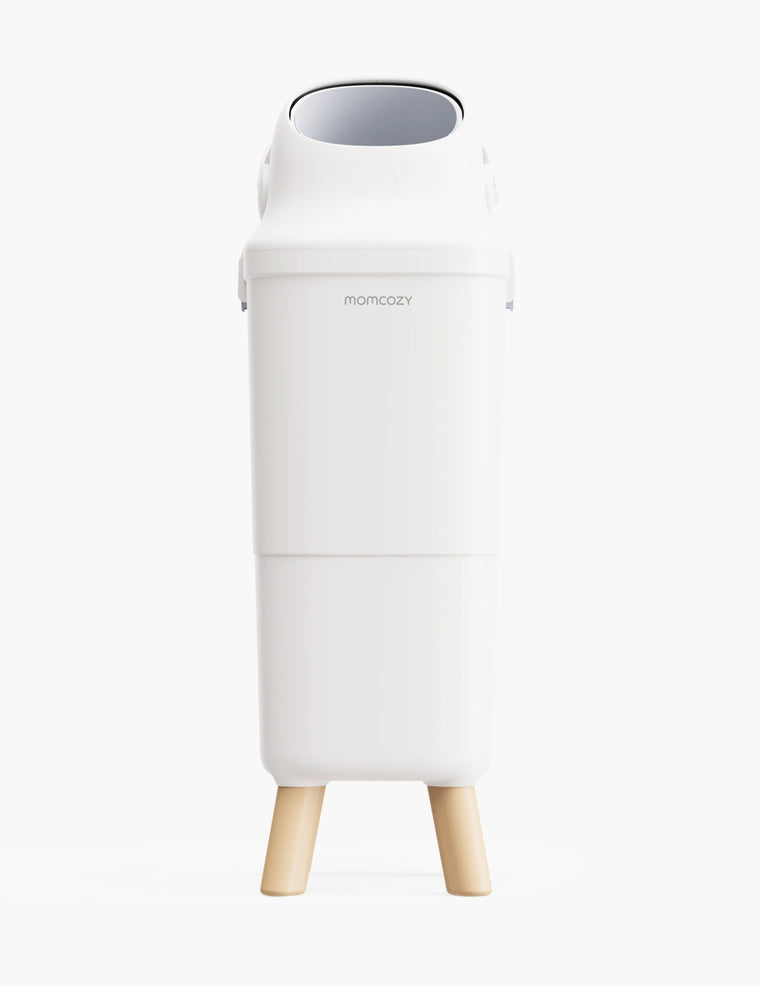
Place the disposal option close enough to reach after the baby is secure, while keeping it outside the baby’s reach. The Momcozy Triple-Seal Diaper Pail offers a wide, hands-free opening, 22-liter capacity, and compatibility with standard 13-gallon bags. These features can suit a bedroom, nursery, or main-floor station that handles diapers throughout the day.
A separate diaper pail is still optional. A nearby household trash can may be enough when the station is used occasionally and the bag is removed promptly. Families deciding between disposal arrangements can compare Momcozy diaper pails or use the factors in Momcozy’s explanation of how to choose a diaper pail.
When You Probably Do Not Need the Changing Table Add-On
The attachment can be skipped when it duplicates a routine that already works. Buying fewer accessories can make the Playard easier to pack and store, especially when diaper changes rarely happen beside it.
You may not need the add-on when:
- A suitable changing dresser or table is already in the same room.
- You prefer a safe floor-changing setup and are comfortable getting down to floor level.
- The Playard is mainly for occasional travel, and the extra attachment adds packing work.
- Your baby is already close to the attachment’s first stop-use condition.
- Most diaper changes happen in another room.
- Your home has no convenient place to store the attachment after removal.
Try describing the repeated problem the attachment will solve. If the answer is only that the system looks more complete with every accessory installed, the purchase may add clutter without improving daily care.
Momcozy Playard + Optional Changing Table — Where the Add-On Fits
The Momcozy One-Click Foldable Baby Playard supports newborn sleep, later play, diaper care, and travel routines in one adaptable setup. The base folds with the mattress inside, stands upright for storage, and uses a press-and-lift system for changing the mattress height.
The compatible changing table is sold separately and provides a raised surface for supervised diaper changes. It is intended for babies from birth to 5 months and up to 20 pounds, subject to all earlier stop-use conditions in the instructions. The attachment is most useful for families who expect frequent diaper changes beside the playard. If another convenient changing station is already nearby, the base playard may be enough.
Use each component only for its intended purpose and follow the product instructions for assembly, folding, cleaning, restraints, and usage limits.
Use This Add-On Decision Checklist
Work through the checklist using the room and routine you actually expect to have after the baby arrives. A “yes” to the first few questions suggests the attachment may solve a repeated task. Unclear answers about compatibility, limits, or folding should be resolved before purchase.
- Where will the Playard stay most of the time?
- How often will diaper changes happen in that location?
- Is a suitable changing surface already nearby?
- Would a raised surface improve reach for each caregiver who will use it?
- What are the exact age, weight, and developmental stop-use conditions?
- Is the Changing Table included, optional, or sold separately for this exact setup?
- Does it change the open footprint, folding sequence, or storage plan?
- Must it be removed before folding, and where will it go afterward?
- Can diapers, wipes, clean clothes, and disposal supplies stay within reach?
- Would a nearby diaper pail solve a repeated disposal problem?
Measure the space and review the complete product instructions after answering. The right choice should make the everyday routine simpler without creating a new problem with storage, packing, or unused parts.
FAQs About Playard Changing Tables
Q1. Is a Playard Changing Table Worth It for a Newborn?
A Playard Changing Table can be worthwhile when the Playard sits in a room where several newborn diaper changes happen each day and another suitable surface is not nearby. Its value comes from repeated use during a relatively short stage. Check the exact age, weight, and developmental limits before deciding, then consider how useful the Playard will remain after the attachment is outgrown.
Q2. Can I Buy a Pack and Play Changing Table Attachment Separately?
Some manufacturers sell changing table attachments separately, while others only include them in specific bundles. These accessories are not universal, so matching the approximate dimensions is not enough. Confirm the exact Playard model, connector design, installation instructions, restraint system, and stated compatibility before buying or using an attachment purchased on its own.
Q3. Can I Use the Bassinet Part of a Playard as a Changing Table?
Use the Bassinet for diaper changes only when the instructions for that exact model expressly permit it. A Bassinet is primarily an approved sleep component, while a Changing Table is made for supervised diaper care. Keeping their roles separate also helps prevent diaper leaks, wipes, or creams from soiling the surface where the baby sleeps.
Q4. How Long Can a Baby Use a Playard Changing Table?
The compatible Momcozy changing table is intended for babies from birth to 5 months and up to 20 pounds. Stop using it when the baby reaches either limit, whichever comes first, or sooner if the product instructions specify a developmental stop condition. After the changing table is outgrown, remove it and continue using the playard only in modes suitable for your child’s current age, size, and development.
Q5. Does the Changing Table Have to Be Removed Before Folding the Playard?
The answer depends on the exact Playard and attachment. Some configurations require the changer to be detached before the frame can fold. Follow the stated sequence and never force the Playard closed around an installed accessory. Before buying, also decide where the removed attachment will be stored so quick folding does not create a loose-part problem.
Q6. Is a Playard Changing Table Better Than Changing Baby on the Floor?
Each setup solves a different practical need. A raised Playard attachment reduces how far the caregiver must reach or lower themselves, while a floor setup avoids the fall height of an elevated surface and travels easily between rooms. Choose the option that fits your mobility, available space, supply storage, and ability to maintain direct supervision throughout every change.
Q7. Do I Need a Second Changing Station Downstairs?
A downstairs station can be useful when the main nursery is on another floor and many diaper changes happen in the living area. It keeps supplies and cleanup close to where the family spends time. If a portable pad and small caddy already make those changes easy, a fixed Playard Changing Table may add little value.
Q8. Should I Put a Diaper Pail Next to a Playard Changing Table?
A nearby diaper pail can complete a station that handles frequent changes by giving dirty diapers an immediate disposal place. It is less important when household trash is already close and emptied promptly. Place any pail outside the baby’s reach, follow its cleaning instructions, and choose it based on disposal frequency, available floor space, and bag preferences.
Choose the Playard Setup That Makes Daily Care Easier
Make everyday care simpler with the Momcozy One-Click Foldable Baby Playard. Add the optional changing table to create a convenient raised diaper-changing station during the early months, while the playard supports sleep, play, and travel as your baby grows. Explore the complete setup and find the right combination for your home.








