
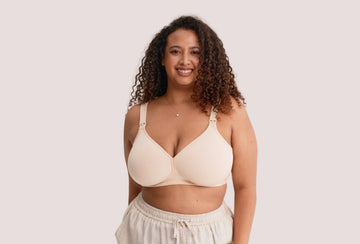
If you're wearing a 36DD or are thinking of going that size, you may well be wondering whether that is actually a large size. It's not just the cup size that determines that. Your band size, your breast shape, your body shape, and the type of bra you're wearing will all have an impact on how your breasts actually look and feel.
A 36DD is a US bra size (36 band, DD cup). That will generally be a fuller bust, but it doesn't necessarily mean you're going to have large breasts on every body. Understanding bra sizing can actually help you to get a better fit rather than go by the cup letter. We'll explain what a 36DD is, how it compares to other sizes, and which styles of bra are likely to be the most comfortable and supportive for day-to-day wear.
What is a 36DD bra size?
A 36DD has two parts. The 36 is the band size (the measurement around your ribcage), and the DD is the cup size in relation to the band.
In the standard US sizing system, a DD cup is approximately a 5-inch difference between bust and underbust. That said, sizing varies from brand to brand, so that's just a general guide.
The cup size in no way indicates breast volume on its own. A 36DD will generally have more cup volume than a 32DD, as cup volume goes up with band size. So two women both wearing DD cups could easily have very different volumes.
36DD Bra Size: Exact Measurements in Inches and Centimeters
A 36DD will give you a general idea of your bust and band size (again, the fit may vary from brand to brand and depending on the method of sizing used). Knowing your measurements in inches and centimeters will allow you to check whether 36DD is the correct size for you.
How big is a 36DD in inches and centimeters?
Under a common US sizing convention, a 36DD may correspond approximately to the following:
Band size category: 36" (91.4cm)
Underbust: normally about 32-34" (81-86cm) depending on the method of sizing.
Bust measurement: (the old school way) is 41 inches (104cm), which gives you a DD cup (5 inches difference).
These are all estimates rather than guaranteed measurements for every 36DD wearer. Different brands will have different measurement ranges for their band sizes, and modern fitting techniques may not necessarily use the old calculation in the same way.
For the most accurate result, measure your underbust and your fullest bust, and then compare those measurements to the manufacturer's size chart. You can also refer to the Momcozy How to Size Guide for further sizing info.
36DD Sister Sizes: 34DDD, 38DD, and the Full Range
Sister sizes are different bra size combinations that have approximately the same cup volume. They can be useful if your normal cup size fits, but the band is either too tight or too loose.
The closest sister sizes of a US 36DD are:
34DDD (34F in some of the US charts) is a smaller band with a larger cup letter.
38D: A larger band with a smaller cup letter.
These sizes have pretty much the same cup volume; they just won't quite fit the same, as the band circumference is different. A 34DDD may well feel quite tight around the ribcage; a 38D may well feel quite loose.
36DD International Conversions: UK, EU, French, Australian
Bra sizing varies internationally. Approximate equivalents for a US 36DD include:
US:36DD
UK: 36DD
EU: 80E
French: 95E
Australian:14DD
These conversions aren't universal, as each brand will have its own cup lettering and its own measurement charts. Some European brands, for instance, will have different cup labeling from their US equivalent even if it's the same size cup.
Is 36DD a large bra size?
A 36DD is definitely a full bust. How big it looks is very much down to your individual frame. If you're a smaller build, it will probably look quite large; if you've got broader shoulders or a wider chest, it may not seem quite so large.
DD is not the largest cup size available. Cup volume goes up with band size, so a 36DD isn't going to have the same volume as every other DD.
If your bra is comfortable on your breasts, it fits your ribcage, and gives you the coverage you want, then the label is of absolutely negligible importance compared to the fit.
Why does a 32DD sometimes appear to be bigger than a 38DD?
A 32DD may well look bigger on one person than a 38DD does on another, simply because of the overall proportions of the body. On a smaller ribcage, the breasts will appear to be fuller in relation to the rest of the body.
Breast shape, spacing, projection, and posture all have an effect on the overall appearance. A push up/moulded bra will give a completely different shape to an underwired or wireless bra even if they're the same size on the label.
Does 36DD look the same on every body type?
No. Two people with 36DD breasts can have completely different breast shapes, different shoulder widths, and different torso lengths. One person may have a lot of tissue in the central part of the breast; the other may have a much more widely set pair of breasts or a shallower breast shape.
The bra style makes a difference as well - full coverage cups will give a very different look to plunge or balconette styles. Your best bet is really down to your own comfort, the coverage you're after, and your own individual shape.
What's the actual difference between 32DD, 34DD, 36DD, 38DD and 40DD?
The number is the band size, and the letter is the cup size (breast volume) relative to that band. If the cup letter is the same, then cup volume will generally go up as the band size goes up.
|
Bra size |
Band comparison |
Relative cup volume |
|
32DD |
Smallest band listed |
Smaller than 36DD |
|
34DD |
Smaller than 36DD |
Smaller than 36DD |
|
36DD |
Reference size |
Reference volume |
|
38DD |
Larger than 36DD |
Larger than 36DD |
|
40DD |
Largest band listed |
Larger than 36DD |
These sizes are not interchangeable. The sister sizes of a US 36DD are 34DDD (34E in UK sizing) and 38D. A 38DD is not a sister size: it holds more volume than a 36DD because the band is wider at the same cup letter.
If your cups fit but the band is a bit too tight, then a larger band with a smaller cup letter may be the answer. If the band is too loose, then a smaller band with a larger cup letter may be the way to go.
What bra styles work best for a 36DD?
The best bra for a 36DD is going to be very much down to your lifestyle, the level of coverage you're after, the fabric you're after, and the amount of support you require.
Consider these options:
Full coverage bras: provide more coverage and help to contain the breast tissue.
Wireless bras: a flexible option for day-to-day wear without the underwire.
Balconette bras: have a more open neckline, which works with certain tops.
Sports bras: will help to manage breast movement during exercise if they're the right fit.
Seamless bras for a smoother look under fitted clothing.
Nursing bras: for easy access to breastfeeding for the pregnant and nursing mum.
A good band and comfortable straps can make a world of difference, particularly if you're finding your breasts are heavy and your shoulders are sore. The right style is one that's going to work for you in the first place rather than simply giving you a smaller or larger bust.
For more advice on nursing with a fuller bust, check out Momcozy's How to Breastfeed with Big Breasts: Expert Tips for Comfort and Success. That one looks at breastfeeding positions, latch, and all the various comfort tips for the mum with big breasts.
Plus-Size Bras for Fuller Busts
Women with fuller busts may well prefer bras that offer adequate coverage, support and comfort all day. The right bra for you will be down to personal preference, your body shape and your lifestyle. A 36DD doesn't necessarily mean you need a plus-size bra; it just means you may need to look at a range of options to find the right one.
The Momcozy Plus Size Bra is a bra designed for mums (specifically those who are going through pregnancy and/or breastfeeding). It takes into account the changes in size and shape of the breast that can occur during motherhood.
The products to consider are:
Momcozy AirMesh Busty Nursing Bra: Designed for the fuller bust, this nursing bra has an AirMesh fabric, supportive cups, and wide padded straps. It's designed to be supportive without being heavy at all. Designed to keep moms comfortable with support for fuller busts.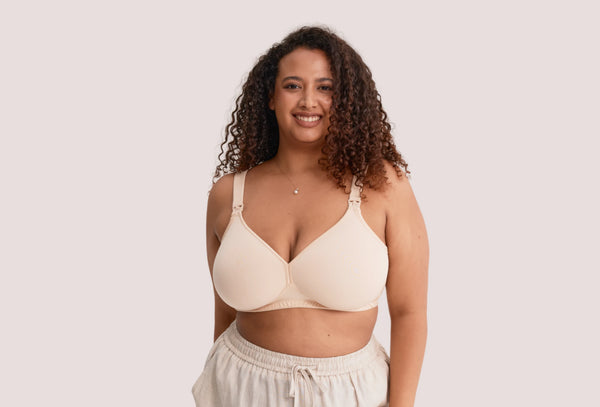
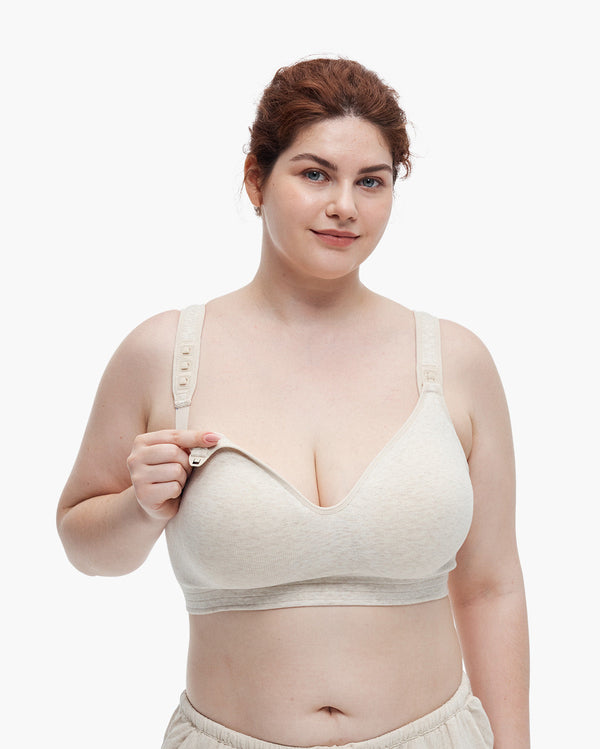
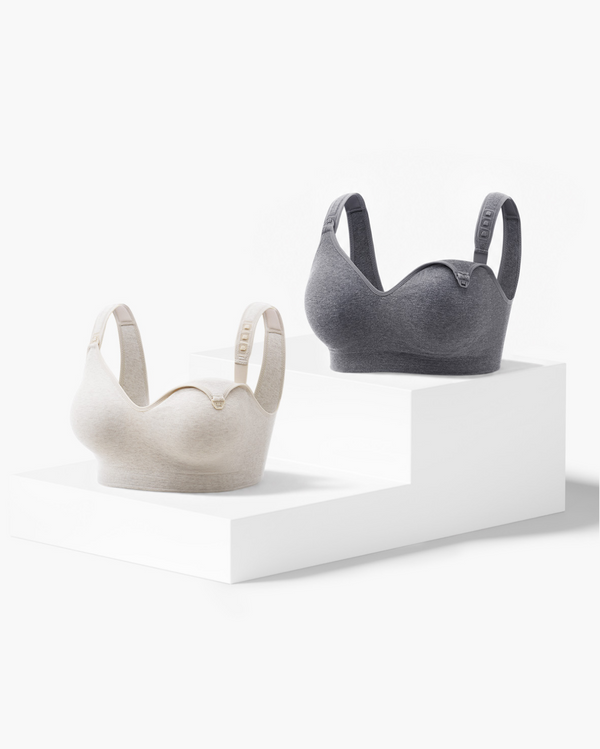
Momcozy Busty Cotton Nursing Bras: Made from premium US fabric, these have lightly structured cups and padded shoulder straps. They're ideal for the mum who wants coverage and support through both pregnancy and the breastfeeding period. They're also very practical to use on a day-to-day basis.
For mums looking for a bit more comfort and support, the Momcozy Nursing Bra range is definitely worth a look at. It has a range of nursing bras which are designed to support a fuller bust as well as being suitable for mums who are breastfeeding.
Other Bra Styles to Consider
Aside from maternity and nursing bras, women with fuller busts may also consider these styles:
Full coverage bras: offer more coverage and help to keep the breasts in place nicely.
Minimizer bras: achieve a smoother look under clothing.
Seamless bras: create a smooth look under fitted tops and everyday wear.
Is 36DD a plus size bra size?
Not necessarily. A 36DD would be a larger bust size (fuller bust), but the plus-size thing is different from brand to brand. One brand may well consider a particular cup size to be plus, and another may not. It's entirely down to the brand as to how they define their plus size ranges.
Don't assume that every 36DD wearer needs a plus-size bra. Check the brand's size chart, the range of styles they have, and their fit advice before you buy. A bra that fits your body is far more important than the category it's in.
How to Measure for a 36DD and When to Re-Measure
Measuring yourself is the practical way of working out whether 36DD is a size that suits you. You'll need a flexible tape measure and a mirror.
1. Take your underbust measurement. The tape should be right under your breasts, level across your ribcage and snug on the skin (but not tight).
2. Measure your bust. Take the tape and wrap it around the fullest part of your breasts, keeping it level and not too tight.
3. Compare your measurements. Use both measurements with the brand's size chart to establish your band and cup size.
4. Try the bra on. Check that the band is level, the cups are properly containing your breast tissue (no spilling, no gaping), and the straps are comfortable.
You may well need to review your size after weight changes, pregnancy, childbirth, or changes to your breastfeeding. For further guidance, see the Momcozy How to Size Guide.
Signs You're Wearing the Wrong 36DD Size and How to Fix It
A bra can have the correct size on it and still fit badly, as different brands have different cuts and different fabrics. The usual signs are:
The band is now raised: adjust the straps and check that a narrower band would be better.
The cups are really overflowing: Try a bigger cup or a different shaped cup.
The cups wrinkle or gape: so consider a smaller cup or another style.
The straps will dig into your shoulders: so check the band support and strap adjustment. Wider straps may also be more comfortable.
The underwire is pressing quite painfully: Try a different cup size or band size, or consider a wireless bra.
The band is quite tight: Recheck your measurements, and if it's still too tight, then try a larger band.
A good bra should be secure without being painful or causing any undue pressure. If one style doesn't fit, then try a different style rather than thinking that the size label is the issue.
Why Some Women Switch From 34DD to 36DD or 38DD
Band size can change due to weight gain or loss, changes in ribcage measurement, pregnancy, or indeed differences between brands. A woman moving from 34DD to 36DD may well need more room around the ribcage, while someone moving up to 38DD will probably need an even larger band.
However, if the cups fit well and it's just the band that needs adjusting, then sister sizing may be the answer. 34DDD and 38DD are sister sizes to 36DD, for instance, and will have pretty much the same cup volume but a different band fit.
FAQ
Are DD Breasts Heavy?
DD breasts can feel heavy, but their actual weight varies from person to person. Breast size, tissue composition, and body shape all affect their weight. Some women with DD cups may experience back, shoulder, or neck discomfort, while others may not have any issues. Breast weight varies from person to person, even among people who wear the same bra size. A DD cup does not have one fixed weight because cup volume, breast density, and tissue composition differ.
Is a 36D Cup Considered Big?
A 36D can be considered a fuller-bust size for some body types, but it is not universally large. Its appearance depends on your frame, breast shape, and proportions. Cup letters also change in volume with band size, so a 36D is not the same volume as a 32D or 40D.
Is 36DD Small, Medium, or Large in Clothing Sizes?
A 36DD bra size cannot be translated directly into a small, medium, or large clothing size. Clothing sizes depend on bust, waist, hip, and brand measurements. Someone who wears a 36DD may wear different clothing sizes depending on the cut and fit of the garment.
Conclusion
So, is 36DD big? It is generally considered a fuller-bust bra size, but its appearance depends on your body proportions, breast shape, and the bra you choose. The DD cup letter alone does not tell the whole story, and the same size can look different on different people.
Start by measuring your underbust and fullest bust, then compare the results with the specific brand's size chart. If you need a nursing bra, Momcozy's AirMesh Busty Nursing Bra, Busty Cotton Nursing Bras, and Nursing Bras for Large Breasts collection are options to explore. Most importantly, choose a bra that fits comfortably, provides the support you need, and works for your everyday routine.









