


There's no single age when to stop using a baby monitor. Your and your child's readiness, along with your home's layout, matters far more than a specific birthday.
The real question isn't "how old is old enough?" It's simpler than that: is the monitor still helping you hear something you'd otherwise miss, respond faster than you could without it, or make a genuinely useful call about your child's night? Or has it become something you keep running mostly out of habit?
That's the line worth paying attention to. Whether you're just starting out with Momcozy baby monitors or deciding whether to retire the one you have, the right answer isn't about a deadline. It's about whether the monitor is still doing a job.
Key Takeaways
- There is no universal age to stop using a baby monitor; readiness, communication ability, home layout and actual usefulness matter more than a birthday.
- A child who can reliably call or reach a caregiver may need less monitoring, but families on different floors may still need audio longer.
- Video often becomes unnecessary before sound monitoring does, so families can step down to audio, VOX or occasional use before stopping completely.
- If the monitor wakes parents, drives repeated checking or rarely changes a response, reducing monitoring intensity may be more useful than leaving it unchanged.
- Privacy deserves more weight as children become aware of being watched; older children may need communication without continuous visual monitoring.
- Temporary monitor use can still make sense for illness, nightmares, travel or a new room even after regular all-night monitoring has ended.
There Is No Single Age to Stop Using a Baby Monitor

Search "when to stop using a baby monitor" and you'll find a wide spread of answers. Some parents say 12 months. Others say 4, 5, or even school age. Forums like Reddit and Mumsnet are full of threads where one parent's toddler was ready at 18 months, while another is still monitoring a six year old through a rough patch of nightmares or illness.
That spread isn't confusion. It's evidence that age was never the real variable. A fixed cutoff, like "stop at age 3," is easy to remember, but it ignores what's actually different from one family to the next: can this child call out and be heard? Can this parent hear them without help?
Why Age Ranges Are Only Rough Reference Points
Most published ranges (commonly 18 months to 4 years) reflect averages across very different homes and children. They're a starting point for thinking, not a rule to follow. A one-story home with a child's room next to the parents' won't necessarily match a two-story house with a nursery down the hall.
What Matters More Than Age
What actually predicts readiness is whether the child can reliably get a caregiver's attention, whether the home layout allows sound to travel without help, and whether the monitor is still solving a real problem instead of running out of habit. That's the check worth running before age comes into it.
Six Signs Your Child May Be Ready to Reduce or Stop Monitoring

No single sign here is a green light on its own. A child who calls out clearly but sleeps two floors away may still need audio support. The value is in looking at these six signals together. If most line up, it may be time to stop. If only a few do, stepping down (video first, audio later) is usually the safer move.
Communication
Your child can reliably call for you, knock, or use whatever method you've agreed on to get help. This matters more than age. A verbal three year old who never actually calls out isn't showing the same readiness as one who does.
Safe Access to Help
If your family's nighttime setup allows some movement (getting out of bed, opening a door, walking to your room), your child can do this safely within those boundaries. This is less relevant if your child stays in a crib or a closed room by design.
Stable Sleep Patterns
Sleep and wake times are predictable enough that checking the monitor rarely changes how you'd respond. If nights have settled into a routine and surprises are rare, the monitor is doing less active work than it used to.
Audibility
You can hear your child from wherever you spend your evenings and nights, whether that's a nearby room or simply thin walls. If there's a gap, another method, a cracked door, a shared wall, can sometimes cover it.
Monitor Usefulness
You rarely check it, or it's mostly running out of habit rather than need. If you'd genuinely miss it during an off night, that's worth noting too.
Privacy Awareness
An older child notices the camera, asks about it, or expresses a preference for more privacy. This tends to show up gradually and is worth taking seriously even if your child can't fully articulate why.
Run through these six together. A mixed scorecard usually points to reducing monitoring gradually rather than stopping outright.
When It Makes Sense to Keep the Monitor Longer

Stopping isn't always the next logical step, even when a child shows several readiness signs. Sometimes the monitor is still solving a real problem, just a narrower one. The question worth asking isn't "should we still have this on," but "what specifically is it still doing for us, and does it need to be video, audio, or just occasional?"
Home Distance
Different floors, thick walls, a closed door, or a noisy fan can all make it hard to hear a child without help, regardless of how independent that child is otherwise. In these cases, audio-only monitoring often covers the gap without needing a screen running all night.
Nighttime Needs
Some children call out from bed rather than getting up and coming to find a caregiver. If that's the pattern in your house, some form of monitoring is still doing real work, even if your child is well past toddlerhood.
Temporary Health/Sleep Disruptions
Illness, vomiting, nightmares, or a stretch of night terrors are common reasons to bring a monitor back into rotation, even after a family had mostly stopped using one. This isn't a step backward. It's a reasonable, short-term response to a short-term situation.
Individual developmental circumstances
Some children have developmental or medical circumstances that call for a more individualized approach to nighttime monitoring. This isn't something a general guide can responsibly weigh in on, so if it applies to your family, it's worth talking through with your child's pediatrician rather than relying on age-based advice.
In a shared sibling room, keeping some form of monitoring going can also mean catching a stirring child early, before a cry wakes the whole house.
Home Layout Can Matter More Than Age
Age tells you little about whether you can actually hear your child at night. A five-year-old one room over might be easy to hear without any help. A two-year-old on a separate floor, behind a closed door, with a white noise machine running, might not be audible no matter how independent they are otherwise.
This is one of the biggest reasons fixed-age advice falls apart in practice. Families in multi-story homes, older houses with thick walls, or homes where evenings are spent in a basement or garden describe the same thing. They keep some form of monitoring going long after their child has outgrown it by every other measure.
Same Floor vs Different Floor
If your child's room is close enough that you'd hear real distress through a wall or a cracked door, a monitor may already be doing less work than you think. If there's a floor, a hallway, or a long stretch of house between you, that distance alone can justify keeping it running.
Thick Walls and Background Noise
Older homes, dense construction, or fans and white noise machines can all swallow sound that would otherwise carry. This isn't about your child's readiness. It's about whether sound can physically reach you.
Audio Can Outlast Video
This is usually where the distinction matters most. A family that can't reliably hear a child doesn't necessarily need a camera running, just a reliable way to hear them. Dropping video while keeping audio is often the simplest fix for a layout problem, without holding onto full visual monitoring longer than needed.
Video, Audio, or Nothing? Scale Down Before You Quit

Stopping a monitor doesn't have to be one decision. For most families, it's a series of smaller steps down, from full video, to audio-only, to occasional use, before the monitor goes away entirely. The question at each stage is the same: what's the minimum level of monitoring that still solves the actual problem?
Level |
Keep it when... |
Video |
Seeing your child changes what you'd do (checking a sleep position, confirming a cough isn't something more) |
Audio only |
The only thing you need is to hear a call, cry, or cough. A picture wouldn't change your response. |
VOX / screen-off |
You want the reassurance of audio without a screen lighting up or running all night. |
Occasional use |
Monitoring only makes sense for specific nights (illness, travel, a rough stretch) rather than every night. |
When Video Stops Adding Useful Information
If you're not acting differently based on what you see, the camera isn't adding much. Hearing your child is often enough.
When Audio-Only is Enough
If the task has narrowed to "will I hear them if they call," audio-only or VOX mode covers that without extra stimulation.
When Occasional Monitoring is Enough
Some families only need the monitor back for a night or two at a time. That's a reasonable long-term pattern, not a fallback.
Check our guide on how to choose a baby monitor if you are looking for a more in-depth analysis.
Privacy and Independence Start to Matter More as Children Grow
Monitoring a sleeping newborn and monitoring a preschooler aren't really the same act, even if the equipment is identical. As children get older, they become aware of things infants simply aren't, and that awareness deserves a place in the decision, separate from questions of safety or convenience.
Why a Camera Can Feel Different at Age 4–5 Than at 12 Months
A newborn has no concept of being watched. A four or five year old might. Some children notice the camera, ask about it, or seem to perform for it once they know it's there. Others don't think about it at all. There's no universal age where this shifts, and no rule that says monitoring becomes inappropriate at a specific birthday. It's tied to a specific child's temperament and awareness, not a milestone you can schedule around.
Audio Communication May be Less Intrusive than Video
Continuous visual monitoring and simply being able to hear and talk to your child aren't the same level of observation. For families weighing privacy alongside safety, moving to audio-only, or an occasional check-in, can meet the practical need without the ongoing sense of being watched a live camera can create.
If your child is old enough to ask for the camera to go, that's worth taking seriously as real input, not just a phase to wait out, unless there's a specific reason monitoring still needs to continue.
Is the Monitor Still Helping, or Is It Keeping You Alert?
Monitors are built to pick up sound, and they're often very good at it, which means they also pick up things that were never a problem: normal rustling, sighs, snores, the ordinary noise of a sleeping child. For some parents, that amplification is reassuring. For others, it becomes the thing keeping them awake, checking a feed that hasn't shown anything worth acting on in weeks.
Neither reaction is universal, and this isn't about labeling monitor use as a problem. It's a practical signal worth checking in on: is the monitor giving you information you act on, or is it mostly just running?
The "We Never Look at It Anymore" Signal
Some parents realize, almost by accident, that they haven't opened the app or glanced at the screen in days. If that's true for you, the monitor has quietly become background noise rather than an active tool, and that's worth considering scaling back.
The "Every Sound Wakes Me" Signal
If you find yourself waking to every small sound the monitor picks up, even sounds that turn out to be nothing, it's worth testing whether that's necessary. Try lowering the volume, switching to VOX or screen-off mode, or skipping the monitor for a single night and see what actually changes. If nothing important is missed, that's useful information. If you notice you genuinely need it, that's useful too.
How to Phase Out a Baby Monitor Without Going Cold Turkey
Turning a monitor off for good, in one night, can feel like a bigger leap than it needs to be. A step-down approach gives you the same information, does your child actually need this, without betting an entire night on it.
A 7-night step-down plan
- Pick a low-stakes window first. Start with a time you're already nearby and awake, like an early bedtime or a nap, rather than the middle of the night.
- Lower the volume or sensitivity before removing anything. A quieter monitor still catches real distress but stops amplifying every small sound.
- Let the screen sleep instead of watching live. If your device has a VOX or screen-off mode, use it. You'll still be alerted to sound without the pull of a live picture.
- Move to audio-only for a few nights. Drop video entirely and see if audio alone gives you what you need.
- Keep the monitor nearby but powered off. This is where most of the actual transition happens. It's available in thirty seconds if something changes, but it's not running by default.
- Agree on how your child should reach you. Calling out, knocking, or coming to find you, whatever fits your setup, so there's a clear plan on both sides.
- Give it several nights before deciding anything. One unusual night (a cold, a bad dream, a loud storm) isn't a fair test. A week gives a more honest picture.
What To Do If the Trial Does Not Work
If your child needed you and the reduced setup didn't catch it, that's useful information, not a failure. Step back up to whatever level worked, audio-only, VOX, or full monitoring, and try again later. There's no penalty for moving at your child's pace, and no reason a first attempt has to be the last one.
When It Is Reasonable to Use the Monitor Again Temporarily
Stopping regular monitoring isn't a one-way door. Bringing a monitor back for a specific stretch of time is a normal, practical response to a temporary situation, not a sign that the earlier decision to stop was wrong.
Illness and Unsettled Nights
A cold, a stomach bug, or a run of nightmares or night terrors are all reasonable reasons to want to hear your child sooner rather than later. Using a monitor here is about catching a call or a cough faster during a rough patch, not tracking anything medical.
Travel and Unfamiliar Rooms
A hotel room, a relative's house, or any unfamiliar sleep space can unsettle a child who normally sleeps through the night without issue. A monitor is an easy way to stay aware during a trip, even if it's not part of the regular routine at home.
Transitions to A New Room or Bed
Moving to a new room, a new bed, or out of a crib often comes with a settling-in period. Keeping the monitor running during that stretch, then dropping it again once things stabilize, is a reasonable way to support the transition without committing to it long-term.
What a Baby Monitor Cannot Tell You About Safety
A baby monitor is a tool for hearing and seeing your child from another room. It isn't a medical device, and it shouldn't be treated as one, whether you're deciding to stop using it or deciding to keep it running.
SIDS Boundary
Devices that monitor a baby's breathing, heart rate, or movement, including consumer video and audio monitors, aren't approved for or proven to prevent SIDS. The AAP has stated that prevention of SIDS is not an acceptable indication for home cardiorespiratory monitoring. Stopping regular use of a baby monitor does not change your child's SIDS risk one way or the other. What matters is following established safe-sleep guidance: back sleeping, a firm sleep surface, and a clear crib, regardless of whether a monitor is running.
Direct Supervision Boundary
A monitor extends your ability to hear or see a child from another room. It doesn't replace being present, checking in, or responding to something that seems off. If you're ever concerned about your child's breathing, color, or responsiveness, that's a call for direct attention or medical advice, not something to resolve by watching a screen more closely.
Frequently Asked Questions
Is 4 years old too old for a baby monitor?
Not necessarily. Some families stop well before age 4, while others keep some form of monitoring going longer, especially if a child sleeps far away, has trouble calling out, or is going through a rough sleep stretch. What matters more than the number is whether the monitor is still solving a real problem in your home.
Should I stop using the monitor when my toddler moves to a bed?
Not automatically. A bed transition is a good moment to reassess, but it doesn't require stopping right away. Many families keep some level of monitoring (often audio-only) through the adjustment period, then scale back once the new routine settles.
Can I keep an audio monitor after I stop using video?
Yes, and this is a common step for many families. If the remaining need is simply hearing a call, cry, or cough, audio-only monitoring often covers that without the screen and stimulation that come with video.
Do I still need a monitor if my child sleeps on another floor?
Possibly. Distance, closed doors, and thick walls can all make it hard to hear a child without help, regardless of how independent they are otherwise. In these cases, audio monitoring can remain useful longer than it would in a smaller or single-floor home.
Can I use the monitor only when my child is sick or having nightmares?
Yes. Bringing a monitor back for illness, nightmares, travel, or a temporary sleep disruption is a normal, practical use, not a step backward. Many families use it this way even after they've stopped relying on it night to night.
Do baby monitors help prevent SIDS?
No. Baby monitors, including breathing and vital-sign trackers, have not been proven to prevent SIDS, and the AAP specifically recommends against using home monitors for that purpose. Following established safe-sleep practices, like back sleeping and a clear crib, is what actually supports safer sleep, not monitor use.
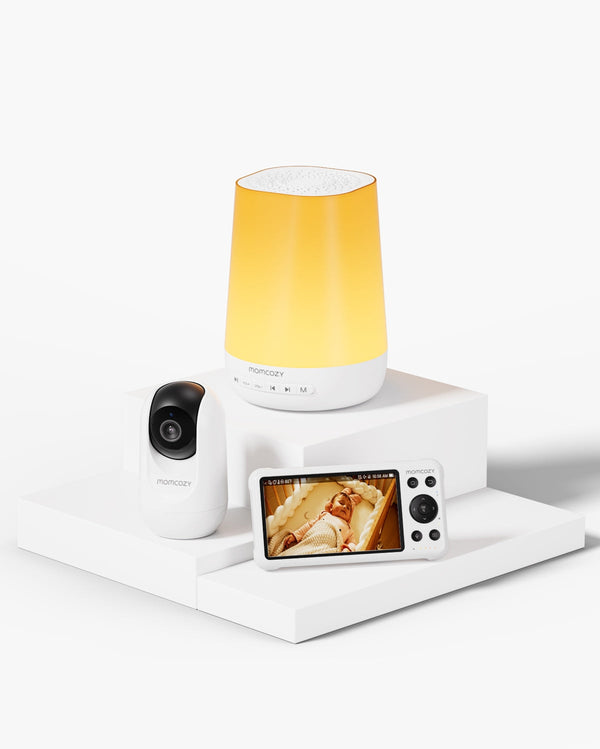
Member price
$229.99
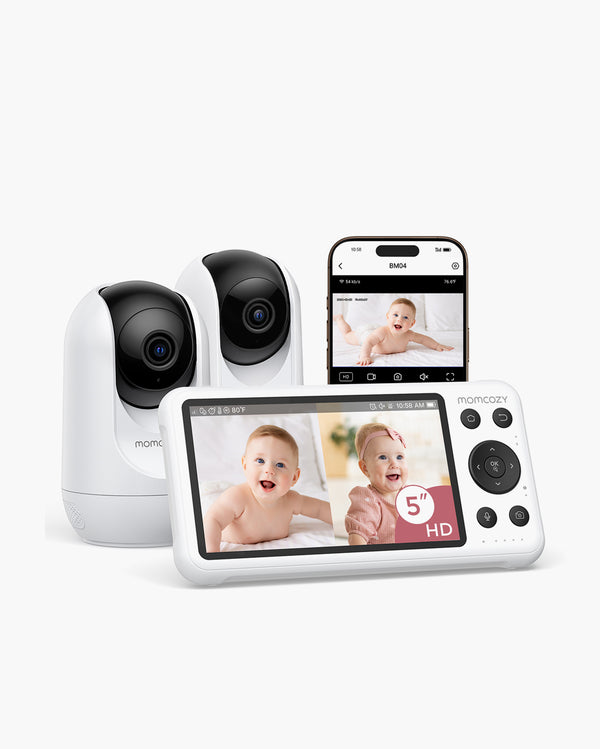
Member price
$259.99Code Save 10%
Conclusion
There's no age that makes a baby monitor unnecessary, and there's no rule that says stopping has to be permanent. The right time to scale back is when the monitor stops solving a real problem, when you can hear your child without help, when they can call out and be heard, when checking the screen has become habit rather than need.
For most families, that shift happens gradually, not all at once. Dropping video before audio, trying a night or two without it, keeping it nearby but off, are all reasonable ways to find out what your family actually needs. And if illness, travel, or a hard night calls for it again later, bringing it back doesn't undo any of that progress.
If you're just getting started or building out your setup, Momcozy's baby monitors are a reasonable place to look.








