


MEDICALLY REVIEWED BY

Zola Zhang, MD, IBCLC, Breast Surgeon, Mother
Breast Surgeon | International Board Certified Lactation Consultant | Mother
As a dedicated Breast Surgeon and International Board Certified Lactation Consultant (IBCLC) with 21 years of clinical experience, my work is rooted in both medical expertise and the lived reality of motherhood—because I’m not just a clinician, but also a mother who exclusively breastfed my own child for two years. This dual perspective shapes every interaction, allowing me to blend scientific rigor with deep empathy for the joys and challenges of breastfeeding.
Start with the model number, care labels, and manual: they determine what can come off and what can be washed. Unplug the swing and follow the manufacturer’s directions before cleaning; keep moisture out of vents and electronics, dry every part completely, and address recurring odors by finding trapped residue or moisture rather than masking the smell.
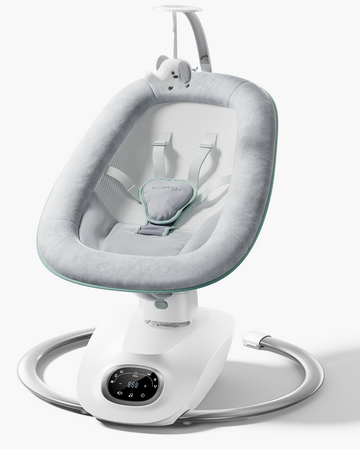
A baby swing is not one washable item. Its seat cover, insert, canopy, harness webbing, buckle, foam, frame, labels, controls, battery compartment, and motor area may all have different care limits. The manual for your model takes priority over any general cleaning routine.
Begin by sorting the parts—not by guessing
Before you remove a zipper, open a snap, or start wiping, find the swing’s model number and current manual. Check sewn-in care labels as well. If the paper manual is missing, look for the manufacturer’s official digital version or support page.
Then sort what you see into these groups:
Part |
Treat it as |
What to verify first |
Seat cover or pad |
Potentially removable textile |
Whether it unzips, detaches, and can be machine-washed |
Insert, head support, canopy, or harness covers |
Model-specific accessory |
Whether it is removable and how it may be cleaned |
Harness webbing and buckle |
Safety restraint |
The manufacturer’s specific cleaning instructions |
Foam |
Material with its own limits |
Whether it can be removed, spot-cleaned, or must stay dry |
Frame and seat shell |
Non-powered hard surface |
Approved wiping method |
Controls, vents, motor housing, plug, and battery compartment |
Powered area |
Manufacturer-approved maintenance only |
Warning labels |
Safety information |
Keep them readable and avoid wetting or abrading them |
Disconnect power before cleaning, and remove batteries if the manufacturer directs it. Do not assume that every fabric item is washable simply because the seat cover is.
Some swings are designed for easy cover removal. For example, the Momcozy CocoSway lists a removable, machine-washable seat cover, but that statement applies to its seat cover—not automatically to its harness, buckle, insert, or other accessories. See the CocoSway product details.
Remove and wash soft parts without disturbing the restraint system
Take a few photos before disassembly. Capture the strap routing, attachment points, and the way the fabric sits around the seat. This gives you a reference when the cover is dry and ready to go back on.
If the manual says the cover is removable
Follow the listed sequence for opening zippers, loops, snaps, or attachment points. Do not force fabric around a harness slot or try to pull webbing through an opening unless the manual specifically tells you to do so.
A removable cover can usually be handled in one of three ways:

- Machine wash only if the label and manual permit it. Use the listed cycle, temperature, and detergent instructions.
- Hand-clean or spot-clean if that is what the label requires. Keep the cleaning limited to the approved fabric areas.
- Leave it attached if it is non-detachable. Remove loose dust from seams and crevices with a vacuum brush or curtain attachment, then use only the manufacturer-approved cleaning method for the fabric.
Mild, fragrance-free detergent may be appropriate when the care label allows it. Do not treat “mild” as permission to use any stain remover, odor product, disinfectant, vinegar, baking soda, or enzyme cleaner. Those products can have different effects on textiles, foam, coatings, and infant-contact surfaces; check compatibility first.
Keep harnesses, buckles, and foam separate from cover care
The harness is not just another fabric strip. Do not machine-wash, soak, bleach, solvent-treat, sew, tape, glue, or otherwise repair harness webbing or buckles unless the manufacturer expressly permits the relevant method.
The same caution applies to foam. If it smells musty, feels degraded, stays damp, or cannot be cleaned and dried according to the product instructions, do not conceal the issue by reinstalling a freshly washed cover over it.
Reinstall only after full drying
Allow removable textiles to dry completely before reinstalling them. Use a dryer only if the care instructions permit it; no universal drying time applies.
When reassembling:
- Put the cover back on using the photographed routing and the manual’s attachment points.
- Confirm that no strap is twisted, trapped behind fabric, or routed through the wrong opening.
- Check that the cover is fully seated and that the harness and buckle still operate as intended.
- Leave the swing unplugged until every cleaned area is dry and the inspection is complete.
Clean the frame and vents with controlled moisture
The goal is to remove residue without sending water, cleaner, or debris into the places that power or move the swing.
Frame, seat shell, and accessible crevices
For non-powered frame surfaces, one general approach is mild liquid soap on a non-abrasive cloth, followed by drying with a clean cloth. Use that only where your model’s instructions allow it.
Work in small areas rather than wetting the whole frame. Wipe away milk, spit-up, food residue, or other messes from approved hard surfaces, paying attention to:

- The underside of the seat
- Fabric edges and attachment points
- Harness-slot surroundings
- Frame joints and accessible seams
- Areas beneath removable pads
Keep the cloth damp rather than dripping. Do not spray cleaner directly onto the swing.
Motor vents, controls, and electrical areas
Treat vents and the motor housing as dry-maintenance zones unless the manual gives a specific alternative method.
Do:
- Keep the swing unplugged while cleaning.
- Remove loose dust from the outside of a vent only by the method approved for your model.
- Wipe nearby non-powered exterior surfaces carefully, without carrying moisture toward openings.
- Wait until the swing is completely dry before reconnecting power.
Do not:
- Spray, pour, steam, or drip liquid into vents, controls, motor housings, power connections, or battery compartments.
- Push a damp cloth, brush, swab, or tool into a vent.
- Force debris farther into an opening.
- Wet warning labels or scrub them until they are unreadable.
A damp cloth may be suitable for the frame on some models, including the Momcozy swing collection description, but that does not authorize wetting the controls, motor area, vents, or electrical connections. Review the collection’s care information.
If the motor behaves unusually after cleaning—or if you notice an electrical concern—stop using the swing and contact the manufacturer rather than attempting an internal repair.
Prevent sour and musty odors over repeated use
A persistent smell often means residue remains in a seam, under a pad, around a harness slot, or in another hard-to-see area. A musty smell can accompany mold, which can grow on fabric, upholstery, and dust when moisture is present. Odor alone does not identify where mold is located. Read the CDC’s mold guidance.
The practical response is to find the source, clean only the parts you are authorized to clean, and make sure all components dry fully.
What you notice |
Likely next step |
Fresh milk, spit-up, food, or diaper leak |
Clean the affected approved surface promptly; check seams, underside fabric, and nearby crevices. |
Odor returns after the cover is washed |
Inspect the seat shell, foam, harness-slot areas, fixed fabric, and crevices for retained residue or moisture. |
Fabric or foam feels damp after cleaning |
Keep the swing out of use until it is fully dry; do not store it damp. |
Musty smell or visible mold |
Pause use and seek manufacturer guidance; resolving mold also requires addressing the moisture condition that allowed it to develop. |
Frayed straps, degraded foam, damaged buckle, unreadable labels, or abnormal motor behavior |
Do not improvise a repair. Contact the manufacturer about support or approved replacement parts, or replace the affected product. |

Avoid fragrance sprays, essential oils, and heavily scented products as an odor strategy. They can cover the clue that residue or moisture remains, without resolving the underlying problem.
A simple maintenance rhythm
Over months and years of use, build a practical baby-gear cleaning routine that is easier to sustain than occasional intensive cleaning:
- After spills: Clean the affected approved surfaces and check beneath the pad if the mess may have traveled.
- Monthly: Vacuum accessible crevices on non-detachable fabric, inspect seams and harness-slot areas, and wipe approved frame surfaces.
- Before storage, reuse, or passing the swing on: Wash authorized textiles, inspect the restraint system and labels, clean accessible crevices, and make sure the entire swing is dry.
- When indoor dampness is a recurring issue: Address the moisture in the room as well as the swing. Household mold-prevention guidance recommends keeping indoor humidity at 50% or lower throughout the day. See “You Can Control Mold”
Use this final safety checkpoint
Continue using the swing only when it is clean, completely dry, structurally sound, correctly reassembled, and clear of applicable recalls. Keep the routine simple: deal with messes promptly, inspect hidden areas regularly, and let the manual control every washing and disassembly decision.
Pause use if odor persists after authorized cleaning and complete drying, mold is visible, foam or straps are degraded, safety labels cannot be read, or the motor operates abnormally. In those cases, check recall information and contact the manufacturer about replacement parts or, for Momcozy products, review product-care and support options—not as a substitute for the model’s manual—rather than attempting a workaround.








