


WRITTEN BY

Shelly Umstot, BSN, RN
Shelly Umstot is a BSN and has been a registered nurse for over 35 years. She lives in North East Ohio and is a freelance health content writer. Her passion is bringing understanding to those with questions and concerns regarding health issues and helping them obtain and maintain their optimal health. She loves being with her family and has two lovely granddaughters who have stolen her heart. Assisting new parents in finding the information they need to face the joys and challenges of caring for their children is a gratifying experience for her as a professional, parent, and grandparent herself.
No matter what method you've chosen to nourish your baby, most likely, you will need to learn how to bottle feed a newborn. Exclusively pumping? Storing breast milk for another person to feed the baby? Infant formula feeding your baby? Whatever method, you'll find newborn-safe hold, position, and prep tips below. If your baby is exclusively breastfed and this is their first bottle, read our changing from breast to bottle feeding guide first—this page does not repeat that introduction timeline.
Quick Answer: The Essential Steps
How Do You Hold a Bottle When Feeding a Newborn?
Always wash your hands before feeding your newborn. As we will discuss later in this article, position your newborn on your lap.
The proper bottle angle:
Hold the bottle at an angle from the bottom. Keep the bottle at a slight incline. The formula or breastmilk should fill the nipple to keep the baby from sucking air.
Starting the feeding:
Gently rub the bottle nipple over your baby's lips. Your baby should open their mouth and take the nipple into it. Start feeding them enough milk for a good mouthful; the nipple should be in the mouth enough to keep it open and wide. Support your arms and your baby's head and neck so the bottle stays at a steady angle without tiring your wrists.
During the feeding:
Give your baby a couple of ounces of milk or infant formula. Take breaks during the feeding to burp and eliminate any swallowed air. As your baby grows and starts on solids, transitioning them to an upright baby high chair can also help manage digestion and reduce air intake during meals.

Burping technique:
To burp a baby, hold it upright on your lap or against your shoulder and chest. Put a burp cloth or other towel under its chin to catch any burped-up liquid or drooling. Gently rub its back or tap it with the flat of your hand to help dispel any air.
Feed your baby, holding the bottle at an angle until they take no more breast milk or formula from the bottle.
What's the Best Position to Bottle-Feed a Newborn?
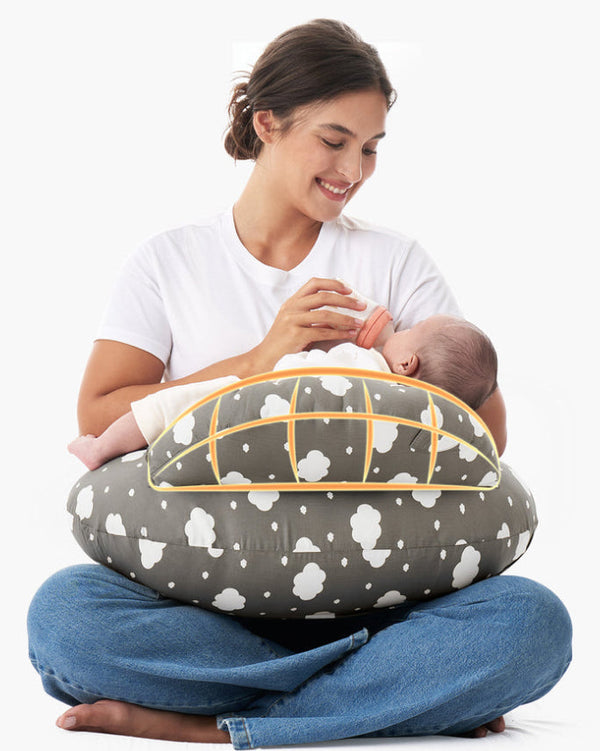
Plan to bottle-feed your baby for at least 20 minutes. Settle into a comfortable position in a calm environment and relax. This is very important when bottle feeding your baby as it lets them know they are safe and you are comfortable feeding them this way.
The ideal position:
With your baby close to your chest and belly, support their head in the upper crook of your arm at an angle where their head and neck are aligned.
Critical safety note:
Keep your baby from lying flat after feeding to eliminate the risk of choking or spitting up.
Why positioning matters:
Bottle-fed babies are sometimes prone to ear infections. If the position during bottle feeding is not correct, the milk can go into the middle ear through the Eustachian tube and make your baby sick.
- Keep your baby from lying horizontally during feeding to prevent milk from entering the middle ear
- Avoid propping your baby's bottle, and never let your baby go to bed with a bottle
- The residue from the milk in the bottle can cause tooth decay and other dental issues
- Tooth decay can start as soon as your baby's teeth erupt from the surface of the gums
What is Paced Bottle-Feeding?
Paced bottle-feeding slows flow so your newborn can suck, swallow, and pause—helpful for formula or expressed milk. For the full hold, angle, and pause rhythm, use our paced bottle feeding guide on the breastfeeding blog.
Why paced feeding works:
Paced bottle-feeding helps the baby avoid overindulging. Since gravity and milk flowing quickly are eliminated, the baby tends to slow down, eat when hungry, and stop when full.
The Steps of Paced Feeding:
- Prepare your baby's bottle with a slow-flow nipple.
- Hold the baby as upright as possible while supporting their head and neck.
- Hold the bottle flat; do not tilt it at an angle. This makes the baby actively suck to get the bottled human milk or breast milk.
- Gently brush the nipple over the baby's mouth and insert it when they fully open it.
- Allow them to suck on the nipple without milk in it. Tip it only slightly until the nipple is halfway full.
- Let the baby suck the liquid for about three to five steady swallows, and then take a break.
- Continue the pattern of sucking and breaking and then burp when necessary. Watch the baby for cues that they want more or are full. 15 to 20 minutes should be enough for one feeding.
How Do You Bond With Your Baby During Bottle Feeding?
You can never snuggle your baby enough during any feeding, including bottle-feeding! Most important is the way you interact with them at feeding time. You'll respond to your baby's cues more readily and get to know them better.
Tips to bond with your baby:
Get skin-to-skin: Unbutton the front of your shirt, loosen the baby's clothing, and hold your baby close. If appropriate, bundle up with them under a blanket. This skin contact boosts the hormone oxytocin and enhances parent-baby bonding.
Talk to your baby: Talking or singing can be soothing. They've heard your voice for months before birth, so they feel comfortable hearing it while you feed them. Some say that it will encourage them to babble earlier.
Stare into your baby's eyes: Gazing at them directly about eight to ten inches from their face (they can focus at this distance) can also release oxytocin.
According to a review in the National Library of Medicine (NIH), "An infant's milk intake during feeding was shown to have a strong association with the interaction between the infant and parent/caregiver."
Bottle-feeding babies does not mean that you don't care for them. You can be just as close to your baby with bottle feeds.
How Do I Get My Baby to Take a Bottle?
Your bottle-feeding position can affect whether your baby likes to take a bottle, especially in a breastfed baby who has only been fed from the breast in a cradle or football hold. Maybe you've fed them lying flat on your bed from the breast.
The transition strategy:
Breastfed newborns often need a different hold than at the breast. Patience beats pressure—if every try ends in tears, see our baby refusing the bottle fixes before forcing sessions.
For when to start, who should offer the first bottle, and pacing with nursing, see our changing from breast to bottle feeding guide rather than a day-by-day schedule here.
Reading hunger cues:
Most newborns will take any form of nutrition if they are hungry enough. Let your baby show you the cues that they are hungry, such as:
- Rooting (turning their head and opening mouth when cheek is stroked)
- Making sounds using their mouths, such as sucking or smacking
- Moving their hands to their mouths
When they are showing these hunger cues, use this time to introduce them to bottle feeding. Don't worry that they won't try to eat, as most newborn babies will drink from any place that gives them food.
How Much Milk Should Your Baby Take?
| Age of Baby | Number of Ounces | How Often |
| Newborn | 1.5 - 3 ounces | Every 2-3 hours |
| Two months | 4-5 ounces | Every 3-4 hours |
| Four months | 4-6 ounces | 4-5 times daily |
| Six months | 6-8 ounces | 4-5 times daily |
This is only an estimate, as every baby is different. Watch for signs that your baby is still hungry or too full to finish a bottle. Over-feeding increases your baby's risk of spitting up the infant formula or breast milk post-feeding.
How to Choose the Right Bottle and Nipple
Although many manufacturers may claim that their bottles are the ones to choose from, there is no scientific evidence that one bottle is better than another. Getting a baby exclusively breastfed to take a bottle can take extra patience—see our how to introduce a bottle to a breastfed baby guide for caregiver and timing tips alongside the newborn technique below.
What to look for:
Choosing a bottle and nipple that is simple to wash and sterilize is best. Nipples that look like human breasts may be easier for the baby to latch onto, but a baby will take any nipple that gives it the nourishment it is hungry for.
Nipple flow guidance:
Start with a slow-flowing nipple for your infant. Signs you may need to adjust:
- Need a faster-flow nipple: If they take a long time to finish a bottle or seem distracted from it in the middle of the feeding
- Need a slower-flow nipple: If the baby is drinking the liquid too fast, is cranky after a feeding, or spits up a lot of milk after it's over
About anti-colic bottles:
Many companies claim to have the best bottle construction for eliminating gas. If your baby is held in the correct position and only gets the milk in the bottle, no air, the gas is more likely from something you ate if they are taking breast milk.
Preparing Your Baby's Bottle
Essentially, the act of making a bottle is the same for breast milk and infant formula. It's how the liquid is prepared that is different.

How to Make a Baby Bottle With Breast Milk
You can make a bottle from frozen or fresh breast milk.
Important safety timeframes:
Although it is painful for a mother to throw away her precious breastmilk, you need to keep these timeframes in mind:
- Once you begin feeding your baby breastmilk from a bottle, it is safe to remove it from the fridge or freezer for only two hours
- Breastmilk stored in the refrigerator can be safe for four days
- Breastmilk can be frozen for 6-12 months
- If breastmilk has been removed from the freezer and thawed, you must use it within 24 hours
- You may store the bottle in the fridge for 24 hours as long as your baby has not drunk from it
Preparation steps:
The storage bags can be warmed in a bottle warmer or warm water and poured into a bottle. Attach the nipple and ring to the bottle and ensure they are not leaking.
If you aren't using storage bags, you can pour the breastmilk directly into the bottle from the collection cup from your breast pump.

How to Make a Baby Bottle With Infant Formula
Ready-to-feed formula:
If you use ready-to-feed baby formula, you can pour it directly from the container. Run the bottle or can top under warm, soapy water and rinse, as germs could be on the surface. Ready-to-feed formula is convenient but tends to be more expensive than powdered formula.
Concentrated formula:
Concentrated formula is also an option. You must add the proper amount of water to ensure your baby's proper nutrition.
Powdered formula preparation:
If you use powdered infant formula, you must prepare it before filling your bottles. Although it may seem easier to make up the formula for the entire day, it is recommended that you make your bottles one at a time.
Bacteria in water can multiply very fast at room temperature, and even in the fridge, they are likely to grow, although at a slower pace.
Safe preparation steps:
- Fill a kettle with tap water and boil it on the stove. After it comes to a boil, remove it from the heat and let it sit for about 30 minutes, but no longer.
- The water must be about 158 degrees before making up the powered formula. Pour the water into the bottle first, then add the recommended amount of powder.
Critical mistakes to avoid:
- DO NOT use bottled water to make up feedings. It is not sterile and may contain excess salt and sulfate.
- DO NOT add sugars or cereal to your baby's formula.
- DO NOT add formula powder to the bottle first, as it may cause constipation or dehydration. A thicker liquid can also increase the baby's risk of choking.
- DO NOT add extra water to the formula, as your baby will not get the recommended nourishment.
- DO NOT warm up the formula in the microwave as it may heat unevenly and be too hot and burn your baby's mouth.
- DO NOT feed your baby heated milk without testing a few drops on the inside of your wrist. It should feel warm, not hot.

Cleaning and Maintaining Bottles
Proper bottle hygiene is essential for your baby's health. Always wash bottles after every use with hot soapy water, and sterilize them regularly, especially for babies under three months. You can sterilize by boiling bottles for five minutes, using a steam sterilizer, or running them through a dishwasher with a sanitizing cycle.
Quick cleaning tip:
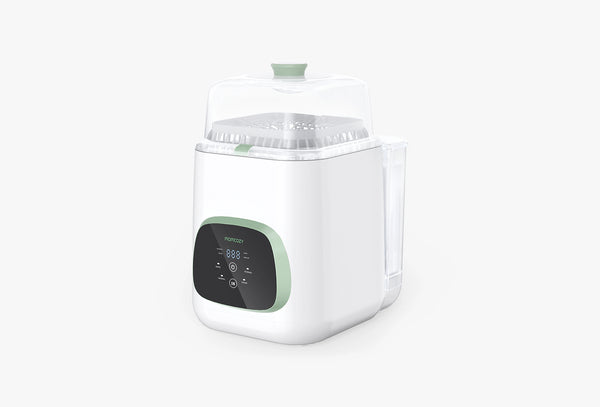
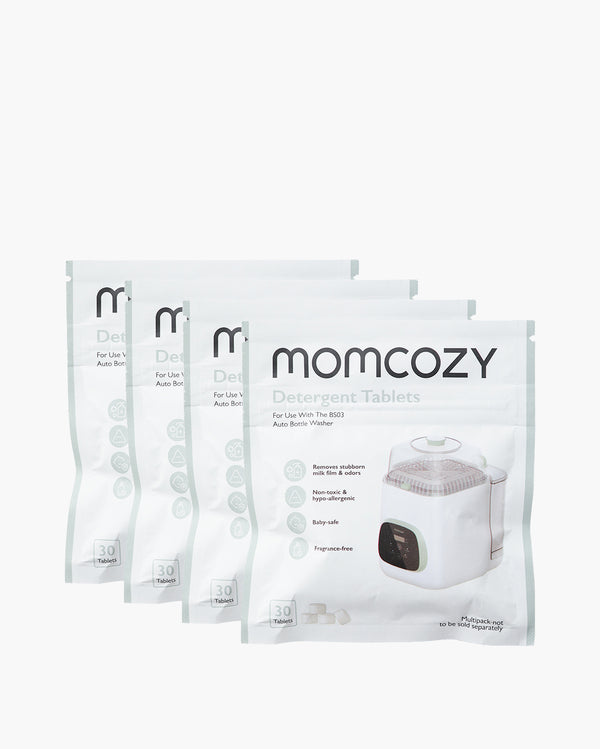
Many parents find that using a dedicated bottle washer system, such as the Momcozy KleanPal Pro Bottle Washer, simplifies the cleaning and sterilizing process significantly, saving time while ensuring thorough sanitation.

Member price
$359.99Code Save $30
Member price
$299.99Code Save 10%

Member price
$374.99$414.99
Takeaways
Bottle feeding can be a pleasurable experience for both you and your baby. Whether feeding breastmilk or infant formula, you can bond just as deeply with proper positioning and attention to your baby's cues. In addition to ensuring a comfortable feeding environment at home, parents can also look for solutions to keep their baby comfortable during outings. Hold your baby at a 30–45 degree angle, keep the nipple full of milk, take regular burping breaks, and never prop the bottle. Breastfed-first families: pair these newborn basics with our changing from breast to bottle feeding guide when cups are new. If breast and bottle start to clash after you add cups, read about signs of nipple confusion before swapping bottle brands.








