


This article explains how storage temperature determines breast milk safety, with practical timelines and freezer tips. It also covers thawing, refreezing, and pooling practices.
If your counter is filling with half-used bags while you wonder which batch to save for later, a simple, predictable storage routine can keep milk within safe windows and cut down waste. You will leave with clear time limits, a practical freezer plan, and a workable way to use what you pump.
What Counts as “Deep Freezer” vs. Standard Fridge
The most important point is that storage guidance is based on temperature, not freezer type, so a deep freezer is only better if it reliably stays colder and more stable. A standard fridge freezer is the compartment attached to your kitchen refrigerator, while a deep freezer is a separate unit, often in a garage, basement, or pantry. In real life, the standard freezer gets opened frequently, and that makes consistency harder, so think in terms of stability rather than labels. A practical example is a family with a toddler who loves opening the kitchen freezer door; in that case, a separate deep freezer can be a calmer home for longer-term milk, while day-to-day bottles live in the fridge.

To keep your decision grounded, use a simple appliance thermometer and aim for 40°F or colder in the fridge and 0°F or colder in the freezer. Fridges at or below 40°F and freezers at or below 0°F are the baseline targets. If your kitchen freezer hovers at 5°F after frequent door openings, plan on using that milk sooner, while a deep freezer that stays at 0°F can be your longer-term stash. The steady temperature matters more than the label on the door.
Time Windows You Can Trust
In the US, the most practical baseline is the CDC’s room-temperature, refrigerator, and freezer windows for healthy term babies. These windows include 4 hours at room temperature, 4 days refrigerated, and 6 to 12 months frozen. They are designed to work for everyday homes and give you a clear timeline for the milk you pump at 2:00 AM when you are running on fumes.
|
Storage Location |
Temperature Target |
Fresh Milk Window |
Thawed Milk Window |
Use-After-Feeding |
|
Counter/room |
77°F or cooler |
Up to 4 hours |
Up to 2 hours |
Use within 2 hours |
|
Refrigerator |
40°F or cooler |
Up to 4 days |
Up to 24 hours |
Use within 2 hours |
|
Freezer |
0°F or cooler |
Best within 6 months, acceptable up to 12 months |
Do not refreeze |
Use within 2 hours |



If you like a simple calculation, here is one that works: pump at 8:00 AM on Monday, put it in the fridge, and if it has not been used by 8:00 AM on Friday, freeze it that morning. Once it is frozen, its age is counted from the first freeze date, not the day you thaw it later. For context, refrigerated milk remained safe for up to 72 hours, but today’s public health guidance has expanded the window for healthy, term infants, which is why the 4-day rule is widely used.

Freezer Storage That Protects Quality
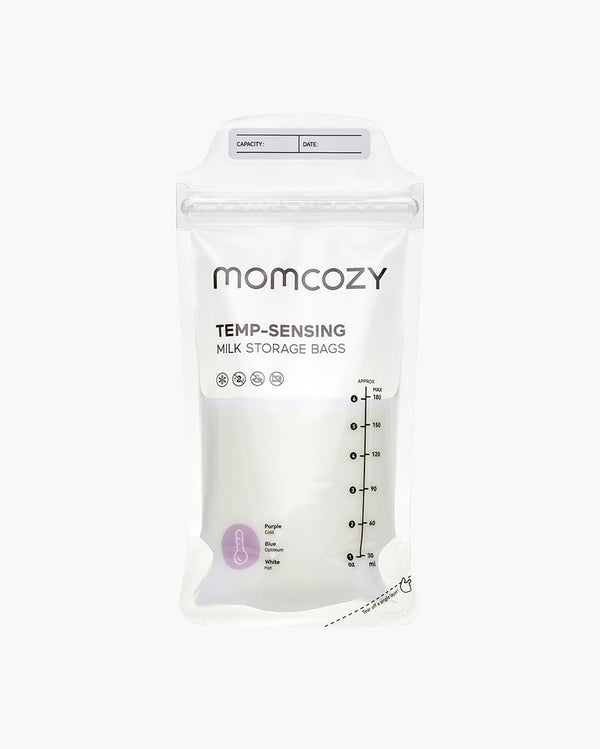
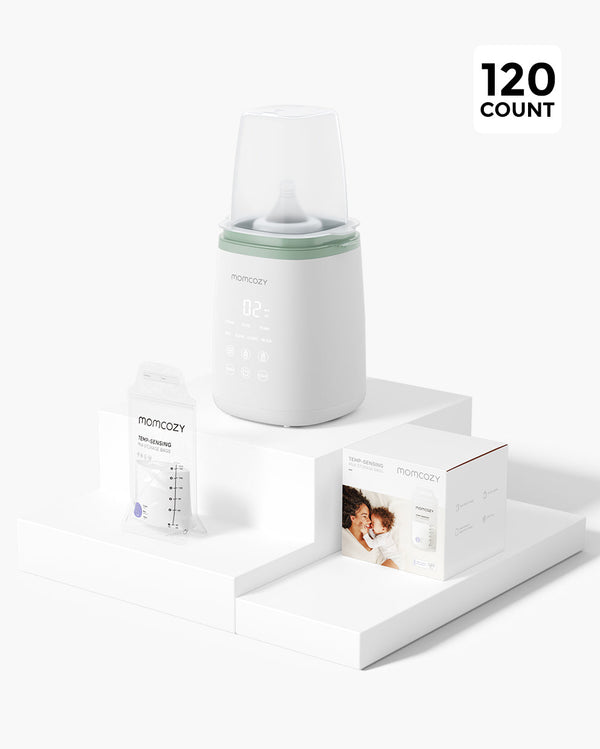
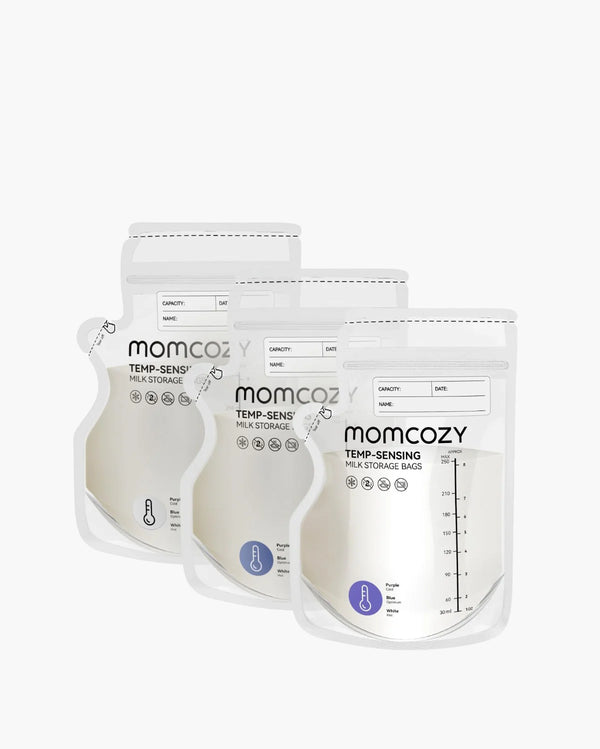
For slightly larger portions, Momcozy 8oz BPA-free storage bags offer a freezer-safe stand-up design and double zipper seal, making them suitable for the brick method and labeling with dates.
BPA-free breast milk storage bags like the Momcozy 100PCS 6oz bags with double zipper seal and writable date label support small 2–4 oz portions, stand upright for easy stacking, and are designed for reliable fridge and freezer use.
Choose containers and portions that reduce waste and keep the milk stable. Use glass or hard-sided plastic containers with tight lids. In day-to-day life, storing 2–4 fl oz per bag keeps you from thawing more than your baby will finish in one feeding, which saves milk and patience. Label each bag with the date and use older milk first, and keep bags in the back of the freezer instead of the door to avoid temperature swings.

If space is your pain point, the brick method is a practical fix. Freezing bags flat into “bricks” makes them stackable and more space-efficient. Freeze the bags flat on a tray, then file them upright like index cards so you can flip quickly to the oldest date when you are half-awake. This is especially helpful in a standard fridge freezer where space is tight and disorganization makes you lose track of what you already have.
Thawing, Using, and the Tricky Edge Cases
Safe thawing is gentle and slow, and it protects nutrients and your baby’s mouth. Thaw in the refrigerator overnight, or warm gently before feeding. Once thawed in the fridge, use the milk within 24 hours, and once it has been warmed or left out, use it within 2 hours. If your baby takes a partial bottle, use the remainder within 2 hours, then discard.
One area where guidance differs is refreezing. CDC guidance says milk that still has ice crystals can be refrozen, while fully thawed but cold milk should be used within 24 hours. The Academy of Breastfeeding Medicine notes that research is limited and current practice is not to refreeze thawed milk, which is why some families choose a more conservative approach. Refreezing is discouraged once milk is fully thawed. If you lose power and your freezer milk is still slushy, you can refreeze; if it is fully liquid but cold, use it within the next day and do not refreeze.

Pooling and the Pitcher Method (When It Helps)
Pooling milk can make daily life smoother, but it has clear boundaries. The pitcher method pools milk pumped over a day, which can reduce variation across bottles and reduce labeling overhead. The key safety step is to cool freshly pumped milk before combining it with already chilled milk, and to freeze the extra within that 24-hour window. If you try this, think of it as a daily cycle: pump, chill, combine, and then portion out for tomorrow before you sleep.
If your baby is premature or medically fragile, your care team may want a stricter plan than the general guidance above. Guidance for healthy term infants does not always apply. In those cases, follow your clinician’s direction even if it feels more conservative, because the safety margin matters.
You do not need a perfect freezer to succeed. You need a reliable temperature, small portions that match how your baby eats, and a rhythm you can maintain on tired days. Choose the freezer that stays steady, store milk where it stays coldest, and trust that the simplest system is often the one that lasts.
Disclaimer
This article, "Deep Freezer vs. Standard Fridge: Breast Milk Storage Guidelines", is provided for general informational and educational purposes only. It is not medical, lactation, pediatric, or professional advice, and it is not a substitute for personalized care from a licensed healthcare professional.
For breast milk handling and storage topics, practical tips in this article (including references to products such as storage bags or related accessories sold by Momcozy) are general guidance only. Safety and quality depend on hygiene, labeling, storage temperature, timing, thawing/warming method, and adherence to official clinical guidance and product instructions.
This content should not replace pediatric or lactation guidance for feeding adequacy, dehydration risk, milk safety concerns, or infant growth concerns. If your baby has poor feeding, dehydration signs, vomiting, fever, or poor weight gain, contact a licensed healthcare provider immediately.
Momcozy sells maternal and baby products, but no product can guarantee identical outcomes for every user. Always read and follow the manufacturer's full instructions, warnings, cleaning/care guidance, and applicable safety requirements before use.
By reading this article, you agree that any reliance on the content is at your own risk. Momcozy, its authors, affiliates, and contributors are not liable for losses or damages arising from the use or misuse of this content or related products. For medical concerns, contact a licensed healthcare provider immediately.








