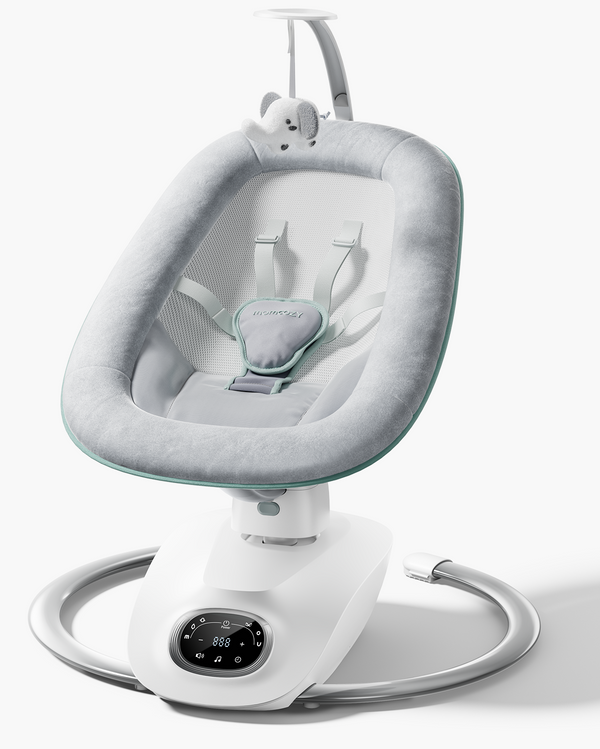
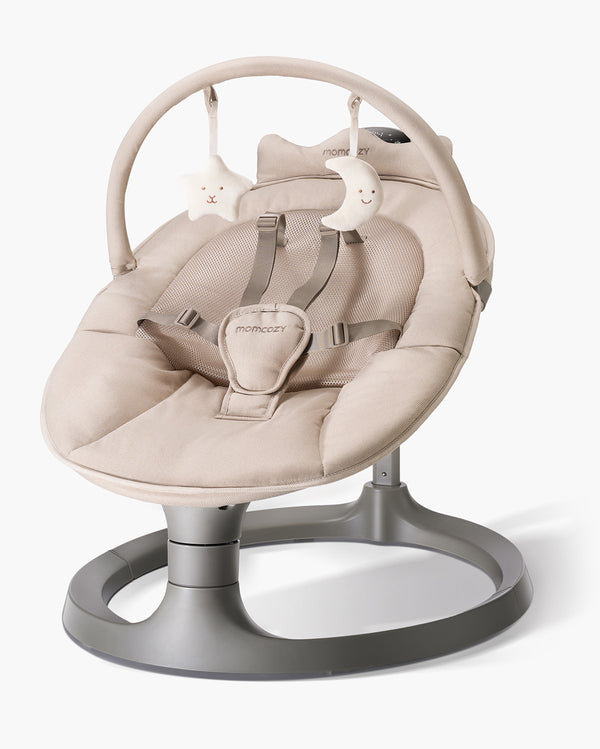
Some newborns can use baby swings for short, supervised periods while awake but only if the specific model permits newborn use and the baby meets its minimum weight and fit requirements. A swing may help soothe a fussy newborn or give parents a brief hands-free moment, but it is not a sleep space. Before use, confirm the approved recline, secure harness fit, and stable head position; if the baby becomes sleepy or falls asleep, move them to a firm, flat sleep surface.
Quick Answer: Can a Newborn Use a Baby Swing?
Yes, some newborns can use a swing if the product is rated for newborn use and the baby fits securely. Age alone does not determine whether a swing is suitable.
Before using any baby swings, confirm that:
- Your baby meets the model's minimum weight requirement.
- The seat is set to the approved newborn recline.
- The harness fits snugly without added padding.
- Your baby's head and neck remain stable.
- You can supervise continuously.
- Your baby is awake throughout the session.
A swing should never replace a crib, bassinet, portable crib, or play yard. The American Academy of Pediatrics advises moving a baby who falls asleep in a sitting device to a firm, non-inclined sleep surface as soon as possible.
Newborn Readiness Checklist Before Using a Swing
A swing is suitable only if your newborn fits securely and can maintain a stable position. Check the product manual, minimum weight, recline settings, and harness instructions rather than relying on a "from birth" label alone. Following the correct steps for how to use a baby swing safely can reduce positioning mistakes. Parents comparing models should also consider the practical criteria used to choose a baby swing safely and smartly.
1. Check the Minimum Weight Requirement
Use the limits for the exact model. Premature or low-birth-weight newborns may not fit as securely as larger babies of the same age.
Do not use the swing if your baby slides down, sits too low, or leaves large gaps within the harness.
2. Use the Most Reclined Position
Newborns have limited head and neck control, so use the most reclined setting permitted by the manual.
This position supports supervised awake-time use, but it does not make the swing suitable for sleep.
3. Check Head and Neck Position
Your baby's head should rest naturally without falling forward or sharply to one side. The nose and mouth should remain visible.
End the session if the chin drops toward the chest or your baby continues to slump after repositioning.
4. Secure the Harness
Fasten every required harness point and make sure the straps lie flat and snug.
Do not add blankets, pillows, cushions, or unapproved inserts. Use only support designed for that exact swing model.
5. Watch Your Baby's Cues
- Stop the swing if your newborn:
- Slides or slumps
- Appears uncomfortable
- Coughs, gags, or has breathing changes
- Cries continuously
- Tries to twist out
- Becomes sleepy or falls asleep
Some newborns dislike swinging motion. Do not increase the speed or extend the session when your baby appears distressed.
How Long Can a Newborn Stay in a Baby Swing?
There is no single session length that applies to every newborn or product. For young babies, shorter sessions are more appropriate than long periods in the seat.
Begin with a few minutes while staying nearby. End the session when your task is complete or sooner if your baby becomes uncomfortable or drowsy. A timer may help prevent a brief break from becoming a long stretch.
Rotate swing use with:
- Holding and interaction
- Feeding and burping
- Supervised floor time
- Age-appropriate tummy time
- Correctly positioned babywearing
- Sleep in a crib, bassinet, or play yard
Session length is different from the developmental and weight-related signs that indicate when to stop using a baby swing.
Can a Newborn Sleep in a Baby Swing?
No. A newborn should not use a baby swing for naps, overnight sleep, or routine sleep settling.
If your baby falls asleep, stop the swing and move them to a firm, flat, non-inclined sleep surface on their back. Do not leave the baby sleeping in the swing because you are watching nearby.
Do not add blankets, pillows, head positioners, or cushions to make the seat seem more suitable for sleep. AAP safe sleep guidance advises moving babies who fall asleep in sitting devices to an appropriate sleep surface. The CPSC Safe Sleep guidance also recommends a flat, clear sleep area without loose bedding.
Common questions about supervision, positioning, and sleep risks are addressed in Are Baby Swings Safe?

How to Position a Newborn in a Baby Swing
Correct positioning should be checked before turning on the motion. Place the swing on the floor, adjust the approved recline, center your baby in the seat, and secure the harness.
Start With the Reclined Setting
Set the seat to the most reclined position permitted for your baby's age and size. Confirm that the seat locks securely.
Place your baby's bottom fully against the lower part of the seat. The torso should remain centered rather than leaning toward one side.
Keep the Chin Off the Chest
Check that the baby's head does not fall forward. You should be able to see the face and observe comfortable breathing.
Stop and reposition your baby if clothing bunches around the neck or the body slides downward. End the session if a stable position cannot be maintained.
Use Only the Built-In Support Designed for That Model
Use only the padding or infant insert included with or approved for the model. Unapproved inserts can change the seat angle, harness position, or distance between the baby's face and surrounding fabric.
If the seat appears too large without extra padding, wait until your baby fits it correctly.
Best Times to Use a Swing With a Newborn
A swing may be useful for short periods when your baby is awake, you need both hands, and you can stay close enough to watch continuously.
During a fussy period, gentle motion may give your arms a brief break while you remain beside the swing. It can also be useful while you:
- Prepare a bottle
- Eat a quick meal
- Wash pump parts
- Use the bathroom
- Complete another short task nearby
Using a swing for a few supervised minutes does not mean you are ignoring your baby. The important boundaries are visibility, secure positioning, short sessions, and awake-time use.
After feeding and burping, some parents may place a calm, awake baby in the swing briefly. Do not use the swing to treat reflux or keep a baby asleep. Contact a pediatrician if your baby has frequent vomiting, feeding difficulties, breathing changes, or ongoing distress.
When Not to Put a Newborn in a Swing
Do not use a newborn swing when the baby cannot fit securely or when continuous supervision is not possible.
Avoid using it:
- When your baby is sleepy or needs a nap
- When the baby is below the minimum weight
- When the harness remains loose
- When the head repeatedly slumps forward
- When the swing is placed on furniture or another raised surface
- When the product is damaged or missing parts
- When you need to leave the room
- When your baby needs feeding, holding, floor movement, or sleep instead
Place the swing only on a stable floor. Stop using it if the motor, frame, seat lock, harness, or power connection does not work as described.
What About Premature or Small Newborns?
Premature and very small newborns may not fit a swing securely, even when the product is marketed for use from birth. Body size, muscle tone, breathing history, and head control can affect positioning.
Check the exact minimum weight and harness instructions. Do not add an aftermarket insert to compensate for a large seat.
Ask a pediatrician before using a swing if your baby was premature, had a low birth weight, has breathing concerns, has low muscle tone, or received special positioning instructions. Medical guidance does not change the rule that the swing is for supervised awake time only.

Baby Swing vs. Other Newborn Soothing Options
A swing should be one part of a varied soothing routine rather than the main place your baby spends the day.
A baby swing provides powered movement during brief, supervised use. A bouncer may move through the baby's body movements or a caregiver's touch. Babywearing provides closeness and mobility when the carrier fits correctly.
Supervised floor time allows greater freedom to move the arms and legs. Tummy time supports movement practice when the baby is awake and watched closely.
A crib, bassinet, or play yard serves a different purpose. These spaces are intended for safe sleep, while swings and bouncers are awake-time seats.
Where Momcozy Fits: A Newborn-Aware Electric Swing Option
Momcozy electric swings are designed to provide adjustable motion and comfort-focused support during supervised awake time. Parents should compare the recline, harness design, approved weight range, motion controls, cleaning method, and room footprint before choosing a model.
The Momcozy CocoSway 3D-Motion Electric Baby Swing offers adjustable movement, recline support, a five-point harness, remote controls, and a washable seat pad. The Momcozy 2-in-1 Electric Baby Swing combines powered swing movement with a separate stationary-seat function.
Opatentowana technologia 3D Swing
6 trybów kołysania
Siedzisko obracane o 180°
5-punktowe pasy bezpieczeństwa
Podwójne wsparcie ramion
Ruchy inspirowane rodzicem
Wygodne siedzisko
Może też służyć jako siedzisko stacjonarne
The two models have different features and mode-specific limits. Always check the current product page and manual rather than applying one model's requirements to another.
Differences in motion patterns, controls, and seat designs are outlined in the Momcozy baby swing comparison. Parents deciding between the two Momcozy designs can also compare a 2-in-1 vs. 3D motion baby swing. Practical factors such as controls, available space, and cleaning can further narrow down the best baby swing for your routine.
These products may make short soothing periods more manageable, but they should not be used as sleep spaces or replacements for holding and floor movement.
Keep Baby Swing for Newborn Use Short and Supervised
Before each session, confirm that your baby meets the model's requirements. Use the approved recline, secure the harness, and check that the head remains stable. Keep your baby awake, visible, and close throughout the session.
Move your baby to a firm, flat sleep space if they become drowsy. Balance swing time with feeding, holding, floor play, tummy time, and direct interaction. Explore Momcozy baby swings to compare motion, recline, comfort, and parent-control features, then check the selected model's manual before first use.
FAQs
Q1: Can a 2-Week-Old Use a Baby Swing?
Possibly, but only if the swing permits use at that age and weight, and the harness fits securely. Ask a pediatrician first if your baby was premature, very small, or has breathing or positioning concerns.
Q2: Can a Newborn Use a Swing Every Day?
Yes, daily use may be suitable when sessions remain brief, supervised, and balanced with holding, feeding, floor time, and interaction. The swing should not become the main place your baby spends the day.
Q3: What Speed Should I Use for a Newborn Swing?
Begin with the lowest permitted setting and watch your baby's response. Faster motion is not always more soothing. Stop if the baby becomes uncomfortable, overstimulated, or sleepy.
Q4: Is It Normal if My Newborn Dislikes the Swing?
Yes. Some newborns enjoy motion, while others prefer holding, walking, feeding, or quiet floor time. Try a shorter session or another time of day, but do not force continued use.
Q5: Should I Feel Guilty Using a Swing for My Newborn?
No. A short, supervised session can give you time to eat, prepare a bottle, wash pump parts, or use the bathroom. Keep your baby visible, securely positioned, awake, and balanced with other activities.
Q6: Can I Use a Newborn Insert in Any Swing?
No. Use only an insert supplied with or approved for that exact model. Unapproved cushions can affect the harness fit, seat angle, and position of your baby's head.