








Latest Article

Bottle Warmer Water Chamber Descaling: When Weekly Cleaning Helps—and When It Does Not
Weekly descaling is not necessary for every bottle warmer. The care guide for your exact model should set the rule; water hardness, frequency of use, visible residue, and changes in warming performance help decide when to descale. Always follow model-specific instructions.

Bottle Warmer Compatibility: Which Widths, Wide-Neck Shapes, and Silicone Bottles Actually Fit
A bottle fits a warmer only when its widest external point, full assembled height, and any attached parts clear the warmer's usable chamber. Wide-neck and silicone labels do not guarantee fit. Measure your bottle's outside profile and compare with the warmer's documented limits before use.

How to Clean a Baby Swing Safely: Fabric, Vents, and Odor Prevention
Learn how to clean a baby swing safely by following the model's manual and care labels. Remove and wash soft parts separately, keep moisture out of vents and electronics, and address odors by finding trapped residue. Always dry completely before reassembly.

Diaper Pail Latch Types Explained: Push, Twist, Foot-Lock — Which Ones Toddlers Can (and Can’t) Open
Diaper pail latch types—push, twist, and foot-lock—vary in toddler resistance. A foot pedal is not a lock, and twist controls may or may not deter children. Evaluate each pail's specific design, check all access points, and use placement and liner handling as additional safeguards.

Silent Diaper Pail Lids for Nighttime Changes: Which Mechanisms Don’t Wake the Baby?
No single diaper pail mechanism is universally quietest for nighttime changes. Evaluate the full disposal sequence—opening, insertion, closing, sealing, and maintenance—rather than focusing on one feature like a soft-close lid. Test the pail in your nursery to confirm it won't wake the baby.

Baby-Safe Materials in Diaper Pails: What to Check on the Interior Coating for Newborn Rooms
This guide helps you evaluate diaper pail materials for a newborn room by examining the interior coating, lid seals, bags, and deodorizing features. It emphasizes checking product-specific emissions certifications like GREENGUARD Gold, avoiding unnecessary fragrances, and following cleaning instructions to maintain a safe, odor-controlled nursery.

How to Clean a Baby Swing Toy Bar and Hanging Toys Without Damaging Electronics
Learn the safest methods to clean a baby swing toy bar and hanging toys without harming electronics. Always check the manual, power down, remove only detachable parts, and use minimal moisture on electronic components. Air-dry everything fully before reassembly to keep the swing safe and functional.

How to Store a Baby Swing Without Mildew Smell in a Humid Basement or Garage
To prevent mildew smell when storing a baby swing in a humid basement or garage, first control moisture in the room and ensure the swing is completely clean and dry. Use a protective cover on raised shelving, avoid damp areas, and inspect for odor or damage before reuse.
How to Tell Whether a Stroller Recline Will Stay Locked When a Toddler Pushes Against It
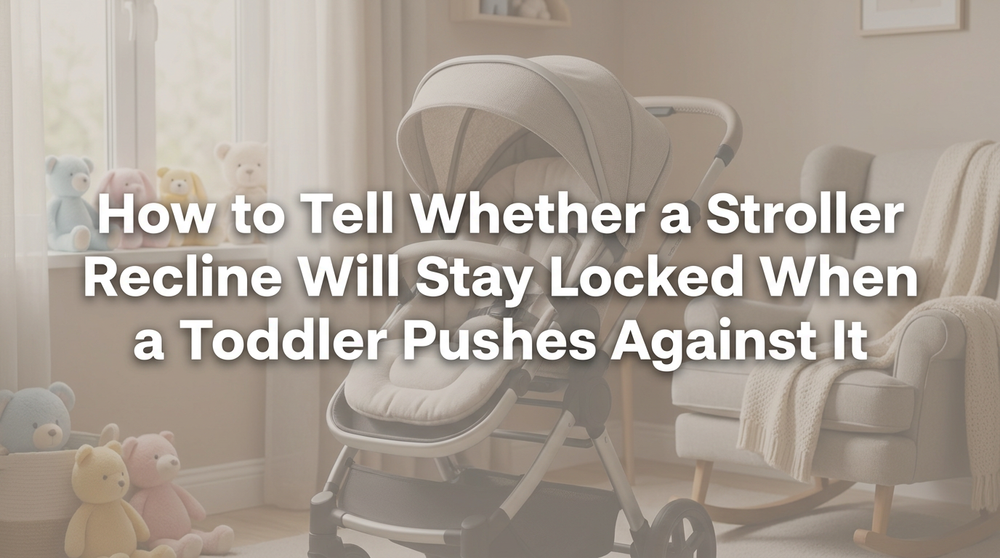
To tell if a stroller recline will stay locked when a toddler pushes against it, consult the exact model's manual for the recline control and its required engagement check. Perform a controlled, empty-stroller test as the manual permits, not with the child seated. If the seat moves without using the designated control or cannot be verified as secure, stop using the stroller and contact the manufacturer.
EXPERT Spotlight


Popular Pregnancy & Postpartum Tools

Baby Name Generator
A name is the first gift to your beloved baby. Find the perfect name for your baby

Pregnancy Weight Gain Calculator
Track your pregnancy weight gain and get personalized recommendations based on your pre-pregnancy BMI.
Chinese Gender Prediction Calculator
Legend has it that this ancient Chinese gender prediction chart was discovered in a royal tomb near Beijing over 700 years ago.
Due Date Calculator
Using our Pregnancy Due Date Calculator, you can estimate your due date based on your last menstrual period, conception date, IVF transfer, or ultrasound.