Thrush in the nipples while breastfeeding is one of some moms' biggest problems. It can cause itchiness, a burning sensation, and sometimes, even unbearable pain. It can also affect your baby. That said, knowing how to treat the infection, or even better, prevent it, is a must. That is what this article is for. Below, you will find all the information about nipple thrush that you need to know.
What Is Nipple Thrush?
Nipple thrush is a fungal infection caused by Candida yeast overgrowth. It is often associated with recent antibiotics. Breastfeeding moms often have to deal with this infection. You want to treat it as soon as possible, as it can significantly affect your ability to breastfeed. It can also affect your baby, and it can pass back and forth between you and your baby. As such, you must know how to treat both nipple thrush and oral thrush.
What Causes Nipple Thrush?
Here are the usual causes of nipple thrush:
Recent Antibiotic Use - Antibiotics used by moms either for themselves or their babies can kill good bacteria, which allows Candida, a genus of fungi that lives on our skin, to multiply.
Damaged Nipples - If there are cracks or soreness in your nipples, then there is an entry point for Candida. Poor latch while breastfeeding can lead to this.
Oral Thrush - Thrush can easily pass from you to your baby and vice versa. That said, you can get a nipple thrush if your baby has an oral thrush.
Vaginal Thrush - If you have a vaginal yeast infection or you have had one before, you are more likely to have nipple thrush.
Moisture - A moist environment is necessary for yeast growth and fungal infections. That said, breast pads or sweaty skin are also some of the causes of nipple thrush.
What are the Symptoms of Nipple Thrush?
If you suspect you have nipple thrush, check if the following conditions are true:
What are the Symptoms?
Understanding Nipple Thrush during your breastfeeding journey.
Slow Healing
Cracked nipples that don't seem to get better with usual care might be an infection.
Itchiness
An unusual itch or intense sensitivity when clothes touch your skin is a frequent sign.
Visual Changes
Nipples may appear bright pink, shiny, flaky, or have tiny white spots.
Stabbing Pain
Intense burning or shooting pain deep in the breast after a feeding session ends.
What Does Nipple Thrush Look Like?
When you have nipple thrush, your nipples may look extra pink. It can also appear shiny, flaky, or dry. In the nipple or areola area, you may also notice blisters or white patches.
How to Treat Nipple Thrush?
Since nipple thrush is a fungal infection, the solution is to use antifungal medication. You need to treat both your nipple thrush and your baby's oral thrush. You can use oral gels or drops to treat your baby's oral infection after feeding. If they are 4 - 6 months old, you can use Miconazole. Otherwise, use Nystatin.
For yourself, you can use a topical cream, like Miconazole, after feeding sessions. If you have a severe case of nipple thrush, you can take oral antifungal tablets.
Of course, proper hygiene also helps.
Below are specific steps that you can take to treat nipple thrush at home:
Change Your Diet
Fermented foods are rich in prebiotics. That makes you think that eating fermented food can help treat Candida overgrowth. However, the prebiotics in fermented foods also support bad bacteria and yeast. That makes them not good to eat when you have nipple thrush.
Besides fermented foods, you should also avoid sugary or carb-rich foods. There is a problem, though. You have to remember that making milk takes a lot of calories. Therefore, you need to make sure you are still eating enough food while trying to balance your diet.
Use Baking Soda
Baking soda, when diluted, can help treat thrush. Mix 1 cup of warm water and a half teaspoon of baking soda. Then, apply the paste to your nipples before breastfeeding. Remember to wipe it off before starting the feeding session, though.
You can also apply the paste to your baby's mouth with a cotton swab.
Sterilize Items You Use on Your Breasts
Leaking milk, or contact with breastmilk in general, creates warm, damp areas where yeast thrives. That said, sterilizing your bras, reusable breast pads, breast pump parts, towels, and other items is a must.
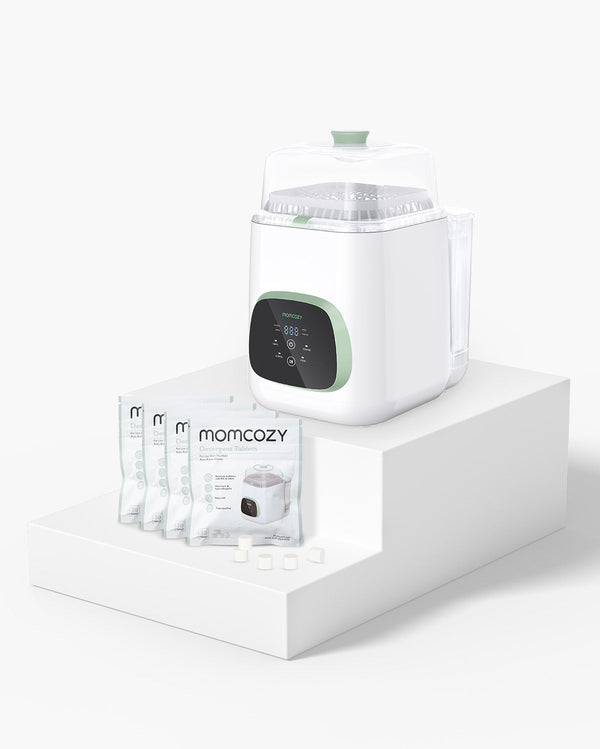
You can use special sterilizers for breast pump shields and flanges, like Momcozy Bottle Washer. For towels, breast pads, and bras, you can add 1 cup of white vinegar to the rinse cycle.
Take Biotin
Antibiotic usage during pregnancy may have caused a biotin deficiency. You need to take Biotin daily to reverse the process. The good news is that Biotin is water-soluble. Suppose you have taken more Biotin than necessary. Your body will remove the excess through peeing.
How to Prevent Nipple Thrush from Breastfeeding?
Since moisture is the problem, keeping your nipples dry helps prevent nipple thrush while breastfeeding. As with treatment, proper hygiene also helps prevent nipple thrush. Below is more information you should know about:
Keep Your Nipples Dry
Breastfeeding gets your nipples wet. That is unavoidable. With that said, you should take steps to dry your nipples before covering yourself up. You can use a hairdryer set on a low setting to do this. We also recommend changing your breast pads, especially if you are using the non-reusable ones, when they get moist.
Sterilize Your Items
You need to sterilize breastfeeding items to eliminate microorganisms. You can do so by boiling or soaking breast pump parts and bottle nipples. Even things like teething toys or pacifiers need to be sterilized. Basically, you should sterilize anything that regularly makes contact with your nipples or your baby's mouth.
We also recommend washing your bras, breast pads, and towels with hot water. Bleaching them is also a smart move, and so is drying them under the sun.
Using Probiotics
Let's go back to the root of the problem. Antibiotics killing good bacteria allow for yeast growth, which leads to nipple thrush while breastfeeding. To counteract that, you can consider taking probiotics to support good bacteria. Taking high-quality probiotics or eating foods like yogurt are your best options.
Can I Breastfeed with a Nipple Yeast Infection?
Yes, you can breastfeed when you have nipple thrush. In fact, it is better for you to continue. Breastfeeding helps prevent further issues, like engorgement, which will cause you even more pain and discomfort. To make these sessions less painful, using a nursing pillow to bring your baby to the breast at the correct height, reducing the friction and pressure on your sensitive nipples. The treatment also wants you to apply a cream around your nipples after your feeding sessions. Thus, you need to breastfeed.
We understand that breastfeeding while you have nipple thrush can be painful, though. If you find it too painful, you can pump instead. Just make sure that you don't freeze the milk since it does not kill Candida.
Here are a few things you need to keep in mind:
You need to wash or wipe off creams or any ointment that you have applied to your nipples before breastfeeding. This helps keep your baby safe.
After the feeding session, wash your hands with hot, soapy water. Likewise, always wash your hands after changing your baby's diaper or applying medicine to your thrush. It helps prevent the spread of thrush.
We also recommend washing all your and your baby's clothes in hot water to kill bacteria. Sun-drying them is also a nice additional step.
Consult your doctor to be more informed, and strictly follow their advice.
Please note that your baby may eat a little less when you are breastfeeding while you have nipple thrush. You may want to cut your feeding sessions short if the pain is too much for you. When that happens, you can switch to using breast pumps. Your baby will be fine, as long as you monitor their diaper output and hydration.
When To Seek Medical Help?
You should seek medical help if the pain becomes unbearable. It is also wise to do this when you are seeing no improvements after treating the infection by yourself. For more information, we have created a checklist to guide you:
Unbearable Pain - You experience intense stinging or burning pain that does not go away even with better latching.
No Improvements - You tried treating the infection at home, but you see no improvements, or the symptoms have worsened instead.
Fever - The infection can spread, and your body's way of telling you is through a fever.
Symptoms of thrush in your baby - Your baby becomes fussy during feeds. Additionally, you notice white patches on their tongue and cheeks that do not rub off. You may also notice a bright red, spotty diaper rash.
Tools and Tips About Nipple Care During Breastfeeding
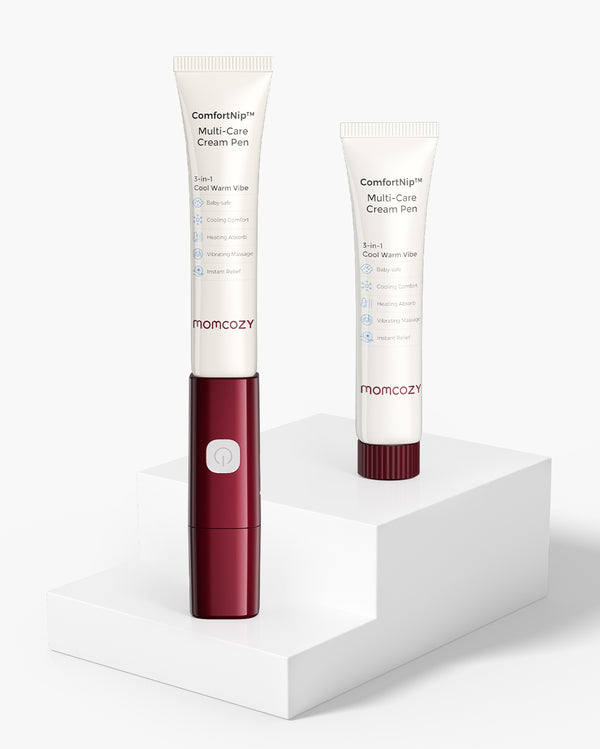
As mentioned above, you may feel a burning sensation after feeding sessions because of nipple thrush. The Momcozy Multi-care nipple care pen can help solve this issue for you. This is a 3-in-1 tool, combining high-end nipple cream, smart temp control, and a vibration massager in one device. It offers 59°F/15°C cooling mode that is perfect for relieving the post-feed burning sensation you may experience because of thrush.
100% Natural Nipple Cream for Breastfeeding
Momcozy also offers a lanolin-free, 100% natural nipple cream. You can use this to protect your sore nipples while breastfeeding. Admittedly, this moisturizes your skin or slows down moisture loss. Since we want less moisture, you may want to avoid using this cream for that purpose. The good thing is that this is multifunctional. You can use it as a lubricant for your breast pump instead. It helps reduce pain and discomfort while pumping.
Reusable or washable breast pads are usually better than disposable breast pads. They help you save money, and they are often made with superior materials. However, disposable breast pads are better than the washable ones when you have nipple thrush. With disposable ones, you don't need to worry about sterilizing the breast pads. You just throw them away and use a new one. It eliminates a task, which gives you more time to rest and recover.
Feeding Items Sterilizer
You can find some sterilizers on the market that let you sterilize both breast pump parts and feeding bottles. Buying one is a great investment for mothers with nipple thrush. They help ensure that your feeding items are thoroughly clean, which helps prevent thrush from coming back once you have treated it.
Here are some more questions people ask about nipple thrush while breastfeeding.
Do I have to throw out breast milk if I have thrush?
No. You do not need to throw out your breast milk if you have thrush. Breast milk is still safe for your baby. You can continue breastfeeding or pumping. However, we don't recommend freezing milk as it does not kill Candida. Instead, warm up the breast milk before feeding your baby.
Will thrush from breastfeeding go away on its own?
Thrush usually does not go away on its own. Without treatment, it can linger or keep coming back. Both you and your baby often need treatment at the same time to fully clear the infection and prevent reinfection.
Can nipple thrush affect my milk supply?
Yes, it can indirectly affect milk supply. Pain from nipple thrush may make breastfeeding or pumping uncomfortable. That can lead to less frequent milk removal. Over time, this can reduce supply if not addressed.
Can nipple thrush transfer to your baby?
Yes. Thrush can easily pass between parents and babies during breastfeeding. Babies may develop oral thrush (white patches in the mouth) or a yeast diaper rash.
What should I do if my baby has a thrush?
Contact your baby's healthcare provider for diagnosis and treatment. Follow the prescribed treatment exactly and treat both yourself and your baby at the same time, even if only one of you shows symptoms. Clean and sterilize items like pacifiers, bottle nipples, and pump parts daily during treatment to prevent reinfection.
Conclusion
No one wants to have thrush in the nipple while breastfeeding. It is painful, can affect your milk supply, and even worse, your baby. As such, moms should know not just how to treat it but also how to avoid it. The key is to control moisture levels and bacteria growth. You need to ensure your nipples are not too damp, but not too dry at the same time. Taking probiotics also helps support good bacteria that help prevent nipple thrush. But remember that if home treatment is not leading to improvements, your best move is to consult your doctor.
Disclaimer
The information provided in this article is for general informational purposes only and does not constitute medical advice, diagnosis, or treatment. Always seek the advice of your physician or other qualified health provider regarding any medical condition. Momcozy is not responsible for any consequences arising from the use of this content.