If you notice that one breast produces less milk than the other, you are not alone — and many mothers ask why does one breast produce less milk. The short answer is that uneven supply is extremely common: it is simply how many bodies work, not a sign that something is wrong.
Though breastfeeding is a natural experience for many mothers, a one breast making less milk can still feel worrying — especially when you wonder whether your baby is getting enough. In this post we look at why it happens, share practical ways to increase milk supply on one breast, and offer tips for balancing production between both sides, so you can manage your breastfeeding journey with confidence.
Less Milk Production in One Breast: Is It Normal?
Yes, it is quite normal for one breast to produce less milk than the other during the breastfeeding journey due to various causes. While some mothers may worry about their feeding baby's intake or experiencing low milk supply, imbalances in milk production are often common issues. Many women find themselves in a situation where one breast appears to produce noticeably more milk than the other. This fluctuation in milk supply can occur for a number of reasons and doesn't always mean that a mother's ability to breastfeed is compromised. Because feeding breasts can function differently, a multitude of factors, including variations in feeding patterns, hormone fluctuations, and even the physical structure of the nipple and breasts, can affect milk production.
Why Does One Breast Produce Less Milk: Key Causes
So what could be the causes that one breast produces less milk for mothers during breastfeeding? See the below points to find out.
Feeding Patterns
Feeding patterns can significantly affect breast milk supply. If your baby shows a preference for one breast, this can lead to increased milk production on that side while the other side produces less. This preference may impact the feeding patterns and cause an uneven milk supply. Babies naturally tend to favor one side, especially if they find it easier to latch on to a particular nipple or if the milk's flow is more favorable on that side.
Anatomical Differences
Some women may produce less milk than others due to differences in their breast anatomy or nipple structure. For example, variations in milk output may result from one breast having more glandular tissue than the other.
Blocked Ducts
Reduced milk production in one breast may also be due to blocked milk ducts, which hinder milk flow. Localized discomfort, swelling, and occasionally redness in the affected area are among the symptoms.
Hormonal Factors Affecting Breast Milk Supply
A major factor in the production of milk is hormones. The amount of breast milk each breast produces can vary depending on hormonal changes, which can be brought on by stress, menstrual cycles, or other causes.
Pumping Patterns
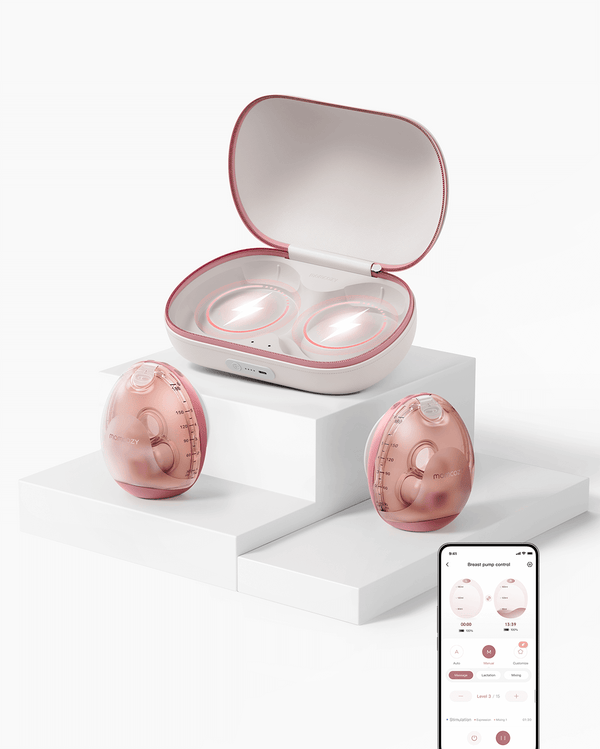
Reduced milk production on one side may result from only pumping from that breast over time. To avoid this, ensure that you pump both breasts regularly to encourage even milk production. To encourage milk production on both sides, you should aim to regularly stimulate each breast. To help with this, you might try the Momcozy M9 breast pump with a powerful suction of up to -300 mmHg. Using a pump can help increase milk supply on the lesser producing side. It can effectively increase milk supply between your breasts and help balance them.
High Efficiency
Expert-Tuned Rhythms
APP Control
Long Battery
Previous Surgeries
Women who have undergone surgeries, such as reductions or augmentations on their breast, may experience differences in breast milk production due to altered tissue and nipple placement.
How to Increase Milk Supply on One Breast?
There are several effective ways to increase breast milk supply. No matter the reason that one breast producing less milk than the other, there are several strategies you can try to help boost the milk supply on that side. These methods can help increase milk supply and improve feeding efficiency.
When the problem is a stubborn low milk supply in one breast (the "slacker" side), the most reliable fix is targeted, hospital-grade stimulation — which is exactly where the Momcozy V3 and V3 Pro help (see the pumping tips below). For safe supply-building background, La Leche League International and the CDC share trusted guidance.
Start feedings on the lower side when baby is hungriest.
Apply a warm compress before pumping to aid let-down.
Gentle circular motions help clear and encourage flow.
Pump for 5-10 mins on the lower side after nursing.
⚡
W1 Wearable Pump
Combine heat, massage, and pumping to wake up milk ducts and restore balance to your supply.
Momcozy: Balanced care for your breastfeeding journey.
Encourage Frequent Nursing on the Feeding Breast
You can encourage your baby to nurse more often on the side that produces less milk. Since frequent nursing encourages milk production, this method can increase supply on the lower milk-producing breast. When your baby feels most hungry during feeding sessions, let them try that breast first, as they will probably suck harder.

Apply Breast Pump
It can also be advantageous to express on the less productive feeding breast using a breast pump. To further encourage milk flow, think about pumping on the side that produces less milk following nursing sessions. Regular pumping can send signals to your body to produce more milk.
For a true low milk supply in one breast, a hospital-grade pump with independent dual-pump control makes the biggest difference. The Momcozy V3 (plug-in) and V3 Pro (cordless) are hospital-grade pumps built around Dual-Pump Dual-Control: each breast is driven by its own motor, so you can run a stronger suction and a supply-building rhythm on the weaker side while keeping the dominant side comfortable. Use the Milk Boost or Power Pumping rhythm on the lower-producing breast, start every session gently with SoftStart™, and rely on up to −270 mmHg of hospital-grade suction to wake that side up. The V3 Pro adds StableFlow™ smart pressure stabilization for adaptive, consistent suction. Pair either with the wearable W1 for warmth and massage on the go.
Using Warm Compresses for Comfortable Feedings
Before breastfeeding or pumping, applying warm compresses can aid to enhance milk flow and facilitate let-down. The heat helps the breast tissue to relax, which facilitates the release of milk.
Massage
Better milk flow and comfortable breastfeeding can be encouraged by gently massaging the breast before and during feedings. Lightly press in circular motions around the breast with your fingertips to help loosen any obstructions and encourage milk movement.
Experiment with Different Breastfeeding Positions
Testing various breastfeeding positions can impact how well your baby latches and feeds, influencing milk production.Try several positions, such as side-lying or the football hold, to see what works best for you and your infant. Utilizing a nursing pillow can help you maintain these different positions more comfortably by providing the necessary support for your baby and reducing strain on your back and arms.
Hospital-Grade Power Meets Warmth: How V3, V3 Pro, and W1 Rebalance Uneven Supply
For stubborn uneven supply, the hospital-grade V3 (plug-in) and V3 Pro (cordless) do the heavy lifting. Their Dual-Pump Dual-Control lets you aim a stronger supply-building rhythm (Milk Boost or Power Pumping) at the weaker breast while keeping the other side comfortable — the most direct way to correct low milk supply in one breast. The wearable W1 below shows how warmth and massage can add a gentle, on-the-go complement between those sessions.
From $263.99 USD $329.99 USD
Warm-Massage
Milk Boost Mode
Reliable Battery
Transparent Top
Ultra-slim
Wireless Charging
Effortless Alignment
Smart App Control
To help your "slacker" breast produce more milk, you need the right kind of stimulation. The Momcozy W1 Wearable Breast Pump makes this easy. We already know that heat and massage help milk flow better, and the W1 does both at the same time.
Instead of using separate heating pads or massaging by hand, you can just wear this pump. It has built-in heaters and gentle vibrations that feel like a baby nursing. By using this warmth and massage on the side that produces less, you wake up the milk ducts and tell your body to make more. It is a simple, hands-free way to pump more often and get your milk supply back in balance.
For stubborn uneven supply, pair the hospital-grade V3 or V3 Pro at home with the wearable W1 on the go. Run the big-host pump's Milk Boost rhythm on the lower side during morning and evening sessions to wake that breast up, then use the W1's warm-massage sync for mid-day top-ups — a "big host + wearable" routine that targets low milk supply in one breast from both angles. Always confirm technique with a lactation professional.

More Tips to Balance Milk Production in Two Breasts
Consider implementing the following tips to achieve a more balanced breast milk supply between both breasts:
Alternate Feeding Sides
Offer the breast with low milk production first during each feeding. During each feeding, start with the breast experiencing low milk supply. At the start of a baby feed, they typically suckle more forcefully, which can help increase milk supply.
Equalize Pumping Sessions
For balanced expressed milk sessions, pumping on both sides for equal time helps. When using a breast pump, try to pump on both sides for equal amounts of time. Balancing your pump duration can also help balance breast milk supply. This ensures that both breasts receive adequate stimulation, promoting balanced breast milk supply.
To truly equalize pumping sessions, use independent per-breast settings. With V3 or V3 Pro Dual-Pump Dual-Control, add an extra 5–10 minutes or a higher level on the breast that produces less milk, then mirror a normal session on the other side — the "extra pump on the lower side" step, automated. This is the most direct way to rebalance a breast that produces less milk, through pumping alone. The USDA WIC program and Aeroflow Breast Pumps also offer pumping support and covered pumps for eligible families.
Staying Hydrated and Nourished for Feeding Breast Health
For the production of milk, maintaining adequate nutrition and hydration is essential. To assist lactation, make sure you're getting adequate liquids throughout the day and eating a nutritious, well-balanced diet. Hydration and good nutrition support your body in meeting your baby's needs.
Monitor Stress Levels
Milk supply may be adversely affected by stress, reducing milk production in one breast. Reduce anxiety and create a calm atmosphere for breastfeeding by practicing relaxation techniques like deep breathing, meditation, or mild yoga to help your milk flow.
Consult a Lactation Specialist
If you're still having uneven milk production, consulting with a lactation expert can give you information and support tailored to your medical needs. They can evaluate your nursing style and provide more advice on how to increase milk production.

FAQs About One Breast Making Less Milk
Q: Should I Pump If the Baby Only Eats One Side?
Yes, if your baby tends to favor one feeding breast, pumping the less-used side can help maintain and increase milk supply. Regular pumping encourages milk production, ensuring your baby's needs are met in low supply circumstances. Your body produces more milk when it receives signals from regular expressions on that side.
Q: How Can the Milk Supply in One Breast Be Increased Exclusively by Pumping?
If you're exclusively pumping, focus on regular pumping sessions every 2-3 hours. Pumping consistently is key when your baby prefers one side, and will increase supply effectively. Ensure that the suction settings are comfortable and effective for you, and consider alternating sides during each session to mimic natural feeding patterns.
Q: Why Is My Baby Suddenly Refusing One Side?
There could be several reasons for a sudden refusal of one side, including changes in taste, discomfort from teething, or a preference developed over time. If this happens, attempt to gently reintroduce the feeding breast your baby is avoiding during calm moments, and consult with an expert if the problem continues.
Q: How do I increase milk supply on one breast that suddenly dropped?
A: A one breast producing less milk suddenly is often a latch, blocked-duct, or pumping-gap issue. First rule out a clog or illness, then add targeted stimulation: nurse or pump the lower side first and more often, use warm compresses and massage, and run a hospital-grade pump with independent per-breast control (the Momcozy V3 or V3 Pro) so you can apply a stronger supply-building rhythm to that side alone. Over a few days this usually rebalances the weaker breast so it can produce more milk — and in time even make more milk than before.
Take Action to Balance Milk Supply Between Breasts!
It's common for breastfeeding moms to notice uneven milk supply, and understanding the causes is the first step in finding a good solution. Try feeding frequently, using effective pumping techniques, and explore other helpful tips to boost the milk supply on the less productive feeding breast. Regardless of whether you're dealing with uneven milk supply from the start, seek expert support and stay informed to feel confident in your breastfeeding journey. Also, don't forget to get support from healthcare providers or lactation consultants, as it can greatly enhance your breastfeeding success.
If you are dealing with one breast suddenly producing less milk or a long-standing low milk supply in one breast, the fix is consistent, targeted stimulation — and the right pump helps. The hospital-grade V3 (plug-in) or cordless V3 Pro, with independent Dual-Pump Dual-Control and supply-building rhythms, lets you give the weaker side the extra attention it needs. Pair it with the wearable W1 for warmth and massage on the go.