


MEDICALLY REVIEWED BY

Shelly Umstot, BSN, RN
Shelly Umstot is a BSN and has been a registered nurse for over 35 years. She lives in North East Ohio and is a freelance health content writer. Her passion is bringing understanding to those with questions and concerns regarding health issues and helping them obtain and maintain their optimal health. She loves being with her family and has two lovely granddaughters who have stolen her heart. Assisting new parents in finding the information they need to face the joys and challenges of caring for their children is a gratifying experience for her as a professional, parent, and grandparent herself.
The CDC says the safest approach is simple: remove loose food first, wipe the tray with warm water and mild soap or detergent, use only soft cloths or sponges, rinse well, and dry fully. If residue is still stuck on, let the soapy water sit for 1–2 minutes to soften it before you wipe again.
Start with the tray condition, not the cleaner
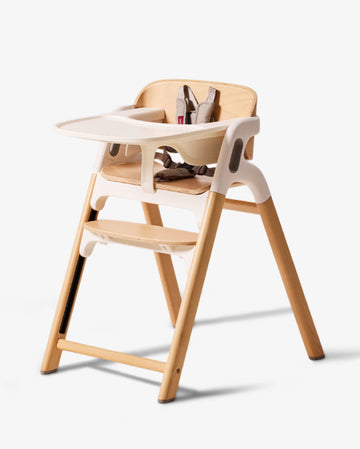
Before you scrub, check whether the tray is smooth, non-absorbent, and free of cracks or chips. High chair trays are meant to be easily cleanable, and scratches can make them harder to clean and more likely to hold onto bacteria.

If the tray already has deep scratches, peeling, or damage, cleaning may not fully solve the problem. In that case, replacement is often the safer long-term fix because rough surfaces trap residue more easily.
The gentlest way to lift sticky residue
Start by scraping or wiping off any loose crumbs with a soft cloth, then wash the tray with warm, soapy water or a detergent solution. A mild detergent and a few minutes of soaking can help soften dried-on spots before you wipe them away.
Use a non-abrasive sponge or cloth only. Avoid steel wool, scouring pads, harsh brushes, or metal scrapers, since those can scratch plastic or coated surfaces.
For a final light wipe on sticky spots, fragrance-free water wipes like 99% Water Baby Wipes - Higher Level of Purity can be useful when a soft cloth alone is not enough.
A simple cleanup flow
- Remove loose food debris.
- Apply warm, soapy water or detergent.
- Let stubborn residue sit for 1–2 minutes.
- Wipe gently with a soft cloth or sponge.
- Rinse thoroughly with clean water.
- Dry the tray fully with a clean, lint-free towel or let it air-dry.

That rinse step matters because leftover detergent can interfere with later sanitizing, and drying helps reduce recontamination.
When you need to sanitize after cleaning
For normal cleaning, soap and water are often enough. If the tray is visibly soiled after a meal, or you want a more complete food-contact cleanup, sanitize only after the residue is fully removed and the tray has been rinsed. According to the CDC, sanitize only after the residue is fully removed and the tray has been rinsed.
For high chair trays, FDA food-contact guidance allows sanitizing with chlorine at 50–100 ppm with at least 7 seconds of contact time, or with quaternary ammonium compound sanitizer at 200–400 ppm with at least 30 seconds of contact time, following the product label.

If you use a sanitizer, the surface needs to stay wet for the full contact time. If the tray dries too soon, the sanitizer cannot do its job properly.
What to avoid so you do not damage the surface
Do not use abrasive pads, steel wool, or harsh brushes on tray surfaces. Those tools can scratch the tray and create tiny places where food and germs can linger.
Do not skip the cleaning step and go straight to sanitizer. Dirt and sticky residue can reduce how well a sanitizer works, so the tray needs to be cleaned first. The CDC says dirt and sticky residue can reduce how well a sanitizer works, so the tray needs to be cleaned first.
Do not mix cleaners or disinfectants unless the label specifically allows it. When you are done, wash your hands with soap and water.
How to handle stubborn spots, seams, and corners
If residue settles into edges, seams, or textured areas, work in small sections with a soft cloth instead of pressing harder. For sticky spots, a mild detergent solution left on the surface for 1–2 minutes can help loosen the residue without forcing you to scrub.

If the tray has a textured surface, residue may be harder to remove than on a smooth one. That makes gentle pre-soaking and careful wiping more useful than stronger scrubbing.
If a sticky film keeps coming back after cleaning, check whether the surface is scratched or worn. Worn trays can hold onto residue and may need replacement.
Keep the tray clean between uses
If you wipe the tray during mealtimes, store wet cloths in a sanitizer solution between uses so you do not spread residue from one wipe to the next. Just make sure the cloth itself is kept clean and used in a way that does not redeposit grime.
A good habit is to clean the tray right after each meal instead of letting residue harden. The longer sticky food sits, the more likely you are to reach for rough scrubbing later.
The quick takeaway
For most high chair trays, warm water, mild soap or detergent, and a soft cloth are enough to remove sticky residue without scratching. Rinse well, dry completely, and only sanitize after the surface is fully clean. If the tray is scratched, cracked, or still holding residue after gentle cleaning, it may be time to replace it.








