


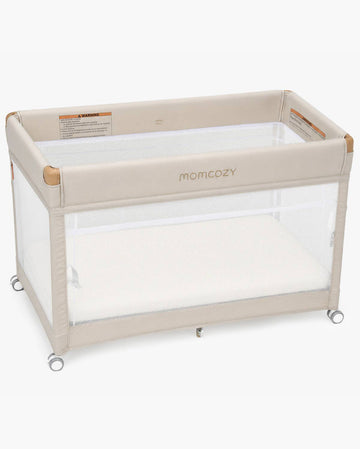
In a small apartment, the hard question is not whether a playard fits once. It is whether the room still works when it is open. Before you shop Momcozy portable playards, decide whether yours will stay open, fold away, move between rooms, or give way to a different setup. A compact playard can protect precious floor space, but only if it supports the way your household actually lives.
Key Takeaways
- Fit is not enough if the open unit blocks a path, door, closet, bedside reach, or shared living area.
- For daily fold-away use, test the real routine and storage destination, not folded dimensions alone.
- A compact exterior still needs enough usable interior space for your baby and routine.
- A gated area, large playpen, or mini crib may work better when room allocation is the real issue.
- Features earn their space only when they solve a repeated household job.
- Choose the setup that keeps the room functional, not the smallest product on paper.

The Real Small-Space Question: Will the Room Still Work When the Playard Is Open?
Start with the open footprint and the room around it. A playard works in a small bedroom or living room only when you can still walk through, open doors and drawers, reach storage, use the bed, and live in the shared space without constantly shifting furniture. For the actual measurements, use these playard fit and measuring details; here, the decision is whether those dimensions leave the room usable.
Picture the busiest moment, not the empty room. Mark the open location and test ordinary adult movement before treating it as a workable plan.
Will You Leave It Open, Fold It Away, or Move It Between Rooms?
Use the routine your household will truly repeat: leave the playard open, fold it away, or move it between rooms. Then interpret footprint, folding, and mobility specifications against that routine. For a unit that stays open, prioritize a practical footprint and usable interior. For fold-away use, prioritize repeatable steps and a real storage location. For room-to-room use, prioritize doorway fit, turning space, wheels, and brakes.
|
1. Open |
2. Use |
3. Fold or move |
4. Store |
|
Place it where the room can still function. |
Match the interior space to the planned task. |
Test the repeatable empty-unit routine. |
Use the exact location you already identified. |
Is Daily Folding Realistic - or Will the Playard End Up Staying Open?
Daily folding is realistic only when the full setup, takedown, and storage sequence is simple enough for your household to repeat. Watch a complete demonstration before relying on fold-away use, then count the steps you would repeat when you are tired or in a hurry. Ask whether the mattress or attachments come off, whether one caregiver can manage the empty unit comfortably, and exactly where it will go afterward.
If that sequence is inconvenient, evaluate the open footprint as the everyday footprint instead of planning around a routine you are unlikely to keep.
Small Footprint vs. Enough Interior Room for Baby
The right compact playard preserves enough room outside the frame for the household and enough usable room inside for the baby’s intended activity. A smaller exterior is not automatically the better fit. A smaller interior may work for short contained periods, but a mobile baby who needs regular play space may outgrow it sooner than a larger playpen or babyproofed area.
There is no universal ideal size. Match the interior to your baby's stage, the length of use, and whether the unit is occasional containment or a regular daytime space.
Playard vs. Gated/Babyproofed Area vs. Large Playpen — Which Uses Floor Space Better?
No one option uses floor space best in every small home. The right choice depends on whether you need a contained area that can be moved or folded, a larger part of the room for daytime movement, or a more permanent play zone.
A playard creates a defined footprint, which can be useful when you need to keep the rest of the room available for adult seating, walking paths, or other daily use. Depending on the model and your routine, it may also be easier to move or fold when the space is needed for something else.
A gated, babyproofed area uses the room itself rather than adding another enclosure. That may be a better match when you can dedicate part of the living room to daytime use. A larger playpen can provide more interior movement room, but it also takes up more permanent floor space.
If your family’s main need is a larger daytime movement zone rather than a contained footprint, compare the daytime play-space options before choosing a setup.

In a One-Bedroom Home, Is a Playard or Mini Crib More Practical?
In a one-bedroom home, choose the form that lets the bedroom serve both baby and adults over a longer room-sharing period. A playard offers flexible multi-use potential; a mini crib can offer a smaller fixed sleep footprint when the setup stays in one place.
Compare bedside reach, daytime uses, storage, and how long the room will need to do double duty. A fuller one-bedroom sleep-space comparison can help when the choice goes beyond the small-space decision covered here. Use only the approved sleep configuration and the product instructions; do not modify mattresses or sleep surfaces.
Which Features Actually Earn Their Space in a Small Home?
Judge each feature by the repeated job it replaces, not by the number of extras available.
|
Feature |
When it earns space |
What to verify first |
|
Fast repeatable fold |
You need to reclaim the floor regularly. |
Full fold steps and the exact storage destination. |
|
Wheels |
The same empty unit must serve more than one room. |
Doorway fit, turns, brakes, and movement instructions. |
|
Bassinet Mode |
It replaces another short-use item you truly need. |
Approved mode and limits; whether you already have a bedside bassinet. |
|
Changing Station or organizer |
Diaper care or supplies repeatedly happen in that room. |
Whether it is optional, removable, and likely to add width or clutter. |
|
Washable fabrics |
The playard will stay visible and be used often. |
Current care instructions and how manageable cleaning is. |
Bassinet Mode is especially useful when it replaces a separate short-use setup, not when it duplicates one. These Bassinet Mode fit considerations can help you decide whether that function belongs in your room and routine.
Cleaning, Sturdiness and Visibility Matter When the Playard Becomes Daily Furniture
When a playard stays in the main living area, it needs to be manageable as daily furniture, not merely fit on paper. Check current care instructions and product documentation rather than assuming that a fabric or frame is easy to clean.
When a Playard Is Not the Best Small-Space Solution
A playard is not the best answer when it creates a larger room-function problem than the one it is meant to solve. The following conditions point to a different setup.
- The only location blocks circulation or essential furniture.
- You need a larger daytime movement zone that can be safely dedicated or gated.
- A smaller fixed sleep product better fits long-term one-bedroom room sharing.
- The real setup and takedown process makes daily folding unlikely.
- Needed accessories add more width or clutter than the room can support.
Why “Best Pack and Play for Small Spaces” Results Often Look Like Travel-Crib Lists
A lightweight travel product can look like the obvious answer when space is tight, but frequent transport and daily home use call for different priorities.
If you will carry the unit through airports often, low weight and a very small folded size may matter most. If the playard will live mainly in a small apartment, you may instead need a setup that feels stable day to day, moves between rooms when needed, folds in a way you can realistically repeat, and remains useful as your needs change.
Start with how you will use it most often, rather than choosing based on the smallest packed size. The home-versus-travel fit differences can help you compare the details that matter for your routine.
The Momcozy One-Click Foldable Baby Playard with Bassinet - Where It Fits the Small-Space Decision
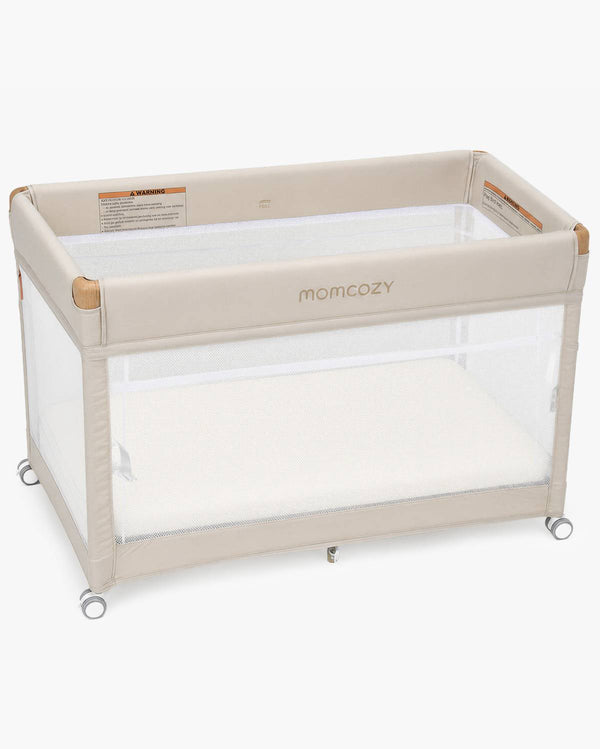
After you have chosen a routine, test the Momcozy One-Click Foldable Baby Playard with Bassinet against the same framework. Its stated open dimensions are 112 x 62 x 78 cm; folded, it is 63.5 x 16 x 78 cm. Test both locations. At 10.3 kg (about 22.7 lb), it is home-first rather than ultra-light travel-first.
When they solve a real household need, Momcozy One-Click Foldable Baby Playard with Bassinet's one-piece fold, self-standing storage, four lockable caster wheels for empty-unit repositioning, and Bassinet and Playard modes may reduce duplicate gear. The changing station is optional or sold separately and may increase the configured footprint. Review the current Momcozy One-Click Foldable Baby Playard with Bassinet portable playard details and final manual before purchase or use, especially for approved modes and care instructions.
Small-Space Decision Checklist Before You Buy
Use this checklist to test the real room and routine before you choose a model. Each item should be answered for the exact location and configuration you expect to use.
- Mark the exact open location and confirm the room still works around it.
- Decide whether the unit will stay open, fold daily, or move between rooms.
- Identify the exact storage location before relying on a fold-away routine.
- Watch a full setup and takedown demonstration and count the steps you would repeat.
- Compare exterior footprint with enough usable interior room for the intended stage and task.
- Compare a playard with a gated area, large playpen, or mini crib when those options solve the actual space problem better.
- Choose features by repeated use frequency, including the width or clutter created by accessories.
- If room-to-room movement matters, check doorway width, wheels, brakes, and turning space.

FAQs
Can a Pack and Play Fit in a One-Bedroom Apartment?
Yes, if bedside access and the normal exit route stay clear during overnight use, not merely when the room is empty.
Is a Mini Playard Better for a Small Bedroom?
A mini playard can be better for short contained periods; reconsider it when your intended routine needs a regular movement zone.
Where Can I Store a Folded Playard in a Small Apartment?
Choose the exact closet, under-bed, or wall location before buying, then check that the route into that spot is workable too.
Can I Leave a Playard Set Up in the Living Room Full Time?
Yes, if it functions as part of the room plan. Reassess the layout when seating, visitors, or seasonal storage changes.
Is a Playard or Baby Gate Better for a Small Living Room?
Choose a gated area when one safely prepared zone can remain dedicated; choose a playard when the boundary needs to change rooms.
Can a Playard Replace a Mini Crib in a One-Bedroom Home?
Compare approved use, caregiver access, and whether the bedroom needs a stable long-term layout, not product size alone.
Are Wheels Useful on an Apartment Playard?
Wheels help only when an empty unit regularly moves between rooms; they do not replace checking thresholds, turns, and manual instructions.
Does a Changing Station Make a Playard Too Wide for a Small Room?
It can. Measure the widest installed configuration and decide whether the attachment must be removed before folding or moving the unit.
Conclusion
A playard for small spaces works when it solves a room-function problem without creating a bigger circulation, storage, or usability problem. Ask where it will stay open, where it will go folded, and what it genuinely replaces. When those answers line up, Momcozy portable playards can be a practical next step.








