


MEDICALLY REVIEWED BY

Mary Bicknell, MSN, BSN, RNC, ANLC
Mary Bicknell comes with over 30 years of experience as an RN in the NICU. Educating mothers on the importance of healthy breastfeeding is important to her. It can be challenging to maintain successful breastfeeding through many difficult situations and long hospitalizations. Mary is committed to helping families define what successful breastfeeding means to them; and to assist them to obtain their goal. After leaving the bedside, Mary became a nurse leader and continued to make sure that breastfeeding education and support was always available to the families in her unit.
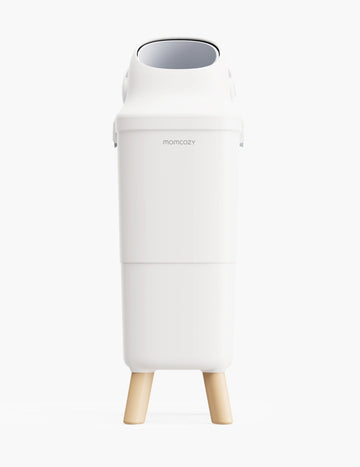
A clean, fully functional diaper pail can become a contained bin for bathroom trash, period products, bagged dog waste, bagged cat-litter waste, or adult incontinence products. The right choice depends on whether your exact model can be lined and sealed reliably, where it will sit, and how that waste must be discarded where you live.
The key is to treat it as a waste container with useful odor-control features—not as a permanent odor vault or a catch-all for anything you do not want to deal with.
First, make sure the pail is still worth keeping
Before assigning the pail a new job, give it a quick pass-or-retire inspection.

A pail is a reasonable reuse candidate when it has:
- A lid that closes and latches as intended
- Seals, hinges, pedals, and inner mechanisms that still work
- No cracks, mold, or residue that remains after cleaning
- A location that children and pets cannot access inappropriately
- A liner option that fits your specific model and is practical to keep buying
- A clear household-trash or other approved disposal route for its future contents
Do not assume that an ordinary kitchen bag will work. Some pails accept standard trash bags, while others need proprietary refills to operate or seal correctly. Continuous-liner models may also let you remove a partial bag rather than waiting for the pail to fill—but that feature is model-specific.
Check your manual before buying liners, removing internal parts, or relying on the pail's sealing system for a new waste stream.
Clean and reset it before reuse
A previous diaper pail deserves a full reset before it moves into the bathroom, mudroom, or another shared space.

- Empty it completely. Remove the old liner and any trapped material from the lid, bag cutter, or inner chamber.
- Remove parts only if your manual permits it. Do not force out seals, filters, or mechanisms that are not meant to come apart.
- Wash compatible surfaces with soap and water. Rinse away residue.
- Dry it fully with the lid open. Moisture left in seams or under a lid can make the next use unpleasant.
- Inspect the lid, seals, and hinges. Close the pail and confirm that it still operates normally.
- Wash your hands after handling the pail and its former liner.
Do not assume bleach, scented cleaners, essential oils, or disinfectants are safe for every pail. Plastics, seals, filters, and odor-control mechanisms vary. Use only cleaning products your model's manufacturer approves.
If a persistent smell, visible residue, or a faulty seal remains after cleaning, do not force a second life out of it. Move on to local recycling or disposal options instead.
1. A contained bathroom-trash bin
Bathroom trash is a documented post-potty-training reuse for a diaper pail. A diaper pail's lidded, hands-free design can be useful in a bathroom where ordinary bins feel too open or where small amounts of damp waste create odor.
Best fit: A bathroom with tissues, personal-care packaging, and other household trash that benefits from being out of sight.
Set it up: Use a compatible liner, place the pail where it does not obstruct access, and make sure the lid can open freely. A hands-free pedal can be especially useful in a busy family bathroom.
Empty it: Empty based on odor, moisture, and handling comfort—not just when the bin is full.
Not a fit if: Your bathroom produces mostly dry, low-odor waste. A smaller ordinary bin may be easier and less expensive to line.
Keep this bin for appropriate household trash only. Do not use it for liquids, medicines, sharps, batteries, chemicals, hot materials, or materials assigned to recycling or another local collection stream.
2. A dedicated bin for period products
A diaper pail can also work as a discreet, dedicated period-product bin. Its lid and contained liner can offer more privacy than an open bathroom basket.
Pads and tampons belong in a bin, not the toilet. Flushing menstrual products can block plumbing, so a lined pail gives household members a clear alternative.
Set it up: Place the pail near the toilet, use the liner your model supports, and reserve it for used period products and related bathroom waste. If preferred, wrap or bag items before placing them inside.
Empty it: Do not wait for a full load. Empty the pail whenever odor, moisture, or the amount of waste makes handling it uncomfortable.
Not a fit if: The pail is difficult to open, does not seal reliably, or is too large for the bathroom's actual needs. A small lidded bin may be the better tool.
3. A staging bin for bagged dog waste
For homes with a dog, a diaper pail can serve as a temporary staging point for tied pickup bags—but only if local household-trash rules allow dog waste in the trash.
Best fit: A lined pail positioned near the exit, garage, or another practical handoff point after walks. Its lid can help contain odor between household-trash collections.
Set it up: Put only securely tied pickup bags into the pail. Keep the pail inaccessible to children and pets, and keep the exterior clean enough to handle safely.
Empty it: Empty it frequently, especially in warm conditions or whenever opening the lid produces a strong odor. A sealed lid can reduce odor while closed, but it does not make stored waste odorless when the pail is opened.
Not a fit if: Your local rules prohibit this disposal route, the pail would sit in a living area, or you cannot empty it often enough. Never assume pet waste belongs in recycling, compost, organics collection, or a toilet; disposal rules differ by location.
4. A conditional bin for bagged cat-litter waste
Cat-litter waste is a more cautious option. People have used diaper-style disposal systems for bagged litter, but the available evidence on odor performance is anecdotal rather than a guarantee that any pail will remain sanitary or smell-free.

Best fit: A household that can keep a dedicated, lined pail near—but not necessarily beside—the litter box, and can empty it often.
Set it up: Scoop waste into a bag, tie it securely, and place it in the lined pail. Keep the exterior and lid clean, and wash hands after handling materials that may be contaminated with cat feces.
Empty it: Scoop the litter box daily and remove pail waste regularly. Daily litter-box cleaning is one measure that reduces toxoplasmosis risk; it does not prove that a particular pail is safe or odor-free. Follow CDC guidance on preventing toxoplasmosis for cat-litter precautions.
Not a fit if: Someone who is pregnant or immunocompromised would be the regular handler, the pail cannot be kept away from children and pets, or local rules do not permit the waste in household trash. Pregnant and immunocompromised people can face greater potential harm from toxoplasmosis and should take added precautions around cat feces; see CDC information for cat owners.
Do not flush litter or build a composting, recycling, or organics-disposal routine around the pail unless your local authority explicitly permits it.
5. A discreet bin for adult incontinence products
A diaper pail can be used for adult incontinence-product disposal when the products are bagged and disposed of as household trash, subject to local rules. For a household managing adult incontinence products, a dedicated lidded bin can provide contained, more discreet disposal close to where it is needed.
Best fit: Products that can be rolled or contained, bagged, and placed in household trash under local rules.
Set it up: Position the pail where the person using it—or a caregiver—can reach it safely. Use a verified compatible liner. Roll used products tightly, secure them where applicable, and place them in a sealable bag before disposal in the lined pail.
Empty it: Empty before the pail becomes difficult to handle, and whenever odor or moisture calls for it.
Not a fit if: Your municipality or care provider requires a different disposal method. Many areas treat these products as regular household waste, but some may offer or require specialized services. Adult diapers and similar products should not be flushed.
Keep it maintained—or let it go
Whatever use you choose, emptying frequency matters more than the pail's maximum capacity. A pail can contain some odor while closed, but stored waste still needs routine removal. If your model uses a replaceable filter, follow its specified maintenance schedule.
Retire the pail from waste duty if:
- The lid no longer seals or closes properly
- A pedal, hinge, or inner mechanism is broken
- Cracks or damaged surfaces prevent thorough cleaning
- Odor persists after cleaning and prompt emptying
- Compatible liners are no longer practical to obtain
- Your household's disposal rules or needs have changed
A diaper pail can earn a useful second life when its condition, manual, and local waste rules support the job. Choose the one use that removes a real household friction point, set it up with the right liner and emptying routine, and let the pail go responsibly if it no longer performs hygienically.








