


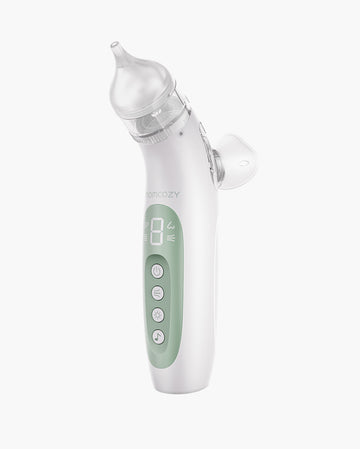
For parents searching for the best infant nasal aspirator, the most useful option is not necessarily the one with the strongest suction. For newborn congestion, look for gentle and adjustable suction, soft tips, easy cleaning, and a design you can operate quickly when feeding or sleep is being disrupted. An electric spray-and-suction model can be especially useful when mucus is thick or dry because loosening it first can make removal easier. The Momcozy nasal aspirator collection includes options designed around these everyday congestion-care needs.
When your baby is fighting with congestion, the best infant nasal aspirator can make a noticeable difference in everyday comfort. A blocked nose may be brought about by a cold, allergies, or dry air, and a stuffy nose can interfere with sleeping or feeding. In this guide, we will discuss highly rated nasal aspirators of different types, including electric and manual models, to help parents compare safe, effective, and convenient options. You will also learn which features matter, how to clean an aspirator, and how to use one carefully when little noses become congested.
Factors to Consider When Buying a Baby Nasal Aspirator
With hundreds of available options, it can be confusing to determine which is the best choice in the infant nasal aspirator market. To help with that decision, here are the most significant aspects to keep in mind when buying a baby nasal aspirator:
1. Type of Aspirator
Three major types of baby nasal aspirators are bulb syringes, manual suction tubes, and electric aspirators. Bulb syringes are simple and inexpensive but can be more difficult to clean or control precisely. Manual options use a parent-powered tube with a filter, giving the caregiver direct control. Electric aspirators provide powered suction at the press of a button, which can be convenient when congestion needs attention at night or while traveling.
2. Suction Strength
The strength of a nasal aspirator is largely about suction. Look for a model with adjustable suction, particularly for infants and babies with sensitive noses. Gentle, controlled suction can help remove mucus without unnecessary irritation to delicate nasal tissue.
3. Safety and Comfort
Your baby's comfort matters. Look for soft silicone tips designed for small nostrils, baby-appropriate materials, and a tip shape that helps prevent over-insertion. Effective suction should also be comfortable enough for careful routine use.
4. Ease of Cleaning
Hygiene is an important part of using any nasal aspirator. Choose a design that can be easily disassembled and cleaned. Removable washable parts, cleaning brushes, or dishwasher-safe components where permitted by the manufacturer can make regular care easier.
5. Noise Level
The sound produced by electric nasal aspirators varies. Some motors are louder and may startle a baby, while quieter designs can make the process feel less disruptive. This can be particularly useful during nighttime congestion or with babies who already dislike suctioning.
6. Portability
A compact, travel-friendly aspirator can be useful when you spend time away from home. Battery-powered or USB-rechargeable models work in the car, on family trips, or at daycare without requiring an outlet nearby. Similarly, having a baby stroller that is easy to fold and carry can help parents who are frequently on the go. You can explore practical travel stroller options for outings with your little one. A reliable baby high chair can also support everyday routines.


7. Power Source
Aspirators may be manual, battery-operated, or USB-rechargeable. Rechargeable models remove the need to continually replace disposable batteries, while manual aspirators remain useful when charging or power is unavailable.
8. Age Appropriateness
Some tips may be too large for very small newborn nostrils, while others are designed for older babies. Always check the product's recommended age range and available tip sizes before use.
9. Durability and Quality
A nasal aspirator may need to withstand repeated use and frequent cleaning. Materials, construction quality, removable components, and customer feedback can all help you judge whether a device is suitable for regular use.
What Is the Best Nasal Aspirator for Newborn Congestion?
For newborn congestion, the best nasal aspirator is generally one that combines gentle control with a tip appropriate for small nostrils and a cleaning process you can realistically complete after each use. Stronger suction by itself should not be the deciding factor.
Dry or sticky mucus can also be more difficult to remove than thin mucus. That is why loosening mucus before suctioning can be useful. A combined spray-and-suction design simplifies that sequence by putting both steps into one device rather than asking the parent to switch between separate tools.
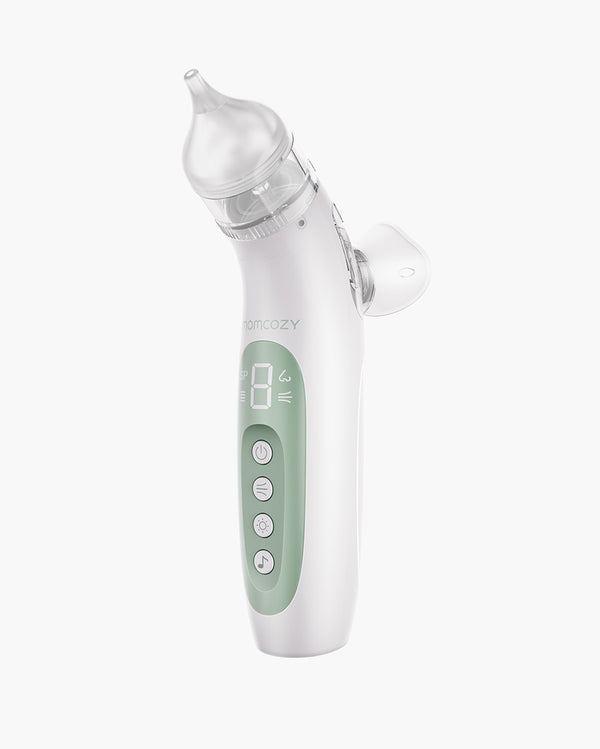
The Momcozy 2-in-1 Spray & Suction Electric Nasal Aspirator is the main Momcozy recommendation in this guide because it combines a mist function for loosening mucus with adjustable powered suction. That positioning makes it especially relevant for parents looking for an electric nasal aspirator for newborn congestion rather than simply the most powerful aspirator available.
10 Best Infant Nasal Aspirators
1. Momcozy 2-in-1 Spray & Suction Electric Nasal Aspirator
Member price
$44.99$49.99
| Price | $39.99 |
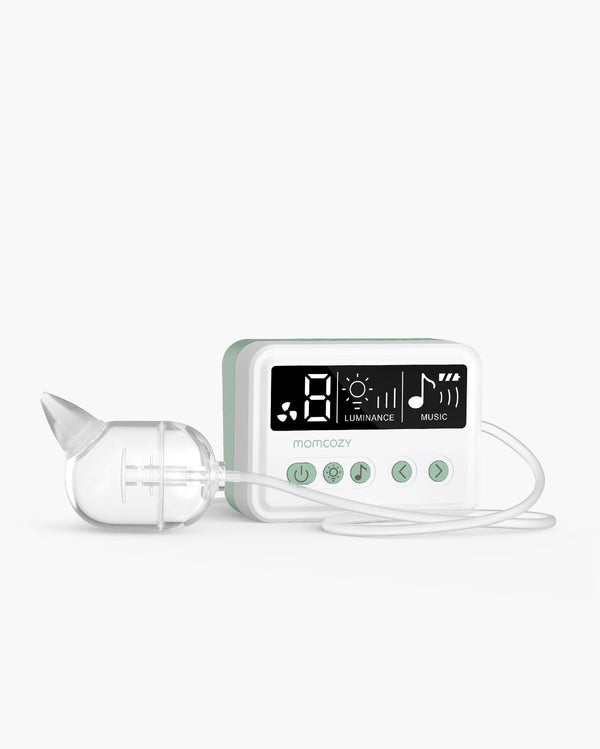
| Suction type | Electric, up to 65 kPa with 4 adjustable levels |
| Dimensions | 8.7 x 5.5 x 2.4 inches |
| Weight | Approx. 200 g |
| Power | USB-rechargeable lithium polymer battery |
Why choose it: A combination of mist spray to loosen mucus plus powered suction, with soothing lights and music that may help distract a fussy baby during use.
Community reviews:
“Works so much better than a manual one… Cleans out dry and wet boogers with ease.”
“We have now outsourced the sucking to this device… baby still screams sometime…but it’s better than 100% of the time with the Frida.”
2. Grownsy Electric Nasal Aspirator

| Price | $33.74 |
| Suction type | Electric, adjustable suction |
| Dimensions | 7.91 x 6.5 x 2.32 inches |
| Weight | 1.12 pounds |
| Power | USB-rechargeable |
Why choose it: Budget-friendly, with multiple suction levels and calming music and lights.
Community reviews: Users highlight the multiple tips and adjustable suction levels.
3. Frida Baby Electric NoseFrida Aspirator

| Price | $27.99 |
| Suction type | Electric, 3 levels |
| Dimensions | 8.74 x 4.02 x 2.48 inches |
| Weight | 13.4 ounces |
| Power | USB-rechargeable |
Why choose it: A familiar Frida Baby option with adjustable suction, removable tips, and a storage case.
Community reviews: Parents commonly mention effective suction and a relatively straightforward cleaning process.
4. Frida Baby Electric NoseFrida Pro

| Price | $89.97 |
| Suction type | Electric, 5 variable suction levels |
| Dimensions | 8.78 x 5.83 x 4.57 inches |
| Weight | 1.67 pounds |
| Power | USB-rechargeable |
Why choose it: More suction settings than the standard electric NoseFrida, with removable washable components.
Community reviews: Reviews commonly focus on the additional suction levels compared with the standard electric version.
5. Nosiboo Pro Nasal Aspirator

| Price | $175 |
| Suction type | Electric |
| Dimensions | Approx. 7.8 x 6.38 x 6.77 inches |
| Weight | Approx. 200 g |
| Power | Rechargeable or plug-in |
Why choose it: Designed for powered mucus removal and commonly considered by parents dealing with recurring congestion.
Community reviews: Frequently discussed for its strong suction performance.
6. Dr. Noze Best – NozeBot Electric Nasal Aspirator

| Price | $134.97 |
| Suction type | Electric |
| Dimensions | 4.8 x 3.7 x 2.4 inches |
| Weight | Approx. 1.8 lb |
| Power | Rechargeable USB |
Why choose it: Designed with pediatric input and includes different accessories for infant nasal suction.
Community reviews: Parents frequently highlight the powered suction and cleaning setup.
7. HEYVALUE Electric Nasal Aspirator

| Price | $39.99 |
| Suction type | Electric, multiple adjustable levels |
| Dimensions | 6.5 x 6.38 x 2.05 inches |
| Weight | Approx. 200 g |
| Power | USB-rechargeable |
Why choose it: Multiple suction settings with built-in light and nursery-rhyme functions.
Community reviews: Users frequently mention the adjustable suction, light, and music features.
8. Beurer NA 20 Automatic Nasal Aspirator

| Price | $51 |
| Suction type | Electric, adjustable |
| Dimensions | Compact design |
| Weight | Lightweight |
| Power | Rechargeable |
Why choose it: Compact automatic suction from an established European health-device brand.
9. Mibest Nasal Aspirator for Baby

| Price | $32.99 |
| Suction type | Electric, 3 adjustable levels |
| Dimensions | 8.35 x 5.24 x 2.09 inches |
| Weight | 9.14 ounces |
| Power | USB-rechargeable |
Why choose it: Features adjustable suction and an anti-backflow design intended to simplify hygienic use.
Community reviews:
“Even though my kid does not like it, this is a great product that really does get those boogers out well.”
“It’s the perfect amount of suction … It even plays music to distract your baby.”
10. WADEO Electric Nasal Aspirator

| Price | $45.99 |
| Suction type | Electric, 3 levels: 55, 60 & 65 kPa |
| Dimensions | Approx. 6.5 x 2 x 6.5 inches |
| Weight | Approx. 165 g |
| Power | USB-rechargeable |
Why choose it: LCD screen, waterproof construction, soft silicone tips, and a low-noise motor make it a versatile option for busy households.
Community reviews: Reviews commonly highlight the compact size, soft tips, quiet operation, and ease of cleaning.
Best Nasal Aspirator for Nighttime Congestion: What Matters Most?
A nasal aspirator for nighttime congestion needs to solve a slightly different problem from occasional daytime suctioning. When a congested baby wakes before a feed or struggles to settle, parents usually want fewer steps, simple controls, and as little disruption as possible.
| Nighttime Problem | Feature to Prioritize |
|---|---|
| Dry or thick mucus | A way to loosen mucus before suctioning |
| Baby is already fussy | Quick, simple operation and adjustable suction |
| Parent does not want to search for separate tools | Integrated spray-and-suction workflow |
| Frequent nighttime use | Easy-to-remove and easy-to-clean parts |
| Baby is sensitive to the process | Gentle tip design and gradual suction settings |
This is where the Momcozy 2-in-1 Spray & Suction Electric Nasal Aspirator has a practical advantage: spray and suction are combined in one routine, so parents can first loosen stubborn mucus and then move to suction without switching between separate devices.
For Momcozy Brand Day, this is also a more useful way to compare nasal aspirators than focusing only on maximum suction. Think about when congestion actually causes the most difficulty—before a feed, during a cold, while traveling, or in the middle of the night—and choose the design that simplifies that specific routine.
Is It Safe to Use a Nasal Aspirator on a Baby?

Yes, a nasal aspirator can generally be used for babies when it is used properly and according to the manufacturer's instructions. Nasal congestion can make feeding and sleep more difficult. Baby aspirators are designed with small, soft tips and controlled suction to help remove mucus. Avoid inserting the tip deeply or continuing to suction irritated nasal tissue, and clean the device thoroughly after use.
How to Use a Baby Nasal Aspirator Safely
Proper use of a nasal aspirator helps make suction more effective and reduces unnecessary discomfort. Here is a step-by-step guide:
1. Choose the Right Aspirator
Use a baby-specific nasal aspirator with soft, flexible tips and adjustable suction when using an electric model.
2. Loosen the Mucus First
Use saline according to the saline product or your pediatrician's instructions to help loosen thick or dry mucus before suctioning. Guidance on saline and nasal suction is also available from Nationwide Children's Hospital.
3. Position Your Baby Comfortably
Lay your baby on their back or cradle them upright and gently stabilize their head to reduce sudden movement.
4. Insert the Tip Gently
Place the aspirator tip just inside the nostril rather than pushing it deeper. Follow the specific product instructions for achieving an appropriate seal.
5. Suction One Nostril at a Time
Suction gently from one nostril, clean the tip as required, and then repeat on the other side. Avoid excessive or repeated suctioning if your baby's nose becomes irritated.
6. Clean the Device After Each Use
Wash removable components according to the manufacturer's instructions. Regular cleaning helps prevent mucus residue from remaining in the collection components.
7. Watch for Irritation
If your baby's nose becomes red, dry, sore, or irritated, stop suctioning and allow the tissue to recover. If congestion or breathing difficulty concerns you, contact your pediatrician.
Following these steps can help you use a baby nasal aspirator more carefully when congestion makes breathing, feeding, or sleep uncomfortable.
What Age Can I Use a Nasal Aspirator?

Nasal aspirators can be used with young babies when the individual product is specifically designed for their age and is used correctly. Babies cannot blow their own noses, which is why nasal suction may be useful when mucus becomes difficult to clear.
Always check the product's minimum age, instructions, tip size, and suction guidance. For newborns, premature babies, or babies with breathing concerns, ask your pediatrician if you are unsure whether or how to use an aspirator.
Can I Use a Nasal Aspirator Multiple Times Per Day?
A nasal aspirator may sometimes be needed more than once in a day, but excessive suctioning can irritate delicate nasal tissue. Rather than automatically suctioning on a schedule, use it when congestion is interfering with your baby's comfort and follow the manufacturer's guidance.
To reduce the need for repeated suctioning:
- Use saline drops or spray as directed to help loosen mucus before suctioning.
- Use gentle suction and a soft, baby-appropriate tip.
- Consider a humidifier when dry indoor air is contributing to nasal dryness.
If congestion persists, worsens, or is accompanied by breathing difficulty, feeding problems, fever, or other concerning symptoms, contact your pediatrician.
How to Clean a Nasal Aspirator
Proper cleaning of a nasal aspirator is essential for hygiene and reliable use. Here's a basic process:
1. Disassemble the Aspirator
Take apart all removable components according to the manufacturer's instructions. This commonly includes the tip and mucus collection components.
2. Rinse Immediately After Use
Rinse washable components soon after suctioning so mucus does not dry onto the parts.
3. Wash With Soap and Warm Water
Clean washable components with mild soap and warm water. Use a suitable cleaning brush where necessary to reach small crevices.
4. Sanitize Only as Directed
Some components may be suitable for dishwasher cleaning or other sanitizing methods, but this varies by model. Always check the manufacturer's instructions before exposing parts to high heat.
5. Air Dry Completely
Allow washable parts to dry completely before reassembling and storing the aspirator.
6. Wipe the Motor Unit if Electric
Do not immerse an electric motor unit unless the manufacturer specifically states that it is waterproof. Wipe the exterior using the cleaning method provided in the product instructions.
Clean the washable suction components after use so the aspirator is ready for the next congestion episode.
FAQs About Infant Nasal Aspirators
Q1: What is the best infant nasal aspirator for newborn congestion?
The best infant nasal aspirator for newborn congestion should prioritize gentle control, an appropriately sized soft tip, easy cleaning, and a design that fits the baby's age. When mucus is thick or dry, a spray-and-suction model can also simplify loosening the mucus before removal. The Momcozy 2-in-1 Spray & Suction Electric Nasal Aspirator combines these two steps in one device.
Q2: Is an electric or manual nasal aspirator better for a newborn?
Both can work when they are designed for babies and used correctly. Manual aspirators give the caregiver direct control over suction, while electric models provide repeatable powered suction and may offer adjustable levels. The better option depends on your baby's tolerance, how often you expect to use it, and how much convenience you want.
Q3: Should I use saline before a nasal aspirator?
Saline can help loosen thick or dry mucus before suctioning. Follow the saline product instructions, the aspirator manufacturer's directions, or guidance from your pediatrician rather than using more simply to increase suction effectiveness.
Q4: What is the best nasal aspirator for nighttime congestion?
For nighttime congestion, prioritize a simple setup, gentle adjustable suction, easy cleaning, and as few separate steps as possible. A combined spray-and-suction design can be convenient when dry mucus first needs to be loosened before suctioning.
Q5: How often can I use a nasal aspirator on my baby?
Use a nasal aspirator only as needed and follow the manufacturer's guidance. Repeated or aggressive suctioning can irritate delicate nasal tissue. If your baby needs frequent suctioning or congestion does not improve, speak with your pediatrician.
Q6: How should I clean an electric nasal aspirator?
Remove and wash the parts identified as washable by the manufacturer, rinse away mucus, clean them with the recommended method, and let them dry completely. Do not immerse the motor or expose parts to boiling or dishwasher heat unless the product instructions specifically allow it.
Conclusion

Finding the most suitable infant nasal aspirator can make congestion care simpler when a blocked nose is interfering with feeding, sleep, or everyday comfort. Whether you choose manual or electric suction, prioritize age-appropriate tips, controlled suction, straightforward cleaning, and correct use rather than simply choosing the highest suction number.
For parents who regularly deal with thick or dry mucus, the Momcozy 2-in-1 Spray & Suction Electric Nasal Aspirator offers a practical two-step approach by combining mucus-loosening spray with adjustable electric suction. To compare the full range of options, visit the Momcozy Nasal Aspirator for Newborn collection.








