


MEDICALLY REVIEWED BY

Talia, OBGYN, master’s degree holder, IBCLC
A board-certified OBGYN, master’s degree holder, and IBCLC. As a mom who exclusively breastfed for 2 years, I bring both clinical expertise and real parenting empathy to my work.
I’ve supported 20,000+ postpartum parents with evidence-based breastfeeding guidance—from latching & positioning to lactation medication safety. 90% of my clients build sustainable feeding routines, and I’ve partnered with 2,000+ families to boost breastfeeding rates and satisfaction.
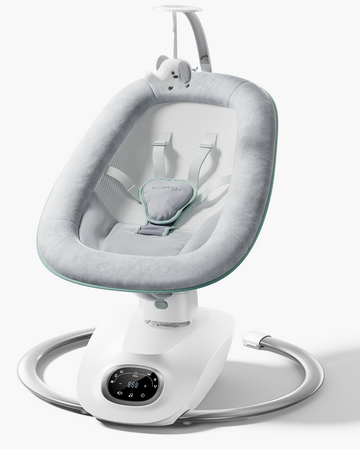
If your baby slumps forward in a swing seat, stop the swing, lift or reposition your baby right away, and check the recline, harness fit, and product limits before using it again. For young babies, especially under 4 months, a chin-to-chest position can make breathing harder, so the safest answer is to treat forward slumping as a reason to pause and reset.
Have you ever glanced over and noticed your baby’s head folded forward in the swing, almost like their chin is tucked into their chest? That little slump can feel scary because newborns and young infants do not always have the neck strength to correct their position on their own. Here is how to handle it calmly, what to check on the swing, and when it is better to move your baby somewhere else.
Why Forward Slumping in a Swing Matters
A baby swing can be a lifesaver during those fussy late-afternoon stretches when you need both hands free for a few minutes. But if your baby’s head drops forward, the concern is positioning, not the swing motion itself.

Young babies have limited head and neck control, and head slump is most concerning for newborns or babies who cannot reliably lift and turn their heads yet. When a baby’s chin rests on their chest, their airway may not stay as open as it should.
This is why slumping is a bigger deal for a 2-week-old than for an older baby who can hold their head up, turn away, and adjust when uncomfortable. Many babies develop better head control somewhere around 2 to 6 months, but every baby is different, so it is better to watch your baby’s actual strength and posture instead of going by age alone.
What to Do Right Away
If you see your baby slumped forward, do not wait to see if they fix it. Stop the swing first, then gently reposition your baby so their head, neck, and torso are aligned.
Take your baby out if they seem sleepy, very curled, fussy, unusually quiet, or hard to position well. A pediatric organization notes that infants younger than 4 months should be placed in the most reclined swing position to help prevent slumping forward.

Once your baby is out of the swing, do a quick reset before trying again:
- Check that your baby’s back and bottom are fully settled into the seat.
- Make sure the harness is snug, with the straps lying flat instead of twisted.
- Use the most reclined setting allowed by the swing manual, especially for a newborn.
- Remove bulky blankets, thick jackets, or loose padding that can push your baby forward.
- Stay close enough to see your baby’s face and chest while the swing is in use.
A small receiving blanket over your baby after they are buckled can be fine for warmth if you are supervising, but avoid placing extra padding behind or under them unless the swing manual specifically allows it. Aftermarket inserts can change the fit of the seat and harness in ways that are hard to judge by eye.
Check the Recline Before You Blame the Swing
One of the most common reasons babies slump is that the seat is too upright for their stage. A newborn’s body naturally curls, and if the swing seat is sitting high, gravity can pull the head forward.
Use the most reclined position your swing allows for a young baby. If the swing has multiple seat positions, do not assume the middle setting is “safer” just because it looks more supportive. For a baby without steady head control, more recline is usually the better starting point.
It also helps to check the swing on a level floor. If one side is on a thick rug and the other is on hard flooring, or if the swing is angled near a transition strip, the seat may not sit the way you expect. The same principle matters in car seats too: a recline indicator should be checked on level ground because gravity affects the reading, and the goal is to keep the baby positioned so the head does not fall forward.

Make Sure the Harness Is Doing Its Job
A loose harness lets a baby slide down, and sliding down makes slumping more likely. The harness should hold your baby’s hips and torso in the right spot so they do not scoot into a curled position.
Buckle every strap the swing is designed to use. If it has a 5-point harness, use the shoulder straps, waist straps, and crotch strap. If it has a 3-point harness, make sure the waist and crotch portions are snug enough to keep your baby’s bottom back in the seat.
A practical check: after buckling, try to pinch the strap webbing at your baby’s shoulder or hip. If you can pinch a fold of strap, it is probably too loose. You do not want it tight enough to dig in, but you should not see big gaps between your baby and the harness.
Also check clothing. Puffy winter suits, thick sleep sacks, and oversized sweaters can make the harness look snug when it is actually compressing around the fabric. For swing time, lighter layers usually make it easier to get a secure fit.
Do Not Let the Swing Become a Sleep Spot
This is the part many tired parents struggle with, because swings often work exactly when you need help most. A fussy baby relaxes, the motion kicks in, and suddenly they are asleep.
But a swing is not a safe sleep surface. A pediatric organization advises that if a baby falls asleep in a swing, car seat, or bouncy seat, caregivers should move the baby to a firm sleep surface as soon as possible.
In real life, this might mean using the swing for 10 minutes while you warm a bottle, pump, wash pump parts, or eat a quick lunch nearby. If your baby starts nodding off, treat that as your cue to transfer them to a crib, bassinet, or play yard with a firm, flat mattress and no loose blankets or soft items.
A swing can be part of your soothing routine, but it should not replace a sleep space. If your baby only settles in motion, you may need a short transition routine: dim room, fresh diaper, swaddle if age-appropriate and your baby is not rolling, feeding if needed, then into the bassinet before they are deeply asleep.
Confirm the Swing Fits Your Baby’s Stage
Every swing has limits, and they are not just fine print. The right age, weight, recline, and developmental stage matter because a swing that worked last month may not be right today.
A federal consumer safety agency explains that an infant swing is generally designed for a baby in a seated position from birth until the baby attempts to climb out, around 9 months. A cradle swing is different: it is for a baby lying flat from birth until the baby begins to push up on hands and knees, around 5 months.

Check your manual for these details:
- Minimum and maximum weight
- Whether the swing is approved for newborn use
- Required recline position by age or weight
- Harness instructions
- When to stop using it, such as rolling, pushing up, sitting, or climbing attempts
- Whether the seat pad or insert must be used for smaller babies
If you bought the swing secondhand or received it as a hand-me-down, look up the model number and check for recalls or missing parts. Current safety standards cover areas like stability, restraints, seat angles, locking mechanisms, openings, and pinch hazards, and products made after September 14, 2024 must meet a current safety standard under the federal rule.
When to Stop Using the Swing
Stop using the swing for now if you cannot keep your baby from slumping even after adjusting the recline and harness. That is the clearest sign that the seat is not fitting your baby well at this stage.
You should also stop using the swing if your baby is trying to roll in it, push up, sit forward, twist sideways, or climb out. Those movements can happen fast, especially once a baby gets stronger through the shoulders and core.
A good rule of thumb: the swing is for supervised soothing, not containment while you leave the room. If you need a place to set your baby down while you shower, cook, or help another child, a crib, bassinet, or play yard is usually the better choice.
If your baby repeatedly slumps in multiple seats, seems unusually floppy, has noisy breathing in certain positions, or you feel something is not right, check in with your pediatrician. You are not overreacting by asking; positioning and muscle tone are exactly the kinds of things they can help you sort out.
Practical Next Steps
The next time your baby slumps forward in the swing, think: stop, reposition, recline, and reassess. Stop the motion, sit your baby back into the deepest part of the seat, tighten the harness, and use the most reclined setting allowed for your baby’s age and size.
Keep swing sessions short and supervised, especially for newborns and babies under 4 months. If your baby falls asleep, move them to a firm, flat sleep surface as soon as you can.
Most of all, trust what you see. If your baby cannot stay comfortably positioned in the swing, it is okay to set that product aside for now and try again later when they have better head and neck control. A swing is helpful only when it fits your baby safely today, not just when the box says they are technically old enough to use it.








