


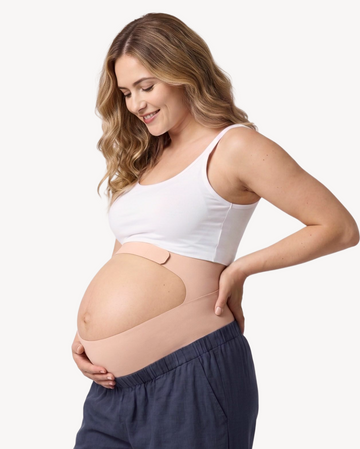
Each pregnancy is unique, and so are the belly shapes. Many people are curious about different types of pregnancy belly shapes, compare them to one another, and even have old wives' tales about what they may mean. Pregnancy bellies can have all kinds of shapes, either round and high or wide and low. If a mother-to-be realizes that her bump doesn't look like their friends' or even what she thought it should look like when she was pregnant before, she might ask herself, what's going on? But in fact, belly shape is not a good indicator of sex or health in babies. Instead, it is based on posture, abdominal tone, where the uterus is and if you've had a baby before. By knowing what factors contribute to these differences, you can feel better about your own body changes and not worry as much about how you're different from others.
What Does the Shape of My Pregnant Belly Mean?

With the growth and change of your bump over the course of your pregnancy, you may find yourself wondering what your bump's shape means for your baby or for you. The reality is that the different shapes of pregnant bellies that can be seen from one woman to another are primarily based on your frame and not necessarily indicative of anything going wrong within you. Many moms also find they require additional support for the pull of the bump on their back and hips, which is why a belly band is a popular addition to the third trimester routine.
What Your Pregnancy Belly Shape Reveals About Your Baby
The shape of your belly is largely due to your baby's size, position, and health, and is more of a personal anatomy issue. Muscle tone has a big contribution: Mothers who have had their first pregnancy may have a higher and tighter carry as their abdominal muscles haven't stretched before, whilst mothers who have had a second or third pregnancy tend to have a lower carry as the abdominal muscles have already stretched once. The location and prominence of the bump will also depend on your torso length, pelvic shape, and the tilt of your uterus. None of these factors have any real meaning to indicate your baby's development, and a rounder or wider belly is not a warning sign of something wrong.
Can Belly Shape Predict Gender?

This is one of the most persistent pregnancy myths, and there's no evidence to support it. There is no scientific basis behind carrying low and wide to indicate that it is a boy and carrying high and round to indicate that it is a girl. Belly shape depends on your body shape and the position your baby is in on a particular day, not on the chromosomes. To be sure of your baby's sex, an ultrasound or a genetic test by your healthcare provider is the most reliable method.
Types of Pregnancy Belly Shapes
Although each belly is different, there are a number of common patterns that frequently appear, and a bump can change from one to another during a single pregnancy, so much so that they've found their own unofficial nicknames. Let's take a look at the types of pregnancy belly shapes and what usually causes each one.
|
Belly Shape |
What It Looks Like |
Common Cause |
|
High and round |
Sits up near the ribs, compact and rounded |
Strong abdominal muscle tone, often seen in first pregnancies |
|
Low |
Sits closer to the pelvis |
Looser abdominal muscles, later pregnancy, or baby's position |
|
Wide |
Spreads out to the sides rather than forward |
Torso shape, pelvic width, or how the uterus is positioned |
|
All out front (basketball) |
Compact and projects straight out |
Petite frame or tucked baby position |
|
Watermelon |
Fuller and rounder all around |
General weight distribution and uterine growth pattern |
|
Uneven or asymmetrical |
Slightly off to one side |
Baby's position or a tilted uterus |
|
Overhanging (sometimes called a "B-belly") |
Has a shelf-like curve with a soft fold underneath |
Muscle tone, previous pregnancies, or body composition |
These categories aren't official medical terms, and your belly may not fit neatly into just one of them. Many moms notice their bump shifts between a few of these types of belly shape during pregnancy as the weeks go on.
Pregnant Belly: First Trimester (Weeks 1 to 12)
Many women do not experience any changes in their appearance in the first trimester, but there are many changes happening inside them. The first sign of the baby's rounding is usually noticed and is usually because of bloating and digestive changes: the uterus is still the size of a pear or small grapefruit at the end of this stage. It is not uncommon to look pregnant one day and flat the next; a lot of this is due to gas and constipation, which do not necessarily mean that she has grown. Most first-time moms will see a bump in the future, but by week 12, this may feel a bit tighter. At this stage, the doctor's concern is to confirm the pregnancy, to check the weight and early development of the uterus, but not the size of the belly.
Pregnant Belly: Second Trimester (Weeks 13 to 27)

It's in the second trimester that the bump typically becomes noticeable. At this stage, the uterus has expanded to about basketball size, and your bump can change from one stage to another as the baby grows, so the shape you see now may not be the shape you carry through the rest of your pregnancy. As the muscles that hold the growing uterus up stretch, you may experience itchy skin as the uterus expands to accommodate the baby, and round ligament pain as the ligaments stretch. A linea nigra (dark line) may appear in the middle of your belly, which is due to hormonal changes and will fade a few months after delivery. This is also when most moms turn to additional support for the first time. The Momcozy Go As You Grow™ Maternity Belly Band is created with a wider panel that can stretch as the bump grows, which may be particularly useful in multiple or twin pregnancies, where the belly tends to grow faster.

Pregnant Belly: Third Trimester (Weeks 28 to 40)
During the third trimester, the uterus rises higher under the rib cage, and weight gain often slows as you get closer to delivery. Your belly may look high, low, or wide, although for many the shape doesn't change much at all and the bump simply keeps growing. As the baby grows and presses on the lungs and bladder, shortness of breath and more frequent bathroom trips are common. Some swelling of the feet and ankles is also common, but if the swelling is sudden or severe, or if it comes with headaches or changes in vision, contact your provider immediately, as this could be a more serious condition. The pressure on the back and pelvis can be at its highest during this period as well, since the bump is heaviest during this time. A body-supported option such as the BumpEase Momcozy Ergonest Maternity Belly Band will help to spread some of that weight for long days standing.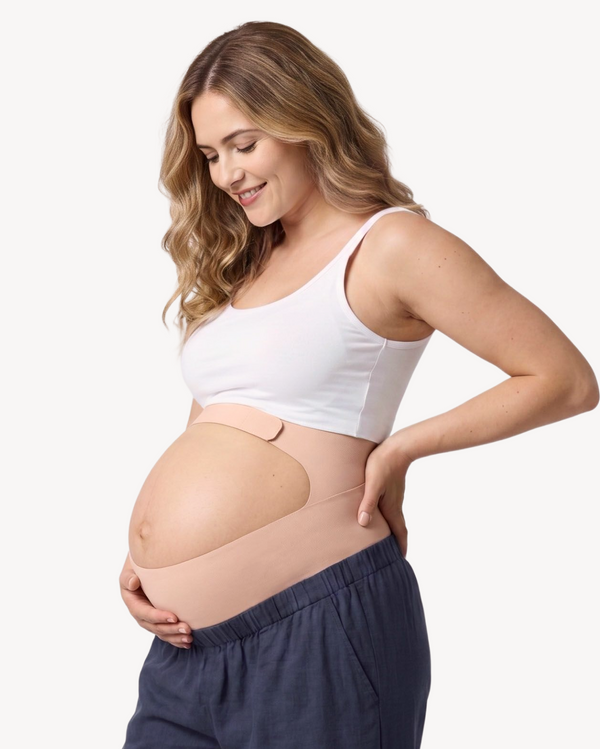
 Member price
$119.89Kodem Zaoszczędź 20%
Member price
$119.89Kodem Zaoszczędź 20%
When Does a Baby Bump Pop?

Everyone has different body types and muscle tones, so there is no set week when the bump will "pop." For many first-time moms, a bump begins to show in the middle of the second trimester, around weeks 16 to 20, and it can take longer if you have a curvier frame. Moms who have been pregnant before may show earlier, sometimes in the first trimester, since their abdominal muscles are more relaxed. If your bump seems to have appeared out of nowhere, it's likely because the uterus has risen above the pelvic bone, usually around weeks 13 to 14, and is now visible for the first time, rather than growing at a sudden pace.
What Factors Determine Your Pregnant Belly's Size and Shape?
There are a few factors that can affect the growth of your bump and its placement. The overall outline is established by body shape and bone structure, and the muscle tone of the abdomen is responsible for the difference in how far the belly sticks out or in from the body. This is also related to whether it's a first pregnancy or not; muscles that have been stretched before tend to show the belly sooner, and it's lower. Other factors are height, pre-pregnancy weight, and the position and size of the baby at any point in time. Multiple pregnancies usually result in an earlier and bigger bump. There is no one-size-fits-all when it comes to a belly that's pregnant, so it's hard to get much info from comparing yours to someone else's.
FAQs
Is My Lower Belly Fat or Am I Pregnant?
It can be difficult to distinguish early pregnancy bloating from extra lower belly fat because they can appear nearly identical in the first few weeks. A missed period, fatigue, and breast tenderness alongside the bloating are better indicators than the belly's appearance alone. The best way to be certain is to take a home pregnancy test or see your OB-GYN.
What Week Does a Pregnant Belly Harden?
At around 16 to 20 weeks, many women will start to feel their bellies firm up, as the uterus expands beyond the pelvis and the room for the intestines to move around decreases. Some individuals pick a week earlier than others.
Is a Pregnancy Bump Hard or Soft?
It's typically a combination of both. The skin and tissue around the top will be softer, and the top will be firmer, especially towards the end of the pregnancy. If the bump suddenly becomes very firm and painful, especially if there is bleeding, you should seek your health care provider's advice right away.
How Does a 3 Month Pregnant Belly Look?
Most bumps are not noticeable or even apparent at three months, although clothes may begin to fit more tightly. This is probably the baby's size, but there is a chance that it is bloating.
What Weeks Does a Pregnant Belly Grow Most?
Most growth happens within the second trimester, between 13 and 27 weeks, as the uterus emerges above the pelvis and its shape becomes more rounded every week.
Which Part of Your Belly Grows First When Pregnant?
The first signs of growth are usually in the lower abdomen, as the uterus is located there and ascends into the abdominal cavity during the second trimester.
Will My Bump Shape Change During Pregnancy?
Yes, the shape can change over the weeks as the uterus rises and expands upward and outward, and the baby settles into position. It's not unusual if your bump looks different at 20 weeks than at 35.
Does Carrying Low Mean It's a Girl?
No, it is a widely believed and unsupported myth. Carrying low is generally related to muscle tone, the baby's position, or a later stage of pregnancy rather than the baby's sex. The most accurate method for determining gender is with an ultrasound.
Conclusion
Every pregnant tummy has its story to tell, which varies based on muscle tone, body type and previous pregnancies. The different types of pregnancy belly shapes that many women experience during pregnancy are just as unique as the women themselves, and are not necessarily an indicator of the health or sex of your baby. As your bump expands and the additional weight begins to increase, additional support can make life more comfortable as you near the end of your pregnancy.








