


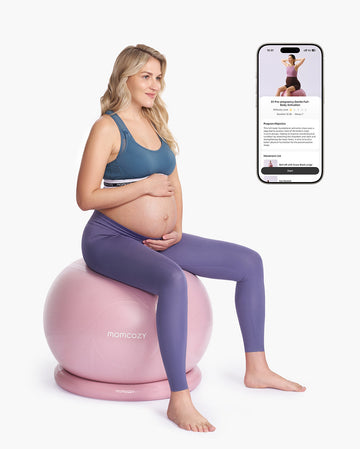
Can bouncing on a ball induce labor? Not reliably. Although gentle, clinician-approved movement on a birth ball may help some full-term parents feel comfortable and mobile, it has not been shown to start labor or dilate the cervix. labor begins through a complex biological process, so safety and personal comfort should come first.
Do Exercises Really Help Induce labor?
Movement does not reliably trigger labor, and it should never be used as a substitute for medical guidance or an agreed plan for induction. Walking, changing positions, using stairs, or sitting on a ball may feel good for some people because they support everyday mobility and encourage varied, upright positions. But feeling more mobile is different from causing labor to start. Th e NHS guidance on exercise in pregnancy notes that pregnancy activity should feel comfortable and be adapted to your individual circumstances.
At full term, gentle activity can be a way to manage restlessness and maintain a sense of routine. The most useful question is not “Which exercise will make labor happen?” but “Which movement feels safe, comfortable, and sustainable for me today?” Keep the intensity low enough that you can talk comfortably, take breaks, drink water, and stop whenever your body asks you to.
When Is It Safe to Do Exercises to Induce labor?
Only consider gentle, clinician-approved movement when your maternity team has said exercise is appropriate for you. The Momcozy course material itself is clear that its practice is not medical advice and that you should stop if you feel unwell. For a straightforward pregnancy, the safest approach is usually to choose familiar, low-impact movement; avoid testing a new exercise for the first time at the end of pregnancy.
Check in first if you have been advised to restrict activity, have a high-risk pregnancy, experience vaginal bleeding, have placenta-related concerns, have ruptured membranes, are having symptoms of preterm labor, or simply feel unsure. Stop and seek advice promptly for chest pain, faintness, severe headache, calf pain or swelling, fluid loss, painful contractions, or reduced fetal movement. Your care team knows your pregnancy history and can give guidance that a general article cannot.
The Best Exercises to Induce labor Naturally
There are no “best” exercises that naturally induce labor. The ten movements below are instead gentle, course-derived options for comfort, mobility, and body awareness in late pregnancy. Use only the movements you have been cleared to do, work in a pain-free range, and keep a stable chair, wall, or support nearby where relevant.
10 Helpful Movements for labor and Birth
Ball-Supported Forward Fold
Kneel with the knees about hip-width apart, wrap your arms around the ball, and let the upper chest rest softly on it. With natural breathing, let the hips guide small, slow circles of the ball in each direction. This is a supported position from the course, not a labor-induction technique; a towel under the knees can make it more comfortable.

Side-to-Side Pelvic Tilts
Sit in the center of a stable ball with both feet firmly on the floor. Exhale as one sitting bone gently lowers and the pelvis shifts a little to that side; inhale back to center, then repeat on the other side. Keep the motion small and controlled rather than chasing a large range.

Seated-on-Ball Thoracic Flexion & Extension
Sit tall on the ball with your feet hip-width apart and your pelvis centered. Inhale to open the arms and chest gently; exhale to softly round through the upper back and draw the arms in. Let the neck stay long and the shoulders relaxed. If balance feels uncertain, choose a chair-supported alternative instead.

Seated Spinal Rotation
Sit evenly on the ball with the feet planted slightly wider than hip distance. Inhale to lift the arms, then exhale into a small, comfortable rotation while one hand remains on the ball for support. The movement should come from a gentle upper-body turn, never from forcing the belly or holding your breath.

Pelvic Tilt
Remain seated in the middle of the ball with both feet grounded. Inhale into a small forward tilt that opens the chest; exhale to draw the pelvis back and lightly tuck the tailbone, allowing the lower back to lengthen. Move slowly enough that you feel steady on the ball throughout.

Cat Stretch
Come to an all-fours position with the shoulders over the wrists. Inhale to lengthen the front of the body, then exhale to round the spine gradually. Keep the movement gentle and use padding under the knees if needed. This can be a calming way to change position after sitting.

Cat Tail Wag
From an all-fours position, exhale as the right hip moves softly toward the right shoulder and the gaze follows; inhale back to center, then alternate sides. Keep the range small and comfortable through the torso. This is not a deep twist and should not create pulling, pain, or breathlessness.

Seated-on-Ball Rocking
Sit on the center of the ball with the hands cradling the head. On the exhale, gently engage the lower abdomen and pelvic floor while allowing the upper back to round and the ball to roll slightly forward; inhale back along the same easy path. Prioritize control over range, and skip it if sitting on a ball does not feel secure.

Dynamic Squat
Stand in front of the ball with the feet a little wider than shoulder-width. Inhale to prepare; exhale as the hips move back to lightly touch the ball, then stand back up without locking the knees. Use a wall-supported ball and hold a nearby stable support if necessary. A shallow squat that feels easy is more appropriate than a deep one that changes your balance.

Seated-on-Ball Bouncing (after full term)
The course labels this movement after full term . Sit upright with the hands resting lightly on the knees, use small controlled up-and-down bounces, and coordinate them with an easy breath. Do it only after your maternity team has confirmed it is suitable for you; it may be a comfortable position change, but it does not guarantee cervical change or labor.

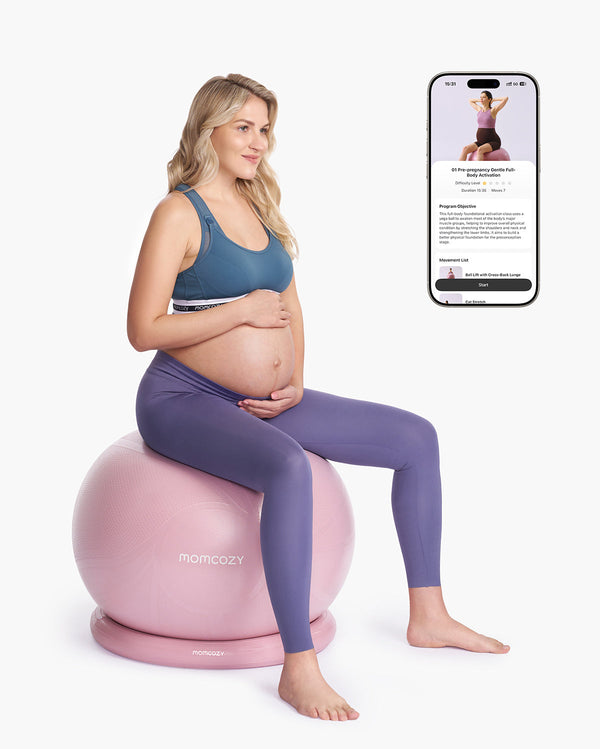
For ball-based movement, a stable setup matters. The Momcozy BirthEase Pregnancy Ball Set can be considered as part of a supported, clinician-approved movement routine. Choose a space with clear floor area, wear non-slip footwear or go barefoot if that is safer for you, and keep the movements small until you know how your balance feels that day.
Member price
From$49.99Kodem Zaoszczędź 20%
Does Bouncing on a Ball Help Dilate the Cervix?
No. There is no reliable evidence that bouncing on a ball dilates the cervix. Cervical change is part of labor physiology and cannot be measured or guaranteed by how long you bounce. If you enjoy sitting or making small movements on a ball and your care team has approved it, think of it as a comfort and mobility option rather than a method to make dilation happen.
How Long Should You Bounce on a Birthing Ball?
There is no evidence-based time target for bouncing to start labor. Begin with a short, comfortable interval and reassess how you feel. Stop immediately if you feel unsteady, dizzy, sore, short of breath, or notice symptoms that concern you. Your midwife or obstetrician can give you an individual recommendation based on your gestation and health.
Exercises to Avoid in Late Pregnancy
Avoid movements that create pain, breath-holding, instability, overheating, or a risk of falling. Late pregnancy is not the time to force deep stretches, fast bouncing, maximal strength work, unsupported balance challenges, or any pose that feels awkward because your center of gravity has changed. Modify or stop any position that is uncomfortable, and follow individual advice about lying flat or exercise restrictions.
Who Shouldn’t Try Exercises to Naturally Induce labor?
Anyone who has been told to avoid exercise, has a pregnancy complication, or has new concerning symptoms should not use movement as a self-directed attempt to start labor. This includes people with bleeding, suspected membrane rupture, signs of preterm labor, significant pain, or concerns about fetal movement. Call your maternity care team for guidance rather than trying a routine found online.
Other Natural Ways to Induce labour
There is no proven at-home method that can safely and predictably start labour. Rest, hydration, food, gentle activity when cleared, and emotional support may help you cope with the waiting period, but they are not induction methods. If pregnancy continues beyond the timeframe your team recommends, discuss evidence-based options and your preferences with them.
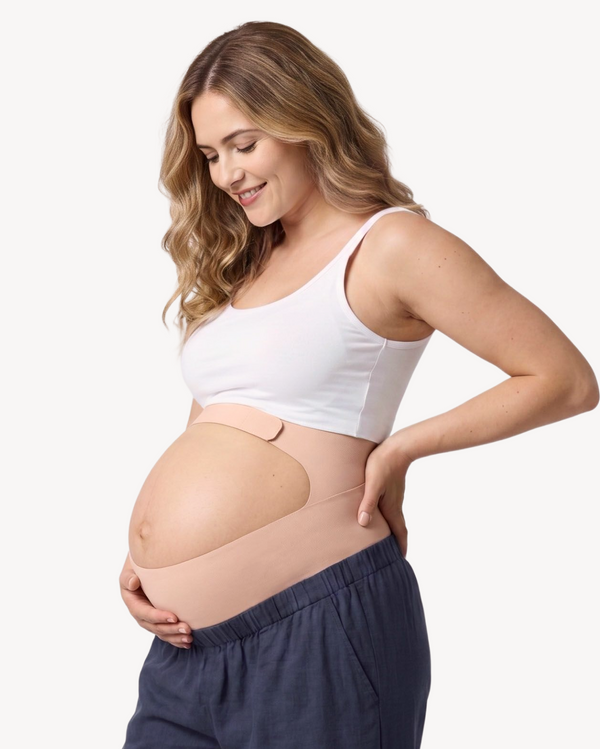
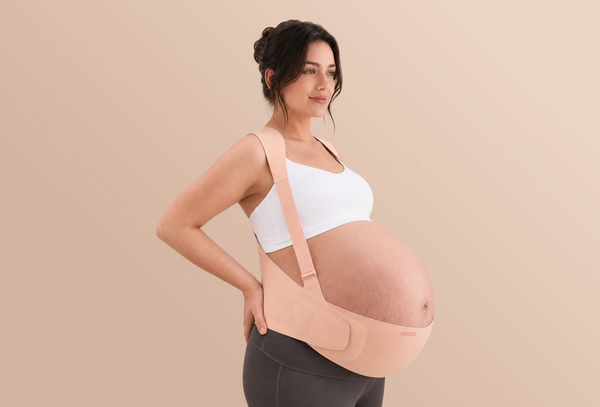
For everyday bump support, explore Momcozy pregnancy belly bands. The BumpEase - Momcozy Ergonest Maternity Belly Band is designed for most expecting moms seeking lightweight support. The Momcozy Go As You Grow™ Maternity Belly Band is the option to consider when a twin pregnancy belly, pregnancy belly with triplets, or a larger, heavier bump calls for that specific support context. Neither product is a treatment or a substitute for advice from your maternity team.
Member price
$69.99Kodem Zaoszczędź 15%
When Should You Talk to Your Doctor or Midwife First?
Talk to your doctor or midwife before trying any new late-pregnancy movement, and contact your maternity unit urgently for bleeding, suspected waters breaking, severe or persistent pain, feeling faint, severe headache, or reduced fetal movement. It is also worth asking for personalized guidance if you are overdue, have a planned induction or cesarean birth, or have any question about whether an exercise is right for you.
Frequently Asked Questions
What Is the Fastest Way to Go into labour?
There is no safe, reliable at-home shortcut. If you have questions about timing or induction, your midwife or obstetrician is the right person to ask.
Does Bouncing on a Ball Help Dilate the Cervix?
It may feel comfortable for some people, but it has not been shown to reliably dilate the cervix or start labour.
Can Walking Induce Labor?
Walking can be gentle everyday movement when cleared by your care team, but it cannot promise to induce labor.
Do Squats Help Induce Labor?
Comfortable, supported squats may be part of a movement routine for some people, but they are not a proven way to start labor.
How Long Should I Exercise to Induce Labor?
Do not exercise to chase labor. Follow your clinician’s guidance, keep movement comfortable, and stop if you feel unwell.
Can You Do Exercises to Induce Labor Before 39 Weeks?
Do not use exercise to try to start labor before 39 weeks. Speak with your maternity team about activity that is appropriate for your individual pregnancy.
Prioritising Comfort and Safety at Full Term
Can bouncing on a ball induce labor? It is not a proven way to begin labor or dilate the cervix. If your maternity team has cleared you for activity, a ball can instead be one gentle tool for changing position, practicing comfortable movement, and taking a moment to connect with your body at full term. Keep expectations realistic, choose support over strain, and let your care team guide the decisions that matter most.








