


MEDICALLY REVIEWED BY

Mary Bicknell, MSN, BSN, RNC, ANLC
Mary Bicknell comes with over 30 years of experience as an RN in the NICU. Educating mothers on the importance of healthy breastfeeding is important to her. It can be challenging to maintain successful breastfeeding through many difficult situations and long hospitalizations. Mary is committed to helping families define what successful breastfeeding means to them; and to assist them to obtain their goal. After leaving the bedside, Mary became a nurse leader and continued to make sure that breastfeeding education and support was always available to the families in her unit.
Usually, yes. High chairs with exposed screws, seams, and other little catch points tend to hold onto more crumbs and sticky residue than smoother, more seamless designs.
If you have ever wiped the tray clean and then noticed dried oatmeal packed around the straps or under a little hardware edge, you already know how fast a high chair can go from messy to grimy. In real-world parent feedback, the chairs people described as easiest to live with were usually the ones with fewer cracks, fewer soft parts, and simpler surfaces to wipe in one pass. Here’s how to tell what matters most, what tends to trap the mess, and how to keep any high chair easier to manage.
The Short Answer
Why exposed hardware tends to hold more residue
Official high chair cleaning guidance specifically calls out cracks, crevices, straps, and release buttons because those spots collect food and grime faster than open, smooth surfaces. Exposed screws fit the same pattern when they sit inside a recessed area or next to a seam, because puree, yogurt, breast milk, and crumbs dry into those edges instead of completely wiping away.

That said, the screw itself is not always the whole problem. In one parent discussion about filthy high chairs, the biggest complaints were trapped food on straps, cushions, and the chair body itself, and several parents said hard plastic or vinyl surfaces were easier to clean than fabric-heavy setups.
Why seamless is not automatically perfect
A seamless design usually gives you fewer places to scrub, but “seamless” does not mean zero maintenance. If the chair still has fixed straps, tray grooves, or a padded insert with stitched edges, you can still end up digging out dried avocado with a cloth and a fingernail after lunch.
The real advantage is that a smoother chair usually lets you see the mess right away and wipe it before it hardens. That is why simple, molded surfaces tend to feel easier for everyday baby feeding, especially during the sloppy months when every meal seems to involve banana, sweet potato, and splashes of milk.
Where the Mess Really Hides
Straps and buckles
High-chair straps get dirty quickly, and a chair can look mostly clean while the buckles and webbing are still holding crusted food and dried liquid underneath. For a lot of parents, this is the part that feels most frustrating because it touches your baby’s clothes and skin and never seems fully clean.
Reports on high chair straps and hidden residue show the same issue: food particles settle into textured material and tight crevices, then staining and sticky buildup follow if they are not scrubbed out. That is why a chair with easy-to-remove straps often feels much easier to own than one with fixed straps threaded through narrow slots.

Tray edges, buttons, and little recesses
Regular high chair cleaning routines also recommend brushing crumbs out of hard-to-reach areas with a nylon brush or toothbrush. In real life, that usually means the underside of the tray lip, tray-slide tracks, release buttons, joints where the seat meets the frame, and screw heads that sit below the surface instead of flush with it.
Parents looking for cleanup hacks kept coming back to the same theme: remove padded inserts when you can, simplify the setup, and stick with wipeable surfaces. A visible screw on an open frame is often less annoying than a soft seat pad with stitched edges that stays damp and catches every splash.
What Matters Most When You’re Choosing a Chair
Fewer parts usually means faster cleanup
Quick-clean advice starts with the design itself for a reason. The features that help most are smooth molded surfaces, a tray that comes off easily, minimal seams, and fewer little attachment points where food can get stuck.
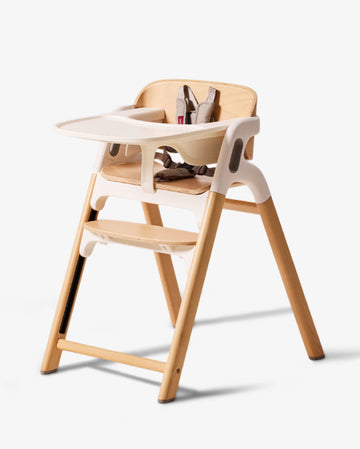
In another parent thread on constant high-chair cleanup, several people said simple plastic chairs and removable tray covers cut down on scrubbing because there was less texture and less fabric to trap a mess. A chair like the Momcozy high chair and soft cushion fits that cleanup-friendly pattern with an easy-wipe seat and a removable dishwasher-safe tray.

If you already know you hate post-meal cleanup, this matters more than extras that look nice in photos but add one more area to wash.
Removable straps and pads help more than most parents expect
Strap-cleaning advice from parents is pretty practical: if the straps can come off, soak, and be scrubbed separately, cleanup is much easier than trying to clean them while they are still attached. The same goes for cushions and covers, especially once your baby is sturdy enough not to need every optional insert.
A chair can have one or two visible screws and still be manageable if those screws are easy to reach and the rest of the seat is simple. A chair with hidden seams, fixed padding, and narrow strap slots can be much more annoying even if it looks sleeker at first glance.
How to Keep Either Design Cleaner Day to Day
After every meal
Quick wipe-downs after each meal make the biggest difference. A damp cloth and a little mild detergent are usually enough for the daily mess, especially if you hit the cracks, straps, and buttons before the food dries hard.
That simple habit saves you from the awful moment when yesterday’s applesauce turns into today’s sticky film. It also makes the chair smell better and keeps you from needing a full scrub after every messy baby-led weaning meal.
Weekly and monthly cleanup
Weekly and monthly cleaning schedules help catch what quick wiping misses. A practical rhythm is to sanitize the tray often, clean the whole chair weekly, and once a month remove the parts the manual allows, wash the straps and cushions, and scrub the tiny corners with a soft brush.

Drying the chair completely matters more than people think. Towel-dry the frame and tray, then let straps or cushions air dry before you put everything back together so moisture and old crumbs do not settle back into the seams.
When Exposed Screws Are Fine and When They Become a Problem
Usually manageable
Exposed screws are usually manageable when they are few, easy to reach, and set into a chair with hard, open surfaces. In a forum thread about relentless high-chair mess, parents often sounded happiest with stripped-down designs because they could wipe or rinse the whole chair without working around bulky pads and layers.
Usually a headache
They become a headache when the screw sits inside a ring of dried food, next to stitched fabric, or right beside a tray track that never fully dries. Reports on high chair straps and hidden residue show how much harder sticky buildup is to remove once it settles into textured material or narrow crevices.
If you keep needing a toothbrush, nail brush, or repeated soaking just to get through one area, the design is probably working against you. In one strap-cleaning discussion, caregivers ended up scrubbing with liquid hand soap and a brush, and sometimes removing straps when possible, which is not the kind of routine most parents want after every lunch.
Practical Next Steps
If you are choosing between two high chairs, run your fingers along the tray edge, around the seat insert, through the strap slots, and over any visible hardware. The chair that feels simpler to trace with a cloth is usually the one that will stay cleaner with less effort.
In cleanup threads from parents dealing with filthy chairs, simplifying the setup came up again and again. If your current chair has exposed screws, you may not need to replace it, but you will probably make life easier by removing optional pads, covering straps during extra-messy meals, and sticking to a regular deep-clean schedule.
- Check whether food moves past the screw head easily or collects around it.
- Remove optional padded inserts if your baby no longer needs them.
- Clean straps and buckles separately before residue hardens.
- Keep a soft toothbrush nearby for tray tracks, buttons, and tight corners.
- Dry the chair fully before the next meal.
The bottom line is simple: exposed screws can collect more grime, but they are usually only part of the story. The easiest high chairs to live with are the ones with fewer seams, fewer soft parts, removable pieces, and surfaces you can wipe clean in one quick pass.








