


MEDICALLY REVIEWED BY

Zola Zhang, MD, IBCLC, Breast Surgeon, Mother
Breast Surgeon | International Board Certified Lactation Consultant | Mother
As a dedicated Breast Surgeon and International Board Certified Lactation Consultant (IBCLC) with 21 years of clinical experience, my work is rooted in both medical expertise and the lived reality of motherhood—because I’m not just a clinician, but also a mother who exclusively breastfed my own child for two years. This dual perspective shapes every interaction, allowing me to blend scientific rigor with deep empathy for the joys and challenges of breastfeeding.
Do not choose a diaper pail by star rating, a “sealed” label, or a few odor-free first days. Choose it by looking for repeated, time-stamped ownership evidence about odor while the pail is shut, odor when it opens and empties, cleanup, bag requirements, and ongoing costs—then match those findings to your household’s trash routine and odor tolerance.
A dedicated pail can be genuinely useful, but it is not automatically necessary. The best setup is the one you can empty, clean, and afford without creating another frustrating nursery chore.
Start with Your Household, Not the Product Page
A newborn commonly goes through about 8–12 diapers a day, while typical use declines to roughly 6–8 a day by 9–12 months. Those are planning ranges, not a prediction for one baby: diaper changes vary with age, feeding patterns, urination, and bowel movements.
That volume gives you a practical question: Do you need to store diapers indoors for more than a day, or can you remove diaper trash frequently?
A Dedicated Pail May Fit Better If… |
A Covered Regular Bin May Fit Better If… |
You are highly sensitive to indoor odor. |
You already take trash out frequently. |
The nursery is far from the outdoor bin or main trash. |
You prefer ordinary trash bags and minimal parts. |
You often need one-handed disposal while holding a baby. |
You have limited nursery space or dislike cleaning specialized containers. |
You are comfortable maintaining seals, bags, and possibly deodorizers. |
You would rather use a simple covered bin and a defined trash-removal routine. |
A pail does not eliminate the need to empty trash. It changes where diapers wait between trash trips—and may add a bag system, a mechanism, and a cleaning task to manage.
Read Reviews as Ownership Evidence, Not a Scorecard
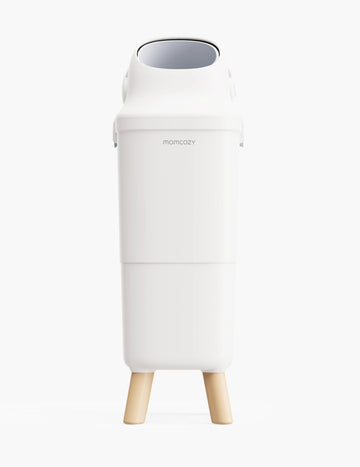
A high average rating is a starting point, not proof of first-year reliability. For example, a product page may show enthusiastic ratings while still offering only a small pool of reviews, little information about how long people have used the pail, and no useful breakdown of failures over time. The Momcozy Triple-Seal Diaper Pail listing displays a 4.8-out-of-5 rating from 21 reviews; that is useful feedback, but it cannot establish a representative long-term durability record.
The same caution applies to product language. “Triple-seal,” “odor-locking,” and similar terms describe a manufacturer’s intended design. They do not, by themselves, prove how the pail will perform after months of use or during a full-bag change.
Give More Weight to Reviews That Explain Conditions
The most useful reviews answer questions such as:
- How long was the pail used? A report after several months is more informative than “no smell so far” after a few days.
- What diaper stage was involved? Newborn diapers, larger diapers, and the period after solids begin can create different capacity and odor challenges.
- How often was it emptied? “No odor” means little without an emptying schedule.
- What bags or refills were used? A liner installed incorrectly or a substitute bag that fits poorly can change the experience.
- Where did odor show up? While the pail was closed, when it opened, or when the bag was removed?
- What failed or required cleaning? Look for detail about hinges, pedals, seals, leaks, stuck bags, and odor left in the container.
A useful negative review identifies a repeatable failure point: for example, a pedal becoming unreliable after months or odor escaping at bag removal. A vague one-star complaint about shipping damage, an unclear setup issue, or a one-time bad bag may still matter, but it should not be treated as evidence of a category-wide defect.
Also check whether an editorial ranking discloses affiliate commissions or free product samples. Disclosure does not make a review invalid. It simply gives you context and makes transparent methods, specific testing conditions, and corroborating owner reports more important.
Separate the Three Odor Moments
“Odor control” is not one experience. A pail can do well in one moment and disappoint in another.
1. Odor While the Pail is Closed
This is the background smell that affects a nursery or changing area between diaper changes. Reviews become more useful when they state how long diapers sat in the pail and how many were inside.
One comparison, for instance, described a seven-day, 30-diaper, no-emptying test. That is more informative than a bare “odor-free” claim because it includes a timeframe and load. Still, the comparison did not explain diaper contents, room temperature, ventilation, replication, or an independent test protocol. Treat details like these as a better starting point for questions—not a universal ranking. 
2. Odor When the Pail is Opened
This is the quick burst of odor that can matter most during frequent newborn changes. Look for owners who explain whether the opening exposes the stored bag, whether they need two hands, and whether the mechanism still works smoothly after regular use.
A foot pedal can be valuable when a caregiver is holding a baby and a dirty diaper. But convenience and reliability are separate questions. Reports of hinge trouble from a small number of users do not establish a failure rate, yet they are a reason to inspect recurring comments about the pedal, lid, flap, or closing mechanism.
3. Odor During Full-Bag Removal
This is often the most revealing moment—and the one short reviews skip. Ask:
- Does the bag remain closed or clamped while it is lifted out?
- Is there a step that exposes the contents before the bag can be tied?
- Does the user report odor escaping only at bag-change time?
- Is the bag likely to snag, tear, or require awkward handling when full?
A pail can seem excellent during daily use but still make bag changes unpleasant. Give extra weight to reviews that address both.
Treat Capacity as Emptying Frequency
An advertised diaper count is not a calendar. How long a pail lasts depends on diaper size, how tightly diapers pack, usable bag volume, and how many diapers your baby uses that week.
Rather than asking, “How many diapers does it hold?” ask, “How often am I comfortable emptying it at my baby’s current stage?”
Use this comparison before buying:
What to Check |
Why It Matters |
Current diaper use per day |
The newborn months generally bring the highest change volume. |
Your preferred emptying threshold |
Some families empty before a pail is full to limit odor; others prioritize fewer trash trips. |
Bag type and availability |
Proprietary cartridges may add convenience but require continued purchases. |
Actual bag fit |
“Standard bag compatible” is model-specific, and not every bag fits equally well. |
Room for a full bag to come out |
A pail can fit beside a changing station but still be awkward to empty in a tight corner. |
For example, the Momcozy Triple-Seal listing states compatibility with standard 13-gallon trash bags rather than requiring special refill bags. That can reduce refill dependence, but confirm the current specifications and test bag fit with the bags you plan to buy. A standard-bag claim for one pail is not evidence that every diaper pail works with ordinary kitchen bags.
Count the Ongoing Work, Not Just the Purchase Price
The upfront price is only one part of ownership. Compare each candidate using the same categories:
Ownership Question |
What to Look For in Reviews and Listings |
Bag cost |
Price of the current refill or the standard bags you would actually use |
Refill dependence |
Whether the pail requires a proprietary cartridge or accepts an ordinary bag |
Deodorizer cost |
Whether it uses a disk, pack, or other replacement item—and what happens when it is depleted |
Cleaning access |
Whether you can reach the interior after a leak, bag tear, or lingering odor |
Odor absorption |
Reports that the body or interior retains odor after months of use |
Mechanism upkeep |
Repeated comments about pedals, hinges, latches, seals, or lid alignment |
Deodorizer-based systems deserve special attention. In one hands-on review of a model using a baking-soda disk, odor control weakened after the deodorizer ran out, creating a recurring replacement need. That does not mean every deodorizer system performs the same way. It does mean “includes deodorizer” should prompt a follow-up question: How often will I replace it, and am I willing to keep doing that? 
Likewise, one longer-term review found odor absorption in a plastic pail after several months. That observation cannot predict the performance of all plastic pails. It is, however, a useful reminder to read about cleanup after real use—not just odor containment on day one.
Reassess as Your Baby’s Routine Changes
The first-year setup does not have to be permanent. Your newborn’s diaper volume, diaper size, household schedule, and tolerance for odor may all change over time. When solids begin, it is reasonable to reassess whether your current emptying schedule, bag system, and cleaning routine still work for your home.
Do not assume that breastfed, formula-fed, or solid-food diapers will smell the same in every home. Instead, watch your own routine: how quickly odor becomes noticeable, whether bags are filling too fast, and whether cleaning is becoming more frequent than expected.
Choose Your Path
- Choose a dedicated sealed system if indoor odor control, fewer nursery-trash trips, and easier one-handed disposal are worth the commitment to emptying, cleaning, and possibly buying proprietary consumables.
- Choose a standard-bag-compatible diaper pail if you want a dedicated diaper container but prefer easier bag sourcing and potentially lower ongoing consumable dependence.
- Choose a covered regular bin with a firm trash routine if simplicity, lower accessory costs, and frequent disposal fit your household better.
- Pause before buying if your real routine is still unclear. Start with a covered bin, track how often you take out diaper trash, and decide after you know what your space and odor tolerance require.
- Verify today’s details before checkout: bag compatibility, included parts, refill or deodorizer needs, dimensions, care instructions, return terms, and recent long-term reviews.









