


MEDICALLY REVIEWED BY

Talia, OBGYN, master’s degree holder, IBCLC
A board-certified OBGYN, master’s degree holder, and IBCLC. As a mom who exclusively breastfed for 2 years, I bring both clinical expertise and real parenting empathy to my work.
I’ve supported 20,000+ postpartum parents with evidence-based breastfeeding guidance—from latching & positioning to lactation medication safety. 90% of my clients build sustainable feeding routines, and I’ve partnered with 2,000+ families to boost breastfeeding rates and satisfaction.
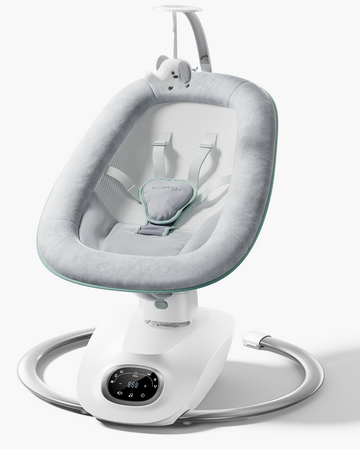
Yes, a baby swing can become less stable on thick carpet, soft rugs, sloped floors, or uneven surfaces. The safest place for a baby swing is a flat, hard floor where the frame sits level, the feet make full contact, and the swing does not wobble before your baby is placed inside.
You set the swing down in the living room, step back, and notice one side sinks into the rug just a little more than the other. That tiny wobble matters, especially when the swing starts moving and your baby shifts their weight. Here’s how to tell whether your floor setup is safe, what warning signs to watch for, and how to make everyday swing time steadier and calmer.
Why Carpet and Uneven Floors Can Make a Baby Swing Less Stable
A baby swing is designed to sit still while the seat moves, which means the base has to stay planted. When the floor underneath is soft, bumpy, or angled, the frame may not rest evenly on all contact points. That can make the swing rock, twist, or lean in ways it was not meant to.
Thick carpet is the most common trouble spot I see in real homes. A plush rug may feel cozy under your feet, but it can let one side of the swing sink lower than the other. If the swing has small anti-slip feet, those feet may press into the carpet instead of gripping the floor.
Uneven floors can be just as sneaky. A room may look flat until you place the swing near a doorway threshold, over a floor vent, beside a rug edge, or on older hardwood that slopes slightly. Baby swing setup guidance recommends placing the swing on a flat, hard floor, because thick or uneven carpet can reduce stability.
The Simple Wobble Test
Before putting your baby in the swing, place the empty swing exactly where you plan to use it. Press gently on each side of the frame, then push lightly from the front and back. A stable swing should feel solid, with no rocking, twisting, or shifting.
Then turn the swing on at the lowest speed while it is still empty. Watch the base for a full minute. If the feet move, the frame creeps across the floor, or one side lifts even slightly, that spot is not stable enough.
This test takes less than 2 minutes, and it is one of the most practical habits you can build into your baby gear routine. I like doing it again after moving the swing from one room to another, because a safe spot in the nursery does not always mean a safe spot in the living room.
The Safest Place to Put a Baby Swing at Home
The best spot is a flat, firm section of floor with room around the swing. Hardwood, tile, laminate, or low-pile carpet can work when the frame sits level and does not shift. What matters most is that the base touches the floor evenly and stays steady during motion.
Never place a baby swing on a table, bed, couch, counter, ottoman, or changing station. Elevated and soft surfaces create a much higher risk because the swing can move, tilt, or fall from a height. Even if you are standing nearby, babies can shift suddenly, and a powered swing adds motion to the setup.
A safety agency created a mandatory safety standard for infant swings under 16 CFR Part 1223, and stability-related requirements are part of reducing injury risks from product failures or unsafe use. That does not mean every surface in your home is equally safe. It means the swing should be used the way the manufacturer intended, on a stable surface with the frame properly assembled.
Good Places to Try First
A clear area of hard flooring is usually the easiest starting point. If your baby spends time near you while you fold laundry, pump, prep bottles, or sit for a snack, choose a spot where you can see the swing without placing it in a walking path.
If your home is mostly carpeted, look for the firmest, lowest-pile area. Avoid placing the swing half on a rug and half off, because that creates an uneven base. Also avoid rug corners, rug pads, thick play mats, foam tiles, and floor transitions between rooms.
Leave enough clearance around the swing so the seat can move freely. Keep it away from curtains, cords, blankets, diaper bags, laundry baskets, toddler toys, and furniture legs. A baby swing does not need a huge amount of space, but it does need a clean, steady zone.
Warning Signs Your Baby Swing Is Not Stable Enough
You do not have to be an engineer to spot an unsafe setup. Most instability shows up in small, visible ways before anything dramatic happens. The key is to check before your baby is buckled in, not after the swing is already running.
Watch for these warning signs:
- The frame rocks when you press gently on one side.
- One foot does not touch the floor fully.
- The swing leans forward, backward, or to one side.
- The base sinks unevenly into carpet.
- The swing moves across the floor while running.
- The seat swings unevenly or looks off-center.
- You hear clicking, scraping, or shifting from the frame.
- The motion looks stronger on one side than the other.
- The swing feels different after being moved to a new room.
If you notice any of these, stop and move the swing. Do not try to “fix” a wobbly surface by putting a folded towel, book, mat, or blanket under one side. That can make the base even less predictable once the swing starts moving.
Check the Frame, Not Just the Floor
Sometimes the floor is fine, but the swing itself needs attention. Baby swing setup guidance recommends checking that all locks are engaged, bolts are not loose, and the assembled frame has no wobble. That quick inspection matters more as the swing gets moved, folded, stored, or used daily.
Look at the harness, seat fabric, frame joints, power cord or batteries, and motion mechanism. If the seat fabric is not attached correctly, or the frame is not fully locked open, the swing may feel unstable even on a perfect floor.
A monthly inspection is a helpful rhythm, but I would also check after travel, storage, a move, or a toddler “helping” with the baby gear. Real life happens, and baby products get bumped more than we think.
Baby Swing Features That Can Affect Tip-Over Risk
Not all baby swings feel the same on the floor. Some have wide, low bases that feel very planted. Others are lighter and easier to move from room to room, but they may be more sensitive to soft carpet or uneven flooring.
A wider base usually helps because it spreads the swing’s weight across a larger footprint. Anti-slip feet can also help on hard floors, as long as they sit flat. The key is not just whether the feature exists, but whether it makes full contact with the surface underneath.
Weight limits matter, too. Infant swings are generally intended for babies from birth until they can sit up unassisted, and the federal rule defines an infant swing as a stationary unit with a frame and powered mechanism that swings an infant in a seated position. Once a baby is bigger, stronger, or trying to sit up, lean, roll, or escape, the way their weight shifts can make swing use less safe.
Recline Angle and Speed Matter
For a newborn, a more reclined position is often used because they do not have strong head and trunk control yet. But every swing is different, so the safest recline is the one listed in your product manual for your baby’s age, weight, and stage.
When trying a swing for the first time, start with the lowest speed. A practical baby swing setup routine suggests beginning at the lowest speed, using a secure harness, and staying close during the first few minutes. That gives you time to see whether the swing moves smoothly and whether your baby’s position stays secure.
Higher speed is not always better. If your baby is fussing, a faster setting may make them more unsettled, and extra motion can exaggerate a slightly unstable setup. Slow and steady is usually the better first move.
How to Use a Baby Swing More Safely Day to Day
A baby swing is helpful for short breaks, not long stretches. It can give you a few hands-free minutes to drink water, answer a text, sit with your pump parts, or help an older child. But it still needs supervision, a secure harness, and the right setup every time.
Buckle the harness snugly so your baby cannot slump, slide, or lean out of position. A common fit check is that you can slide about two fingers between the strap and your baby’s chest. If the straps are loose enough for your baby to twist sideways, they are too loose.
Many parents use a swing in 10- to 20-minute stretches, and some baby swing guidance recommends keeping sessions under 30 minutes. That is a useful real-life limit because it reminds you to rotate your baby to floor time, holding, feeding, diaper changes, or a safe sleep space.
If Your Baby Falls Asleep in the Swing
It happens all the time: the swing finally calms your baby, their eyelids get heavy, and suddenly they are asleep. As tempting as it is to leave them there, a swing is not meant to replace a crib or bassinet.
If your baby falls asleep, move them to a firm, flat sleep surface as soon as you can. Baby swing safety guidance echoes the common safe-sleep practice of transferring a sleeping baby to a firm, flat crib or bassinet surface. Keep the swing as a soothing tool, not a sleep spot.
This is especially important for younger babies who cannot reposition themselves well. Their head and neck control is still developing, and a seated position can let them slump in a way you may not notice right away from across the room.
Carpet Setup Tips When You Have No Hard-Floor Option
If every useful room in your home is carpeted, you can still make a better choice within your space. Start by choosing the lowest-pile, firmest carpet area you have. A tightly woven area is better than a fluffy rug, shag carpet, or padded play mat.
Place the swing fully on one surface. Do not let two feet sit on carpet while the other two sit on hardwood, a rug edge, or a threshold. Mixed surfaces are one of the easiest ways to create a slight tilt.
Run the empty-swing test every time you move it. Turn it on at the lowest setting and watch the base. If it stays still, feels level, and does not sink unevenly, that spot is much better than one where the frame shifts as soon as motion begins.
What Not to Put Under the Swing
Avoid adding loose items under the base. Towels, blankets, folded quilts, books, cardboard, foam mats, and rug pads can slide or compress. They may look like a quick fix, but they add another unstable layer between the swing and the floor.
If you need a firmer setup, look for a different location rather than building one underneath the swing. The safest surface is stable on its own. Once you start stacking things to make the swing level, it becomes harder to predict how the frame will behave when your baby moves.
Also keep the swing away from high-traffic areas. A baby swing placed near a hallway, kitchen entrance, or laundry path is more likely to get bumped by an adult, sibling, pet, laundry basket, or diaper caddy.
Do Playground Swing Concerns Apply to Baby Swings?
Playground swings and baby swings are very different, but there is one shared lesson: motion plus a small child requires supervision. A powered infant swing should not be pushed by hand or used like playground equipment. It is made for controlled, seated soothing at home.
Experts discussing playground swing injuries note that pushing too high can still cause neck or head injury risk, especially because young children have less developed neck and shoulder muscles. Swings were identified as a common source of traumatic brain injuries in a review of more than 20,000 ER visits, though that discussion focuses on playground equipment, not infant swings.
For baby swings, the practical takeaway is simple: do not add extra motion. Use the built-in settings, start low, buckle the harness, and keep your baby within sight. If the swing looks too vigorous for your baby’s size or stage, slow it down or stop using it for that session.
Practical Next Steps
Set your baby swing on the flattest, firmest floor you have, then test it empty before each new location. If it wobbles, sinks into carpet, creeps across the floor, or leans to one side, move it somewhere steadier.
Use the harness every time, follow the weight and age limits in your manual, and stop using the swing once your baby can sit up unassisted or exceeds the listed limit. Start with the lowest speed, keep sessions short, and move your baby to a crib or bassinet if they fall asleep.
A baby swing can be a genuinely helpful piece of baby care gear when you are feeding, pumping, folding tiny laundry, or just trying to get a few calm minutes. The safest setup is not complicated: flat floor, solid frame, clear space, buckled baby, and your eyes nearby.








