Infant nasal irrigation isn’t always referring to the same thing. Some sources use the term for saline drops or spray placed in a baby’s nose. Others use it for a fuller rinse, in which fluid enters one nostril and drains out the other. These are distinct methods, and in infant care they shouldn’t be treated as interchangeable.
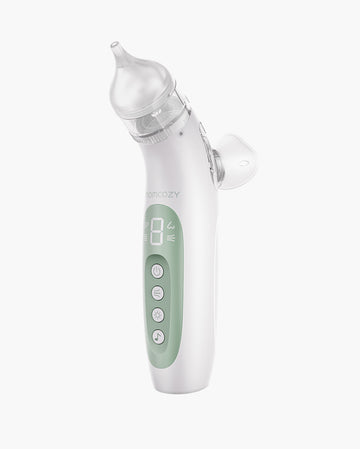
For younger babies, saline drops or a gentle mist followed by light suction are often better suited than flushing fluid through the nose, though the right choice depends on your baby’s age and needs. If you’re considering suction-based care, Momcozy baby nasal aspirators are one option to explore. They clear mucus by suction rather than by rinsing the nasal passages, which sets them apart from irrigation products.
Before trying any rinse or product, learn how it works, check that it’s appropriate for your baby’s age, and know when to check in with your pediatrician.

Key Takeaways
- Moisture is also delivered in the form of drops or mist. Drops or mist may help to loosen dry or sticky mucus, but do not always flush out of the nasal passage.
- Suction pulls mucus out. Softened mucus can be sucked out using a bulb syringe, manual aspirator, or electric aspirator.
- A full rinse pushes saline through the nasal passage until it comes out of the other nostril or the mouth.
- Whether the child should be rinsed fully will depend on their age, the position they can comfortably maintain, what’s being treated, and the clinician’s guidance.
- True irrigation requires particular care. Always use clean equipment and safe water, and follow the instructions for preparing infant formula carefully, using guidance designed for infants, not older children or adults.
Four Methods That Are Often Confused
- Saline drops: Add a little moisture to the nostrils and help loosen mucus.
- Saline mist or spray: Coats the inside of the nose with a light layer of moisture, though it may not rinse the passages.
- Full nasal irrigation or rinse: Saline travels through the nasal passageway and exits via the other nostril or the mouth.
- Nasal suction: Suction is used to withdraw mucus with a bulb, manual aspirator, or electric aspirator.
The way you do it makes a difference: the instructions for drops, mist, suction, and full irrigation should not be used universally.
What Does “Nasal Irrigation” Mean for a Baby?
Nasal irrigation generally means rinsing the inside of the nose with saline. More specifically, the solution flows through a nasal passage and comes out through the opposite nostril—or sometimes the mouth. Simply adding a few drops or using a saline mist does not count as irrigation.
However, not all health resources use the term in the same way, so when you look for information about using a saline rinse for babies, you may find information about saline drops or spray, even though the information is not recommending a full rinse.
That difference can make searches such as nasal lavage infant or infant nose flush confusing. Baby nasal irrigation or saline rinse infant searches can also result in variations in technique: one page might teach you how to perform simple saline care for your baby, while another instructs you on how to give a rinse that involves your baby having to cooperate and be positioned. Different instructions can be attributed to differences in the techniques themselves, and not to misinformation on any website.
|
Method |
What actually happens |
Typical tools |
Does fluid need to pass through? |
|
Saline drops |
Saline drops can moisten nasal passages and loosen mucus |
Saline drop bottle |
No |
|
Fine mist or spray |
Saline is sprayed into the nostril to moisten the nasal lining |
Saline mist or spray bottle |
No |
|
Full nasal rinse |
Saline moves through the nasal passage and drains out |
Irrigation device intended for the child’s age and needs |
Generally, yes |
|
Nasal suction |
Mucus is drawn out rather than rinsed through the passage |
Bulb, manual, or electric aspirator |
No |
Why Different Websites Use the Same Term Differently
The word rinse is also used, informally, to refer to a couple of types of nasal care. A parent who is trying to find a baby nose rinse or a nasal wash for baby may be looking for something to help with mild congestion or a small amount of dried mucus, while another may be looking for a full nasal irrigation.
So first, be clear on what the technique is. Tips intended for a toddler who can follow easy positioning instructions are not suitable for a newborn baby. The age of the child, the reason for the method, and how the method is performed must be taken into account.
Saline Drops, Mist, Rinse, and Suction: What's the Difference?
Not all methods work the same. The ideal option varies according to the child’s age, degree of cooperation, type of mucus, and the advice of the health professional or the product.
|
Method |
Best fit |
Not the same as |
|
Saline drop |
Adding moisture to dry or sticky mucus |
A full-volume rinse that moves saline through the nasal passage |
|
Fine saline mist |
Distributing moisture across the nostril to help soften mucus |
A through-flow flush |
|
Full nasal irrigation |
A rinse when the child is developmentally ready and teh approach is appropriate |
Routine drops, mist, or suction |
|
Nasal suction |
Removing loosened, accessible mucus with a suitable aspirator |
Irrigation or a saline rinse |
|
Bulb syringe |
Drawing mucus out through suction when used as directed |
A syringe used to force fluid into an infant’s nose |
|
Fine mist + suction |
Combining moisture to soften mucus with suction to remove it. Momcozy’s BreezyClear™ 2-in-1 nasal aspirator combines these functions; it is not a full nasal-irrigation device |
A rinse across both nostrils. It is currently listed on the product pages as being for ages 2-12, so don't market it as a newborn or young infant option |
If the mucus is dry or sticky, drops and spray can help, and suction can be applied to extract mucus once it is sufficiently loosened. A bulb syringe extracts mucus; it doesn’t push saline through your baby’s nose. Keep these two methods separate by learning how to use a bulb syringe for baby.
Full irrigation has a number of other considerations, such as positioning, cooperation, quality of the water, and cleanliness of the equipment. It is not automatically the next step when drops or suction do not seem sufficient.
When it comes to comparing bulb, manual, electric, and mist and suction devices, Momcozy’s guide to baby nasal aspirator types and safety breaks down how each option works. The best decision is based on your kid’s needs, and keep in mind that age and developmental readiness for using a full nasal rinse may be a factor.
At What Age Is Full Nasal Irrigation Appropriate?

There isn’t one age that makes full nasal irrigation suitable for every child. Readiness is based on a child's ability to sustain position and participate in the procedure, rather than their age.
Certain medical advice states that a lot of children can start full nasal irrigation by nine months of age, when they are able to sit up and lean over. This is meant to be a general guide for readiness, not an age cutoff. Prior to using an infant saline rinse that enters one nostril and exits out of the other, consult with your child’s pediatrician to confirm that it is safe for an infant.
Ability and Positioning Matter More Than the Search Term
A full flush requires more teamwork than just saline drops or light suction. An infant who lacks reliable head and trunk control may not be able to maintain the stance required for a high-flow rinse.
Remember to consider this before you rinse everything well out:
- Setup: Can your child sit up, lean forward, and maintain the needed posture?
- Cooperation: Can your child tolerate the technique without being forced into position?
- Personal considerations: Has your child’s pediatrician confirmed that this approach is suitable for their age and individual circumstances?
If you're not sure about any of these, don't try a full rinse on your own. For babies younger than 2 months old, you may want to use saline drops or a gentle spray and suction only when needed to help clear mucus.
Why Age Advice Looks Inconsistent Online
Some of the confusion comes from how different sources use the word irrigation. For example, Cleveland Clinic discusses around nine months as a practical readiness benchmark for many babies, while Quebec’s public-health guidance uses nasal irrigation more broadly for slowly rinsing the nostrils with saline in babies and young children. These sources may thus be referring to different methods using the same term.
Even if your baby isn't ready for a full nasal wash, you can still carefully help clear nasal mucus. So the next step is to look for alternatives that are made for babies that don't involve pumping liquid through your baby's nose.
What Can Younger Babies Use Instead of a Full Rinse?
If your baby can’t yet tolerate having both nostrils rinsed, use age-appropriate saline drops or a gentle spray instead. They help soften and loosen mucus, and you can use a nasal aspirator afterward to clear it if needed.
Moisture First
If the mucus is hardened and sticky, it may require some softening before it can be removed without irritation. Nasal saline drops can thin mucus without flushing a lot of liquid through the nose. A gentle mist is another option, though it doesn’t rinse the nasal passages completely.
Follow the instructions for each product exactly as indicated and be mindful of its age recommendations, particularly when dealing with newborns and young babies. A product designed for older children may not be safe or suitable for an infant. If dry, hardened mucus is the issue, see Momcozy’s guide for advice on hard or dry baby boogers.
Suction Only When Mucus Is Removable
When mucus is thin, clear, and in easy-to-reach areas, gentle suction might also assist in its removal. But a congested noise by itself doesn’t mean your child needs one. There’s sometimes not much mucus to clear, and several tries can irritate a delicate nasal lining.
Pick a nasal aspirator appropriate for your baby’s age and use it as directed. If it isn’t clearing much, stop instead of repeatedly trying. Momcozy’s guides walk you through how to suction a baby’s nose and when and how often to use a nasal aspirator.
Select the method appropriate to the circumstance. Add moisture if the mucus is dry. Use gentle suction if you need to clear it. A full rinse isn’t automatically the next step just because your baby still sounds stuffy.
Is a Saline Spray or Fine Mist the Same as Nasal Irrigation?
No. A saline spray or mist hydrates the nasal passages but might not provide the flushing action of a complete nasal rinse.
What makes the difference is the movement of the saline. Drops and fine mist provide a small amount of salt to help moisten the nasal passage and might help loosen sticky mucus. A full nasal rinse is the one that utilizes a higher amount of saline that flows through the nose and into the nose. Although the words spray, rinse, and irrigation are all used interchangeably on the web, these methods differ in purpose.
A fine mist can also be used prior to the gentle suction to assist in loosening the mucus. However, the addition of suction doesn't make the mist into an actual rinse. Both functions are maintained: the mist brings moisture, and suction removes available mucus.
When it comes to nasal care products, this is significant. The listing of saline or spraying does not necessarily indicate that the device rinses the nasal passage. For any product that does not have a specific description and label for full irrigation, the mist application should not be referred to as a nasal flush.
When choosing options, see how the product provides saline, what it is for, and the age groups for which instructions are provided. The second difference is where the nasal aspirator is used; they suck up the mucus, and some aspirators also provide a fine mist. No, full nasal irrigation should not be confused with either of these functions.
Where Does a Nasal Aspirator Fit?
A nasal aspirator removes mucus by suction; it doesn’t rinse the nose with saline. Aspirators can be powered, bulb-style, or operated by hand. If there is mucus visible or loose enough to clear out, then use suction; if it's dry and sticky, first add moisture and then suction.
Aspirators Remove Mucus Rather Than Rinse the Whole Nasal Passage
This will mostly depend on the kind of clearing that is needed. An aspirator sucks the mucus out; a full nasal rinse pushes the saline through the passage. Both methods are not always an option.
|
Tool |
When it fits |
What it is not for |
|
Bulb, manual, or electric aspirator |
Removing visible or loosened mucus with gentle suction |
Flushing saline through the nasal passage |
|
Mist-and-suction device |
Adding moisture and then drawing out accessible mucus, as directed |
Performing a full nasal irrigation |
Apply mild suction in brief sessions; adhere to the product instructions and stop use if your baby experiences any discomfort or if you notice any signs of irritation or bleeding. Even if your baby rarely needs nose suctioning, it’s useful to know when and how often to use a nasal aspirator and how to suction a baby's nose.
Mist + Suction Is Still Not a Neti-Style Flush
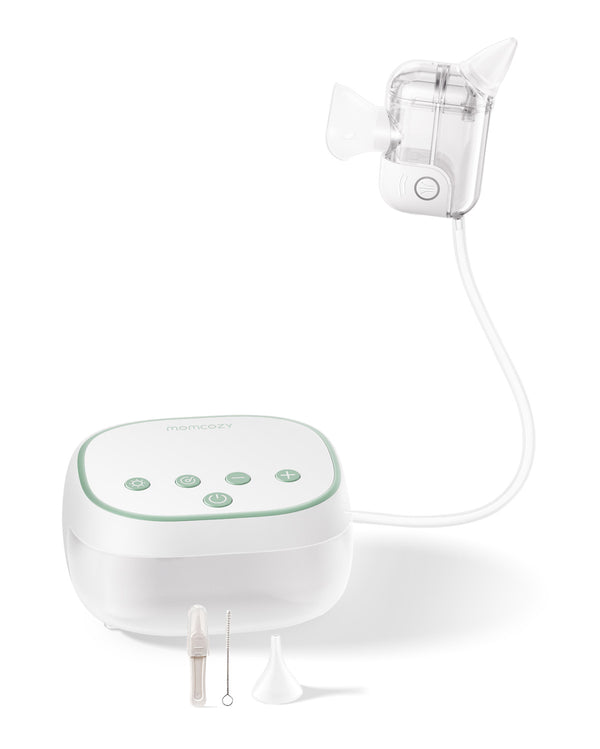
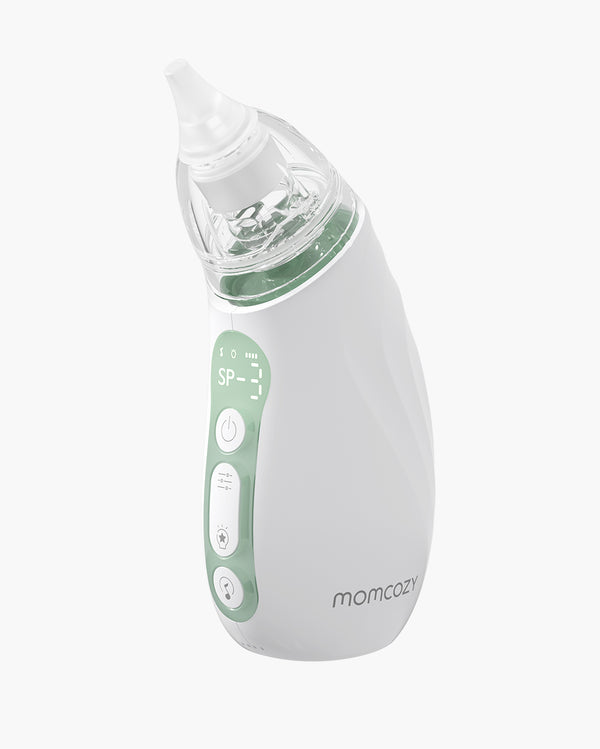
The Momcozy BreezyClear™ 2-in-1 Nasal Aspirator comes with a mist option and suction. The suction takes the mucus out after the spray softens it. This does not represent a full flow-through rinse and should not be viewed as a replacement for irrigation under the guidance of a clinician.

Review the age recommendations before using the product. Momcozy is intended for children between 2 and 12 years old. Always check the latest instruction manual and speak with a paediatrician if you have any concerns.
If the child meets the requirements for use, place the tip near the nostrils, start with the gentlest suction level, and operate the device only while the child is awake and under constant adult supervision.
Member price
$104.00$115.00
What Water and Saline Safety Rules Matter for a True Nasal Rinse?
Nasal irrigation involves more care than simply using saline drops or a gentle nasal spray. It is essential to use safe water, prepare the saline mixture correctly, and keep the irrigation device clean. Avoid making up your own method or following directions designed for a different age group.
Water Safety
- Use safe water. For a safe saline rinse, use sterile or distilled water. You can also use tap water if you boil it first and let it cool according to current medical guidance. Avoid using untreated tap water directly.
- Use saline, not plain water. Saline is usually better tolerated by the more delicate nasal tissues. Plain water can be irritating or drying.
- Follow the correct preparation instructions. Use a sterile saline solution for nasal use and as directed on its label or by your health care provider. Do not estimate the ratios if you are mixing the solution yourself.
- Don't assume drinking water is safe for irrigation. Water can be safe to drink yet still be unsafe for rinsing your nose.
This article doesn't include a homemade saline recipe because exact measurements and preparation instructions require medical review. For an infant, ask a pediatrician whether a true rinse is appropriate before preparing or using one.
Equipment Hygiene
- Clean and dry reusable equipment. Follow the manufacturer's cleaning instructions and allow the device to dry thoroughly between uses.
- Keep devices separate. Don't share rinse equipment between children, even if it has been washed.
- Check before each use. Look for residue, damage, or parts that are difficult to clean.
- Use equipment only as intended. A device made for drops, mist, or suction should not be repurposed for full nasal irrigation.
Safe water and clean equipment reduce avoidable risks, but they don't make a full rinse suitable for every baby. If you're unsure about your child's readiness, the right solution, or the device's intended use, check with your pediatrician before proceeding.
When Should You Ask a Pediatrician Before Trying Nasal Irrigation?
Certain symptoms and health conditions can affect whether nasal irrigation is appropriate. Knowing when to seek medical guidance can help you avoid trying home nasal-care methods when your child may need professional assessment.
Ask your pediatrician before attempting a full rinse if your child:
- Is a young infant or cannot cooperate with positioning. Don't force a child into a position they cannot maintain safely.
- Has frequent nosebleeds. Ask whether a rinse is appropriate before introducing another nasal-care method.
- Has recurrent ear infections. Get guidance on whether full irrigation is suitable for your child.
- Has a weakened immune system. Your child's individual health needs may affect which precautions and methods are appropriate.
- Has persistent or worsening congestion. Symptoms that continue or get worse may need assessment rather than repeated attempts to clear the nose.
Pay particular attention to breathing and feeding. If congestion significantly interferes with either, seek prompt medical advice instead of cycling through different rinses, sprays, or suction devices. Severe breathing difficulty requires emergency care. Don't delay seeking help to try another nasal-care method.
A rinse is a technique, not a diagnosis or a treatment for every cause of congestion. This guidance does not replace medical evaluation for persistent symptoms or conditions such as sinusitis, allergies, ear disease, or lower-airway illness.
Before trying any method at home, make sure you understand what it does and which precautions apply. Knowing the common mistakes to avoid can help prevent confusion between saline moisture, suction, and full nasal irrigation.
Common Nasal-Irrigation Mistakes to Avoid With Babies
Most mistakes happen when different nasal-care methods are treated as interchangeable. A rinse, saline mist, and nasal aspirator do different things, so the technique and equipment need to suit the child’s age and the problem being addressed.
|
Mistake |
What to do instead |
|
Copying an adult neti-pot routine |
Follow guidance intended for the child’s age and abilities. Adult instructions should not automatically be applied to babies |
|
Using untreated tap water for a full rinse |
Use sterile or distilled water, or water prepared according to reviewed medical guidance for nasal irrigation. Water that is safe to drink is not automatically safe for nasal rinsing |
|
Forcing a rinse when a baby cannot maintain the position |
Stop rather than forcing the procedure. Ask the pediatrician which alternative may be appropriate for your child |
|
Inserting a nozzle too deeply |
Follow the device’s instructions and avoid inserting an aspirator tip beyond the nostril entrance |
|
Treating a fine mist as a full flush |
Remember the mist adds moisture but does not necessarily move saline through teh nasal passage |
|
Confusing medicated decongestant drop with plain saline |
Check the ingredients and age directions. Medicated drops are not interchangeable with plain saline |
|
Repeating suction because congestion sounds remain |
Don’t assume every stuffy sound means mucus needs removing. Stop if little or no mucus comes out rather than continuing to suction |
|
Using an aspirator as an irrigation device |
Use each product only for its intended purpose. An aspirator removes mucus; it does not perform a full nasal rinse |
|
Choosing a full rinse when a simpler method may fit |
For dry mucus, moisture may be enough. When loosened mucus is visible and accessible, gentle suction may be an option if appropriate for the child |
These precautions don’t mean nasal irrigation is unsafe for every child; the method, positioning, water preparation, and equipment simply need to suit the situation. If you’re unsure, don’t force the procedure or follow adult instructions for your baby. Use pediatric guidance to help choose the most appropriate nasal-care method.
Which Method Fits Your Baby's Situation?
Start with what you’re noticing. Dry mucus, mucus that is ready to be removed, and congestion without visible mucus can call for different approaches. Use this table to narrow down the options, keeping your child’s age, product instructions, and any pediatrician guidance in mind.
|
Situation |
Method to consider |
Important boundary |
|
Dry or sticky mucus |
Saline drops made for nasal use; consider a fine mist only if it is suitable for your child’s age |
Moisture may be enough. Momcozy’s guide to hard or dry baby booger covers this common concern |
|
Visible, loosened mucus |
Gentle suction with an age-appropriate device |
Stop if little or no mucus comes out instead of repeating attempts |
|
Congestion sounds, but no mucus is visible |
Pause and reassess before using suction or a rinse |
A stuffy sound alone doesn’t mean mucus needs to be removed |
|
Child not ready for full irrigation |
Saline drops, or an age-appropriate mist, with gentle suction when mucus is present, and removal is appropriate |
Do not force a through-flow rinse |
|
Older, cooperative child with a clinician-approved need for a rinse |
A suitable full-irrigation method |
Follow guidance on positioning, water safety, and equipment hygiene |
|
Breathing or feeding difficulty |
Prompt medical assessment |
Do not keep trying home nasal-care methods; severe breathing difficulty requires emergency care |
The right aspirator depends on how it works and whether it suits your child’s age and needs. Momcozy’s guide to baby nasal aspirator types and safety explains the differences between common options, helping you make a more informed choice.
Use this guide as a starting point, not a diagnosis. If your child’s symptoms persist or worsen, or begin affecting breathing or feeding, contact your pediatrician instead of trying a more intensive nasal-care method.
Frequently Asked Questions
Is nasal irrigation safe for babies?
It depends on the technique and the child’s readiness. Saline drops, fine mist, suction, and full nasal irrigation are different methods. Ask your pediatrician before trying a true through-flow rinse with a young infant.
What age can a baby use a nasal rinse?
There is no universal age cutoff for every child and technique. The ability to sit up, lean forward, and cooperate matters. Check with your pediatrician before considering full irrigation for an infant.
Is saline spray the same as nasal irrigation?
No. Saline spray or fine mist adds moisture and may help loosen mucus. Full irrigation moves a larger volume of saline through the nasal passage. A spray does not necessarily flush the passage.
Can I flush my newborn’s nose with a syringe?
Do not forcefully flush a newborn’s nose with a syringe. A full rinse differs from placing saline drops in the nostrils. Ask your pediatrician which approach is appropriate for your baby.
Can I use tap water for a baby nasal rinse?
Never use untreated tap water for true nasal irrigation. Use sterile or distilled water, or tap water that has been boiled and cooled according to current medical guidance. Follow the equipment instructions and use an appropriate saline solution.
Is a nasal aspirator the same as nasal irrigation?
No. An aspirator removes mucus through suction, while irrigation rinses the nasal passage. The Momcozy BreezyClear™ 2-in-1 Nasal Aspirator combines mist and suction but does not perform a full rinse. Momcozy lists it for ages 2–12, so check current product guidance before use.
Should I use saline before suction?
Saline drops or an age-appropriate mist may help loosen dry or sticky mucus before suction. Follow the product directions, and learn how to suction a baby's nose before using an aspirator.
Can I use a neti pot on a baby?
Do not apply adult neti-pot instructions directly to a baby. Full irrigation requires suitable equipment, positioning, and cooperation. Ask your pediatrician whether this technique is appropriate for your child.
What if my baby hates nasal rinses?
Don’t force the rinse or keep repeating attempts. Reconsider whether a full rinse is needed and ask your pediatrician about alternatives. If you are using suction, avoid repeated attempts when little or no mucus comes out.
When should I call the pediatrician?
Seek guidance if your baby is very young, symptoms persist or worsen, or you have concerns about the right method. Get prompt medical help if congestion significantly affects feeding or breathing, and seek emergency care for severe breathing difficulty.
Conclusion
Choosing nasal care for a baby starts with knowing which method you mean. Saline drops and fine mist add moisture, suction removes mucus, and full nasal irrigation moves saline through the nasal passage. A mist is not a full flush, and an aspirator is not an irrigation device.
The right option depends on your child’s age and abilities, whether mucus is dry, loose, or not visible, and the instructions for the product you use. True irrigation also requires safe water, clean equipment, and appropriate positioning. If you’re unsure whether a full rinse is suitable for your baby, check with your pediatrician before trying it.
When congestion persists or worsens, seek medical advice rather than moving to a more intensive method. If breathing or feeding is affected, get prompt medical help; severe breathing difficulty requires emergency care.